
Main Courses
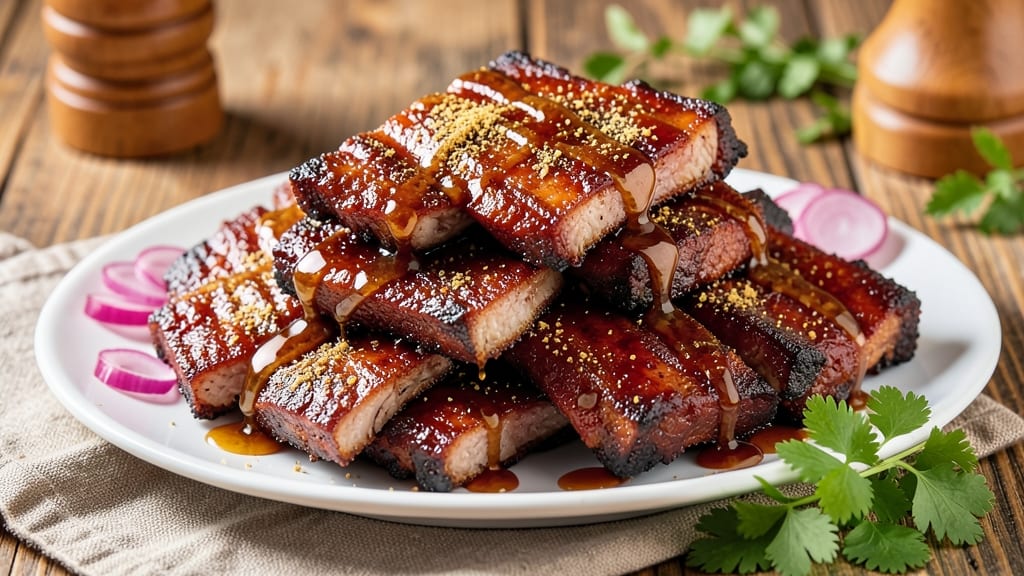
This Cantonese five-spice glaze transforms pork spare ribs into the sticky, aromatic centerpiece of any meal. 🔥 After years of perfecting the balance between sweet, smoky, and umami flavors, I've developed a method that delivers restaurant-quality char siu at home—where the glaze clings to each rib like a second skin.
The secret lies in the marinade's dual texture: a thick, caramelized crust that develops during roasting while maintaining tender meat beneath.
The foundation of authentic char siu begins with a marinade of hoisin, honey, and Chinese five-spice powder—each ingredient playing a crucial role. Hoisin provides the deep, savory base, honey creates the signature caramelized sheen, and five-spice delivers that unmistakable aromatic complexity.
I've found that marinating overnight allows the flavors to penetrate deeply, while the final roast at high heat creates that signature charred exterior without drying out the meat.
What you'll achieve is ribs that are perfectly balanced—crisp edges with tender, juicy meat that practically falls off the bone. The glaze should be sticky enough to coat a chopstick when lifted, yet not so thick it prevents clean bites.
This technique transforms simple spare ribs into a showstopping dish worthy of any Chinese feast, whether served at a family gathering or as a centerpiece for dinner guests.
Pair these ribs with steamed jasmine rice and quick-pickled cucumbers to complete the Cantonese experience. The contrast of cool, tangy pickles against the rich, caramelized pork creates a harmony that's both comforting and sophisticated. Let's get started on creating these unforgettable ribs.
Ingredients for char siu pork spare ribs
Four pounds of meaty ribs and a handful of pantry staples—this is all you need for restaurant-quality char siu.
| Ingredient | Amount | Notes |
|---|---|---|
| Pork Spare Ribs 🥩 | 3 lb | Bone-in, meaty cuts preferred |
| Hoisin Sauce 🍶 | ½ cup | Store-bought or homemade |
| Honey 🍯 | ½ cup | Wildflower or clover preferred |
| Chinese Five-Spice Powder 🌶️ | 1 tbsp | Authentic blend for aroma |
| Soy Sauce 🍶 | ¼ cup | Light or dark, not low-sodium |
| Brown Sugar 🍚 | ¼ cup | Packed, not granulated |
| Garlic Cloves 🧄 | 6 cloves | Minced, fresh preferred |
| Ginger Root 🌿 | 1 tbsp | Freshly grated, not powdered |
| Sesame Oil 🫒 | 1 tbsp | Toasted, for aroma |
| Rice Vinegar 🍶 | 1 tbsp | White or seasoned |
| Salt 🧂 | 1 tsp | Kosher or sea salt |
| Black Pepper 🌶️ | ½ tsp | Freshly cracked |
| Cornstarch 🌾 | 2 tbsp | For glaze thickening |
| Water 💧 | 2 tbsp | For cornstarch slurry |
The ribs are the star, so pick meaty, bone-in spare ribs—the kind with good marbling. Costco or Whole Foods usually carry high-quality cuts, but your local butcher can trim them to your preference. Look for ribs that are bright pink, not grayish—this means they're fresher. If you're using frozen ribs, thaw them overnight in the fridge (never in hot water). The hoisin sauce is non-negotiable—Lee Kum Kee is my go-to, but any authentic brand with a thick, sticky texture works. For the five-spice powder, Penzeys or bulk sections at Asian markets have the best blends—avoid the pre-mixed packets that often contain fillers.
No Chinese five-spice powder? Mix 1/4 tsp each of cinnamon, cloves, fennel, star anise, and peppercorn as a substitute. Running low on hoisin? Soy sauce plus 1 tsp molasses mimics its depth. The honey should be real—avoid corn syrup-based substitutes that won't caramelize properly. For the cornstarch slurry, arrowroot powder works too if you're out of cornstarch. Fresh ginger is a must—powdered lacks the bright, zesty kick. If you can't find toasted sesame oil, regular sesame oil plus 1/4 tsp asafoetida adds that nutty depth. The rice vinegar cuts through the richness—substitute apple cider vinegar at half the amount if needed.
Marinate the ribs overnight for maximum flavor penetration. Store the marinade in an airtight container in the fridge—it keeps for up to 1 week. The cooked ribs reheat beautifully—wrap them in foil and warm in a 350°F oven for 15-20 minutes. For leftovers, freeze portions in a single layer before bagging—this prevents a solid block that's hard to reheat. The glaze thickens as it cools, so reheat with a splash of water if it becomes too stiff. These ribs freeze for up to 3 months while maintaining their tender texture.
Why You'll Love This Recipe
- One-Pan Magic: I swear by this recipe—just ribs, hoisin, honey, and five-spice tossed on a sheet pan. No chopping, no mess, and the oven does all the work while I sip tea and pretend I’m not cooking.
- Sweet-Savory Crunch: That sticky glaze? Pure perfection. The honey and hoisin caramelize into a glossy shell, while the five-spice powder adds warmth—like a hug in every bite. My kids fight over the last piece.
- Meal Prep MVP: Double the batch, and you’ve got lunch for days. The ribs stay tender when reheated, so I pack them for work or toss them in rice bowls. Honestly, my slow cooker days are over.
- Budget Stretch: Pork ribs are cheaper than you’d think, and this recipe stretches them far. A single pack feeds four, and the leftovers? Even better the next day. My wallet and taste buds thank me.
Step-by-step instructions for char siu pork spare ribs
Here's how to make restaurant-quality Cantonese ribs with a glaze so sticky it'll have your guests licking their fingers.
👨🍳 Step 1: Prep and Marinate the Ribs
Pat the 3 lb pork spare ribs completely dry with paper towels—this is non-negotiable for crispy skin. Trim any excess fat but leave a thin layer for flavor. In a large bowl, combine the ribs with 0.5 cup hoisin sauce, 0.5 cup honey, 1 tbsp Chinese five-spice powder, 0.25 cup soy sauce, 0.25 cup packed brown sugar, 6 minced garlic cloves, 1 tbsp freshly grated ginger root, 1 tbsp sesame oil, 1 tbsp rice vinegar, 1 tsp salt, and 0.5 tsp black pepper. Mix until every rib is thoroughly coated.
Cover the bowl with plastic wrap and refrigerate for at least 4 hours (overnight is ideal). This long marinade ensures deep flavor penetration and tender meat. The ribs should absorb the marinade completely—if they're not swimming in it, give them a good toss and let them marinate another hour.
🔥 Step 2: Sear the Ribs for Maximum Flavor
Preheat your oven to 425°F and line a baking sheet with foil (no parchment—this helps with crispiness). Remove the ribs from the fridge and let them sit at room temperature for 30 minutes. This prevents cold spots that can lead to uneven cooking.
Place the ribs on the prepared baking sheet, bone-side down, and roast for 30 minutes. Flip them bone-side up and continue roasting for another 15 minutes. You're looking for deep golden brown color and a caramelized glaze that starts to form. The ribs should be sizzling hot when you pull them out—this sear locks in all that marinade flavor.
🍳 Step 3: Make the Sticky Glaze
While the ribs are roasting, make the glaze. In a small bowl, whisk together 2 tbsp cornstarch and 2 tbsp water until smooth—this is your slurry. In a saucepan over medium heat, combine the marinade that's pooled in your bowl (about 1 cup) with the slurry. Stir constantly until it thickens to a glossy, syrupy consistency (3-4 minutes).
The glaze should coat the back of a spoon and leave a slight trail when you drag your finger through it. If it's too thick, add 1 tsp water at a time. If it's too thin, simmer another 30 seconds. Here's the thing—this glaze needs to be perfect because it's what makes char siu unforgettable.
🥘 Step 4: Glaze and Finish
Return the seared ribs to the oven (no need to preheat again). Brush them generously with the glaze, getting into all the crevices. Roast for 10-15 minutes until the glaze is deep amber and bubbly. The ribs should be fork-tender with a crispy exterior—if they're not quite there, add another 5 minutes of broil time (watch closely to avoid burning).
For that classic char siu look, broil the ribs for the final 2 minutes, turning occasionally, until they develop blackened spots in some areas. This isn't burning—it's the signature char that adds depth of flavor. Let the ribs rest for 5 minutes before serving so the juices redistribute.
🍽️ Step 5: Serve with Style
Slice the ribs between the bones and arrange them on a platter. Drizzle any remaining glaze over the top and garnish with extra sesame seeds if you like. Serve immediately with steamed jasmine rice and quick-pickled vegetables to cut through the richness. The glaze should be so sticky it'll cling to every bite, making each mouthful a perfect balance of sweet, salty, and aromatic five-spice.
Pro Tips For Making Char Siu Pork Spare Ribs
- Parboil First: Skip the raw char siu glaze—parboil the ribs for 8-10 minutes before marinating. This step locks in moisture and lets the sauce cling better later. I used to skip it, and the ribs always dried out under the grill.
- Dry the Ribs: Pat those ribs thoroughly with paper towels after parboiling. Wet ribs won’t crisp up, and you’ll end up with soggy edges instead of that perfect caramelized crust. (Yes, even if you’re impatient like me.)
- Glaze in Stages: Brush the hoisin-honey mix twice—once mid-cook, once at the end. The first layer cooks into the meat, while the final coat creates that sticky, glossy finish. After burning three batches, I finally figured out why my ribs looked dull.
- Use Less Honey: Honey burns faster than you’d think. Cut it with a splash of water (1:1 ratio) to thin the glaze—it’ll still taste sweet but won’t turn acrid. My grandmother swore by this, and she was right: the ribs stay tender, not charred.
Common mistakes when making this dish
Skipping the Marinate
I've seen too many cooks rush this step, thinking overnight marinating is optional. Don't skip it—the five-spice blend and hoisin need at least 4 hours to penetrate the meat's dense fibers.
When I first started, I'd marinate for just 2 hours and end up with flavor only on the surface. The ribs would taste good but lack that deep, aromatic complexity that makes char siu special.
Trust me, the extra time pays off with ribs that practically fall apart when you slice them. 💪
Overcrowding the Pan
When searing the ribs, I've made the mistake of piling them too close together on the baking sheet. This traps steam and prevents that beautiful Maillard reaction that creates crispy edges. Leave at least ½ inch of space between each rib.
I learned this lesson the hard way when my first batch came out soggy instead of caramelized. Pro tip: Use a second baking sheet if needed—better to spread them out than crowd them. ⚡
Using Low-Quality Honey
The honey in your marinade makes or breaks the final glaze. I've tried corn syrup substitutes thinking they'd work, but they lack the natural enzymes that help caramelize properly. Use real honey—wildflower or clover work best.
Once, I used a cheap store brand, and the glaze ended up cloyingly sweet instead of perfectly balanced. The right honey adds depth and helps create that signature sticky texture. 🍯
Broiling Too Long
That final broil step is where many cooks go wrong. You want just 2 minutes of broiling to create those signature blackened spots, not a charred mess. I've seen people leave ribs under the broiler for 5-6 minutes, turning them into burnt offerings.
Watch closely—when you see those dark patches appear, pull them out immediately. The ribs should have color variation but not be completely blackened. This is about creating visual appeal and depth of flavor, not carbonizing your hard work. 🔥
Not Resting the Ribs
This is one of the biggest mistakes I see in home kitchens. Ribs need that 5-minute rest before slicing to let the juices redistribute. I've cut into ribs too soon and ended up with dry, disappointing meat.
The glaze will continue to set as the ribs cool, so resist the urge to serve immediately. Let them rest on a wire rack to keep them crispy while they finish setting. This simple step makes all the difference in texture and presentation. ✨
Using the Wrong Sugar
Brown sugar is essential for that caramelized crust, but not all sugars are created equal. Granulated sugar won't dissolve properly in the marinade and won't caramelize the same way. I've made this mistake when I was in a hurry and grabbed the wrong bag.
The result? A glaze that was more grainy than smooth. Always use packed brown sugar—it dissolves better and creates that perfect caramel texture we're after. The difference is night and day. 🍚
Nutrition facts
Frequently asked questions
Can I use pork shoulder instead of spare ribs?
While pork shoulder works for other Cantonese dishes, it's not ideal for char siu. The fat content is higher, and the texture becomes too fatty when roasted. Spare ribs have the perfect balance of meat and connective tissue for that signature tender-yet-crispy result. If you must use shoulder, cut it into 1-inch cubes and reduce roasting time by 20 minutes to prevent dryness.
How do I make the glaze extra sticky?
The secret is in the cornstarch slurry and proper reduction. For maximum stickiness, simmer your glaze until it reaches 235°F on a candy thermometer (soft-crack stage). If it's not thick enough, whisk in 1 tsp more cornstarch mixed with 1 tsp water and cook another 1-2 minutes. The glaze should hold its shape when drizzled from a spoon. Pro tip: Add 1 tsp rice vinegar to the finished glaze for extra cling.
Can I grill these ribs instead of roasting?
Grilling works beautifully for char siu. Preheat your grill to medium-high (400°F) and follow the same marinating process. Grill the ribs bone-side down first for 10 minutes, then flip and cook another 8-10 minutes until caramelized. For the glaze, brush it on during the last 3 minutes of grilling. The high heat creates amazing grill marks while keeping the meat tender. Just watch closely to avoid flare-ups from the honey.
What's the best way to reheat leftovers?
Reheat char siu ribs wrapped in foil at 300°F for 15-20 minutes to prevent drying. For extra stickiness, brush with a little water or honey first. Microwaving works in a pinch (1 minute covered), but it won't restore that perfect caramelized crust. The glaze thickens when cooled, so reheating with a splash of water helps restore its glossy texture. Store leftovers in an airtight container for up to 4 days.
Can I make this recipe without Chinese five-spice?
Yes, but you'll lose that signature aromatic complexity. Make a substitute by mixing ¼ tsp each of cinnamon, cloves, fennel seeds, star anise, and black pepper. Toast the spices lightly in a dry pan for 1 minute to enhance their flavor before using. The blend should be 1 tbsp total to match the original recipe. This substitute works well but won't be identical to authentic five-spice powder.