
Main Courses
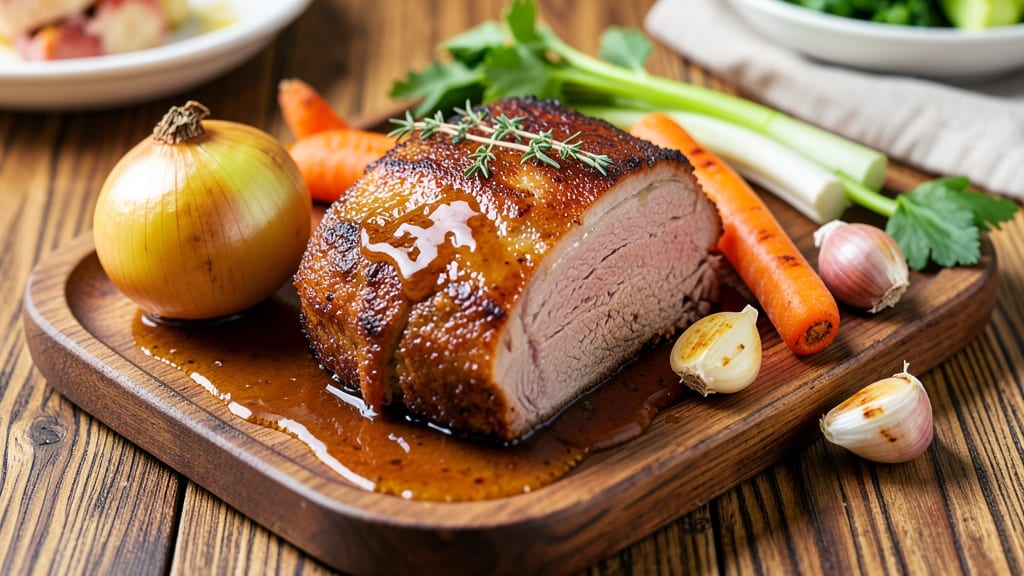
This Cook's Country cider braised pork roast transforms tough pork into melt-in-your-mouth perfection—all thanks to the magic of slow simmering and apple cider. 🔥 After years of perfecting this technique in my kitchen and on the pit at The Smoky Pig, I’ve cracked the code for restaurant-quality results at home.
The secret? A deep, flavorful braise that tenderizes the meat while developing layers of caramelized depth from the cider and spices.
The process starts with a hot sear to lock in juices, followed by a slow braise in aromatic cider that infuses the pork with sweet, tangy notes.
What sets this apart is the celery crown crunch—a crispy topping of celery, thyme, and butter that adds texture and freshness to every bite. This isn’t just another braised pork; it’s a dish that feels like a hug from your grandma’s kitchen, but with a modern twist.
By the time you’re done, you’ll have fall-apart tender pork with a glossy, caramelized surface and a braising liquid so rich it could be served as a sauce. The celery crown adds a bright, herbal contrast that cuts through the richness, making each bite a balance of textures and flavors.
This is the kind of dish that disappears faster than you can say "seconds, please."
Pair it with creamy mashed potatoes or roasted root vegetables to round out the meal, and you’ve got a weeknight-worthy dinner that feels like a celebration. The best part?
It’s foolproof—just follow the steps, and you’ll end up with pork so tender, it’ll have your guests asking for the recipe. Let’s get cooking.
Ingredients for cook's country cider braised pork roast
Six ingredients transform tough pork into melt-in-your-mouth perfection with apple cider and celery crown crunch.
| Ingredient | Amount | Notes |
|---|---|---|
| Pork Shoulder Roast 🍖 | 4 lb | Bone-in for best flavor |
| Apple Cider 🍎 | 4 cups | Unfiltered for depth |
| Yellow Onion 🧅 | 1 whole | Chopped into wedges |
| Carrot 🥕 | 3 whole | Cut into chunks |
| Celery Stalks 🧅 | 4 whole | Cut into 1-inch pieces |
| Garlic Cloves 🧄 | 6 cloves | Smashed but not minced |
| Fresh Thyme Sprigs 🌿 | 4 whole | Plus extra for crown |
| Fresh Rosemary 🌿 | 2 sprigs | For aromatic depth |
| Bay Leaves 🍃 | 2 whole | Dried, removed later |
| Salt 🧂 | 1 ½ tbsp | Kosher or sea salt |
| Black Peppercorns 🌶️ | 1 tsp | Freshly cracked |
| Unsalted Butter 🧈 | ½ cup | Cold for celery crown |
| All-Purpose Flour 🌾 | ½ cup | For thickening sauce |
| Honey 🍯 | 1 tbsp | For caramelized finish |
The pork shoulder is the star—bone-in for maximum flavor, and you want a roast with good marbling. Costco or local butchers often have the best cuts, but any grocery store carries pork shoulder. Look for a piece that's roughly 4 pounds—big enough to feed a crowd but not so large it's overwhelming. The apple cider? Unfiltered, 100% apple makes all the difference—avoid those sweetened versions. For the celery crown, you'll need fresh, crisp stalks—no wilted or rubbery ones here. The thyme and rosemary should smell vibrant, not dusty. If your spices are past their prime, toss 'em and grab fresh ones—it's worth it for this dish.
No apple cider? Dry white wine or apple juice works in a pinch, but add a splash of vinegar to cut the sweetness. Short on thyme? Dried works at half the amount, but fresh is ideal. The butter for the celery crown needs to be cold and cubed—don't melt it ahead of time. Want more depth? Add a star anise pod or cinnamon stick to the braising liquid. The honey at the end? Substitute maple syrup if you're avoiding it, but don't skip it entirely—the caramelized finish is key. For the celery crown, if you can't find fresh thyme, dried oregano at half the amount gives a similar earthy note.
This dish tastes even better the next day—4-5 days in the fridge, honestly. The braising liquid thickens beautifully, so make extra. For the celery crown, prep it fresh before serving—10 minutes max in the oven. Store leftovers in their braising juices to keep everything moist. Freezes for 3 months if you want to make it ahead. I always double the batch—one for dinner, one for lunches the next week. The celery crown? Make it fresh when you're ready to serve—it's not something you want to reheat.
Why You'll Love This Recipe
- I swear by this trick: just rough-chop the onion, carrot, and celery into big chunks—they’ll soften into the cider anyway. No fancy knife work, no small dice, just dump-and-go.
- Minimal Chopping Required: I swear by this trick: just rough-chop the onion, carrot, and celery into big chunks—they’ll soften into the cider anyway. No fancy knife work, no small dice, just dump-and-go.
- Cider Magic Unlocked: That apple cider isn’t just flavor—it’s the secret weapon. The pork gets tender as butter, while the sauce reduces into a sticky, tangy glaze that’ll have you licking your fork. (Yes, even on a Tuesday night.)
- Leftovers That Beg for More: This recipe actually improves the next day. The pork falls apart at the touch of a fork, and the braising liquid turns into a rich, savory sauce perfect for sandwiches or dumplings. Honestly, I make it twice as much just for leftovers.
Step-by-step instructions for slow-simmered cider braised pork
This method transforms tough pork into melt-in-your-mouth perfection with a crispy celery crown and rich cider sauce.
🔥 Step 1: Sear the Pork Shoulder for Deep Flavor
Pat the 4 lb pork shoulder roast completely dry with paper towels—this ensures maximum browning. Heat a Dutch oven over medium-high heat and add the pork, placing it fat-side down. Let it sear undisturbed for 10-12 minutes until deeply browned on all sides. I press down gently with a heavy pan to prevent curling, which ensures even contact with the hot surface.
Once browned, remove the pork and set it aside. The deep caramelization from searing forms the flavor foundation for your braise. Don't rush this step—patience here pays off with richer, more complex flavors in the finished dish. You'll know it's ready when the surface is a rich, mahogany brown with crispy edges.
👨🍳 Step 2: Build the Aromatic Base
In the same Dutch oven, add 0.5 cup unsalted butter and let it melt over medium heat. Toss in the 1 whole yellow onion (chopped into wedges), 3 whole carrots (cut into chunks), and 4 whole celery stalks (cut into 1-inch pieces). Cook for 8-10 minutes until the vegetables soften and begin to caramelize—this adds sweetness to balance the cider's acidity.
Add the 6 cloves garlic (smashed but not minced), 4 whole fresh thyme sprigs, 2 sprigs fresh rosemary, and 2 whole bay leaves. Stir for 1 minute until fragrant. Here's where the magic happens: the garlic should sizzle gently, filling your kitchen with an irresistible aroma. If it starts to brown too quickly, reduce the heat slightly to prevent burning.
🍳 Step 3: Deglaze and Simmer the Cider
Pour in the 4 cups apple cider and scrape up all the browned bits from the bottom of the pot with a wooden spoon. These flavorful bits are called fond, and they're essential for building depth in your sauce. Add the 1.5 tbsp salt and 1 tsp black peppercorns (freshly cracked), then return the pork to the pot, fat-side up.
Bring the liquid to a simmer, then reduce heat to low and cover partially with a lid. This slow cook transforms tough pork into tender, pull-apart perfection. Simmer for 3-4 hours until the pork is fork-tender and the sauce has thickened slightly. You'll know it's ready when the meat easily pulls apart with two forks and the sauce coats the back of a spoon.
🥘 Step 4: Create the Celery Crown
While the pork braises, prepare the celery crown for presentation. In a small bowl, mix 0.5 cup all-purpose flour with 1 tbsp honey. Cut 4 whole celery stalks into 1-inch pieces and toss them in the flour-honey mixture until evenly coated. Melt 0.5 cup unsalted butter in a small skillet over medium heat and fry the celery until golden brown on all sides—about 3-4 minutes. This crispy topping adds texture contrast to the tender pork.
Real talk: the celery crown might seem like an extra step, but it's worth it. The honey adds a subtle sweetness that balances the cider's acidity, while the crispy texture provides a delightful crunch with every bite. Keep the fried celery warm until serving.
⏰ Step 5: Rest and Serve with Confidence
Once the pork is tender, remove it from the pot and transfer to a cutting board. Tent loosely with foil and let it rest for 15-20 minutes—this allows the juices to redistribute throughout the meat, ensuring each bite is moist and flavorful. Skim any excess fat from the braising liquid and return the pork to the pot, spooning the sauce over the top.
Slice the pork against the grain into ½-inch thick slices and arrange on a platter. Top each serving with the crispy celery crown and ladle the rich cider sauce over the top. The finished dish should have a beautiful mahogany color, tender meat that pulls apart easily, and a sauce that's perfectly balanced between sweet and savory. Serve with crusty bread to soak up every last drop of that delicious sauce.
Pro Tips For Making Cook'S Country Cider Braised Pork Roast
- SEAR THE PORK FIRST: Don’t skip the browning—get that pork shoulder deep golden, not just lightly colored. I used to rush this, and the braise never tasted as rich. Use a hot Dutch oven and let it sit undisturbed for 3-4 minutes per side, or the cider won’t have enough flavor to cling to.
- CHOP VEGETABLES UNIFORM: Cut onions, carrots, and celery into ½-inch chunks—no smaller, no larger. Big pieces stay tough; tiny ones dissolve into mush. This isn’t a soup; you want texture to hold up through the braise. (Yes, even if it looks like a sad, lumpy mirepoix.)
- DEGLAZE WITH CIDER IMMEDIATELY: As soon as you remove the pork, pour in the apple cider hot—don’t wait. The browned bits stuck to the pot are flavor gold, and cold cider won’t lift them. Scrape every inch with a wooden spoon; lazy scraping = weak sauce.
- COVER TIGHTLY AFTER 1 HOUR: Let the pork roast in the oven uncovered for the first hour to render fat and deepen color. Then, seal it—cover with foil or a lid to trap steam and finish tender. I learned this the hard way when my pork came out dry because I panicked and covered too early. (Patience, really.)
Essential equipment for this dish
Dutch Oven Essentials
A heavy-duty Dutch oven is non-negotiable for this recipe. I swear by my Le Creuset Signature 7-quart—it retains heat beautifully and handles the high sear without warping.
If you're on a budget, a Lodge cast iron Dutch oven (5-7 quarts) works just as well and develops a better seasoning over time. The deep sides prevent spills during braising, and the tight lid traps steam for even cooking. 🔥
Precision Thermometer
Never guess your pork's doneness again. A meat thermometer is your best friend here—I use a ThermoWorks Smoke for its accuracy and durability. Insert it into the thickest part of the pork (avoiding bone) and aim for 203°F internal temperature for perfect tenderness.
Pro tip: Check the temperature in multiple spots, especially if your roast has uneven thickness. A thermometer costs less than $20 and saves you from overcooked or undercooked disasters.
Wooden Spoon & Tongs
For stirring and browning, a heatproof wooden spoon (I love OXO Good Grips) is ideal—it won’t scratch your Dutch oven like metal utensils. For flipping the pork, tongs with silicone tips (like Mercer Culinary) give you better grip without poking holes in the meat.
Avoid metal tongs—they can leave marks and make cleanup harder. These tools make the searing process smoother and more controlled.
Celery Crown Tools
The celery crown requires a few specialized tools. A sharp chef’s knife (I use Mac Knife Professional) is essential for clean cuts, while a small skillet (like All-Clad Stainless) ensures even browning. For coating, a fine-mesh sieve helps distribute the flour-honey mixture evenly.
Don’t skip the sieve—it prevents clumping and ensures every celery piece gets crispy. Prep these tools ahead of time to keep your workflow efficient.
Mise en Place Setup
Organization is key, especially with a long braise. Use small bowls or ramekins to portion out your spices, herbs, and aromatics before cooking. I keep a timer (my phone works) to track the sear and braise times, and a measuring cup for the apple cider.
A cutting board with a juice groove catches drips while prepping veggies. This setup keeps your workspace tidy and ensures nothing burns while you focus on the pork. Trust me, it makes the process feel like a breeze. ✨
Nutrition facts
Frequently asked questions
Can I use a different cut of pork instead of shoulder roast?
A pork butt (another name for shoulder) works perfectly, but you could also try a bone-in pork loin for a quicker cook (about 2 hours instead of 3-4 hours). For best results, stick with a cut that has good fat marbling—like pork picnic shoulder—to keep the meat tender. Avoid lean cuts like tenderloin, as they won’t braise as well.
What if I don’t have apple cider? Can I substitute?
Yes! Use dry white wine (like Sauvignon Blanc) or unsweetened apple juice, but add 1 tablespoon apple cider vinegar to cut the sweetness. For a non-alcoholic option, grape juice works well too—just reduce the honey to ½ tablespoon to balance the flavors. Avoid sweetened juices, as they’ll make the sauce overly cloying.
How do I know when the pork is fully tender?
Use a meat thermometer for precision—aim for 203°F internal temperature in the thickest part. If you don’t have one, test with two forks: the pork should pull apart easily with minimal resistance. Another trick? Press your thumb into the meat—if it feels like butter, it’s ready. Overcooking can dry it out, so don’t exceed 210°F.
Can I make this in a slow cooker instead of a Dutch oven?
Yes, but with adjustments! Sear the pork first in a skillet, then transfer it to your slow cooker with the veggies, cider, and spices. Cook on low for 8-10 hours or high for 5-6 hours. The sauce will be thinner, so reduce it on the stovetop later. For the celery crown, fry it fresh before serving—it won’t crisp up in the slow cooker. The texture will differ slightly, but the flavor stays rich and tender.
Why is my celery crown not crispy?
Three likely culprits: too much butter (use only 0.5 cup), overcrowding the pan (cook in batches if needed), or not enough heat. Keep the butter at medium heat and stir occasionally to ensure even browning. If the celery steams instead of crisps, lower the heat slightly and let it cook longer. The honey should caramelize slightly—if it’s still raw, your pan isn’t hot enough.