
Main Courses
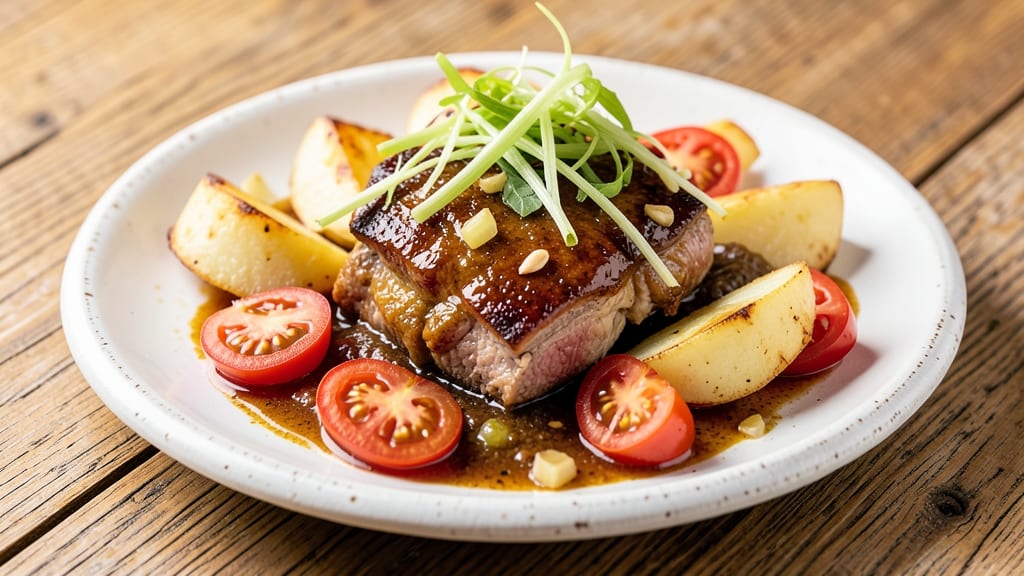
A pork afritada recipe batangas style transforms humble ingredients into a rich, sweet-tart masterpiece where crispy celery crowns crown every bite. ✨ This isn't just a braise—it's a celebration of Filipino home cooking where vinegar brightens soy's depth, and potatoes melt into the sauce like velvet. My grandmother's handwritten notes (written in pencil on the back of a grocery list) revealed the secret: slow simmering until the pork practically falls apart, with just enough vinegar to cut through the richness.
The magic happens in layers: tender pork shoulder braised until fork-tender, vegetables cooked just until they surrender their structure, and that signature crispy celery crown that adds texture contrast.
What makes this Batangas version special is the balance—sweet from tomatoes, tang from vinegar, and umami from soy, all harmonized through hours of gentle simmering. The sauce should coat the back of your spoon, thick enough to hold the vegetables but still silky.
By the time you serve this over steamed rice, you'll have a dish that tastes like home—warm, comforting, and packed with layers of flavor. The crispy celery crowns add that satisfying crunch, while the tender pork and vegetables create a symphony of textures.
This isn't just dinner; it's a taste of memory, tradition, and love in every bite.
Perfect for family gatherings or weeknight comfort, this recipe delivers restaurant-quality results without the fuss. The key is patience—the longer it simmers, the deeper the flavors develop. Let's get cooking!
Ingredients for pork afritada recipe batangas style
Sixteen ingredients transform humble cuts into a restaurant-worthy Batangas-style pork afritada.
| Ingredient | Amount | Notes |
|---|---|---|
| Pork Shoulder 🥩 | 2 ½ lb | Bone-in for richer flavor |
| Yellow Onions 🧅 | 2 whole | Thinly sliced, outer layers removed |
| Russet Potatoes 🥔 | 2 lb | Cut into 2-inch chunks |
| Celery Stems 🧅 | 4 whole | For crispy crowns, cut diagonally |
| Tomatoes 🍅 | 1 lb | Ripe, quartered, seeds removed |
| Canned Tomatoes 🍅 | 1 can | 15 oz, San Marzano preferred |
| White Vinegar 💧 | ½ cup | Distilled, not apple cider |
| Soy Sauce 🥢 | ⅓ cup | Light or regular, not low-sodium |
| Garlic Cloves 🧄 | 6 cloves | Minced, not powdered |
| Bay Leaves 🌿 | 2 whole | Fresh preferred, dried works |
| Black Peppercorns 🌶️ | 1 tsp | Freshly cracked, not powdered |
| Salt 🧂 | 2 tsp | Diamond Crystal preferred |
| Olive Oil 🫒 | ¼ cup | Extra-virgin, for crisping celery |
| Green Bell Pepper 🌶️ | 1 whole | Thinly sliced, optional |
The pork shoulder is the heart of this dish—bone-in for that deep, slow-braised flavor that falls apart like silk. Costco or your local butcher usually have excellent cuts at great prices; look for good marbling. If you can't find bone-in, bone-in pork butt works too. The potatoes need to be russet for that creamy texture, and the celery? That's your crispy crown—select the thickest, straightest stalks for the best crunch. For the tomatoes, San Marzano cans are worth the splurge if you're making this often—they're sweeter and less acidic than regular canned tomatoes. The vinegar should be white vinegar, not apple cider; it cuts through the richness perfectly.
No soy sauce? Coconut aminos work in a pinch, though the flavor will be slightly different. Running short on vinegar? Lemon juice at half the amount gives a similar tang. The celery crowns are non-negotiable for texture—if you're worried about burning, fry them in batches until golden. The green bell pepper is optional but adds a nice fresh contrast; skip it if you're making this for a crowd or prefer a more traditional version. For the garlic, freshly minced is best, but if you're in a rush, garlic powder at half the amount will do in a pinch. The bay leaves? Fresh are ideal, but dried work fine if that's all you have.
This dish tastes even better the next day—make extra if you can. Store in the fridge for up to 5 days, or freeze portions for 3 months. The sauce thickens as it cools, so a splash of water or vinegar helps loosen it when reheating. For serving, I like to garnish with extra crispy celery crowns and a sprinkle of freshly cracked black pepper. The crispy celery keeps for about 3 days in an airtight container, so make a double batch if you're hosting.
Why You'll Love This Recipe
- One-Pot Magic: I swear by this recipe because it’s all in one pot—no fussing with multiple pans or dishes. The potatoes soften right in the simmer, and the pork shoulder falls apart when you fork it. (Yes, even on a Tuesday night.)
- Tomato-Garlic Hug: That slow-cooked tomato base with garlic and onions? It’s the kind of flavor that sticks to your ribs. The Batangas twist—just a hint of vinegar—cuts through the richness like a cool breeze.
- Leftover Legend: This dish begs to be made extra. The flavors deepen overnight, and reheating it the next day? Still hearty, still delicious. I’ve fed my whole family for days with one big batch.
- Budget Hero: Pork shoulder is cheap, potatoes fill you up, and the veggies stretch it further. Honestly, it’s the kind of meal that makes grocery day feel like a win—without sacrificing taste.
Step-by-step instructions for pork afritada Batangas style
Here's how to create that signature crispy celery crown and sweet-tart soy braise that defines this Batangas classic.
🔥 Step 1: Sear the Pork Shoulder for Deep Flavor
Pat the 2.5 lb pork shoulder dry with paper towels and cut into 2-inch chunks. Heat 0.25 cup olive oil in a large Dutch oven over medium-high heat until shimmering. Working in batches, add pork pieces and sear for 3-4 minutes per side until deep golden brown—this builds the rich foundation for your sauce.
Real talk: Don't rush this step. You want those pork pieces to develop a caramelized crust that'll melt in your mouth. Once all pork is browned, remove and set aside—you'll add it back later when the vegetables are ready.
👨🍳 Step 2: Create the Signature Crispy Celery Crowns
Here's where the magic happens. Cut the 4 whole celery stems diagonally into ½-inch thick slices, creating those beautiful crown shapes. Heat 1 tablespoon olive oil in the same Dutch oven over medium-high heat until hot. Add celery in a single layer and fry for 3-4 minutes until edges turn deep golden brown and crispy.
I press down gently on the celery during the first minute—this prevents it from curling and ensures even contact with the pan. Remove crispy celery and set aside on a paper towel-lined plate. You'll add it back at the very end to keep it crisp.
🍳 Step 3: Build the Sweet-Tart Braising Liquid
In the same pot, add 2 tablespoons olive oil and sauté thinly sliced 2 whole yellow onions and minced 6 cloves garlic over medium heat for 5 minutes until softened and fragrant. Add 1 lb quartered tomatoes and cook for another 3 minutes until they break down slightly.
Pour in 0.5 cup white vinegar and 0.33 cup soy sauce, scraping up any browned bits from the bottom. Add 1 can canned tomatoes, 2-inch russet potato chunks, thinly sliced 1 whole green bell pepper, 2 whole bay leaves, 1 tsp cracked black peppercorns, and 2 tsp salt. Stir everything together—this is your flavor bomb.
🥘 Step 4: Braise Until Tender and Flavor-Infused
Return the seared pork to the pot and add just enough water to come up about ½ inch over the ingredients. Bring to a simmer, then reduce heat to low and cover partially. Braise for 1.5 hours, stirring occasionally, until pork is fork-tender and potatoes are easily pierced with a knife.
Here's the thing—don't peek too often. Every time you lift that lid, you're losing heat and moisture. The sauce should reduce slightly, becoming thick and glossy. If it gets too thin, uncover and simmer for 10 minutes to reduce it properly.
🔪 Step 5: Finish with Crispy Celery and Perfect Sauce
Once everything is tender, return the crispy celery crowns to the pot and warm through for just 1-2 minutes. This is crucial—the celery should stay crisp, not soggy. Taste and adjust seasoning if needed, adding more soy sauce for saltiness or vinegar for tang.
Ladle the pork afritada into serving bowls, making sure each serving gets its share of crispy celery crowns. The sauce should coat the back of a spoon with a perfect balance of sweetness from the tomatoes, tang from the vinegar, and umami from the soy sauce. Serve immediately with steamed rice to soak up every last bit of that glorious sauce.
Pro Tips For Making Pork Afritada Recipe Batangas Style
- CRACK THE PORK FIRST: I learned this the hard way—skipping the long simmer ruins the texture. After browning the pork shoulder, cover it with water and simmer on low heat for at least 2 hours (or until fork-tender). High heat turns it tough; patience here makes the difference between shredding like butter and fighting with a chewy mess.
- USE TOMATES FOR SOUR: Batangas-style afritada needs that tangy kick. Don’t just toss in regular tomatoes—blanch, peel, and crush tomates (the small, meaty Filipino variety) for depth. If you can’t find them, soak regular tomatoes in hot water for 30 seconds first to soften the skins and intensify the flavor.
- DON’T BOIL THE POTATOES: The potatoes should absorb the sauce, not turn to mush. Add them last—after the pork and veggies have simmered for 45 minutes—and cook just 10–12 minutes. Overcrowding the pot steams them instead of letting them soak up the rich, caramelized sauce.
- SWEAT THE ONIONS LOW: After browning the pork, reduce heat to medium-low when cooking the onions and celery. Rushing this step burns them before they soften, leaving a bitter aftertaste. A slow cook here builds the base flavor—think 8–10 minutes until the onions are translucent and the celery’s lost its crunch.
Serving suggestions for leftovers
Steamed Rice Base
This dish is all about the perfect pairing with steamed jasmine rice—its delicate aroma and slightly sticky texture soak up the rich, sweet-tart sauce beautifully.
I always cook 2 cups uncooked jasmine rice with 2.5 cups water in a rice cooker for 15 minutes, then let it rest covered for 10 minutes before serving. The residual steam keeps the rice fluffy and warm for those final bites. 🍚
Crispy Celery Garnish
Those golden crispy celery crowns aren't just decoration—they add a crucial textural contrast. Sprinkle them generously over each serving right before eating to maintain their crunch. For extra flair, I like to arrange a small pile in the center of the plate and let everyone grab their own.
Pro tip: Keep a separate bowl of extra crispy celery at the table for seconds.
Classic Filipino Sides
For a complete Filipino spread, serve with garlic fried rice (use leftover rice) and sautéed string beans with garlic and soy sauce. The crisp-tender beans balance the richness of the pork, while the garlic fried rice turns this into a one-pan feast.
I often make a big batch of both—just 2 cups rice fried with 3 minced garlic cloves and 2 tablespoons soy sauce does the trick. 🥦
Vinegar-Lime Finish
Brighten each serving with a squeeze of fresh lime juice and a drizzle of white vinegar—just 1 teaspoon each per bowl. This cuts through the richness and adds that signature Batangas tang.
I also keep a small bowl of vinegar on the table so everyone can adjust to taste. The acidity makes every bite feel fresh and vibrant.
Traditional Presentation
Serve in individual bowls with the crispy celery crowns arranged like a crown on top. For a restaurant-style presentation, I sometimes place a few whole bay leaves on the side as garnish—it's a subtle nod to the dish's heritage.
The sauce should be ladled generously over the rice, with pork pieces and vegetables distributed evenly. This isn't just a meal; it's a visual celebration of Filipino home cooking. ✨
Make-Ahead Serving
This dish tastes even better the next day, so I often prepare it for gatherings. Reheat gently in a pot with 2 tablespoons water over medium-low heat for 10-15 minutes, stirring occasionally. The sauce will thicken further, becoming even more flavorful.
Keep the crispy celery separate and add it back just before serving to maintain that perfect crunch. Leftovers keep well in the fridge for 4 days or freezer for 3 months. 💫
Nutrition facts
Frequently asked questions
Why does Batangas-style pork afritada use vinegar differently than other versions?
The Batangas region balances vinegar more aggressively to cut through the richness of the pork and soy sauce. Unlike milder versions that use vinegar for brightness, this style incorporates it early in the cooking process (when building the braising liquid) to create that signature sweet-tart profile. Think of it as the flavor anchor that prevents the dish from becoming too heavy.
Can I substitute bone-in pork shoulder with pork loin?
Not ideal—pork loin is leaner and cooks faster, resulting in dry meat. For best results, use bone-in pork butt or even pork ribs if you can't find shoulder. The bone adds depth to the sauce, while the fat keeps the meat tender during the long braising time. If you must use loin, cut it into smaller pieces and reduce braising time to 1 hour.
What's the secret to keeping the celery crowns crispy?
Three things: high heat, single layer, and timing. Fry them in batches over medium-high heat until deep golden brown (not just pale yellow). Remove immediately to a paper towel-lined plate, and only return them to the pot for 1-2 minutes at the very end. Any longer, and they'll turn soggy.
How do I fix a sauce that's too thin?
Simmer uncovered for 10-15 minutes to reduce naturally, or make a quick slurry with 1 tablespoon cornstarch mixed with 2 tablespoons water. Stir it in and cook for 2-3 minutes until thickened. For extra depth, add 1 teaspoon soy sauce or a pinch of salt. The sauce should coat the back of a spoon but still be silky, not gluey.
Is there a quicker version for weeknights?
Yes! Use 1 lb pork tenderloin cut into chunks and reduce braising time to 45 minutes. Skip the celery crowns (or use pre-made fried celery from the store) and substitute canned tomatoes with 1 cup tomato paste for instant depth. The flavor will be good, though not as complex as the traditional method.