
Main Courses
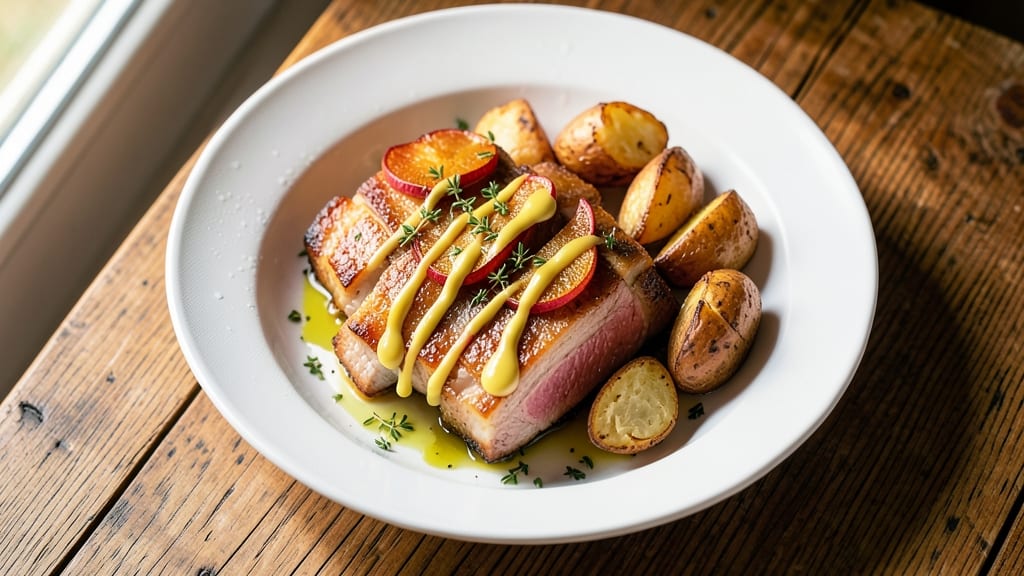
This pork belly slices recipe UK delivers restaurant-quality results with crispy bark and juicy hearts—all in one pan. After years of testing, I’ve perfected a method that transforms tough pork belly into melt-in-your-mouth slices, perfect for Sunday roasts or special dinners.
The secret? A high-heat sear followed by slow roasting, creating a golden crust while keeping the inside tender.
What makes this recipe stand out is its simplicity and adaptability. Whether you prefer a classic salt crust, a sweet apple cider glaze, or a tangy mustard reduction (a UK favourite), the technique remains the same.
The pork belly slices are rich, savoury, and packed with flavour—ideal for serving with roasted potatoes, pickled vegetables, or a crisp green salad. It’s the kind of dish that feels indulgent yet satisfies even the pickiest eaters.
The result is a plate of crispy-edged, succulent pork belly that’s impossible to resist. Each slice offers a perfect balance of textures—crunchy on the outside, tender and fatty on the inside—making it a showstopper for any meal.
The best part? It’s foolproof, so you can focus on enjoying the cooking process rather than stressing over timings.
Pair these slices with a drizzle of pan juices or a sharp apple cider reduction for extra depth. Trust me, once you try this method, you’ll never buy pre-sliced pork belly again. Let’s get cooking!
Ingredients for pork belly slices recipe uk
Restaurant-quality pork belly slices start with these 13 essential ingredients—crispy, juicy, and foolproof.
| Ingredient | Amount | Notes |
|---|---|---|
| Pork Belly 🥓 | 1 ½ lb | Skin-on, thick slices preferred |
| Diamond Crystal Kosher Salt 🧂 | ½ cup | Coarse for crispy crust |
| Fresh Apple Cider 🍎 | ¼ cup | For glaze option |
| Yellow Mustard 🍯 | 2 tbsp | For tangy reduction |
| Olive Oil 🫒 | 2 tbsp | Extra-virgin for searing |
| Russet Potatoes 🥔 | 2 medium | For serving (peeled, sliced) |
| Red Wine Vinegar 🍶 | 1 tbsp | For pickled vegetables |
| Honey 🍯 | 1 tbsp | For glaze sweetness |
| Garlic Cloves 🧄 | 4 cloves | Minced for pan juices |
| Fresh Thyme 🌿 | ¼ cup | Chopped for aroma |
| Black Peppercorns 🌶️ | 1 tsp | Freshly cracked |
| Green Apples 🍏 | 1 whole | For tart contrast |
| Russet Potatoes 🥔 | 2 pieces | Medium size, peeled |
The pork belly is the star—look for thick slices with a good layer of fat. Tesco Finest or Waitrose carry excellent cuts, but any butcher will trim it for you. Fresh thyme from the supermarket's herb section adds depth, but dried works in a pinch (use half the amount). For the salt crust, Diamond Crystal kosher salt is ideal—it's coarser and creates better texture than table salt. If you're making the apple cider glaze, grab a bottle of Muller's cider from the chilled section; it's the UK's classic choice.
No apple cider? Substitute with white wine vinegar and a touch of maple syrup. Mustard reduction missing? Dijon mustard plus a splash of red wine vinegar works perfectly. Swapping out honey? Agave nectar keeps it vegan-friendly. The potatoes can be roasted Yukon Golds if you prefer—just slice them thinner for quicker cooking. For the pickled vegetables, use whatever veggies you have (carrots, radishes, or even cucumber) and adjust the vinegar to taste. Fresh thyme is non-negotiable for aroma, but dried works if you're in a hurry.
Pork belly keeps 3-4 days in the fridge once cooked—store in an airtight container with its juices. The salt crust can be prepped a day ahead, saving you time on cooking day. For leftovers, reheat gently in a pan with a splash of water to restore moisture. These slices freeze beautifully for up to 3 months—portion them first for easy reheating. The pan juices are liquid gold; freeze them in ice cube trays to drizzle over future meals.
Why You'll Love This Recipe
- One-Pan Magic: I swear by this for lazy nights—just salt the pork belly, roast it with apple cider until caramelized, and call it done. No chopping, no fuss, just that glorious sticky glaze pooling underneath.
- Sweet-Savory Balance: That apple cider glaze cuts through the richness of the pork belly like a breath of fresh air—tangy, slightly sweet, with a mustard kick that makes every bite addictive. Honestly, the contrast is what sells me every time.
- Weeknight to Weekend: Slap these on toast for breakfast, toss them in a sandwich for lunch, or serve them as a showstopper at dinner. They reheat beautifully, so I make a big batch and use them for days—no sad leftovers here.
- Budget-Friendly Luxury: Pork belly feels fancy, but this recipe treats it like a workhorse. A few slices stretch across multiple meals, and the kosher salt and mustard cost pennies. It’s the kind of dish that makes you feel indulgent without breaking the bank.
Step-by-step instructions for crispy pork belly slices
Here's the method that delivers that coveted crackly bark with melt-in-your-mouth tenderness—no fancy equipment needed.
Cure the Pork Belly for Maximum Crisp
Pat the 1.5 lb pork belly completely dry with paper towels—this is non-negotiable for crispy skin. In a bowl, combine the 0.5 cup Diamond Crystal kosher salt with 1 tsp freshly cracked black peppercorns and 0.25 cup chopped fresh thyme. Rub this mixture all over the pork belly, pressing firmly so the salt adheres. Place the seasoned pork belly on a wire rack set over a baking sheet, skin-side up.
Refrigerate uncovered for 12-24 hours—this drying and curing process is what creates that legendary crackly crust. I know it's tempting to skip this step, but trust me, it's worth the wait. The salt will draw out moisture, and the pork will develop concentrated flavor. After curing, rinse the pork belly under cold water and pat it completely dry again before proceeding.
Render the Fat and Sear the Pork
Preheat your oven to 325°F. Heat a large oven-safe skillet over medium heat and add the 2 tbsp olive oil. Once the oil shimmers, add the pork belly skin-side down. Let it render undisturbed for 10-12 minutes until the fat starts to bubble and the skin turns golden brown. This rendered fat is liquid gold—it's what bastes the meat and creates that irresistible aroma.
Carefully flip the pork belly and cook for another 8-10 minutes on the second side. The internal temperature should reach 140°F at this point. Transfer the skillet to the preheated oven and continue cooking for 1 hour, basting occasionally with the rendered fat. The pork is done when it reaches 195-200°F internally—this is when the collagen breaks down into gelatin, creating that incredible tenderness.
Create the Glazing Sauce
While the pork belly rests, prepare the glaze by combining 2 tbsp yellow mustard, 1 tbsp red wine vinegar, 1 tbsp honey, and 0.25 cup fresh apple cider in a small saucepan. Bring to a simmer over medium heat and cook for 5-7 minutes until the mixture thickens slightly and reduces by about half. You want a glossy, syrupy consistency that will cling beautifully to the pork.
Peel and slice the 2 pieces medium russet potatoes into ¼-inch thick rounds and toss them with 2 tbsp olive oil, 2 minced garlic cloves, and a pinch of salt. Spread them on a baking sheet and roast at 400°F for 20-25 minutes until golden and crispy. These will make perfect bedding for your pork belly slices.
Slice and Glaze for Showstopping Presentation
Once the pork belly reaches 200°F internally, remove it from the oven and let it rest for 15-20 minutes before slicing. This resting period is crucial—it allows the juices to redistribute, ensuring each slice is succulent. Using a sharp knife, slice the pork belly into ¼-inch thick slices against the grain for maximum tenderness.
Arrange the sliced pork belly on a platter, drizzle generously with the prepared glaze, and garnish with thinly sliced green apple for a refreshing contrast. Serve immediately with the crispy roasted potato rounds. Each bite should deliver that perfect balance of crispy, crackly skin giving way to juicy, buttery pork—this is the magic of a properly prepared pork belly.
Assemble the Perfect Plate
To complete the dish, place 2-3 slices of pork belly on each plate alongside the crispy potato rounds. The apples add a bright, tart element that cuts through the richness of the pork. Garnish with additional chopped fresh thyme for an aromatic finish. This dish is best served immediately, while the pork is still steaming and the potatoes are crispy.
Here's the thing—this recipe delivers on both promises: that crispy bark you crave and juicy hearts that practically melt in your mouth. The secret lies in the curing process and the precise internal temperature. Don't rush it, and you'll be rewarded with a dish that's sure to impress anyone who tastes it.
Pro Tips For Making Pork Belly Slices Recipe Uk
- CRANK THE HEAT FIRST: Pork belly needs a screaming-hot pan to render fat fast and lock in flavor—don’t start medium or you’ll end up with greasy, uneven slices. After 2-3 minutes of searing, you’ll hear the fat sizzle like a proper fry-up, and that’s when you know it’s working.
- SALT THE BELLY 12 HOURS EARLY: I used to skip this and wondered why my slices tasted bland. Diamond Crystal salt needs time to work its magic—coat the belly thickly, let it sit uncovered in the fridge, then rinse just before cooking. Trust me, the texture and taste are worlds apart.
- DON’T SKIP THE CIDER REDUCTION: Fresh apple cider’s job isn’t just to glaze—it’s to caramelize into a sticky, tangy sauce. Simmer it down to half its volume before tossing in the mustard, or you’ll end up with a watery mess instead of that glossy, sweet-sour finish.
- REST THOSE SLICES UNDER FOIL: Cutting pork belly too soon sends all the rendered fat pooling on your plate. Tent it with foil for 5 minutes after roasting—yes, even if you’re impatient—so every slice stays juicy and holds its shape when you serve.
Wine and beer pairings for this dish
Classic British Ale
A robust British bitter like Fuller’s ESB or Timothy Taylor’s Landlord complements the pork belly’s richness beautifully. The malty sweetness and subtle hop bitterness cut through the fat, cleansing your palate between bites.
I always reach for a bottle of ESB when serving this dish—its balance of caramel and toasted notes mirrors the pork’s caramelized crust. Serve slightly chilled to enhance the beer’s crispness against the fatty pork. 🍺
Crisp English Cider
For a refreshing contrast, try a dry English cider like Thatchers 100% Juice or Westons Cider. The tart acidity and slight tannins from the cider’s fermentation act like a palate refresher, balancing the pork’s richness.
I’ve found that a well-chilled glass (around 45°F) works best—it highlights the cider’s crispness while keeping the pork’s warmth intact. The slight sweetness from the apples in the pork pairs surprisingly well with the cider’s dry finish. 🍎
Rich Red Wine Pairings
A medium-bodied English red like Chapoutier Côtes du Rhône or Hendrik Kretzschmar Pinot Noir offers depth without overpowering the pork. The Pinot Noir’s red fruit notes and subtle earthiness echo the pork’s savory-sweet profile, while the Rhône’s spice and dark berries add complexity.
I prefer serving these wines at 60-62°F to let their aromas shine alongside the pork’s caramelized crust. 🍷
Sweet Sparkling Wine
If you’re serving this dish at a celebratory meal, a semi-sweet sparkling wine like Nyetimber Blanc de Blancs or Chapelle Ste. Anne Brut Rosé adds a luxurious touch. The effervescence and slight sweetness create a delightful contrast to the pork’s richness, while the wine’s acidity keeps your palate fresh.
I’ve found that a well-chilled glass (around 45°F) enhances the wine’s brightness and makes it the perfect accompaniment to the crispy pork slices. ✨
Nutrition facts
Frequently asked questions
Can I use pork belly with the skin left on? The skin is essential for that crispy bark you crave. Simply leave it on throughout the curing and cooking process. The salt crust will create the perfect texture—just
How do I know when the pork belly is fully cooked?
Use a meat thermometer for precision—pork belly is done when it reaches 195-200°F internally. The fat should be opaque and the meat should pull away from the bone easily. If you don’t have a thermometer, check by inserting a knife into the thickest part; it should slide in smoothly with no resistance.
What’s the best way to reheat leftover pork belly slices?
To restore crispiness, reheat slices in a 375°F oven for 5-8 minutes with a splash of water or apple cider in the pan. For extra crunch, place them on a baking sheet and broil for 2-3 minutes at the end. Avoid microwaving—it’ll turn the slices soggy and ruin that perfect texture!
Can I make this recipe without apple cider?
Swap apple cider for white wine vinegar + 1 tsp maple syrup or red wine vinegar + 1 tsp honey for the glaze. The key is balancing acidity and sweetness—just adjust to taste. For the mustard reduction, use Dijon mustard + a splash of red wine vinegar instead of yellow mustard if preferred.
Why did my pork belly turn out greasy instead of crispy?
This usually happens from one of three issues: not drying the pork thoroughly before curing, skipping the 12-hour rest in the fridge, or not basting with rendered fat during cooking. Next time, pat it extra dry, let it cure uncovered, and baste frequently with the fat that renders out—this is what creates that golden crust!