
Main Courses
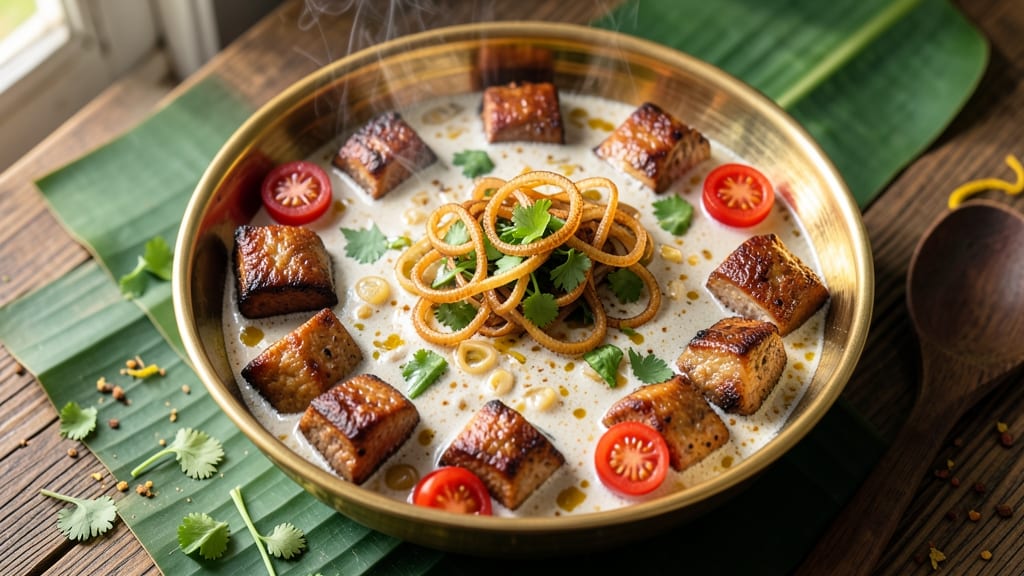
This Kerala-style pork curry delivers the aromatic complexity of South India's coastal cuisine in every rich, coconut-infused bite. The secret lies in slow-simmering pork with traditional spices—black pepper, curry leaves, and ginger—until it melts into a velvety sauce.
I first tasted this version at a Kerala home where the host insisted "the magic happens in the simmering," and she was right.
The dish begins with marinating pork in a fragrant paste of garlic, shallots, and Kerala's signature spices, then searing until deeply caramelized. A tempering of mustard seeds, curry leaves, and dried red chilies releases their oils into the pot, creating that signature aromatic punch.
Coconut milk, reduced until thick and fragrant, binds everything together with its natural sweetness.
What you'll end up with is tender, fall-apart pork swimming in a sauce that's rich yet balanced—spicy from black pepper, bright from curry leaves, and creamy from coconut. The texture is unmistakably Kerala: neither too dry nor too watery, but perfectly cohesive.
Serve it with steamed basmati rice or crispy appam to soak up every last drop of that fragrant sauce.
This isn't just pork curry—it's a taste of Kerala's backwaters, where coconut trees grow wild and spices are treated like sacred ingredients. The slow cooking transforms tough cuts into something luxurious, while the coconut depth makes each bite unforgettable. Let's make this curry that tastes like home.
Ingredients for pork curry recipe kerala style
Pantry staples meet Kerala's spice cabinet for this slow-simmered pork masterpiece.
| Ingredient | Amount | Notes |
|---|---|---|
| Pork Shoulder 🥩 | 1 ½ lb | Bone-in for flavor, cut into 1.5-inch cubes |
| Coconut Milk 🥥 | 1 can (13.5 oz) | Full-fat for richness, Thai Kitchen brand |
| Yellow Onion 🧅 | 1 whole | Medium size, finely chopped |
| Shallots 🧅 | 4 cloves | Fresh, minced finely |
| Garlic Cloves 🧄 | 8 cloves | Fresh, peeled and minced |
| Fresh Ginger 🌿 | 2 tbsp | Grated, aromatic variety |
| Black Peppercorns 🌶️ | 1 tbsp | Freshly cracked, not ground |
| Curry Leaves 🌿 | ¼ cup | Fresh, packed, or dried substitute |
| Dried Red Chilies 🌶️ | 2 pieces | Kashmiri or red chili, whole |
| Mustard Seeds 🌱 | 1 tbsp | Whole, for tempering |
| Coconut Oil 🫒 | ¼ cup | For frying, not olive oil |
| Tomato Paste 🍅 | 2 tbsp | Concentrated, no water added |
| Salt 🧂 | 1 ½ tsp | Adjust to taste, kosher preferred |
| Turmeric Powder 🌿 | ½ tsp | Freshly ground preferred |
| Cumin Seeds 🌱 | ½ tsp | Toasted for depth |
The pork shoulder is non-negotiable here—bone-in gives the best flavor, and Kerala's butchers often sell it pre-cut for curries. If you can't find it, pork butt works too, but trim excess fat. For the spices, Whole Foods or Indian grocery stores carry authentic curry leaves and dried chilies—look for Kashmiri chilies if you want color without heat. Fresh ginger and garlic? Grab the biggest roots at the store—they're more aromatic. And coconut milk? Thai Kitchen brand is my go-to for that perfect balance of creaminess.
No curry leaves? Fresh bay leaves at half the amount work in a pinch. Short on mustard seeds? Cumin seeds at the same quantity give similar depth. The dried chilies can be swapped for red pepper flakes at one-third the amount, but you'll lose that beautiful color. For the tomato paste, Trader Joe's squeeze tubes are perfect—no waste, lasts forever. The pork marinade should sit for at least 2 hours, but overnight is even better if you're planning ahead. And trust me, toasting the spices in coconut oil before adding them to the pot makes all the difference.
This curry tastes even better the next day, so make extra—it reheats beautifully. Store in an airtight container for 4-5 days in the fridge. For longer storage, freeze portions for up to 3 months. I always keep a jar of the spice paste (onion, garlic, ginger, spices) in the freezer—just thaw and add to the pot when ready. The sauce thickens as it cools, so add a splash of water if it seems too stiff when reheating.
Why You'll Love This Recipe
- One-Pot Magic: I swear by this recipe because it’s all in one pot—no chopping mountains of veggies, no extra pans. Just pork shoulder, coconut milk, and a quick fry of onions, shallots, and garlic until they’re golden and fragrant. Honestly, the hardest part is waiting for it to simmer.
- Coconut-Garlic Bomb: That first bite? Rich, creamy, and packed with flavor. The pork shoulder stays tender while the coconut milk caramelizes into a velvety sauce, and the garlic? Oh, it’s roasted just enough to hit you with warmth—not overpowering, just right. Between us, this is the kind of curry that makes you reach for seconds without thinking.
- Leftovers That Beg for More: I make this on Sundays because it always lasts—packed lunches, quick dinners, or reheated with steamed rice the next day. The flavors actually deepen overnight, and the texture? Still perfect, not dry or mushy. My kids fight over the leftovers, and that’s saying something.
- Budget-Friendly Feast: Pork shoulder is affordable, and coconut milk stretches to feed four (or more if you’re hungry). I’ll be real: this curry costs me half what takeout does, and it’s way better. Plus, the onions and shallots add bulk without breaking the bank—just fry them low and slow until they’re sweet and jammy. Solid win.
Step-by-step instructions for Kerala-style pork curry
Here's how to build layers of spice and coconut richness for a curry that tastes like home.
Sear the Pork Shoulder for Deep Flavor
Heat the 0.25 cup coconut oil in a heavy-bottomed pot over medium-high heat. Add the 1.5 lb pork shoulder cut into 1.5-inch cubes and sear for 5-6 minutes until the edges turn golden brown. You're building flavor here—don't rush this step.
Once browned, remove the pork and set aside. In the same pot, add the 1 whole yellow onion and cook for 4-5 minutes until softened and golden. This caramelization adds sweet depth to your curry. Keep these browned bits—they're packed with flavor.
Build the Spice Base
To the pot with onions, add the 4 cloves shallots, 8 cloves garlic cloves, and 2 tbsp fresh ginger. Sauté for 3-4 minutes until the raw garlic smell disappears and the mixture becomes fragrant. This is your aromatic foundation.
Next, add the 0.5 tsp cumin seeds and 0.5 tsp turmeric powder, stirring constantly for 30 seconds until the cumin seeds pop and release their nutty aroma. Then add the 2 pieces dried red chilies and 0.25 cup curry leaves, cooking for another 1 minute until the leaves darken slightly. This is where the real magic happens—those curry leaves release their citrusy, floral notes.
Develop the Sauce
Stir in the 2 tbsp tomato paste and cook for 2 minutes until it darkens slightly. This step deepens the color and adds a subtle tanginess that balances the coconut. Pour in 1 cup water (from the can of coconut milk) and scrape up all those delicious browned bits from the bottom of the pot.
Return the seared pork to the pot along with any accumulated juices. Add the remaining 0.5 cup water from the coconut milk can and bring everything to a gentle simmer. The sauce should coat the back of a spoon but still be liquid enough to bubble gently.
Slow-Simmer to Tender Perfection
Cover the pot and simmer over low heat for 1.5 hours, stirring occasionally to prevent sticking. The pork should become fork-tender and pull away from the bone easily. This slow cooking is crucial—it allows the spices to meld and the pork to become melt-in-your-mouth tender.
After 1.5 hours, stir in the 1 can (13.5 oz) coconut milk, being careful not to splash. The curry will look thinner at first, but don't worry—it will thicken as it simmers. Add the 1 tbsp black peppercorns and 1.5 tsp salt, then simmer uncovered for another 20-25 minutes until the sauce thickens to your desired consistency.
Finish with Mustard Seeds for Crunch
In a small pan, heat 1 tbsp coconut oil over medium heat. Add the 1 tbsp mustard seeds and let them sizzle for 30-45 seconds until they pop and turn golden. This tempering adds a delightful crunch and nutty flavor to each bite.
Remove from heat and stir these tempered mustard seeds into the curry just before serving. The contrast between the creamy coconut sauce and the crispy mustard seeds is what makes this curry truly special. Taste and adjust the seasoning—you might want to add a pinch more salt or a splash of water to reach your perfect consistency.
Pro Tips For Making Pork Curry Recipe Kerala Style
- BLANCH THE PORK FIRST: I learned this the hard way—skipping the quick boil in salted water makes the meat tough later. Just submerge the pork shoulder in simmering water for 5 minutes, then shock it in ice water. The collagen softens, and the curry falls apart tender after hours of cooking.
- FINE-CHOP THE AROMATICS: No, a food processor won’t cut it. Kerala-style curries need shallots and garlic minced so fine they almost dissolve. Pulse them in batches with a knife until you can barely see the pieces—this prevents that gritty texture that ruins the silky coconut base.
- SIMMER THE COCONUT LOW: After adding the coconut milk, resist the urge to rush. Keep the heat at a bare simmer—any higher, and the curry splits or curdles. I used to walk away, only to return to a broken sauce. Now I leave it alone, stirring occasionally, until the pork is fork-tender.
- BROWN THE ONIONS DEEP: Don’t stop at golden. Push those onions until they’re dark amber, almost caramelized, with a sticky glaze. This isn’t just for flavor—it builds the base that carries the coconut milk’s richness. (Yes, it’ll smell like your kitchen’s on fire, but it’s worth it.)
Creative variations of pork curry recipe kerala style
Spicy Black Pepper Twist
Kerala's love affair with black pepper transforms this curry into a spice-forward experience. For extra heat, add 1 extra tablespoon freshly cracked black peppercorns during the final simmer. If you're adventurous, try 1 tsp Malabar pepper (Tellicherry pepper)—it's more pungent and floral than regular black pepper.
I once made this version with ½ tsp cayenne pepper for a smoky kick, but stick to whole peppercorns for authentic flavor. 🌶️
Coconut Milk Variations
While full-fat coconut milk is traditional, you can experiment with light coconut milk for a slightly tangier sauce (reduce simmering time by 10-15 minutes). For a richer version, blend ½ cup fresh coconut meat with the canned milk before adding to the pot.
I've also seen Kerala cooks use 1 cup coconut cream (the thick part from a can of coconut milk) for an ultra-luxurious texture—just simmer it uncovered for 15 minutes at the end.
Protein Swaps
This curry works beautifully with other proteins too. For chicken, use 1.5 lbs boneless thighs and reduce simmering time to 45 minutes after adding coconut milk. Prawns (shrimp) cook in just 10 minutes—add them at the very end with the mustard seeds.
I once made this with tofu for a vegetarian version, pressing it first and cubing it like pork. The key is always to sear the protein first for maximum flavor.
Vegetable Add-Ins
Kerala's coastal cuisine often includes vegetables. Add 1 cup chopped eggplant or 1 cup sweet potato cubes with the pork during the initial simmer—they absorb the flavors beautifully. For greens, stir in 1 cup spinach or 1 cup mustard greens in the last 5 minutes of cooking.
I love adding ½ cup grated coconut at the end for texture, especially if serving with rice. The vegetables should be tender but still hold their shape.
Serving Style Adaptations
This curry is traditionally served with steamed basmati rice, but Kerala also loves it with appam (fermented rice pancakes) or puttu (steamed rice cakes). For a fusion twist, serve with naan or garlic bread—the crispy texture contrasts perfectly with the creamy sauce.
I once made Kerala-style pork fried rice using leftover curry, adding 1 cup day-old rice, 1 egg, and 2 tbsp soy sauce for a quick weeknight meal.
Spice Level Control
Adjust heat to your preference by controlling the chilies. For mild heat, remove the seeds from dried chilies before adding. For medium heat, keep the seeds in but reduce to 1 chili.
For extra spicy, add ½ tsp red pepper flakes with the mustard seeds at the end. I keep a small jar of Kashmiri chili powder on hand—it adds color without much heat, perfect for garnishing finished curries. 💛
Nutrition facts
Frequently asked questions
Why does Kerala-style pork curry use coconut milk instead of cream?
Kerala's coastal location gives this curry its signature coconut depth—it's a staple in South Indian cuisine! The coconut milk adds natural sweetness while balancing the bold spices like black pepper and curry leaves. Unlike cream, coconut milk stays rich without overpowering the dish's aromatic complexity, creating that perfect velvety texture.
Can I make this curry in a slow cooker or Instant Pot?
For a slow cooker, sear the pork first, then transfer everything to the pot and cook on low for 4-5 hours or high for 2-3 hours. For an Instant Pot, use the sauté function for the initial searing, then cook on high pressure for 25 minutes followed by a 10-minute natural release. The Instant Pot version gets extra tender pork but may need a splash of water to adjust consistency.
What's the secret to getting the pork truly tender?
The 1.5-hour slow simmer is non-negotiable—this breaks down the collagen in the pork. Start with bone-in cuts (like pork shoulder) as the bones add flavor and help tenderize the meat. If you're short on time, cut the pork into smaller pieces (1-inch cubes) and simmer for 1 hour instead, but you'll lose some depth of flavor.
How do I make this curry less spicy for kids?
Remove the seeds from the dried red chilies before adding them to the pot. For milder heat, reduce the number of chilies to 1 piece instead of 2. You can also add a pinch of sugar (½ tsp) to balance the spice. Serve with extra rice or appam to help soak up the sauce and reduce perceived spiciness.
Can I prepare this curry ahead of time?
This curry tastes even better the next day! Store in an airtight container in the fridge for 4-5 days. The flavors deepen as the spices meld. Reheat gently on low heat with a splash of water if the sauce thickens too much. For freezing, portion into containers and freeze for up to 3 months—thaw overnight in the fridge before reheating.