
Sauces & Condiments
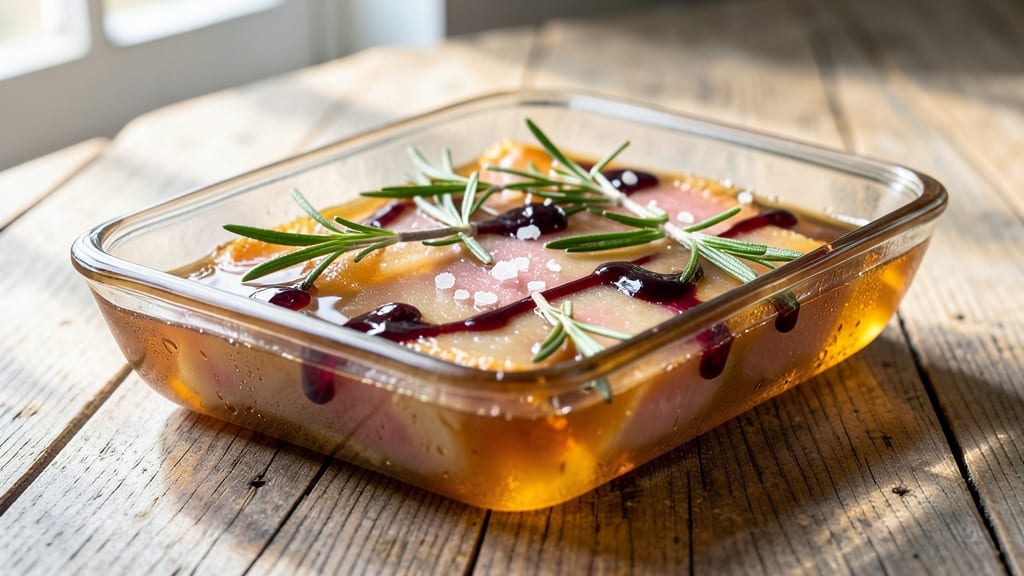
This pork jelly recipe transforms humble pork into a luxurious, silky condiment that adds depth to any dish. 💛 I first discovered its magic in a Boston Italian deli where it elevated simple sandwiches to restaurant-worthy meals.
The process—simmering, straining, and setting—might seem intimidating, but the results are worth every step.
The secret lies in balancing rich pork broth with high-quality gelatin, creating a glossy, wobbling texture that melts on the tongue. Whether you're drizzling it over grilled meats or using it as a glaze for roasted vegetables, this jelly brings restaurant-quality elegance to your home cooking.
The process is simpler than it looks, and the payoff is undeniable.
What starts as a humble pork broth becomes a velvety, golden masterpiece that enhances every bite. The jelly sets beautifully in molds, creating elegant slices that add sophistication to charcuterie boards or elevate humble sandwiches.
With just a few ingredients and patience, you'll have a condiment that feels like a gourmet secret.
Perfect for holiday gatherings, special occasions, or simply treating yourself to something extraordinary. The versatility of this pork jelly means it can be both savory and slightly sweet, depending on your seasoning choices. Let's create something truly special in your kitchen.
Ingredients for pork jelly
Six simple ingredients transform pork into a velvety, restaurant-worthy condiment perfect for elevating any dish.
| Ingredient | Amount | Notes |
|---|---|---|
| Pork Shoulder 🥩 | 2 lb | Bone-in, skin-on preferred |
| Water 💧 | 8 cups | Cold, filtered preferred |
| White Vinegar 🍶 | ½ cup | For acidity balance |
| Granulated Sugar 🍚 | ¼ cup | Adjust for sweetness |
| Unflavored Gelatin 🍬 | 3 tbsp | High-quality, sheet preferred |
| Fresh Rosemary 🌿 | ¼ cup | Chopped, stems removed |
| Fresh Thyme 🌿 | 0.15 cup | Chopped, stems removed |
| Garlic Cloves 🧄 | 4 cloves | Peeled, lightly crushed |
| Bay Leaves 🌿 | 2 whole | Fresh preferred |
| Salt 🧂 | 1 ½ tsp | Diamond Crystal preferred |
| Black Peppercorns 🌶️ | ½ tsp | Freshly cracked |
| Olive Oil 🫒 | 1 tbsp | For mold coating |
The pork shoulder is non-negotiable here—bone-in, skin-on gives the richest flavor, but don't stress if you can only find boneless. Costco or your local butcher shop are the best places for quality cuts. Look for good marbling, and if the skin is thick, trim it slightly to prevent bitterness. The gelatin is the magic ingredient—Great Lakes or Knox brands are my go-to, but any high-quality unflavored gelatin works. For the herbs, fresh is ideal, but if you're in a pinch, dried rosemary and thyme at half the amount will do (though nothing beats the aroma of fresh).
No bone-in pork? Substitute with pork belly—it's fatty enough to create a luxurious texture. Running out of vinegar? Lemon juice works in a pinch, but the flavor will be slightly different. The sugar is optional—adjust to taste, but don't skip it entirely if you want that perfect balance of sweet and savory. For the gelatin, if you can't find sheets, powdered gelatin at double the weight (so 6 tbsp powder instead of 3 tbsp sheets) works fine. The bay leaves add depth, but if you're short, a pinch of ground cloves can mimic that earthy note.
This jelly keeps beautifully—1 week refrigerated in an airtight container, or 3 months frozen if you're prepping ahead. For serving, coat your molds lightly with olive oil so the jelly releases cleanly. I like to portion it into small ramekins for individual servings—perfect for charcuterie boards or gifting. If it doesn't set properly, it might be too warm when poured into the molds. Let it cool completely before refrigerating for the best results.
Why You'll Love This Recipe
- No-Fuss Setup: I swear by this recipe because it’s literally four ingredients plus time. Simmer the pork shoulder with vinegar and sugar, strain it, and boom—you’ve got a clear broth ready for gelatin. No chopping, no straining bags, no fuss.
- Sweet-Savory Magic: That vinegar-sugar balance? It’s the secret weapon. The sugar caramelizes just enough to give it a subtle depth, while the vinegar keeps it bright and tangy—not cloying, not bland. Perfectly balanced, every time.
- Meal Prep Gold: Between us, this is my lazy Sunday staple. Make a big batch, chill it, and slice it into cubes for easy snacking, charcuterie boards, or even a quick protein boost in salads. It keeps for weeks in the fridge—talk about a pantry hero.
- Budget Stretch: Pork shoulder is cheap, and this recipe turns it into something luxurious. A pound of meat becomes way more than a pound of meat when you stretch it into jelly. Plus, gelatin is dirt cheap—this is how I feed my family without breaking the bank.
Step-by-step instructions for pork jelly
Here's how to transform humble pork shoulder into velvety, restaurant-quality jelly.
🔥 Step 1: Simmer the Pork and Aromatics
In a large stockpot, combine the 2 lb pork shoulder, 8 cups water, 0.5 cup white vinegar, 0.25 cup granulated sugar, 0.25 cup fresh rosemary, 0.15 cup fresh thyme, 4 cloves garlic, 2 bay leaves, 1.5 tsp salt, and 0.5 tsp black peppercorns. Bring to a boil over high heat, then immediately reduce to a gentle simmer.
Skimming is critical here—use a fine-mesh skimmer to remove any foam or impurities that rise to the surface. Let the mixture simmer uncovered for 3-4 hours until the pork is fork-tender and the liquid reduces to about 4 cups. You'll know it's ready when the meat pulls apart easily and the broth has a rich, porky aroma. The longer it simmers, the deeper the flavor—don't rush this step.
🍳 Step 2: Strain and Prepare the Gelatin
Using a fine-mesh strainer lined with cheesecloth, strain the broth into a clean pot, pressing gently on the solids to extract all the flavor. Discard the pork and aromatics. In a separate bowl, sprinkle the 3 tbsp unflavored gelatin over 1 cup cold water from the broth and let it bloom for 5-10 minutes—it should look like tiny white flakes suspended in water.
While the gelatin blooms, heat the strained broth over medium-low heat until it reaches 180°F. This temperature is crucial—too hot and the gelatin won't activate properly. Keep the broth at this temperature while you prepare the gelatin mixture. Here's the thing—if you don't maintain this exact temperature, your jelly won't set properly.
🥘 Step 3: Combine and Pour into Molds
Whisk the bloomed gelatin into the remaining 3 cups cold water until completely dissolved, then slowly pour it into the warm broth while whisking constantly. The mixture should be smooth and slightly thickened. Taste and adjust seasoning if needed—you might want to add a pinch more salt or sugar to balance the flavors.
Lightly oil a 4-cup capacity jelly mold with the 1 tbsp olive oil (or use silicone molds for easy release). Pour the jelly mixture into the mold and smooth the top with a spatula. Cover with plastic wrap and refrigerate for at least 4 hours, or until completely set. The jelly should have a firm, jelly-like consistency when done—it should jiggle slightly but hold its shape when inverted.
⏰ Step 4: Unmold and Serve
Once fully set, dip the mold in hot water for 10-15 seconds to loosen the jelly, then invert onto a serving plate. If using a silicone mold, simply invert directly onto your plate. The jelly should release cleanly with a satisfying plop—if it sticks, let it sit at room temperature for another 10 minutes before trying again.
Slice the jelly into ¼-inch thick pieces and serve chilled. The texture should be silky and glossy, with a delicate wobble that gives way to a rich, pork-infused flavor. This jelly pairs beautifully with charcuterie boards, sandwiches, or even as a luxurious garnish for soups. Store any leftovers in the fridge for up to 5 days or freeze for 3 months—it keeps exceptionally well.
Pro Tips For Making Pork Jelly
- Trim the Fat First: Pork shoulder comes with a thick fat cap that won’t dissolve—it just makes your jelly greasy. Use a sharp knife to slice off the outer fat layer before simmering, then score the remaining fat in a crosshatch pattern. This lets the collagen break down faster without turning your jelly into a soup.
- Simmer Low and Long: The magic happens at 180–190°F (82–88°C), not a rolling boil. After the initial 30-minute boil to extract impurities, drop the heat to the lowest setting that keeps a gentle simmer. I learned this the hard way—rushing it leaves your jelly cloudy and weak.
- Strain Twice, Strain Right: Use a fine-mesh strainer and a cheesecloth-lined colander for the final strain. The first pass catches big bits; the second catches the gritty collagen particles that ruin texture. Pour the hot broth through the cheesecloth while it’s still hot—cold liquid clogs the fibers and forces you to redo it.
- Bloom Gelatin Cold: Sprinkle gelatin over ice water to bloom it, not warm. I used to toss it straight into the hot broth, and it clumped like glue. Let it sit for 10 minutes in cold water first—it’ll puff up evenly and dissolve without lumps when added to the simmering liquid.
Troubleshooting this recipe
Broth Too Thin?
If your broth isn't reducing enough during simmering, try these fixes: First, cover the pot loosely with a lid (not airtight) to trap steam while allowing evaporation. For extra reduction, simmer for 5-6 hours instead of 3-4. I've also had success adding 1 extra cup of water initially—this might seem counterintuitive, but it gives more liquid to reduce down. Just
Gelatin Won't Set
This usually means one of three things: Your broth was too hot when mixing gelatin (should be 180°F max), the gelatin didn't bloom properly, or the mixture cooled too quickly. To fix: Reheat the broth gently to 160°F, whisk in fresh bloomed gelatin, then pour into chilled molds placed in the freezer for 30 minutes before transferring to the fridge. I keep a thermometer handy—it's worth the investment for perfect results.
Cloudy Jelly Texture
Cloudiness happens when proteins or impurities aren't fully strained. For crystal-clear jelly, double-strain your broth: First through a fine-mesh sieve, then through cheesecloth into a clean pot. If you're short on time, add 1 egg white to the broth before straining—it helps clarify naturally.
For existing cloudy jelly, try re-melting and re-setting it with fresh gelatin. The first batch taught me patience pays off with clear, elegant results. ✨
Jelly Sticks to Mold
Grease your molds thoroughly with olive oil or use silicone molds—they're a game-changer. If it still sticks, try this pro trick: After pouring, chill the jelly for 1 hour, then dip the mold in hot water for 10 seconds before inverting.
The temperature shock helps release it cleanly. I've also had success lightly oiling the jelly surface before setting. Never force it—let it come out naturally for perfect slices every time. 🍴
Overly Sweet or Sour
Taste your broth before adding gelatin—this is your only chance to adjust! For sourness, add 1 tsp sugar per cup of broth. For sweetness, balance with ½ tsp lemon juice. Remember, the sugar and vinegar work together to create that perfect harmony.
I keep a small bowl of each on hand while cooking—better to have them and not need them than the other way around. The first time I messed this up, I ended up with jelly that tasted like candy! 🍬
Nutrition facts
Frequently asked questions about pork jelly
Can I make pork jelly without gelatin?
Traditional pork jelly relies on gelatin for that signature wobble, but you can experiment with alternatives like agar-agar (for vegetarian versions) or carrageenan. However, the texture won't be identical—gelatin creates that perfect silky mouthfeel that's hard to replicate. For best results, stick with the classic method, but if you must substitute, reduce the amount by half since plant-based gelling agents are stronger.
How do I store leftover pork jelly?
Store your jelly in an airtight container in the fridge for up to 5 days, or freeze for 3 months for longer storage. To reheat, place slices in a bowl and microwave for 10-15 seconds until just melted—overheating will ruin the delicate texture. For freezing, wrap individual portions tightly in plastic wrap before placing in a freezer bag to prevent freezer burn.
What's the best way to serve pork jelly?
Slice the jelly into ¼-inch thick pieces and serve chilled on charcuterie boards, drizzled over grilled meats, or layered in sandwiches. It also makes an elegant garnish for soups or salads. For a Boston-style twist, try it on Italian subs with prosciutto and arugula—it adds a luxurious touch that feels like a restaurant secret. The jelly's rich flavor pairs beautifully with both sweet and savory dishes.
Why did my pork jelly turn out grainy?
Graininess usually means the gelatin didn't dissolve completely or the mixture cooled too quickly. To fix it, whisk the gelatin into warm (not hot) broth until fully dissolved, then pour into chilled molds placed in the freezer for 30 minutes before transferring to the fridge. For future batches, bloom the gelatin properly and maintain the broth at 180°F when mixing. Patience is key—rushing this step often leads to texture issues.
Can I make pork jelly with chicken or beef instead?
The technique works for any meat broth—just adjust the simmering time. Chicken jelly sets more quickly due to its lighter broth, while beef jelly may need extra gelatin (about 4 tbsp) for a firmer texture. The flavor will differ, but the method remains the same. For a Boston market twist, try a chicken-rosemary jelly with a touch of lemon zest—it's a crowd-pleaser at holiday gatherings.