
Sauces & Condiments
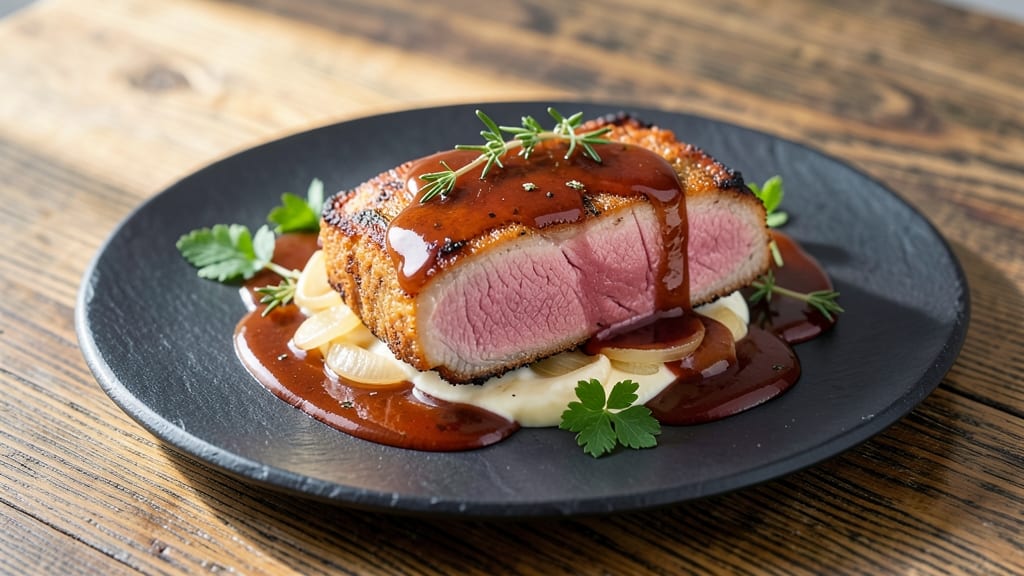
This pork jus recipe transforms simple pan drippings into a restaurant-quality sauce that elevates any pork dish. 🔥 After years of perfecting reductions in professional kitchens, I've simplified the technique to work perfectly at home—no special equipment needed.
The secret lies in proper deglazing and slow reduction, which extracts maximum flavor from every drop.
What makes this sauce exceptional is the balance of rich pork fat, aromatic shallots, and a touch of wine that adds depth without overpowering. I use a bouquet garni for subtle herbaceous notes, though you can customize it to your preference.
The key is patience during reduction—rushing this step results in a thin, flavorless sauce rather than the velvety, umami-packed liquid you crave.
By the time you're done, you'll have a deeply flavorful sauce that clings beautifully to roasted pork, seared chops, or even as a dipping sauce for crusty bread. The texture should be glossy yet thick enough to coat the back of a spoon, with concentrated pork flavor in every spoonful.
This is the kind of sauce that makes home-cooked pork taste like it came from a Michelin-starred restaurant.
Store any leftovers in the refrigerator for up to 5 days or freeze for 3 months—just reheat gently on the stove before using. The flavors actually improve overnight as they meld together. Let's create this sauce that will transform your pork dishes forever.
Ingredients for pork jus
Ten ingredients transform humble pan drippings into Michelin-worthy pork jus.
| Ingredient | Amount | Notes |
|---|---|---|
| Pork Pan Drippings 🥓 | 2 cups | From roasted pork, fat included |
| Shallots 🧅 | ½ cup | Finely minced, fresh preferred |
| Dry Red Wine 🍷 | ½ cup | Bold variety like Cabernet Sauvignon |
| Beef Stock 🍲 | 1 cup | High-quality, reduced if possible |
| Fresh Thyme 🌿 | ¼ cup | Stems removed, loosely packed |
| Fresh Parsley 🌿 | ¼ cup | Leaves only, finely chopped |
| Fresh Bay Leaves 🌿 | 2 whole | Lightly crushed for flavor |
| Black Peppercorns 🌶️ | 10 whole | Freshly cracked for intensity |
| Dried Porcini Mushrooms 🍄 | 1 tbsp | Crumbled, for deep umami |
| Olive Oil 🫒 | 1 tbsp | Extra-virgin for richness |
The pork drippings are non-negotiable here—this is what carries the rich, savory depth. Grab any leftover fat from roasted pork, pork chops, or even pork belly (the more marbled, the better). Whole Foods or Costco often have pre-roasted pork bones that render incredible fat if you're starting from scratch. For the shallots, French's brand is my go-to for consistent quality, but any fresh shallots work—just make sure they're firm and free of sprouts. The wine should be dry and bold; Caymus Vineyards or Apothic Red are reliable choices, but whatever's open in your cabinet works too.
No red wine? Dry sherry or even beef stock with a splash of balsamic can stand in, though the flavor profile shifts slightly. Fresh herbs are ideal, but dried thyme at one-third the amount works in a pinch—just crush the stems first. The porcini mushrooms add that unmistakable umami punch; if you can't find them, dried shiitake mushrooms at double the amount are a decent substitute. For the beef stock, Kitchen Basics brand is my top pick for its deep flavor, but any good-quality stock will do. The key is patience during reduction—don't rush it, or you'll end up with a thin, flavorless sauce instead of the velvety, concentrated masterpiece you're aiming for.
This sauce keeps beautifully in the fridge for up to 5 days, with flavors actually deepening overnight. For longer storage, freeze it in ice cube trays—just thaw and reheat gently on the stove before using. The texture should be glossy and coat the back of a spoon; if it's too thin, reduce it further over low heat. A splash of water or stock can be added back if it gets too thick. Store any leftover pork drippings in the freezer for up to 3 months—they'll be perfect for your next batch of jus.
Why You'll Love This Recipe
- Uses What’s Already There: Honestly, this starts with nothing but scraps—those pork drippings you’d normally toss. Five minutes of deglazing a pan with red wine and shallots turns trash into treasure. No extra shopping, no wasted ingredients, just pure efficiency.
- Rich Without Effort: That beef stock and thyme? They work magic. The wine cuts through the richness while the stock deepens the flavor—no fancy reductions, just simmering until it’s unexpectedly luxurious. The kind of depth you’d pay extra for at a restaurant.
- Leftovers That Beg for More: Make a big batch—it’s that good. The next day, drizzle it over roasted veggies, toss it into eggs, or even use it as a marinade. It’s the ultimate pantry hero, turning simple meals into something special without extra work.
- Weeknight Secret Weapon: Between us, this is my go-to when I’m too tired to think. Toss in the drippings, let it bubble while I chop veggies, and boom—flavor in under 20 minutes. No stress, no fuss, just ridiculously good results. (Yes, even on a Tuesday night.)
Step-by-step instructions for pork jus with deep umami flavor
Transform those precious pan drippings into luxurious pork jus—rich, velvety, and packed with umami.
🍳 Step 1: Sauté Shallots Until Translucent and Sweet
Heat the 1 tablespoon olive oil in a heavy-bottomed saucepan over medium-low heat. Add the 0.5 cup finely minced shallots and cook them gently, stirring occasionally, for 8-10 minutes. You're looking for shallots that become soft, translucent, and just starting to turn golden at the edges.
This slow cooking caramelizes the shallots without burning them, which builds a sweet foundation for your jus. If they start to brown too quickly, reduce the heat to medium-low—you want flavor, not color. Here's the thing: rushing this step will make your jus taste bitter, so patience pays off.
🍳 Step 2: Add Porcini and Spices for Umami Depth
Stir in the 1 tablespoon crumbled dried porcini mushrooms and cook for 1 minute to toast them slightly. Add the 10 whole cracked black peppercorns, 2 whole lightly crushed bay leaves, and 0.25 cup loosely packed fresh thyme. Cook everything together for 2 minutes while stirring occasionally.
The porcini mushrooms release their earthy umami into the oil, while the peppercorns and bay leaves infuse subtle warmth. This aromatic base is what transforms ordinary jus into something extraordinary. Don't skip this step—these ingredients are the secret to that restaurant-quality depth.
🍳 Step 3: Deglaze with Wine and Reduce
Pour in the 0.5 cup dry red wine and increase heat to medium-high. Let it bubble vigorously for 3-4 minutes, scraping up all the browned bits from the bottom of the pan with a wooden spoon. These bits are pure flavor—don't miss them.
Once the wine has reduced by about half and its alcohol smell has cooked off, add the 1 cup beef stock. Bring to a gentle simmer and let it cook uncovered for 10-12 minutes until reduced by about one-third. You want a syrupy consistency that coats the back of a spoon—this is where the magic happens.
🥘 Step 4: Finish with Pork Drippings and Herbs
Carefully pour in the 2 cups pork pan drippings, being mindful of any hot splatter. Add the 0.25 cup finely chopped fresh parsley and stir gently. Simmer for 5-7 minutes until the jus thickens slightly and the fat rises to the surface.
Real talk: this is where you'll see the jus transform from a simple sauce to something luxurious. The pork fat will give it richness, while the parsley adds freshness. If it's too thick, whisk in 1-2 tablespoons of hot water to reach your desired consistency. The jus should coat the back of a spoon but still be pourable.
⏰ Step 5: Strain and Serve Immediately
Strain the jus through a fine-mesh sieve into a clean saucepan, pressing gently on the solids with a wooden spoon to extract all the flavor. Skim off any excess fat from the surface if you prefer a lighter jus, or leave some for richness.
Return the strained jus to medium-low heat and let it warm through for 2-3 minutes. Serve immediately over roasted pork or use as a dipping sauce. The jus will continue to thicken as it cools, so don't wait too long—this sauce is best enjoyed fresh from the pan.
Pro Tips For Making Pork Jus
- DEGLAZE HOT, NOT LUKEWARM: Pour that red wine into the screaming-hot pan the second you remove the pork—no waiting. The residual heat will sizzle the drippings into a glossy, flavor-packed base instead of a sad, watery mess. I used to let the pan cool first, and my jus always tasted thin and dull. High heat. Seriously, crank it up.
- MINCE SHALLOTS SMALL: Tiny shallots disappear faster and caramelize more evenly, giving your jus depth without bitterness. Use a sharp knife and chop them into slivers no bigger than a grain of rice—this isn’t the time to be lazy. I once skipped this, and my jus tasted like I’d just sautéed a handful of onion skins.
- SKIP THE BOIL: Simmer your jus gently—never let it reach a full boil or the wine will cook off too fast, leaving a harsh, alcoholic edge. A steady, low simmer (barely bubbles) keeps the flavors balanced and the texture silky. I learned this after burning through a bottle of wine in 10 minutes and wondering why my jus tasted like cough syrup.
- THYME SPRIGS, NOT CHOPPED: Toss in whole thyme sprigs instead of chopped leaves—they infuse the jus better and can be easily fished out later. No straining required, and the flavor is richer. I was skeptical until I tried it; now I’d never go back to chopped herbs for this dish.
Troubleshooting your pork jus
Burnt Shallots Fix
If your shallots turn dark brown too quickly, immediately remove the pan from heat and add 1 tablespoon cold water to deglaze. Stir to release the fond (browned bits) and return to low heat.
This prevents bitterness and saves your sauce. I've burned shallots more times than I'd admit—just stay patient and reduce the heat to medium-low next time. 🌡️
Thin Jus Solution
A watery jus happens when reduction isn't thorough enough. Simmer uncovered over medium heat for 10-15 extra minutes, stirring occasionally. For faster results, remove ½ cup liquid and reduce it separately in a small saucepan first, then mix back in.
The goal is syrupy consistency—thick enough to coat the back of a spoon.
Fat Separation Problem
Excess fat floating on top? Skim it off with a spoon or pour the jus through a fine-mesh sieve lined with a coffee filter. For a richer texture, leave 1-2 tablespoons of fat in the sauce.
If you prefer less fat, chill the jus in the fridge for 30 minutes—the fat will solidify on top and can be easily removed before reheating.
Wine Overpowering
If your jus tastes too boozy, add ½ cup beef stock and simmer uncovered for 5-7 minutes to cook off the alcohol. For a deeper flavor, use dry sherry instead of wine next time—it has less alcohol and more complexity.
I once made this mistake with a cheap cabernet, but a splash of sherry saved the day. 🍷
Herb Bitterness
Overcooked herbs turn bitter. Remove thyme and bay leaves after 2 minutes of toasting (not during the stock reduction). If you notice bitterness, strain out the herbs immediately and add fresh parsley at the end.
The parsley adds brightness without overpowering the pork flavor. Trust me, this small adjustment makes all the difference.
Grainy Texture
If your jus feels gritty, you likely didn't strain it properly. Use a fine-mesh sieve and press gently with a wooden spoon to extract all flavor.
For ultra-smooth jus, double-strain through a cheesecloth-lined sieve. I keep a dedicated strainer just for sauces—it's worth the small investment for restaurant-quality results. ✨
Nutrition facts
Frequently asked questions
Can I make pork jus without wine?
Replace the 0.5 cup dry red wine with 0.5 cup beef stock or 0.5 cup dry sherry for depth. For a non-alcoholic version, use 0.25 cup apple cider vinegar + 0.25 cup beef stock. The key is maintaining acidity to help break down the pork fat and build flavor during reduction.
How do I know when my pork jus is ready?
Your jus is perfect when it reaches a syrupy consistency that coats the back of a spoon but still pours easily. It should be reduced by about one-third from the original liquid volume, with a glossy sheen. The aroma should be rich and pork-forward, not winey or raw. If it's too thin, reduce it uncovered over medium heat for 5-10 more minutes.
Can I use chicken or turkey drippings instead of pork?
While you can substitute poultry drippings, the flavor profile will shift dramatically. Chicken or turkey jus will taste lighter and less rich. For a pork-like depth, add 1 tablespoon soy sauce or 1 teaspoon fish sauce to the reduction. If you're committed to poultry, use chicken stock instead of beef stock to complement the flavor.
What's the best way to store leftover pork jus?
Store in an airtight container in the fridge for up to 5 days—the flavors actually deepen overnight! For longer storage, freeze in ice cube trays, then transfer to a freezer bag. Thaw in the fridge overnight before reheating gently on the stove (never microwave). The texture may thicken further when chilled, so whisk in 1-2 tablespoons of warm water before serving.
Why did my jus turn out bitter?
Bitterness usually comes from overcooked shallots, burnt herbs, or insufficient reduction. To fix: strain out any burnt herbs immediately and add fresh parsley at the end. For future batches, remove thyme and bay leaves after 2 minutes of toasting (not during stock reduction). If the shallots browned too quickly, deglaze with 1 tablespoon cold water to release the fond and prevent bitterness.