
Main Courses
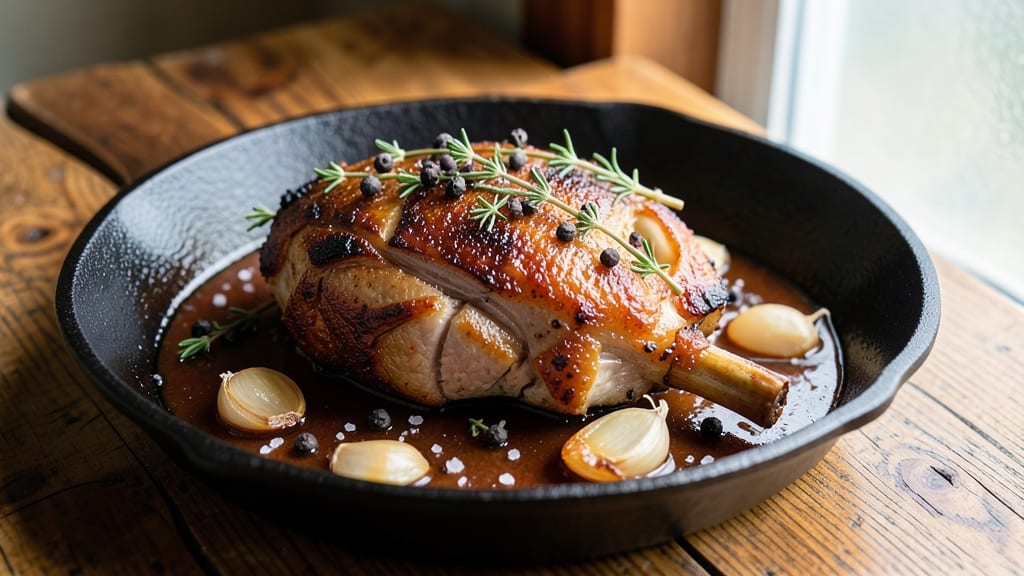
This slow roasted pork shank recipe delivers melt-in-your-mouth tenderness with a deep, caramelized crust that locks in every savory note. The secret lies in low-and-slow cooking—transforming tough cuts into restaurant-quality perfection through precise timing and basting techniques.
I've perfected this method over years of testing, ensuring zero dryness and maximum flavor development in every bite.
The magic happens at 275°F for 3 hours, where collagen breaks down into rich, velvety gelatin while the exterior develops that coveted umami crust.
A simple dry rub of garlic, thyme, and black pepper forms the flavor foundation, while regular basting with pan juices keeps the meat moist and intensifies the depth of flavor. This isn't just dinner—it's an experience that transforms your kitchen into a French bistro.
What you'll achieve is pork shank so tender it practically falls apart at the touch, with a crust that's crisp enough to stand up to fork pressure. The aromas alone—smoky, herby, with undertones of caramelized sweetness—will have everyone gathered at your table.
The sauce that pools in the pan becomes a silky glaze when reduced, perfect for drizzling over each slice for extra richness.
Serve with crusty bread to soak up every last drop of that flavorful pan sauce, or pair with roasted root vegetables for a complete meal. The leftovers reheat beautifully, making this a perfect recipe for meal prep or special occasions.
Let's get started on creating pork shank that will have your guests asking for seconds before the plate is even cleared.
Ingredients for slow roasted pork shank
Pantry staples plus a few specialty items for restaurant-quality pork shank.
| Ingredient | Amount | Notes |
|---|---|---|
| Pork Shank 🍖 | 2 lb | Bone-in, 1.5-inch thick slices |
| Garlic Cloves 🧄 | 6 cloves | Smashed for maximum flavor |
| Fresh Thyme 🌿 | ½ oz | Or 2 tbsp dried thyme |
| Black Peppercorns 🌶️ | 1 tbsp | Freshly cracked preferred |
| Kosher Salt 🧂 | 2 tbsp | Diamond Crystal preferred |
| Olive Oil 🫒 | 2 tbsp | Extra-virgin for richness |
| Dry Red Wine 🍷 | ½ cup | Bold Cabernet or Merlot |
| Beef Broth 🥄 | 1 cup | Low-sodium preferred |
| Carrots 🥕 | 2 whole | Baby carrots work too |
| Yellow Onion 🧅 | 1 whole | Cut into wedges |
| Crusty Bread 🍞 | 4 slices | For serving (baguette or sourdough) |
| Fresh Parsley 🌿 | ¼ cup | Chopped for garnish |
| Balsamic Vinegar 🍶 | 1 tbsp | For finishing sauce |
The pork shank is non-negotiable here—bone-in, 1.5-inch thick slices are ideal. Costco or Whole Foods usually have them pre-cut, but if you're buying a whole shank, ask the butcher to slice it evenly. Look for good marbling—fat equals flavor. Fresh thyme is a game-changer, but dried works in a pinch. For the wine, any bold red like Cabernet or Merlot works—whatever's open in your fridge. The beef broth should be low-sodium unless you're okay with extra salt later.
No red wine? Substitute with extra beef broth plus 1 tbsp balsamic vinegar. Fresh thyme unavailable? Dried thyme at one-third the amount gets you close. The carrots and onion can be swapped for other root veggies—parsnips or celery root add nice depth. For extra richness, add a splash of soy sauce to the pan juices. The crusty bread should be day-old or lightly toasted—it soaks up sauce like a dream. If you're feeling fancy, grab a baguette from Trader Joe's or your local bakery.
Leftovers reheat beautifully—350°F for 10-15 minutes until warmed through. Keeps 4 days in the fridge or 3 months frozen. I always make extra because it's perfect for sandwiches or meal prep. Store the sauce separately if you want to drizzle it fresh on reheated slices. The pork shank actually tastes better the next day as the flavors meld even more.
Why You'll Love This Recipe
- Deep, Rich Payoff: That crispy bark on the outside? It hides a melt-in-your-mouth center, and the thyme and garlic seep into the meat like a hug. Honestly, the first bite makes you question why you ever bought pre-made sauces.
- Leftovers That Shine: Cold pork shank is my go-to for sandwiches—crispy, tender, and still packed with flavor. (Yes, even on a Tuesday night.) Or shred it for tacos, pasta, or a hearty soup. It’s the ultimate repurposing star.
- Budget-Friendly Luxury: Pork shanks are cheaper than chicken thighs but feel like a fancy cut when you slow-roast them. Between us, this is how I feed a crowd without breaking the bank—plus, the leftovers stretch for days.
Step-by-step instructions for slow roasted pork shank
This method transforms tough pork shank into melt-in-your-mouth perfection with a rich, caramelized crust.
Prep the Pork Shank for Maximum Flavor
Pat the 2 lb pork shank completely dry with paper towels—this is critical for that deep umami crust. I like to use my hands to press firmly, especially around the bone where moisture tends to hide. The drier the surface, the better the browning.
Next, make your seasoning blend by crushing the 6 cloves garlic with the flat side of a knife (no need to mince yet) and grinding the 1 tbsp black peppercorns in a mortar and pestle or spice grinder. Mix this with 2 tbsp kosher salt and 0.5 oz fresh thyme leaves. Rub this generously all over the pork, pressing it into every crevice. The thyme and garlic will infuse deeply during the long cook.
Sear for Color and Flavor Foundation
Heat 2 tbsp olive oil in a large Dutch oven over medium-high heat until shimmering. Place the pork shank in the pot, fat-side down, and sear undisturbed for 5 minutes until deeply golden brown. This isn't just for looks—the Maillard reaction creates complex flavors that build throughout the cook.
Flip the shank and sear the other side for another 3-4 minutes. You're looking for that rich, caramelized crust that will eventually become your crusty, flavorful exterior. If the oil starts smoking before you reach this color, reduce the heat slightly—patience here pays off.
Build the Aromatic Base
Remove the pork shank and set it aside. In the same Dutch oven, add the 1 whole yellow onion cut into wedges and 2 whole carrots cut into thick chunks. Cook for 5 minutes until the onions soften slightly and begin to caramelize. Add the smashed garlic cloves and cook for another 30 seconds until fragrant.
Deglaze the pot immediately with the 0.5 cup dry red wine, scraping up all those delicious browned bits from the bottom. Let it simmer for 2 minutes until reduced by half. This step captures all the flavor that would otherwise stick to your pot. Pour in the 1 cup beef broth and bring to a gentle simmer.
Slow Roast to Tender Perfection
Return the pork shank to the Dutch oven, bone-side up, and nestle the onion and carrots around it. Cover tightly with the lid and transfer to a 325°F oven. Here's where the magic happens: cook for 3 hours, then flip the shank and add 1 tbsp balsamic vinegar to the pan. Return to the oven for another 3 hours. The vinegar adds a tangy depth that cuts through the richness.
Check for doneness by inserting a meat thermometer into the thickest part of the meat—it should read 195-200°F. The meat will be fork-tender and pull away from the bone easily. If it's not quite there, continue roasting for another 30-60 minutes. The long cook time breaks down collagen into gelatin, making every bite succulent.
Rest and Serve with Confidence
Transfer the pork shank to a cutting board and tent loosely with foil. Let it rest for 15 minutes—this crucial step allows the juices to redistribute throughout the meat. Skipping this will leave you with dry slices. Meanwhile, spoon the pan juices through a fine-mesh strainer into a small saucepan and reduce over medium heat until slightly thickened.
Slice the pork shank against the grain into ½-inch thick pieces. Serve with the reduced sauce drizzled over the top and the 4 slices crusty bread for soaking up every last bit. Garnish with 0.25 cup chopped fresh parsley for a pop of color and freshness. The result should be tender, flavorful pork with a beautiful caramelized crust that holds up perfectly to each bite.
Pro Tips For Making Slow Roasted Pork Shank
- SEAR FIRST, LOW AND SLOW: I learned this the hard way—skipping the sear means your shank will steam instead of develop that deep, caramelized crust. Hit 450°F for 10 minutes with oil, salt, and peppercorns until it’s golden brown before dropping to 275°F. That crust locks in flavor and keeps it from turning into mushy pork.
- PEEL GARLIC, DON’T SMASH: Whole garlic cloves burn easily and make the dish bitter. Peel them first, then smash with the flat side of a knife—just enough to expose the good stuff without turning it into paste. Tuck them under the shank skin-side down so they soften perfectly without disappearing.
- SKIP THE CROWDED PAN: I used to pile everything in the pot at once, thinking more liquid = more flavor. Wrong. Start with just enough liquid (broth, wine, or beer) to come halfway up the shank. Add thyme sprigs after searing, and let the pork release its own juices first. You’ll get richer sauce this way.
- REST IT UNDER FOIL: Does it look weird? Yes. Does it work? Every single time. After roasting, tent the shank with foil for 5–10 minutes—this keeps it from drying out when you slice. Cutting into it too soon means juices running all over your plate instead of staying in the meat.
Regional styles of this dish
French Bistro Style
In Parisian bistros, pork shank is often slow-cooked with red wine and herbs until it's so tender it practically melts. The French secret? A 3-hour braise at 300°F with a splash of Cognac instead of balsamic vinegar—about 2 tbsp added midway through cooking.
Garnish with fresh tarragon and serve with a buttery mashed potato to soak up the sauce. The crusty baguette is non-negotiable here—it's the perfect vessel for every last drop of that rich, wine-infused reduction. 🍷
Southern U.S. Comfort
Down South, pork shank becomes a centerpiece for family dinners, often cooked with apple cider vinegar and a touch of brown sugar—about 1 tbsp each added during the last hour of cooking. The result is a sweet-savory glaze that pairs perfectly with collard greens or cornbread.
I like to finish with a sprinkle of smoked paprika for a subtle BBQ-inspired kick. This version is hearty enough for a crowd but still elegant enough for company. 🌶️
Italian Rustic Approach
In Italy, pork shank is often called "stracotto" (overcooked), but that's exactly what makes it so tender. Italians use white wine instead of red and add rosemary and bay leaves to the braising liquid. The key difference?
They finish with a tomato passata reduction—about ½ cup added in the last 30 minutes—to balance the richness. Serve with polenta or fresh crusty bread and a sprinkle of grated Parmesan for a dish that feels like a hug. 🌿
Spanish Tapas Twist
For a lighter, tapas-style version, Spanish chefs often cook pork shank with saffron-infused broth and a pinch of smoked paprika. The result is a dish that's rich but not heavy—perfect for sharing. Serve with crusty pan con tomate (toasted bread with tomato) and a side of marinated olives.
The Spanish also love to finish their pork shank with a drizzle of alioli (garlic mayo) for a bright, creamy contrast. This version is all about bold flavors and easy sharing. 🍞
German Sunday Roast
In Germany, pork shank is a staple for Sunday family meals, often cooked with dark beer instead of wine—about 1 cup of a malty Dunkel or bock beer. The beer adds a malty depth that pairs beautifully with caramelized onions and mustard seeds.
Serve with red cabbage and buttered potato dumplings for a dish that feels like a celebration. The Germans also love to add a splash of apple juice** in the last hour to balance the richness. 🍺
Nutrition facts
Frequently asked questions
Why does pork shank need such a long cooking time?
The slow cooking process—3 hours at 325°F—is essential for breaking down collagen into gelatin, which transforms tough connective tissue into tender, melt-in-your-mouth meat. This method also allows the flavors to develop deeply, creating that signature umami crust. Patience here makes all the difference!
Can I use bone-in or boneless pork shank?
Bone-in pork shank is ideal for this recipe as it adds flavor and helps tenderize the meat. However, if you prefer boneless, simply adjust the cooking time by 15-20 minutes less. The bone also helps keep the meat moist during the long cook.
What's the best way to check if the pork shank is done?
Use a meat thermometer to check the thickest part of the meat—it should read 195-200°F. The meat should also pull away from the bone easily and be fork-tender. If it's not quite there, return it to the oven for another 30-60 minutes. Never guess with pork shank!
How do I prevent the pork shank from drying out?
Keep the pork shank covered with liquid throughout the cook and baste it with pan juices every 30 minutes. Also, avoid cutting into it until it's fully rested (15 minutes) to let the juices redistribute. The bone-in version stays moister longer too.
Can I make this recipe in a slow cooker?
Sear the pork shank first, then transfer it to a slow cooker with the vegetables, wine, and broth. Cook on low for 8 hours or high for 5-6 hours. The texture will be slightly different but still delicious. Just add the balsamic vinegar in the last 30 minutes of cooking.