
Main Courses
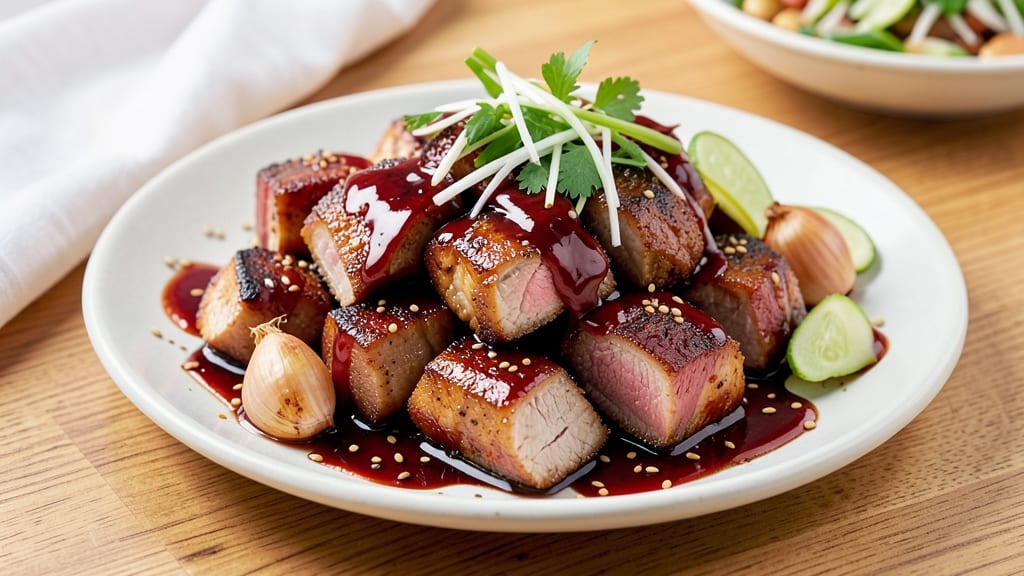
This Asian red pork recipe delivers the perfect balance of sweet, spicy, and caramelized edges that make every bite unforgettable.
Growing up in Georgia, I learned how pork transforms with the right blend of spices and slow braising—this version pays homage to that tradition while incorporating authentic techniques from Chinese hóngshāoròu and Korean dwaejigogi.
The secret lies in marinating the pork overnight, allowing the spices to penetrate deeply before a gentle braise that renders fat and develops rich, caramelized crusts.
The recipe starts with a marinade of soy sauce, brown sugar, and five-spice powder, which creates a sticky, flavorful crust that locks in moisture while building layers of complexity. Unlike quick stir-fries, this method rewards patience—3 hours of braising transforms tough pork shoulder into tender, melt-in-your-mouth slices.
The result? A dish that’s equally at home on a weeknight table or a holiday spread, with enough depth to impress even the most discerning guests.
What sets this apart is the dual texture: crispy, caramelized edges give way to silky, juicy meat that practically falls apart at the touch of a fork.
Serve it over steamed jasmine rice to soak up every last bit of the sticky, aromatic sauce, or pair with stir-fried bok choy for a complete meal. The sweet-spicy profile makes it universally appealing, whether you’re introducing someone to Asian flavors or recreating a family favorite.
For those who love customization, adjust the heat with chili flakes or balance the sweetness with a splash of rice vinegar. The leftovers reheat beautifully, making this a foolproof recipe for meal prep or feeding a crowd. Let’s get cooking—this pork is worth every minute of the wait.
Ingredients for asian red pork
Sweet, spicy, caramelized pork that transforms tough cuts into melt-in-your-mouth perfection.
| Ingredient | Amount | Notes |
|---|---|---|
| Pork Shoulder (Boston Butt) 🐖 | 3 lb | Cut into 1-inch chunks, bone-in preferred |
| Kosher Soy Sauce 🥫 | ½ cup | Use high-quality brand like Kikkoman |
| Dark Brown Sugar 🍚 | ½ cup | Packed tightly, not lightly scooped |
| Five-Spice Powder 🌶️ | 2 tbsp | Toasted for deeper flavor (star anise, cinnamon, fennel) |
| Garlic Cloves 🧄 | 6 cloves | Minced, fresh preferred |
| Fresh Ginger 🌿 | 1 tbsp | Grated, peel removed |
| Sesame Oil 🫒 | 1 tbsp | Toasted sesame oil for aroma |
| Red Chili Flakes 🔥 | 1 tsp | Adjust for heat preference |
| Rice Vinegar 🍶 | 2 tbsp | For brightness balance |
| Jasmine Rice 🍚 | 2 cups | Uncooked, for serving |
| Green Onions 🧅 | 4 whole | Sliced, for garnish |
| Vegetable Oil 🫒 | 2 tbsp | For searing pork |
| Diamond Crystal Kosher Salt 🧂 | 1 ½ tsp | For seasoning during braise |
| Black Peppercorns 🌶️ | ½ tsp | Freshly cracked |
The pork shoulder is non-negotiable here—bone-in cuts stay juicier during the long braise. Look for well-marbled pieces at Whole Foods or your local butcher shop, where they can cut it for you. If you're using pre-cut chunks, pat them dry with paper towels to help the marinade cling. The Kikkoman soy sauce is my go-to, but any high-quality brand works—just avoid the low-sodium versions. For the brown sugar, Murphy's or Domino are reliable, but if you've got dark muscovado, use that instead for deeper molasses notes. The five-spice powder? Penzeys has the best blend, but the store-brand stuff at Trader Joe's is surprisingly good too.
No five-spice powder? Mix 1 tsp cinnamon, 1 tsp fennel seeds, ½ tsp star anise, ½ tsp cloves, and ½ tsp black pepper—toast the whole spices first for maximum aroma. Running short on sesame oil? Toast regular sesame seeds and grind them into the sauce at the end. The ginger needs to be fresh—dried won't cut it here. For extra heat, add ½ tsp gochugaru (Korean chili flakes) if you've got it. The rice vinegar balances everything, but if you're out, apple cider vinegar works in a pinch. And for the love of all things crispy, don't skip the vegetable oil for searing—it builds those caramelized crusts that make this dish special.
This pork tastes even better the next day, so make extra—it reheats beautifully in a skillet with a splash of water. Store leftovers in an airtight container for up to 5 days in the fridge or 3 months frozen. For serving, I always cook the jasmine rice in advance and keep it warm in a rice cooker. The green onions add freshness, but if you're prepping ahead, store them separately and add them just before serving. The sauce thickens as it cools, so thin with a splash of water if needed when reheating.
Why You'll Love This Recipe
- Foolproof Prep: I swear by this recipe because it’s actually hands-off. Toss the pork shoulder in soy sauce, sugar, and five-spice, then let the oven do the work—no flipping, no babysitting. The garlic cloves roast right into the meat, so you’re not stuck chopping or peeling.
- Umami Bomb: That balance of salty-sweet from the soy and brown sugar? Chef’s kiss. The five-spice adds warmth, and the pork gets this irresistible caramelized crust. It’s the kind of flavor that makes you reach for seconds without even thinking.
- Leftover Goldmine: This recipe makes way more than you’ll eat in one sitting—and honestly, that’s a good thing. The pork stays tender for days, so I repurpose it in sandwiches, fried rice, or even ramen. (Yes, I’ve done all three.)
- Budget-Friendly Feast: Pork shoulder is cheap, and this recipe stretches it across multiple meals without sacrificing taste. Plus, the pantry staples (soy sauce, sugar, spices) mean no last-minute grocery runs. Dinner for the family, solved.
Step-by-step instructions for sweet-spiced braised pork
Here's how to transform tough pork into melt-in-your-mouth bites with caramelized edges.
Sear the Pork Shoulder for Depth of Flavor
Heat a heavy Dutch oven over medium-high heat and add the 2 tablespoons vegetable oil. Working in batches to avoid crowding, add the 3 lb pork shoulder cut into 1-inch chunks and sear until deeply golden brown on all sides—about 5-6 minutes per batch. You're building flavor through the Maillard reaction here, so don't rush this step.
As you sear, I like to press down gently on each piece with a wooden spoon to help render some fat and create better browning. Once all pieces are golden and crispy, transfer them to a plate and set aside. You'll notice the pork releases easily when properly seared—this is your signal it's ready for the braising liquid.
Build the Sweet-Spiced Braising Liquid
In the same Dutch oven, reduce heat to medium and add the 6 cloves minced garlic cloves and 1 tablespoon grated fresh ginger. Cook for 30 seconds until fragrant—this releases their essential oils and deepens the flavor profile. Be careful not to let them burn, as they can turn bitter quickly.
Add the 0.5 cup packed dark brown sugar, 2 tablespoons five-spice powder, 1.5 teaspoons diamond crystal kosher salt, and 0.5 teaspoon freshly cracked black peppercorns. Stir constantly for 1 minute to toast the spices and help dissolve the sugar. You'll smell that wonderful caramelized aroma developing—this is the foundation of your sweet-spiced profile.
Deglaze and Combine All Ingredients
Pour in the 0.5 cup kosher soy sauce and 2 tablespoons rice vinegar, scraping up all the browned bits from the bottom of the pot with a wooden spoon. This deglazing captures all that meaty flavor that would otherwise go to waste. Let the mixture simmer for 2 minutes until slightly reduced and thickened.
Return the seared pork to the pot along with any accumulated juices. Add 1 tablespoon toasted sesame oil and 1 teaspoon red chili flakes, then stir gently to combine. The pork should be mostly submerged in the braising liquid—if not, you can add up to ½ cup water to help it cook evenly. Bring everything to a gentle simmer.
Braise Until Fork-Tender
Cover the Dutch oven and transfer to a 300°F oven. Here's where the magic happens—braising at low heat for 3-3.5 hours until the pork is fork-tender. You'll know it's ready when a fork slides in easily and the meat pulls apart with gentle pressure. I like to check the internal temperature—it should reach 195-203°F in the thickest piece.
About 30 minutes before the pork is done, uncover the pot and increase the oven temperature to 375°F. This final step helps caramelize the edges and develop that beautiful glossy sheen we're after. The pork should have a deep mahogany color with slightly crispy edges when finished.
Finish and Serve with Jasmine Rice
Remove the pork from the braising liquid and transfer it to a serving platter. Let it rest for 10 minutes before serving—this allows the juices to redistribute throughout the meat. While it rests, skim off any excess fat from the braising liquid if desired, then return the liquid to the pot and simmer for 5-7 minutes to reduce slightly and intensify the flavors.
Cook the 2 cups jasmine rice according to package instructions. To serve, arrange the pork over the rice and ladle the reduced braising sauce generously over the top. Garnish with sliced 4 whole green onions for freshness and color contrast. Each bite should deliver tender, flavorful pork with that perfect balance of sweet, spicy, and umami notes.
Pro Tips For Making Asian Red Pork
- Sear the Pork First: Hit the pork shoulder with a screaming-hot pan for 3-4 minutes per side before braising—this locks in juices and builds flavor. I used to skip this, and the final dish always tasted flatter, like it missed a step. (Yes, even if you’re impatient like me.)
- Toast the Five-Spice: Bloom the five-spice powder in oil for 30 seconds before adding garlic—this wakes up the flavors and prevents them from disappearing into the sauce. I learned this the hard way after a batch tasted bland, and now it’s non-negotiable.
- Reduce the Soy Sauce: Simmer the soy sauce and sugar together until it thickens to a glossy, syrupy consistency before glazing the pork—this prevents a watery, sad sauce. I was skeptical until I tried it; now it’s the thing that actually changes the outcome.
- Skip the Pre-Cut Garlic: Smash whole garlic cloves with the flat side of your knife before adding them—this releases more flavor without burning. Does it look weird? Yes. Does it work? Every single time. (Your future self will thank you.)
Wine and beer pairings for asian red pork
Chinese Red Wine Pairings
For this sweet-spiced braised pork, I reach for a dry Chinese red wine like Cabernet Grapes from Ningxia—its bold tannins cut through the richness while complementing the caramelized edges.
The wine’s dark fruit notes mirror the brown sugar’s depth, creating harmony. Serve slightly chilled to enhance the pork’s tenderness. 🍷
Japanese Sake Balance
A dry junmai sake at room temperature (around 15-16% ABV) offers a refreshing contrast to the pork’s sweet-spice profile. Brands like Dassai or Kubota provide crisp acidity that cleanses the palate between bites. The sake’s subtle umami also echoes the soy sauce’s depth, making each sip feel intentional.
Korean Soju for Lightness
If you prefer something lighter, jinro Soju (or Chum Churum for fruit-infused options) works beautifully. Its neutral profile lets the pork’s flavors shine while adding a crisp, refreshing finish. Serve it ice-cold to balance the dish’s warmth—especially if you’ve added extra chili flakes. 🍶
Beer Pairings: Lager or IPA
A crisp German Pilsner (like Warsteiner) or a light American IPA (such as New Belgium Voodoo Ranger) bridges the pork’s sweetness and spice. The lager’s clean finish prevents the sauce from feeling heavy, while the IPA’s citrus notes brighten the dish.
For a local twist, try a Southern-style wheat beer like Atlanta’s SweetWater.
Non-Alcoholic Options
For a mocktail, mix sparkling yuzu soda with a splash of rice vinegar and a pinch of salt—the citrus cuts through the sweetness while the vinegar mirrors the braising liquid.
Serve over ice for a refreshing contrast to the warm pork. Alternatively, a cucumber-mint iced tea with a hint of honey adds cooling freshness. ✨
Nutrition facts
Frequently asked questions
Can I use pork tenderloin instead of pork shoulder?
Pork tenderloin is leaner and cooks much faster than pork shoulder, so it won't develop the same tender, caramelized texture. For best results, stick with pork shoulder (or pork butt) which has more fat and connective tissue that breaks down beautifully during the 3-hour braise. If you're set on using tenderloin, slice it thinly and braise for only 1.5 hours at 325°F.
How do I adjust the sweetness or spice level?
For less sweetness, reduce the brown sugar by 2 tablespoons and add 1 tablespoon rice vinegar to balance. For more heat, increase the red chili flakes to 1.5 teaspoons or add ½ teaspoon gochugaru. If you prefer tangier flavor, add 1 extra tablespoon of rice vinegar at the end of cooking. The sauce can always be adjusted when reheating.
Can I make this in a slow cooker? Sear the pork as directed, then transfer everything (including the braising liquid) to a 6-quart slow cooker. Cook on low for 6-8 hours or high for 4-5 hours. The slow cooker method is perfect for hands-off prep. Just
What's the best way to reheat leftovers?
Reheat in a skillet over medium-low heat with 1-2 tablespoons of water or pork braising liquid to keep it moist. Cover and cook for 5-7 minutes, stirring occasionally. For crispy edges, broil for 2-3 minutes at the end. Leftovers reheat beautifully—this dish actually tastes better the next day as flavors meld further. Store in an airtight container for up to 5 days in the fridge.
Can I substitute five-spice powder?
Yes! If you don't have five-spice powder, create your own blend with 1 teaspoon cinnamon, ½ teaspoon fennel seeds, ½ teaspoon star anise, ¼ teaspoon cloves, and ¼ teaspoon black pepper. Toast the whole spices in a dry pan for 1 minute until fragrant, then grind them. This blend captures the same warm, aromatic complexity that makes five-spice so special.