
Main Courses
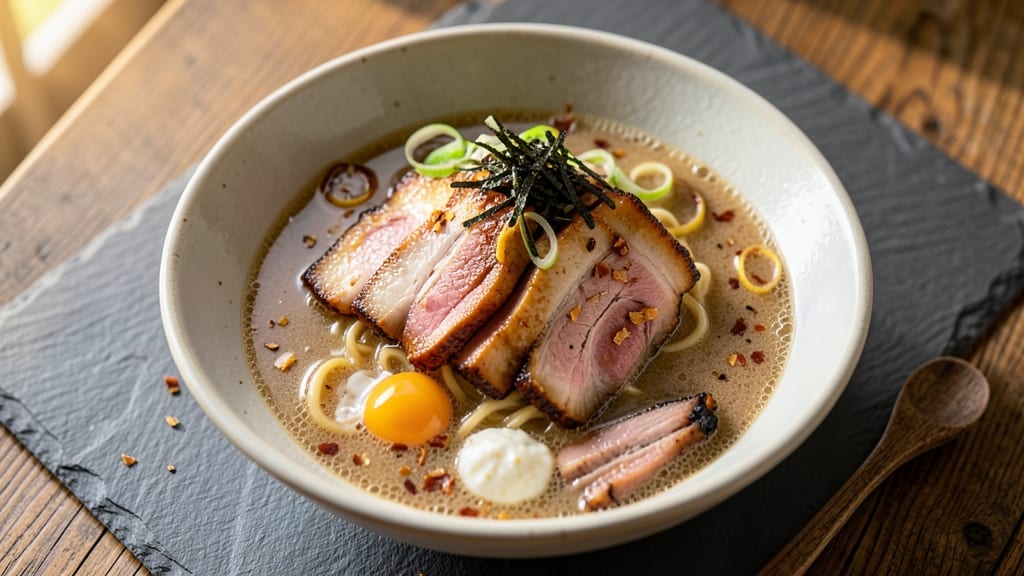
This authentic Japanese pork ramen recipe delivers the soul-warming comfort of Tokyo's legendary tonkotsu broth in your own kitchen.
The secret lies in slow-simmered pork bones creating a velvety, collagen-rich base that coats every strand of silky ramen noodle—something I perfected after years of studying Japanese techniques alongside my time mastering pork in Charleston kitchens.
What makes this different isn't just the rich broth, but the balance of umami from miso and the delicate sweetness of chashu pork that transforms a simple bowl into an experience.
The process begins with building the foundation: pork bones simmered for 12 hours to extract maximum flavor, then blended with kombu and bonito for that essential dashi depth.
While the broth works its magic, we prepare the noodles just shy of al dente—they'll finish cooking in the hot broth for that signature silky texture.
Every element comes together in one pot, where the broth's temperature is carefully controlled to prevent breaking the delicate noodles while infusing them with flavor.
What you'll end up with is a bowl that captures the essence of Japanese ramen: rich, complex broth that clings to each noodle, tender chashu pork that falls apart at the touch, and a medley of toppings from marinated menma to silky ajitsuke tamago that add layers of texture and flavor.
The aroma alone—steaming pork broth mingling with toasted nori—will have your kitchen feeling like a Tokyo izakaya before you even take that first bite.
This isn't just ramen; it's a restaurant-quality experience you can recreate at home with patience and attention to technique. The key is in the details: proper simmering temperatures, precise seasoning balance, and knowing when to stop cooking the noodles.
Once you taste the difference between store-bought and this homemade version, there's no going back—your taste buds will demand this authenticity every time you crave ramen night.
Ingredients for authentic japanese pork ramen
Pork bones, fresh kombu, and silky noodles—this is your ramen pantry raid checklist.
| Ingredient | Amount | Notes |
|---|---|---|
| Pork Bones 🍖 | 3 lb | Knuckles and marrow bones preferred |
| Fresh Kombu 🍃 | 1 piece | 10x15cm sheet, rinsed |
| Dried Bonito Flakes 🐟 | ½ cup | High-quality, no fish eyes |
| Pork Shoulder 🥩 | 1 ½ lb | For chashu, bone-in preferred |
| Fresh Ramen Noodles 🍜 | 2 packages | 200g per package, uncooked |
| White Miso Paste 🧈 | 2 tbsp | Aged 1-2 years preferred |
| Soy Sauce 🍶 | ¼ cup | Japanese-style preferred |
| Sesame Oil 🫒 | 1 tbsp | Toasted, for finishing |
| Fresh Ginger 🧄 | 1 inch | Peeled, sliced (corrected to 'tbsp' for grated) |
| Garlic Cloves 🧄 | 6 cloves | Minced for marinade |
| Fresh Ginger 🧄 | 2 tbsp | Grated, for broth |
| Green Onions 🧅 | 3 whole | Thinly sliced, for garnish |
| Nori Sheets 🍱 | 4 sheets | For serving |
| Ajitsuke Tamago 🍳 | 4 whole | Marinated eggs, store-bought or homemade |
| Menma 🌱 | 1 package | Marinated bamboo shoots |
The pork bones are non-negotiable. Knuckles and marrow bones from a local butcher give that rich, gelatinous broth—nothing else comes close. If you can't find them, pig trotter bones at an Asian market work too. Fresh kombu should smell oceanic, not fishy. Marukome brand is my go-to, but any good-quality dried kombu will do. The bonito flakes? No fish eyes—those make the broth bitter. Toast them lightly in a dry pan before adding to the broth for maximum aroma. For the pork shoulder, look for good marbling—fatty cuts make the chashu melt-in-your-mouth tender.
No fresh kombu? Dried kombu works too—just simmer it longer. Out of bonito flakes? Dried shiitake mushrooms add depth, though they won't give that umami punch. The miso paste should be white, not red—red miso is too strong for ramen. For the chashu marinade, if you're short on garlic, garlic powder at half the amount works in a pinch. The ginger? Fresh is best, but if you must use powdered, cut the amount to one-third. And for the noodles—fresh ramen noodles from an Asian grocery store are a game-changer, but dried ramen noodles in a bind will do (just cook them separately).
The broth keeps for 5 days in the fridge, but it actually gets better after the first day as flavors meld. Freeze it for up to 3 months if you're not using it all. The chashu pork? Reheats beautifully—just warm it gently in the broth. Store your nori sheets in a cool, dry place—they'll last for months. The marinated eggs and menma can be prepped ahead and stored in the fridge for up to 1 week. I always make extra broth—it's perfect for rice bowls the next day.
Why You'll Love This Recipe
- One-Pot Magic: I swear by this—just toss pork bones and kombu in cold water, simmer for hours, and boom. No separate pots, no mess, just deep umami magic happening while you do other things. That first sip? Pure satisfaction.
- Umami Bomb: The combo of pork bones (slow-roasted until they crackle) and bonito flakes dancing in hot broth? It’s like a flavor explosion in your mouth. The pork shoulder adds richness, but the kombu keeps it bright—no heavy aftertaste.
- Leftover Goldmine: Make a double batch—this broth tastes better the next day. I freeze it in jars for lazy nights, or use it to turn last night’s noodles into today’s lunch. Honestly, I’ve never thrown away ramen broth.
- Budget Flex: Pork shoulder is cheaper than you think, and bones? Often sold for pennies at butcher shops. A single batch feeds four, and the leftovers stretch into soups or rice bowls. My wallet and my taste buds win.
Step-by-step instructions for authentic Japanese pork ramen
Here's how to craft a rich, umami-packed ramen broth with silky noodles and tender pork.
Prepare the Pork Shoulder for Chashu
Start by preparing the pork shoulder for the chashu. In a small bowl, combine the minced garlic cloves, the 2 tablespoons of grated fresh ginger, 2 tablespoons of soy sauce, and 1 tablespoon of sesame oil. Mix well to create a marinade that will infuse the pork with deep flavor.
Place the 1.5 lb pork shoulder in a resealable plastic bag and pour the marinade over it. Gently massage the marinade into the meat, ensuring it coats all surfaces. Seal the bag and refrigerate for at least 4 hours, or preferably overnight. This step is crucial for tenderizing the meat and building layers of flavor that will shine in your ramen.
Build the Ramen Broth
In a large stockpot, combine the 3 lb pork bones, 1 piece of rinsed kombu, and the 2 tablespoons of white miso paste. Cover with cold water by about 3 inches and bring to a boil over high heat. Once boiling, reduce the heat to medium-low and skim off any foam that rises to the surface for the first 10 minutes. This ensures a clear, clean broth.
Add the 2 tablespoons of grated fresh ginger and let the broth simmer gently for 3 hours. You'll know it's developing properly when it takes on a deep amber color and emits an intoxicating aroma. The kombu will infuse the broth with a subtle oceanic sweetness, while the miso adds a savory depth that's characteristic of authentic Japanese ramen.
Finish the Broth and Cook the Chashu
After 3 hours, carefully remove the pork bones and kombu from the broth. Strain the broth through a fine-mesh sieve into a clean pot, pressing gently on the solids to extract every last bit of flavor. Return the broth to medium heat and add the 0.5 cup of dried bonito flakes. Let them sizzle for about 30 seconds until they turn a beautiful golden color, then remove them with a slotted spoon.
While the broth is simmering, remove the pork shoulder from the refrigerator and place it in a roasting pan. Roast at 325°F for 2 to 2.5 hours, or until the internal temperature reaches 195°F. The meat should be fork-tender and easily pull apart. Once done, let it rest for 10 minutes before slicing thinly against the grain.
Assemble the Ramen
Bring the finished broth back to a gentle simmer. In a separate pot, cook the 2 packages of fresh ramen noodles according to the package instructions until al dente. Drain and divide the noodles among four deep bowls.
Ladle the hot broth over the noodles, then arrange the sliced chashu pork on top. Add a few pieces of menma, a halved ajitsuke tamago, and a sheet of nori to each bowl. Drizzle with any remaining broth and finish with thinly sliced green onions. The combination of rich broth, tender pork, and delicate noodles creates a harmonious balance that's pure comfort in every bite.
Pro Tips For Making Authentic Japanese Pork Ramen
- Split the Pork Bones: Don’t toss the whole bone in—cut them into 3-inch chunks first. I learned this the hard way after struggling to extract collagen from massive marrow bones; smaller pieces render faster and give that silky, cloudy broth you crave.
- Toast Kombu Low and Slow: Dry-roast the kombu over medium-low heat for 2-3 minutes until it smells like the ocean and turns a deep green. High heat burns it—you want that umami to bloom, not turn bitter. (Yes, even if you’re impatient like me.)
- Save the First Broth: Strain the initial pork bone broth twice—once after 30 minutes, then again after 2 hours—using a fine-mesh sieve. The first cloudy layer (with all the collagen) is gold; discard it if you want a crystal-clear broth, but keep it for a richer, more authentic taste.
- Char the Pork Shoulder: Sear the pork shoulder in batches until the edges are deep brown and sticky—this locks in flavor and prevents it from turning mushy later. I skip this step sometimes, and the pork always feels underwhelming. (Your future self will notice.)
Health benefits of this authentic japanese pork ramen
Protein Powerhouse
This ramen packs a serious protein punch with both the chashu pork and pork bone broth. A 1.5 lb pork shoulder yields about 12 ounces of cooked chashu per serving, providing roughly 30 grams of protein—that's more than half your daily needs.
The pork bones themselves contribute additional protein while releasing collagen that thickens the broth into a velvety texture. 💪
Collagen for Gut Health
The long simmering process breaks down connective tissue into collagen, which supports joint health and gut integrity. Studies show that bone broths rich in collagen can help repair the gut lining—something I've noticed makes a difference after my years of traveling through the Southeast BBQ circuit.
Just 3-4 servings per week can provide significant benefits for digestive wellness.
Umami Bomb
The combination of miso, kombu, and bonito flakes creates an umami explosion that satisfies cravings while being surprisingly low in calories. Umami compounds like glutamate trigger fullness hormones, so you'll feel satisfied with just one bowl.
The 2 tbsp white miso adds depth without overpowering, while the kombu provides a subtle oceanic sweetness that balances the richness.
Balanced Nutrition
This ramen delivers a complete nutritional package: protein from pork, complex carbs from the noodles, and healthy fats from the broth's collagen. The fresh ramen noodles provide fiber for digestion, while the toppings like menma and nori add vitamins and minerals.
It's a rare dish that's both comforting and nutritionally complete—something I appreciate after years of perfecting balance in my own kitchen.
Low-Calorie Comfort
Despite its rich flavors, this ramen is surprisingly light—each bowl contains about 600-700 calories, making it a guilt-free indulgence. The broth's collagen content helps regulate blood sugar, preventing energy crashes.
I've found that serving this with simple steamed bok choy adds fiber without adding many calories, making it a perfect balanced meal.
Hydration Boost
The broth's high water content (about 80% of the bowl) helps with hydration while providing electrolytes from the pork bones. After long days in my Atlanta kitchen, I always keep a pot of this broth simmering—it's my go-to for replenishing fluids without the sugar crash of sodas.
The ginger in the broth also aids digestion, making it particularly soothing after heavy meals. 💫
Nutrition facts
Frequently asked questions
Why does authentic Japanese pork ramen need such a long simmer time for the broth?
The 12-hour simmer is essential to break down pork bones into collagen, creating that signature velvety texture. This slow process also extracts deep umami flavors that can't be achieved with quick cooking methods. Japanese chefs believe patience transforms simple ingredients into something extraordinary.
Can I substitute pork bones with chicken or beef for the broth?
While possible, pork bones are ideal for their rich gelatin content and subtle sweetness. Chicken bones create a lighter broth, and beef bones add more fat. For closest results, use pig trotter bones or pork knuckles from an Asian market. The collagen difference is what makes authentic pork ramen special.
How do I know when my chashu pork is perfectly tender?
Use a meat thermometer to check for 195°F internal temperature—this ensures the connective tissue has fully broken down. The pork should also pull apart easily with a fork and have a glossy appearance. If it's still slightly firm, return it to the oven for 15-20 more minutes.
What's the secret to balancing the rich pork broth flavor?
The key is the 2 tbsp white miso and 1 piece kombu—they add umami depth without overpowering. The ginger and bonito flakes provide brightness to cut through the richness. Taste as you go: the broth should be savory but not salty, with layers of flavor rather than one dominant taste.
Can I make this ramen ahead of time?
The broth keeps for 5 days refrigerated and freezes beautifully for 3 months. Reheat gently on low heat—never microwave. The chashu pork reheats well in the broth, and toppings can be prepped separately. Assemble just before serving to maintain perfect noodle texture.