
Main Courses
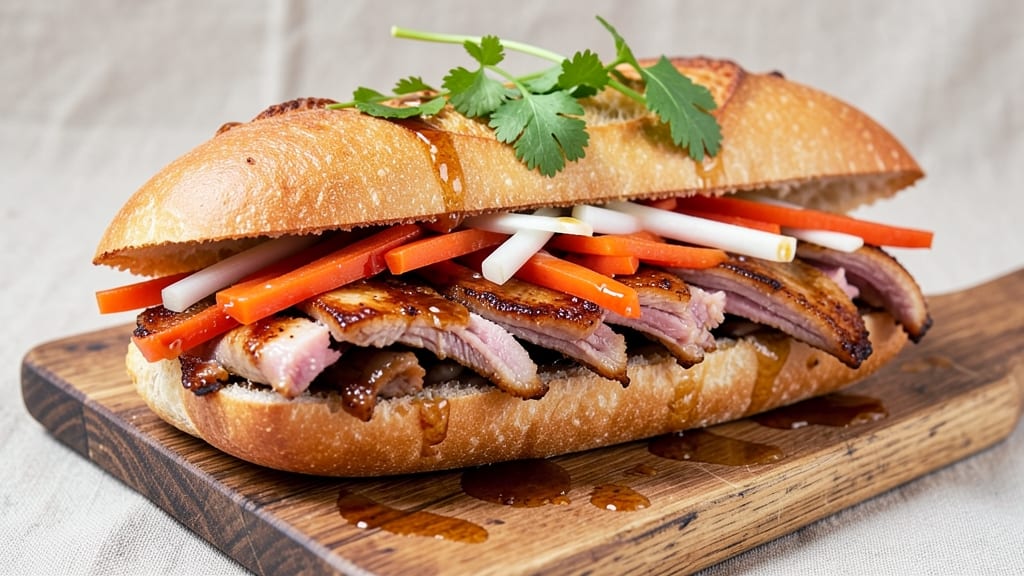
This authentic pork belly banh mi brings the bold flavors of Vietnam straight to your kitchen—where crispy, crackling pork meets tangy pickled vegetables in a perfectly toasted baguette. 🌟 I developed this recipe after years of perfecting the balance between tender pork belly with a crispy bark and the bright, herby crunch of traditional Vietnamese fillings.
The key lies in slow-roasting the pork belly until the skin becomes irresistibly crispy while keeping the meat juicy, then assembling everything with fresh herbs, pâté, and that signature tangy crunch.
What sets this recipe apart is the authenticity—from the five-spice powder that infuses the pork belly with warm, aromatic depth to the homemade pickled carrots and daikon that cut through the richness.
I use a high-quality Vietnamese baguette, lightly toasted to give it just the right crunch, and pack it with pâté, cilantro, jalapeño, and cucumber for that classic banh mi experience.
Every bite delivers a perfect harmony of textures and flavors, making this more than just a sandwich—it’s a taste of Vietnam.
The pork belly is the star, slow-roasted until the skin is crispy and the meat falls apart at the touch of a fork. The pickled vegetables add a bright, tangy contrast, while the pâté and fresh herbs bring layers of umami and freshness.
This recipe is designed to impress, whether you're serving it at a family gathering or enjoying it as a satisfying meal on its own. The secret to success? Patience—letting the pork belly cook low and slow ensures the perfect texture every time.
Once you try this authentic pork belly banh mi, you’ll understand why it’s a staple in Vietnamese cuisine. The crispy bark of the pork, the tangy crunch of the pickles, and the soft, airy baguette come together in a way that’s both comforting and exciting.
Let’s get started on creating your own taste of Vietnam right in your kitchen.
Ingredients for authentic pork belly banh mi
Pork belly, five-spice powder, and fresh Vietnamese herbs—this is your banh mi essentials list.
| Ingredient | Amount | Notes |
|---|---|---|
| Pork Belly 🐷 | 2 lb | Skin-on, thick-cut preferred |
| Five-Spice Powder 🌶️ | 2 tbsp | Authentic Vietnamese blend |
| Carrots 🥕 | 1 whole | Julienned for pickling |
| Daikon Radish 🥕 | 1 whole | Julienned for pickling |
| White Vinegar 💧 | ½ cup | Distilled preferred |
| Granulated Sugar 🍚 | ¼ cup | For pickling solution |
| Salt 🧂 | 1 tsp | Kosher or sea salt |
| Fresh Cilantro 🌿 | ½ cup | Chopped for garnish |
| Jalapeño Pepper 🌶️ | 1 whole | Sliced thin for heat |
| Persian Cucumber 🥒 | 1 whole | Thinly sliced |
| Vietnamese Baguette 🥖 | 2 whole | High-quality, crusty |
| Pâté 🍖 | ½ cup | Vietnamese-style preferred |
| Mayonnaise 🥫 | ¼ cup | For spread |
| Lime Juice 🍋 | 2 tbsp | Freshly squeezed |
| Olive Oil 🫒 | 1 tbsp | For brushing baguette |
The pork belly is non-negotiable. Look for thick-cut, skin-on pieces at an Asian market or well-stocked butcher shop—Vietnamese markets often have the best quality. If you can't find it fresh, frozen works too. The five-spice powder should be authentic Vietnamese, not the generic Chinese blend—Penzeys Spices carries a great one. For the baguette, Trader Joe's or Whole Foods usually stock Vietnamese-style ones, or check the international aisle at your local grocery store. If you can't find them, a good French baguette works in a pinch.
No five-spice powder? Mix cinnamon, cloves, fennel, star anise, and black pepper in a 2:1:1:1:1 ratio. The pickling carrots and daikon can be swapped for green beans or cucumber if needed. For the pâté, chicken liver pâté works if you can't find Vietnamese-style, but it'll have a slightly different flavor profile. The jalapeños can be omitted if you prefer no heat, or swap in serrano peppers for extra kick. Fresh herbs matter here—cilantro and Thai basil are ideal, but regular basil works in a bind.
The pork belly keeps 3 days in the fridge once cooked—store it wrapped tightly in parchment paper. The pickled veggies last 1 week in the fridge, but they taste best within 3 days. Baguettes are best used the same day, but you can freeze the pâté and mayo mixture for up to 1 month. Assemble everything just before serving to keep the bread from getting soggy. For a crowd, prep all components ahead and assemble as needed.
Why You'll Love This Recipe
- One-Pan Magic: I swear by this for lazy nights—the pork belly renders its own fat, the carrots and daikon soften perfectly in the same pan, and the five-spice powder does all the work. No chopping boards full of mess, just one sheet pan and a spatula.
- Crispy-Creamy Payoff: That first bite? The pork belly’s crackling exterior gives way to tender, buttery meat—while the tangy vinegar and earthy daikon cut through the richness. It’s the kind of flavor combo that makes you close your eyes mid-chew.
- Picnic-Proof Perfection: Between us, this is my go-to for potlucks or tailgates. The pickled veggies stay crisp, the pork stays warm, and it travels like a dream. Plus, the leftovers? Just as good cold the next day—no sad sandwiches here.
- Budget Flexibility: Pork belly feels fancy, but a single slab stretches for days. The veggies are cheap, the spices cost pennies, and you’re not sacrificing taste. Honestly, it’s the kind of recipe that makes me feel like I’m feeding a crowd without breaking the bank.
Step-by-step instructions for authentic pork belly banh mi
Here's how to create restaurant-quality Vietnamese banh mi with perfectly crispy pork belly and vibrant pickled vegetables.
🔥 Step 1: Render Pork Belly with Five-Spice Crust
Preheat your oven to 425°F. Line a baking sheet with parchment paper and place the 2 lb pork belly skin-side down. Score the fat in a diamond pattern with a sharp knife - this creates crispy fat shards while allowing the meat to cook evenly.
Sprinkle 2 tbsp five-spice powder generously over the pork, pressing it into the fat and meat. Place the baking sheet in the oven and roast for 1 hour, flipping once after 30 minutes. You're looking for skin that's deep golden brown and crispy, with fat that's rendered but not burnt. The internal temperature should reach 160°F when measured in the thickest part of the meat.
Here's the thing - don't cut into the pork yet. The meat will continue cooking as it rests, and cutting too early will release juices that make the skin soggy. Let it rest on the baking sheet for 15 minutes before slicing into ¼-inch thick pieces against the grain.
🍳 Step 2: Create the Signature Pickled Vegetables
While the pork rests, julienne the 1 whole carrot and 1 whole daikon radish into thin matchsticks using a mandoline or sharp knife. Combine them in a bowl with 0.5 cup white vinegar, 0.25 cup granulated sugar, and 1 tsp salt. Mix well and let sit for at least 30 minutes (or up to 2 hours in the fridge) - this creates that perfect tangy crunch.
Slice the 1 whole jalapeño pepper thinly and thinly slice the 1 whole persian cucumber as well. Add these to the pickling mixture just before assembling your sandwiches. The cucumber will soften slightly but maintain its refreshing bite, while the jalapeño adds just the right amount of heat.
👨🍳 Step 3: Assemble the Pâté Spread
In a small bowl, combine the 0.5 cup pâté with 0.25 cup mayonnaise and 2 tbsp lime juice. Mix until smooth - this creates the signature creamy, slightly tangy spread that binds all the flavors together. The lime juice brightens the pâté while the mayo adds richness.
Brush the 2 whole vietnamese baguettes lightly with 1 tbsp olive oil and toast them in a skillet over medium heat for 1-2 minutes per side until golden and crisp. Cut each baguette diagonally into 4 equal pieces - this gives you perfect sandwich proportions for 4 servings.
🥘 Step 4: Build the Perfect Banh Mi
Spread a generous layer of the pâté mixture on the bottom half of each baguette piece. Add a handful of the pickled vegetables, then layer with 2-3 slices of the crispy pork belly. Top with a few leaves of chopped 0.5 cup fresh cilantro for freshness and color.
Press the top half of the baguette gently but firmly - you want it to hold together without being crushed. The combination of textures is what makes this sandwich special: crispy pork, crunchy pickles, creamy pâté, and that perfect toasted baguette.
🍽️ Step 5: Serve Immediately for Maximum Freshness
Serve each banh mi immediately while everything is at its peak texture and temperature. The pork belly should still be warm and crispy, the pickles vibrant and tangy, and the baguette perfectly toasted. This isn't a sandwich you want to make ahead - the textures change quickly once assembled.
For that authentic touch, wrap each sandwich in parchment paper and secure with a rubber band. This keeps everything contained while you eat, just like you'd find at a Vietnamese street food stall. Each bite should deliver a perfect balance of smoky, spiced pork, refreshing pickles, and creamy pâté on that crispy baguette.
Pro Tips For Making Authentic Pork Belly Banh Mi
- CRACK THE BELLY FIRST: I learned this the hard way—skipping the score-and-baste step means your pork belly won’t render fat evenly. Use a sharp knife to cut a crosshatch pattern (about 1/4-inch deep), then slather with five-spice powder before searing. This locks in flavor and guarantees crispy edges instead of greasy, uneven cooking.
- SWEAT THE CARROTS LOW: Don’t rush the carrot prep—thinly slice them (about 1/8-inch) and cook them in a dry pan over medium-low for 8-10 minutes until they’re tender but still hold shape. High heat turns them mushy; low heat caramelizes their natural sugars, giving that classic banh mi bite. (Yes, even if you’re impatient like me.)
- ACIDIFY THE DAIKON RIGHT: Skip the vinegar bath until you’re ready to slice—daikon turns rubbery fast. Instead, soak the whole radish in cold water with a splash of vinegar (1:3 ratio) for no more than 15 minutes, then drain and pat thoroughly dry. This keeps it crisp for slicing and prevents soggy pickles in your sandwich.
- REST THE PORK UNDER FOIL: After roasting, resist the urge to slice immediately. Tent the pork belly with foil and let it sit for 10 minutes—this redistributes the fat and makes it way easier to carve. I used to skip this and ended up with greasy, uneven slices. (Your future self will thank you.)
Storing and reheating this authentic pork belly banh mi
Fridge Storage Tips
Your cooked pork belly stays delicious in the fridge for 3 days if stored properly. Wrap it tightly in parchment paper first to preserve that crispy bark, then place in an airtight container. I like using glass Pyrex containers because they keep the pork from absorbing fridge odors.
Store the pickled vegetables separately in their vinegar solution—they'll keep for 1 week but taste best within 3 days. 🥗
Freezing Components
Freeze the pork belly in 1-inch thick slices between layers of parchment paper, then wrap the whole package in heavy-duty foil. It keeps for 3 months without losing texture. The pâté-mayo mixture can be frozen too—just store it in a sealed container and thaw overnight in the fridge.
I avoid freezing the baguettes or fresh herbs, as they become soggy when thawed. 🧊
Reheating Pork Belly
For best results, reheat pork belly slices in a 350°F oven for 8-10 minutes on a wire rack—this prevents sogginess. If using a skillet, cook over medium-low heat for 2-3 minutes per side until crispy again.
Add a splash of water to the pan to create steam and restore moisture. Never microwave—the skin will turn rubbery. 🔥
Reviving Pickles
If your pickled vegetables seem wilted after refrigeration, drain them and toss with 1 tsp fresh lime juice and 1 tsp sugar. Let sit for 10 minutes before using—the acidity will perk them up.
For extra crunch, sprinkle with ½ tsp cornstarch before pickling next time. The jalapeños stay crispy longer if you slice them just before adding to the mixture. 🌶️
Baguette Refresh
If your baguettes lose crispness overnight, toast them in a dry skillet over medium heat for 30 seconds per side until golden. For extra authenticity, brush with a mix of 1 tbsp melted butter and ½ tsp five-spice powder before toasting.
I always keep a backup baguette in the freezer—thaw it at room temperature for 1 hour before using. ⏰
Assembly Hacks
Assemble banh mi just before serving—this keeps the bread from getting soggy. If you must prep ahead, store components separately: pork in the fridge, pâté in a sealed container, and pickles in their vinegar.
When ready, spread the pâté on fresh toasted bread and layer ingredients quickly. For crowd-pleasing presentation, arrange pickles in a fan shape on the pâté before adding pork. 💫
Nutrition facts
Frequently asked questions
Can I substitute regular baguettes for Vietnamese baguettes?
A regular French baguette works in a pinch, but Vietnamese baguettes are lighter and less dense, making them perfect for this recipe. If using a French baguette, look for one with a thin crust—it will toast better and won't overpower the delicate flavors. For extra authenticity, try adding 1 tsp five-spice powder to the butter used for brushing.
How do I achieve crispy pork belly without burning it?
The key is patience! Roast at 425°F for 1 hour, flipping halfway, until the skin is deep golden brown. Use a meat thermometer—the internal temperature should reach 160°F in the thickest part. If the fat starts browning too quickly, tent the pork with foil. Resting for 15 minutes before slicing is crucial—it prevents soggy skin.
What if I can't find Vietnamese pâté?
No problem! Use chicken liver pâté or even a smooth hummus as a substitute. For a quick fix, mix ½ cup mayonnaise with 1 tbsp Dijon mustard and 1 tsp fish sauce—it mimics the tangy, umami base. The texture won't be identical, but it'll still taste delicious. For extra depth, add a pinch of five-spice powder to the mix.
Can I make this recipe ahead of time?
Prep all components separately, but assemble the sandwiches just before serving to keep the bread crispy. The pork belly stays fresh for 3 days in the fridge (wrapped tightly in parchment), and the pickled veggies last 1 week. Store the pâté-mayo mixture in an airtight container—it keeps for 2 days. Toast baguettes fresh for the best texture.
Why does my pork belly turn out greasy?
Greasy pork belly usually means the fat wasn't rendered properly or the meat was overcooked. Score the fat in a diamond pattern to help it crisp up, and roast at 425°F until the skin is golden brown (not black). Drain excess fat after cooking by placing the pork on a wire rack over a baking sheet for 10 minutes before slicing. For extra crispiness, broil for 2 minutes at the end.