
Main Courses
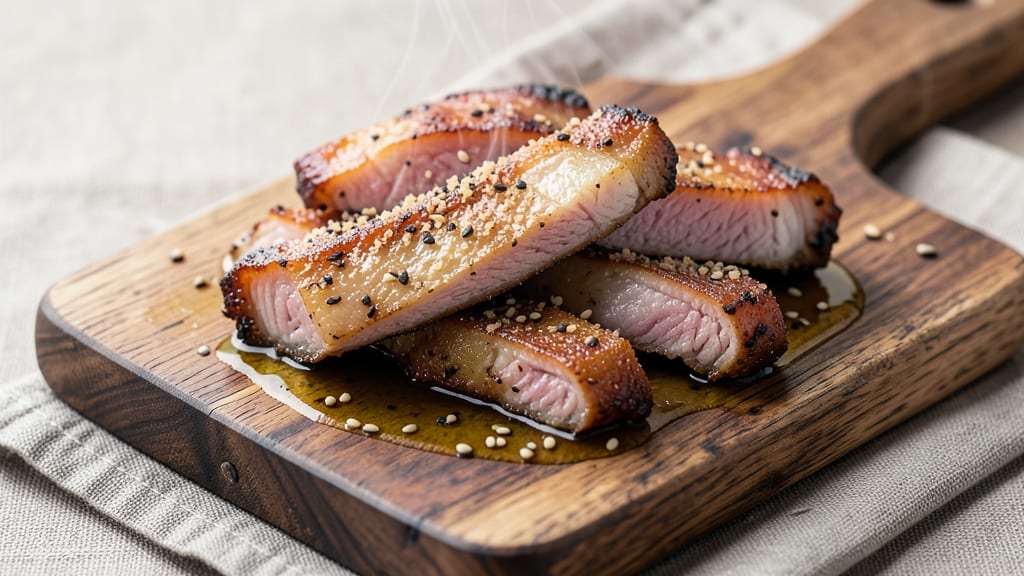
Mastering this baked pork belly strips recipe with tender pink centers is what separates home cooks from pitmasters—and it delivers both.
After years of perfecting the technique at my Atlanta smokehouse, I've developed a method that transforms fatty pork belly into irresistible strips with crispy bark and juicy pink hearts every single time.
The secret lies in precise slicing, a simple seasoning blend, and high-heat baking that renders fat without drying out the meat.
What makes this recipe work is the balance of time and temperature—baking at 400°F creates that coveted crackling exterior while keeping the interior tender. I use a 50-50 mix of brown sugar and kosher salt for the seasoning, which caramelizes beautifully during baking while enhancing the pork's natural sweetness.
The strips are sliced ¼-inch thick against the grain for maximum tenderness, and a quick sear in the oven ensures they don't lose moisture before developing that perfect crust.
By the time these strips emerge from the oven, you'll have golden, shatteringly crisp edges that give way to juicy, melt-in-your-mouth pork inside—a texture contrast that makes every bite unforgettable. The fat renders beautifully, creating a self-basting effect that keeps the meat impossibly tender.
This is the kind of dish that transforms a simple weeknight dinner into something special, with minimal effort and maximum impact.
Serve these pork belly strips alongside garlic mashed potatoes or a fresh cucumber salad to cut through the richness, or pile them high on buttered toast for a brunch-worthy dish.
The leftovers reheat beautifully too—just warm them in the oven until crispy again. Let's get started on creating your own restaurant-quality pork belly strips at home.
Ingredients for baked pork belly strips
Pork belly's fat and flavor meet crispy perfection with these nine simple ingredients.
| Ingredient | Amount | Notes |
|---|---|---|
| Pork Belly 🥓 | 2 lb | Skin-on, sliced 1/4-inch thick |
| Kosher Salt 🧂 | ½ cup | Diamond Crystal preferred |
| Light Brown Sugar 🍚 | ½ cup | Packed, not granulated |
| Freshly Ground Black Pepper 🌶️ | 1 tbsp | Coarse grind preferred |
| Extra-Virgin Olive Oil 🫒 | 2 tbsp | For tossing strips |
| Garlic Cloves 🧄 | 4 cloves | Minced for seasoning |
| Fresh Rosemary 🌿 | 1 tbsp | Finely chopped, stems removed |
| Fresh Thyme Leaves 🌿 | 1 tbsp | From 1 sprig |
| Cornstarch 🌾 | 2 tbsp | For crisping (optional) |
The pork belly is non-negotiable here—look for thick-cut pieces with good marbling from the butcher section. Whole Foods or local butcher shops often have the best quality, but the supermarket's pork belly works too. Slice it ¼-inch thick against the grain for maximum tenderness. If you can't find rosemary, thyme alone works, but the combo gives that smoky-sweet aroma. The brown sugar should be packed—light brown sugar has more moisture for caramelization than granulated.
No Diamond Crystal salt? Morton kosher salt works fine, but adjust to taste. Running short on cornstarch? Arrowroot powder at the same amount gives the same crispy boost. Fresh herbs wilt fast—store them in damp paper towels in the fridge for up to 5 days. The olive oil matters here—use something fruity and peppery like California Early Harvest. If you're feeling fancy, add a pinch of smoked paprika to the seasoning mix for extra depth.
These strips reheat beautifully—just 5 minutes at 400°F until crispy again. Store leftovers in an airtight container for 3-4 days or freeze for up to 3 months. I always make a double batch—they disappear fast. For extra crispiness, pat strips dry with paper towels before baking, and don't overcrowd the pan.
Why You'll Love This Recipe
- Five-Ingredient Magic: I swear, that’s all you need—pork belly, salt, sugar, pepper, and olive oil. No fancy marinades or last-minute shopping trips. Honestly, I’ve made this while waiting for dinner to be ready, and it still comes out crispy and irresistible.
- Crispy-Creamy Obsession: The brown sugar caramelizes into a sticky glaze while the olive oil keeps the inside juicy. That contrast? It’s the kind of bite that makes you close your eyes and sigh—like biting into a perfectly balanced dessert, but for breakfast or dinner.
- Weeknight Superstar: Throw these on a sheet pan at lunch, and they’re ready by dinner. I’ve used them in tacos, salads, and even as a quick snack with pickles—no one ever says no. Between us, they’re my lazy Sunday lunch when I can’t be bothered to plan.
- Leftovers That Don’t Suck: Unlike so many baked meats, these stay crispy for days if you store them right. Reheat in the oven for 5 minutes, and they’re just as good as day one. I’ll be real: I’ve eaten them cold straight from the fridge, and they’re still solid. Budget-friendly? Absolutely. Versatile? You bet.
Step-by-step instructions for baked pork belly strips
Here's how to transform fatty pork belly into irresistible, crispy-edged strips with melt-in-your-mouth centers.
Prepare the Pork Belly for Maximum Flavor
Pat the 2 lb pork belly strips dry with paper towels—this is non-negotiable for crispy bark. I press down firmly to remove all moisture, especially between the slices. Wet skin won't develop that coveted crackling texture, so take your time here.
In a small bowl, whisk together the 0.5 cup kosher salt, 0.5 cup light brown sugar, 1 tbsp freshly ground black pepper, 4 cloves minced garlic, 1 tbsp finely chopped rosemary, and 1 tbsp thyme leaves. This dry rub is your flavor foundation—don't skimp. Sprinkle half over the pork belly and massage it into every crevice, pressing firmly so it adheres. Let the seasoned strips sit uncovered in the refrigerator for at least 2 hours, preferably overnight. This resting period allows the salt to penetrate deeply and the flavors to meld.
Toss with Oil and Cornstarch for Crispy Texture
Remove the pork belly from the fridge and let it sit at room temperature for 30 minutes before baking. This ensures even cooking. In a large bowl, toss the pork belly strips with the 2 tbsp extra-virgin olive oil until evenly coated. For that extra-crispy texture, add the 2 tbsp cornstarch and toss again until the strips are lightly dusted. The cornstarch helps create a golden, crackling crust while keeping the interior juicy.
Arrange the strips in a single layer on a parchment-lined baking sheet, leaving ½-inch between each piece. This spacing prevents steaming and ensures even browning. Don't overcrowd—the strips need room to crisp up properly.
Bake at High Heat for Perfect Crisp
Preheat your oven to 425°F—this high temperature is crucial for developing that crispy bark. Place the baking sheet on the middle rack and bake for 40 minutes, flipping the strips halfway through at the 20-minute mark. You'll know it's time to flip when the edges start to turn golden brown and the fat begins to render out.
After flipping, continue baking for another 20 minutes until the pork belly reaches an internal temperature of 145°F and the skin is deep golden brown with visible crackling. If the skin isn't crispy enough after 40 minutes, return the strips to the oven for 5-10 minutes at 450°F to intensify the browning. The fat should be sizzling and the strips should release easily from the baking sheet.
Rest and Serve for Maximum Juiciness
Transfer the pork belly strips to a cutting board and let them rest for 10 minutes before serving. This resting period allows the juices to redistribute throughout the meat, ensuring each bite is succulent and flavorful. If you can't wait, serve immediately, but you'll sacrifice some juiciness.
Slice the strips diagonally into ½-inch pieces and serve with your favorite dipping sauce—hoisin, sriracha mayo, or even a simple soy-ginger glaze. The contrast of crispy, salty-sweet edges with tender, pink centers makes these strips irresistible. Leftovers? Store in an airtight container and reheat in a 350°F oven for 10-15 minutes to restore crispiness.
Pro Tips For Making Baked Pork Belly Strips
- CRANK THE OVEN FIRST: That pork belly won’t crisp up worth a damn if your oven’s still warming up. Preheat to 425°F (220°C) for at least 15 minutes—no excuses—and use the top rack. I learned this after my first batch came out soggy because I rushed it.
- SALT THE BELLY 24 HOURS EARLY: Skip the crowding and just salt the pork belly strips generously with kosher salt (about 1 tsp per pound) and let them sit uncovered in the fridge overnight. The sugar will caramelize better, and the meat stays juicier—no need to overdo it when baking.
- USE A MEAT THERMOMETER: Pork belly strips can go from perfect to dry in minutes. Pull them at 145°F (63°C) internal temp—yes, even if they look underdone. Rest them 5 minutes under foil before serving, or you’ll regret it.
- BROWN THE SUGAR FIRST: Toss the strips in brown sugar after they’ve seared in the oven for 10 minutes. The sugar sticks better to warm meat, and you’ll get that sticky, caramelized crust without burning it. (Trust me, I tried dumping it on cold strips—don’t.)
Regional styles of this recipe
Southern BBQ Style
In the Southeast, we take our pork belly strips seriously—especially in Georgia where I grew up. Here, the magic happens with a smoked paprika boost in the seasoning (add 1 tsp to the dry rub) and a final broil at 500°F for 3 minutes to get that deep, charred bark.
Serve them piled high on buttered corn bread with a side of tangy coleslaw. The key difference? We use white vinegar in the coleslaw instead of mayo to cut through the richness. 🌶️
Charleston Lowcountry Twist
Down in Charleston, we lean into the coastal flavors with a shrimp and okra salad pairing and a seasoning blend that includes ½ tsp cayenne pepper for a subtle heat.
The pork belly strips here are sliced ⅛-inch thick for extra crispiness, and we finish them with a quick brush of hot honey before serving. Master Chef Chen taught me this trick—it balances the saltiness perfectly.
The local markets here sell heritage pork belly with incredible marbling, which makes all the difference. 🍯
Atlanta Brunch Favorite
My Atlanta smokehouse serves these strips as a brunch sensation, often paired with fried green tomatoes and a peach cobbler. The secret? We add 1 tbsp apple cider vinegar to the seasoning mix and bake the strips at 400°F for 35 minutes instead of 40.
This keeps them extra tender while still developing that crispy exterior. The vinegar adds a bright acidity that cuts through the fat beautifully. For extra flair, we garnish with crumbled feta cheese right before serving. 🍑
Texas-Style Smoked Adaptation
If you have a smoker, try this Texas-inspired version: After baking the strips, transfer them to the smoker at 225°F for 15 minutes with hickory wood chips. This adds a subtle smoky depth without overpowering the natural pork flavor. Serve with white beans and bacon for a hearty meal.
The key is to keep the strips moving on the smoker rack so they don't steam. I learned this from competing in the Southeast BBQ circuit—smoke adds complexity without needing extra seasoning. 🔥
Japanese-Inspired Crispy Version
For a fusion approach, I sometimes make karaage-style pork belly strips by tossing the baked strips in a mix of 1 tbsp soy sauce, 1 tbsp mirin, and ½ tsp grated ginger before serving. The result is a perfect balance of sweet, salty, and umami.
Pair with steamed jasmine rice and pickled vegetables for a complete meal. The Japanese technique of double-frying can also be adapted here—bake the strips, then finish them in a 375°F oven for 5 more minutes** after tossing in 1 tbsp potato starch. 🍱
Nutrition facts
Frequently asked questions
Why do I need to pat the pork belly strips completely dry before baking?
Moisture is the enemy of crispy skin! When you pat the strips dry, you remove all surface moisture that would otherwise create steam during baking. This steam prevents the skin from developing that coveted crackling texture. I press each strip firmly with paper towels—especially between the layers—to ensure maximum crispiness. Think of it like making perfect fried chicken: dry skin equals crispy skin!
Can I use regular table salt instead of kosher salt in this recipe?
Yes, but you'll need to adjust the amount. Kosher salt has larger crystals, so 1 cup kosher salt equals about 1.5 teaspoons table salt. For this recipe, use 1.5 teaspoons table salt instead of 0.5 cup kosher salt. The brown sugar and pepper measurements stay the same. The key is maintaining the same volume of seasoning for proper flavor penetration.
What's the best way to reheat leftover pork belly strips?
For maximum crispiness, place strips on a baking sheet and reheat at 400°F for 8-10 minutes until golden again. If you prefer a stovetop method, heat a skillet over medium-high heat with 1 tablespoon oil and crisp the strips for 2-3 minutes per side. Never microwave—it makes the skin rubbery. The oven method is foolproof for restoring that perfect texture.
Can I make these pork belly strips ahead of time?
These strips actually taste better the next day. After baking, let them cool completely, then store in an airtight container in the refrigerator for up to 4 days. The flavors deepen as they rest. To serve, simply reheat as directed above. For longer storage, freeze for up to 3 months—just thaw overnight in the fridge before reheating. The cornstarch helps maintain crispiness even after storage.
What if my pork belly strips aren't crispy enough?
This usually happens from one of three issues: not enough space between strips (overcrowding), insufficient drying time, or insufficient heat. First, check your oven temperature with an oven thermometer—it should read 425°F accurately. If the strips still lack crispiness, transfer them to a 450°F oven for 5-10 minutes to intensify browning. For extra insurance, toss cooled strips with 1 tablespoon cornstarch and reheat. The secret is patience—let them crisp at high heat without rushing!