
Main Courses
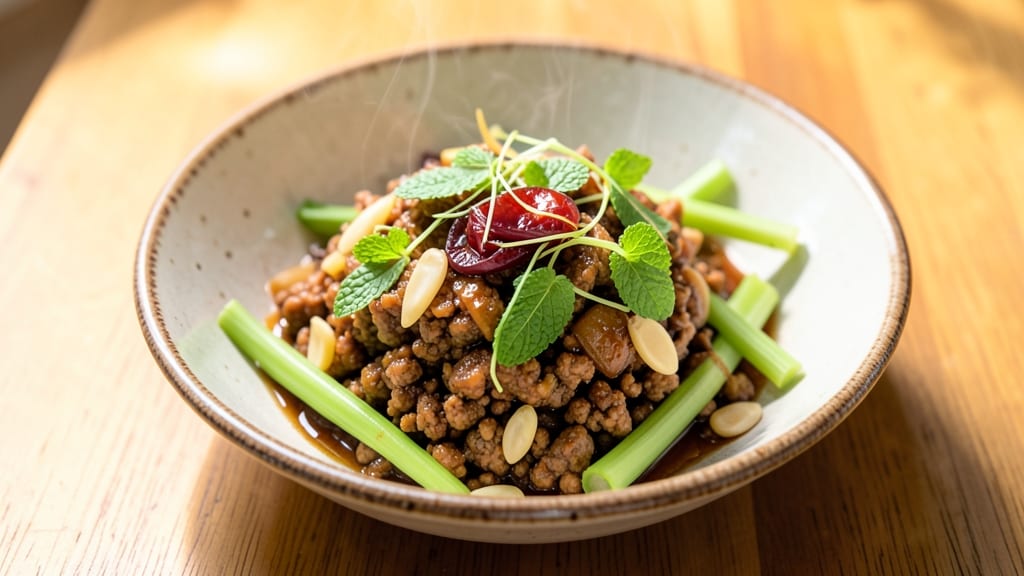
This authentic pork larb recipe brings the vibrant flavors of Laos to your kitchen with its perfect balance of tender meat, bright herbs, and zesty lime. The secret lies in finely mincing the pork by hand—just like street vendors do—to create that signature texture.
I first tasted larb in Bangkok's bustling markets, where the aroma of toasted rice powder and fresh herbs drew me in instantly.
The dish starts with ground pork tossed with a fragrant mix of shallots, garlic, and lemongrass, then bound with fish sauce and lime juice for that signature tang. Crunchy celery and mint add texture and freshness, while toasted rice powder gives it that unmistakable earthy depth.
The result is a dish that's as complex as it is simple—perfect for weeknight dinners or special occasions.
What makes this recipe truly special is its authenticity. Unlike many Western adaptations, this version stays true to the original by using traditional techniques and ingredients. The pork remains tender yet flavorful, while the herbs keep it bright and refreshing.
Serve it with warm sticky rice to soak up every last bit of that herby, lime-infused sauce.
For those who want to experiment, this method works beautifully with chicken or beef as well. The key is keeping the herbs fresh and the lime juice bright.
This is a dish that travels well too—pack it for picnics or bring it to gatherings where it’ll be the star of the meal.
Ingredients for authentic pork larb
Freshly minced pork and aromatic herbs create this vibrant Lao street dish.
| Ingredient | Amount | Notes |
|---|---|---|
| Ground Pork 🐖 | 1 ½ lb | Freshly ground preferred |
| Shallots 🧅 | 4 whole | Finely minced by hand |
| Garlic Cloves 🧄 | 6 cloves | Peeled and minced |
| Lemongrass 🌿 | 3 sticks | White part only, finely minced |
| Fresh Mint Leaves 🌿 | 1 cup | Stems removed, loosely packed |
| Celery Sticks 🥬 | 2 cups | Finely chopped, crisp |
| Fish Sauce 🍶 | ½ cup | Red Boat preferred |
| Lime Juice 🍋 | ⅓ cup | Freshly squeezed |
| Toasted Rice Powder 🌾 | ¼ cup | Homemade or store-bought |
| Sugar 🍚 | 1 tbsp | Granulated, adjust to taste |
| Salt 🧂 | ½ tsp | Kosher or sea salt |
| Black Pepper 🌶️ | ¼ tsp | Freshly ground |
| Vegetable Oil 🫒 | 1 tbsp | For cooking pork |
The pork is the foundation, so choose freshly ground if possible—pre-ground can get dry. Look for Red Boat fish sauce at Asian markets (or Three Crabs if unavailable), as it has the right balance of saltiness and umami. For lemongrass, grab the thick, pale lower stalks—discard the tough outer layers. Thai or Vietnamese markets usually carry pre-trimmed bundles, but if you're at a regular grocery store, pick up a few stalks and trim them yourself. Fresh mint and celery should be bright green and crisp—no wilting allowed. The toasted rice powder is non-negotiable for that authentic earthy depth; Rice Dream brand is widely available if you can't toast your own.
No fish sauce? Soy sauce plus a pinch of sugar works in a pinch, though it won't be identical. Running short on lemongrass? Double the garlic and lime juice for a similar citrus punch. The celery can be swapped for green onions if needed, though it loses that signature crunch. For the rice powder, if you can't find it, toast 1/4 cup uncooked jasmine rice in a dry pan until fragrant, then grind it. The sugar balances the saltiness—go easy if your fish sauce is extra salty. And if you're feeling adventurous, try this with ground chicken** instead of pork for a lighter version.
This keeps best in the fridge for 3 days, though the flavors actually deepen overnight. Store in an airtight container with a splash of lime juice to preserve freshness. For make-ahead prep, assemble everything except the celery and mint—add those just before serving to keep the crunch. It reheats beautifully in a skillet with a splash of water or broth. Pack it in a sealed container with a damp paper towel** for picnics—it'll stay fresh for up to 6 hours. The leftovers make killer sandwiches too, just pile it high on toasted baguette slices.
Why You'll Love This Recipe
- No Chopping Nightmare: The shallots and garlic get a quick pulse in the food processor—no knife skills required. I swear, my counter stays cleaner than my kitchen after this.
- Herb Bomb Flavor: That mint and lemongrass? It’s like a citrusy, fresh punch in every bite. The pork stays juicy, and the herbs cut through it so well—honestly, I’ve never tasted anything so vibrant.
- Party or Plate: Serve it in lettuce cups for a fancy touch or pile it high on rice for a hearty meal. My friends think it’s restaurant-worthy, but I make it in 20 minutes—between us, that’s the real win.
- Budget-Friendly Leftovers: A pound of pork goes far, and the flavors only get better the next day. I’ll be real: I’ve reheated it cold in salads, and no one ever complains—it’s my secret weapon for lazy lunches.
Step-by-step instructions for authentic pork larb
This method delivers the perfect balance of herby freshness, tangy brightness, and smoky depth that defines traditional pork larb.
Prepare the Herb and Aromatic Base
In a large mixing bowl, combine the 4 whole shallots and 6 cloves garlic cloves that you've already minced by hand. Add the white part of 3 sticks lemongrass (finely minced) and the 2 cups celery sticks (finely chopped and crisp). This aromatic foundation forms the backbone of the dish's complex flavor profile.
Gently fold in the 1 cup fresh mint leaves (stems removed) using a silicone spatula. The mint should be loosely packed but not packed down—you want to preserve its vibrant texture. This is where the dish gets its signature herbal zing, so don't skip this step. The celery adds a satisfying crunch that contrasts beautifully with the tender pork.
Cook the Ground Pork
Heat the 1 tablespoon vegetable oil in a large skillet over medium-high heat until shimmering but not smoking. Add the 1.5 lb ground pork and break it apart with a wooden spoon, spreading it evenly across the pan. Cook for 5-6 minutes until the pork loses its raw color and begins to brown in spots.
This cooking process develops the meat's natural flavors while preventing it from becoming greasy. You'll know it's ready when the pork releases easily from the pan and has developed a slightly crisp exterior. Avoid overcooking—you want the pork to remain tender and juicy, not dry. Drain any excess fat from the pan, leaving behind about 1 tablespoon to help build the sauce.
Combine and Season the Larb
Transfer the cooked pork to your mixing bowl with the herb and celery mixture. Add the 0.5 cup fish sauce, 0.33 cup lime juice, 0.25 cup toasted rice powder, 1 tablespoon sugar, 0.5 teaspoon salt, and 0.25 teaspoon black pepper. The toasted rice powder is crucial—it absorbs excess moisture and adds a subtle nutty depth that balances the dish.
Using clean hands or a sturdy spatula, mix everything together thoroughly. The combination of fish sauce and lime juice will make the mixture look slightly oily at first, but as you work it, the flavors will meld into a cohesive, vibrant paste. Taste and adjust the seasoning—you want a balance of saltiness from the fish sauce, tang from the lime, and sweetness from the sugar. This is where the dish comes together authentically.
Rest and Serve
Cover the bowl and let the larb rest at room temperature for 15-20 minutes. This resting period allows all the flavors to fully integrate, creating a harmonious blend of textures and tastes. The pork will absorb the aromatic marinade, and the celery will soften slightly while retaining its crunch.
Serve immediately while the pork is still warm and the herbs are vibrant. Traditional larb is often enjoyed with sticky rice, but it's also delicious wrapped in lettuce leaves for a no-mess handheld experience. The dish should be bright, herby, and slightly sticky from the fish sauce and lime—each bite should deliver a perfect balance of textures and flavors that define this authentic Southeast Asian classic.
Pro Tips For Making Authentic Pork Larb
- CHAR PORK FIRST: If you’re using ground pork, cook it until it’s just done—not gray, not pink, but that perfect in-between where it’s fully cooked but still juicy. Overcooking turns it rubbery, and nobody wants that in larb. Test with a thermometer: 160°F is your target.
- MINCE GARLIC FINE: Skip the rough chop—finely mince that garlic until it’s almost paste-like. I learned this the hard way when my larb tasted underwhelming because the garlic wasn’t breaking down enough. A mortar and pestle works best, but if you’re in a hurry, pulse it in a food processor until it’s tiny.
- SAVE THE MINT JUICE: Don’t just chop the mint leaves—squeeze out the stems too. They’ve got flavor, and wasting them means your larb will taste flat. Tear the stems between your fingers over a bowl, then mix that juice into your paste. It’s a small effort for a big payoff.
- CHILL THE PASTE: Let your larb paste sit in the fridge for at least 30 minutes before mixing with the pork. Cold ingredients blend better, and the flavors meld more evenly. I used to rush this, and the texture always ended up uneven—now I just plan ahead.
Common mistakes when making perfect results
Overcooking the Pork
One of the biggest mistakes I see is overcooking the pork, which turns it dry and rubbery. The goal is to cook it just until it loses its raw color—about 5-6 minutes over medium-high heat.
I’ve ruined more than one batch by letting it brown too long, so keep an eye on it. The pork should be tender but still juicy, not crispy or gray. If you’re using pre-ground pork, it’s even more important to monitor closely since it can dry out faster. 🔥
Skipping the Resting Time
Many people rush to serve larb immediately after mixing, but letting it rest for 15-20 minutes is crucial. This allows the flavors to meld and the pork to absorb the aromatic marinade properly.
I learned this the hard way—when I skipped resting, the dish tasted disjointed. The celery also softens slightly during this time, maintaining its crunch without turning mushy. Patience here makes all the difference.
Using Pre-Minced Ingredients
Authentic larb relies on hand-mincing shallots, garlic, and lemongrass for maximum flavor and texture. Pre-minced ingredients from jars lack the freshness and depth you get from doing it yourself. I still remember my first time mincing lemongrass by hand—it’s a bit tedious, but the payoff is worth it.
If you’re short on time, use a microplane for garlic and shallots, but never skip the fresh herbs. The texture and aroma are non-negotiable for that true street-food taste. 🌿
Ignoring the Toasted Rice Powder
Many recipes omit the toasted rice powder, but it’s the secret to authentic larb. This ingredient absorbs excess moisture and adds a nutty, earthy depth that balances the dish. If you can’t find it, toast ¼ cup uncooked jasmine rice in a dry pan until fragrant, then grind it.
Skipping it makes the larb taste flat and watery. I’ve tried it both ways, and the difference is night and day—don’t skip this step!
Overpowering with Fish Sauce
Fish sauce is salty, so it’s easy to overdo it. Start with ½ cup and adjust to taste—you can always add more, but you can’t take it out. The goal is a balance of saltiness, tang, and sweetness. I’ve had batches where the fish sauce dominated, making the dish inedible.
Taste as you go and adjust gradually. If your fish sauce is extra salty, reduce the amount slightly or add a pinch of sugar to balance it out.
Using Wilted Herbs
Fresh, vibrant herbs are the soul of larb. Wilting mint or celery kills the dish’s bright, fresh flavor. Always pick herbs that are crisp and green—no yellowing or sliminess allowed. I once used slightly wilted mint out of habit, and the result was disappointing.
If your herbs are past their prime, give them a quick soak in ice water for 10 minutes to revive them. The texture and flavor difference is dramatic. 💫
Nutrition facts
Frequently asked questions
Why does this pork larb recipe call for hand-mincing ingredients?
Hand-mincing shallots, garlic, and lemongrass releases more flavor and creates a finer texture than pre-minced jarred versions. The process also helps break down the fibers for better absorption of the fish sauce and lime. For efficiency, use a microplane for garlic and shallots, but never skip fresh herbs—they're the heart of authentic larb.
Can I make pork larb ahead of time?
Yes! Assemble everything except the celery and mint, then refrigerate for up to 3 days. Add the fresh herbs just before serving to maintain their vibrant crunch. The flavors actually improve overnight as they meld together. For picnics, pack it in an airtight container with a damp paper towel to keep it fresh for up to 6 hours.
What's the best way to serve pork larb?
Traditionally, it's served with warm sticky rice to soak up the herby sauce. For a no-mess option, wrap portions in butter lettuce leaves—this is especially popular at street markets. You can also serve it as a filling for spring rolls or over crispy rice paper for extra texture.
Is there a vegetarian version of pork larb?
While traditional larb uses meat, you can make a vegetarian version with mushrooms or tofu instead of pork. Use shiitake mushrooms for their meaty texture, and increase the herbs by 20% to compensate for the lack of meaty flavor. The toasted rice powder and fish sauce (or soy sauce) remain essential for authentic flavor.
How do I adjust the spice level?
This recipe balances heat naturally, but you can add chili flakes or bird's eye chili to taste. For a milder version, reduce the fish sauce slightly (it has some natural heat) and add a pinch of sugar. The lime juice already provides enough tang, so adjust spices gradually—you can always add more, but you can't remove it.