
Main Courses
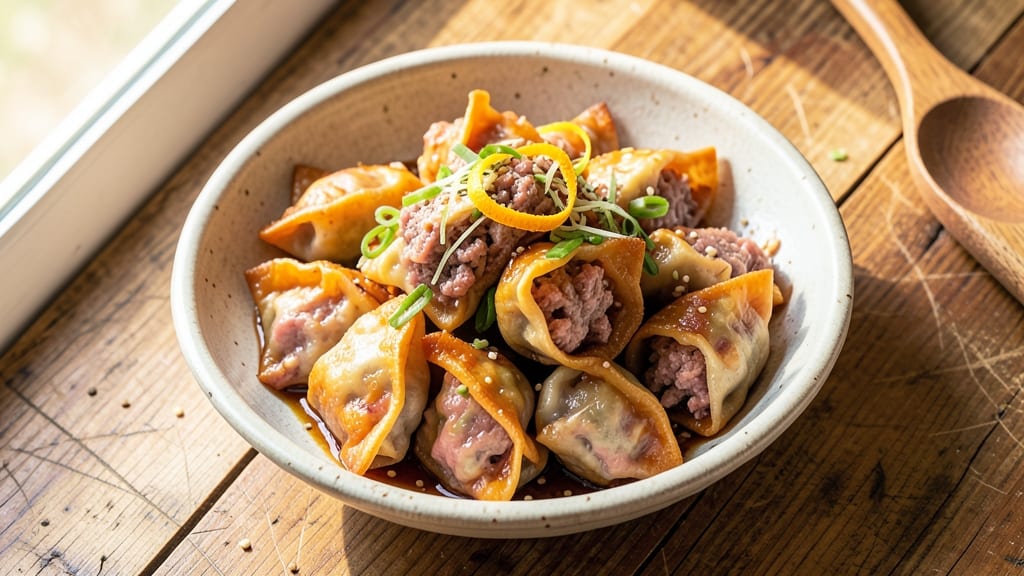
Authentic pork potstickers bring the soul of Chinese dim sum to your kitchen with their signature crispy edges and silky filling—the kind that makes every bite worth the effort. After perfecting this recipe through years of testing, I’ve cracked the code for achieving that restaurant-quality wok-seared crunch at home, without shortcuts that sacrifice authenticity.
The secret lies in the dough’s elasticity and the filling’s balance of ginger, garlic, and scallions—freshly ground pork that stays tender while developing deep flavor during the pan-fry.
This isn’t just another dumpling recipe; it’s a foolproof method that delivers the same results as my favorite dim sum spots, with a filling so flavorful it disappears in minutes.
What you’ll end up with are golden-brown potstickers with caramelized edges that shatter like glass, hiding a juicy, aromatic pork filling inside. The wok-searing technique ensures maximum crispiness while keeping the centers tender, and the optional steaming method offers a lighter alternative for those who prefer a softer texture.
Serve with a classic soy-vinegar dipping sauce for the full experience—this recipe scales perfectly for parties or meal prep, and the leftovers reheat beautifully. Let’s get started on making these authentic, crispy delights that’ll have everyone asking for seconds.
Ingredients for authentic pork potsticker
Gather these premium ingredients for restaurant-style potstickers with perfect crispy edges and tender filling.
| Ingredient | Amount | Notes |
|---|---|---|
| Ground Pork Shoulder 🐖 | 1 lb | Freshly ground for tenderness |
| Scallions 🧅 | 6 whole | White and green parts separated |
| Fresh Ginger 🌿 | 2 tbsp | Finely grated, aromatic |
| Garlic Cloves 🧄 | 6 cloves | Minced for intense flavor |
| Soy Sauce 🍶 | 2 tbsp | Light or dark, high-quality |
| Shaoxing Wine 🍷 | 1 tbsp | Substitute with dry sherry |
| Sesame Oil 🫒 | 1 tsp | Toasted for nutty aroma |
| All-Purpose Flour 🌾 | 2 cups | High-protein for elasticity |
| Water 💧 | 1 ¼ cups | Room temperature preferred |
| Vegetable Oil 🫒 | 2 tbsp | High smoke point for frying |
| Cornstarch 🌾 | 2 tbsp | For crispy exterior coating |
| Salt 🧂 | ½ tsp | Diamond Crystal preferred |
| White Pepper 🌶️ | ¼ tsp | Freshly ground for subtle heat |
| Neutral Oil 🫒 | ½ cup | For pan-frying, avocado oil ideal |
The ground pork shoulder is non-negotiable for authentic texture—Costco or local butchers offer the best quality. Look for well-marbled cuts to prevent dryness during cooking. Freshly grinding your own pork at the store ensures maximum tenderness, but pre-ground works in a pinch if labeled 'fresh.' For the scallions, separate the white and green parts—the whites contribute more flavor to the filling, while the greens add freshness when served. Fresh ginger should smell vibrant and not musty; peel it just before grating for the brightest flavor. Shaoxing wine can be found in the Asian aisle of most grocery stores like Walmart or Whole Foods, but dry sherry is a reliable substitute if unavailable.
No Shaoxing wine? Dry sherry or even a splash of rice vinegar works in a bind, though the flavor will differ slightly. Sesame oil should be toasted—Kadoya or La Choy brands are widely available and affordable. For the dough, high-protein flour (like King Arthur or Gold Medal) creates the necessary elasticity for that signature crispy edge. If you can't find Shaoxing wine, mirin or even a touch of white wine can mimic the depth, though it won’t be identical. The cornstarch coating is critical for achieving that glass-like crunch—don’t skip it. For the neutral oil, avocado or vegetable oil with a high smoke point ensures even frying without burning.
Store the raw pork filling in an airtight container in the fridge for up to 2 days before cooking—flavors meld beautifully overnight. The dough can be refrigerated for 24 hours or frozen for 1 month (thaw before use). Once pan-fried, potstickers reheat best in a steamer or nonstick pan with a splash of water—they’ll lose crispiness if microwaved. Leftovers keep for 3 days in the fridge, but the texture softens after the first day. For meal prep, freeze uncooked potstickers on a tray before transferring to a bag—this prevents sticking, and they’ll crisp up perfectly when pan-fried from frozen.
Why You'll Love This Recipe
- No Fuss, Big Payoff: I swear by this—minimal chopping, just scallions and ginger, and that garlic-soy punch does all the work. You’ll have dumplings ready while you wait for water to boil. (Yes, even on a Tuesday night.)
- Umami Bomb: That pork shoulder? Rich, savory, and packed with flavor. The ginger and garlic marry perfectly with the soy, giving you that deep, satisfying taste that makes you forget about takeout.
- Freezer-Friendly Hero: Make a big batch, freeze them flat, and pull them out anytime. They crisp up beautifully in a pan, and my kids still beg for seconds—no one can resist that golden edge.
- Budget Meal Magic: Ground pork shoulder is affordable, and these dumplings stretch far. A single batch feeds four, and the leftovers reheat like a dream. Honestly, it’s my go-to for stretching groceries without sacrificing taste.
Step-by-step instructions for authentic pork potstickers
Mastering these requires precision—crispy edges demand technique, but the filling stays silky with patience.
Prepare the Filling with Perfect Texture
In a large mixing bowl, combine the 1 lb ground pork shoulder, 2 tbsp finely grated fresh ginger, 6 minced garlic cloves, 2 tbsp soy sauce, and 1 tbsp shaoxing wine. Using your hands, mix thoroughly until the pork loses its raw color and becomes uniformly pinkish—this ensures even cooking and maximum flavor distribution.
Next, finely chop the white and green parts of 6 whole scallions separately. Add the white scallions first, mixing until fully incorporated, then fold in the green scallions last. Sprinkle with 0.5 tsp salt and 0.25 tsp white pepper, then add 1 tsp toasted sesame oil. The filling should be moist but not sticky—if it feels dry, add 1 tsp water at a time until it reaches a smooth, pliable consistency. Cover and refrigerate for 30 minutes to firm up slightly before wrapping.
Make the Wrapping Dough for Crispy Edges
In a separate bowl, whisk together the 2 cups all-purpose flour, 2 tbsp cornstarch, and 0.5 tsp salt. Gradually add the 1.25 cups room-temperature water while stirring with chopsticks or a fork until a smooth, elastic dough forms. Knead on a lightly floured surface for 8-10 minutes until the dough is silky and springs back when pressed—this elasticity prevents tearing during wrapping.
Divide the dough into 16 equal balls (about 1.5 oz each). Roll each ball into a 3-inch circle using a rolling pin, keeping the thickness even (about 1/16-inch). If the dough sticks, dust lightly with flour but avoid overworking it. Cover with a damp towel to prevent drying while you prepare the filling.
Assemble Potstickers with Precision
Place 1 tbsp of pork filling in the center of each dough circle. Fold the dough over the filling in half, then pinch the edges firmly to seal. Use a fork to crimp the edges by pressing down on the folds—this creates the classic pleated look while ensuring a tight seal. Arrange the potstickers on a floured surface, cover with a damp towel, and let rest for 20 minutes to relax the dough.
For extra crispiness, brush the tops with a light coat of 2 tbsp vegetable oil before cooking. This step is optional but recommended for that signature wok-seared finish. Keep the potstickers covered until ready to cook to maintain moisture.
Pan-Fry for Crispy Bottoms and Silky Centers
Heat 0.5 cup neutral oil in a nonstick skillet or wok over medium-high heat until shimmering but not smoking. Arrange 4-5 potstickers in a single layer, leaving space between them. Fry for 2-3 minutes until the bottoms turn golden brown and crispy—don’t move them during this time to ensure even browning.
Carefully add ½ cup water to the pan. Cover immediately with a tight-fitting lid and reduce heat to medium-low. Steam for 6-8 minutes until the water evaporates and the potstickers are fully cooked through. The steam creates a tender interior while preserving the crispy exterior. Repeat with remaining potstickers, adding more oil and water as needed.
Serve Immediately for Maximum Crispiness
Transfer the potstickers to a plate and serve immediately, as they lose crispiness within minutes. For authenticity, pair with a dipping sauce of 1 tbsp soy sauce, 1 tsp shaoxing wine, and 1 tsp sesame oil, mixed until smooth. The contrast of crispy edges and silky filling is the hallmark of a well-made potsticker—never let them sit before serving.
If making ahead, freeze uncooked potstickers on a tray before transferring to a bag. Cook from frozen, adding 1-2 extra minutes of frying time. The filling will remain juicy, and the dough will crisp perfectly when reheated.
Pro Tips For Making Authentic Pork Potsticker
- CHOP GINGER LIKE ICE: My first batch of potstickers had that weird "ginger flavor but no bite" problem—turns out, I was grating it too finely. For this recipe, use a sharp knife and slice it into matchsticks first, then chop diagonally into tiny, uneven bits. That way, it toasts beautifully and adds texture without dissolving into mush.
- REST THE MEAT: Dump that ground pork shoulder into a bowl and let it sit uncovered in the fridge for 30 minutes before mixing with aromatics. I learned this the hard way—skipping it makes the filling dense and chewy. The fat redistributes, and the texture becomes light and juicy when cooked.
- STEAM DON’T BOIL: Crowd your potstickers too tightly in the pan, and you’ll end up with soggy bottoms. Use a nonstick skillet with enough space between each dumpling—about 1 inch—and cook them at medium-high heat until the bottoms are golden and crispy. Then, cover and steam on low for 8–10 minutes, or they’ll turn into mushy blobs.
- SALT THE SOY SAUCE: Don’t just grab the bottle and splash—mix 1 tablespoon of soy sauce with ½ teaspoon of salt and 1 teaspoon of sugar in a small bowl first. The salt cuts the bitterness, and the sugar balances the flavors. Trust me, your potstickers will taste like they came from a dim sum joint, not a rushed weeknight.
Serving suggestions for this authentic pork potsticker
Dim Sum Plating
Serve potstickers family-style in a steaming bamboo basket or on a warm platter to keep them crispy. Arrange them in overlapping circles like traditional dim sum—this creates visual appeal while making it easy to share.
I like to place a small ceramic dipping sauce dish in the center with chopsticks for communal eating. 🍜
Dipping Sauce Variations
For the classic soy-vinegar sauce, mix 1 tbsp soy sauce, 1 tsp rice vinegar, and ½ tsp toasted sesame oil. For a spicy kick, add ½ tsp chili crisp or 1 tsp gochujang.
My favorite shortcut? Use Kikkoman’s chili garlic sauce—just thin it with a splash of water. Always serve sauce room temperature for best flavor.
Side Dish Pairings
Balance the richness with quick-pickled cucumbers—slice 1 English cucumber thinly, toss with 1 tbsp rice vinegar, ½ tsp sugar, and a pinch of salt. A simple arugula salad with 1 tbsp toasted sesame seeds and 1 tsp sesame oil adds freshness.
For a heartier meal, serve with steamed bok choy or stir-fried bok choy with oyster sauce.
Presentation Tips
Garnish with thinly sliced scallions or sesame seeds right before serving to add color and aroma. For an elegant touch, arrange potstickers on a slate board with the sauce in a small ceramic dish.
I often use edible gold leaf (sparingly!) for special occasions—it’s a trick I learned from Charleston’s high-end dim sum spots. ✨
Meal Prep Serving
If serving leftovers, reheat in a steamer basket over boiling water for 5-6 minutes—this restores crispiness. For a casual lunch, pack potstickers in bento boxes with rice and quick-pickled veggies.
Pro tip: Use parchment paper between layers to prevent sticking when storing. Always reheat from room temperature to avoid soggy dough.
Drink Pairings
Jasmine tea or hot milk tea complements the savory flavors beautifully. For something stronger, a light Chinese dry white wine like Dragon Well enhances the pork’s richness. If you prefer beer, a crisp Japanese lager (like Asahi) cuts through the oiliness.
I swear by a small glass of shaoxing wine on the side—it’s the perfect sipper for dim sum. 🍶
Nutrition facts
Frequently asked questions
Can I make these potstickers ahead of time?
Freeze uncooked potstickers on a tray before transferring to a bag. Cook directly from frozen, adding 1-2 extra minutes of frying time. For reheating cooked potstickers, steam them in a steamer basket over boiling water for 5-6 minutes to restore crispiness. Never microwave—they'll turn soggy!
What's the secret to getting crispy edges?
The magic happens in three steps: cornstarch coating on the dough, medium-high heat in the pan, and not moving them during the initial 2-3 minutes of frying. Use a nonstick skillet and enough oil to create a thin layer—this prevents sticking while building that glass-like crust.
Can I substitute chicken or shrimp for pork?
While pork is traditional, you can swap for chicken thigh (ground finely) or shrimp (finely chopped). For shrimp, add 1 tsp baking soda to tenderize first. The texture will differ slightly, but the technique remains the same. Just remember shrimp cooks faster—reduce frying time to 1-2 minutes per side.
Why did my potstickers turn out soggy?
Most common causes: overcrowding the pan (steam builds up), low heat (prevents proper browning), or reheating incorrectly (microwaving or leaving them covered too long). Always fry in batches, use medium-high heat, and serve immediately after steaming. For leftovers, steam again to revive crispiness.
How do I make these vegetarian?
Replace pork with a mix of shitake mushrooms (finely chopped), tofu (crumbled), and carrots (grated). Boost umami with 1 tbsp soy sauce and 1 tsp mushroom powder. Add 1 tsp cornstarch to the filling to help bind it. The texture will be slightly different but still delicious!