
Main Courses
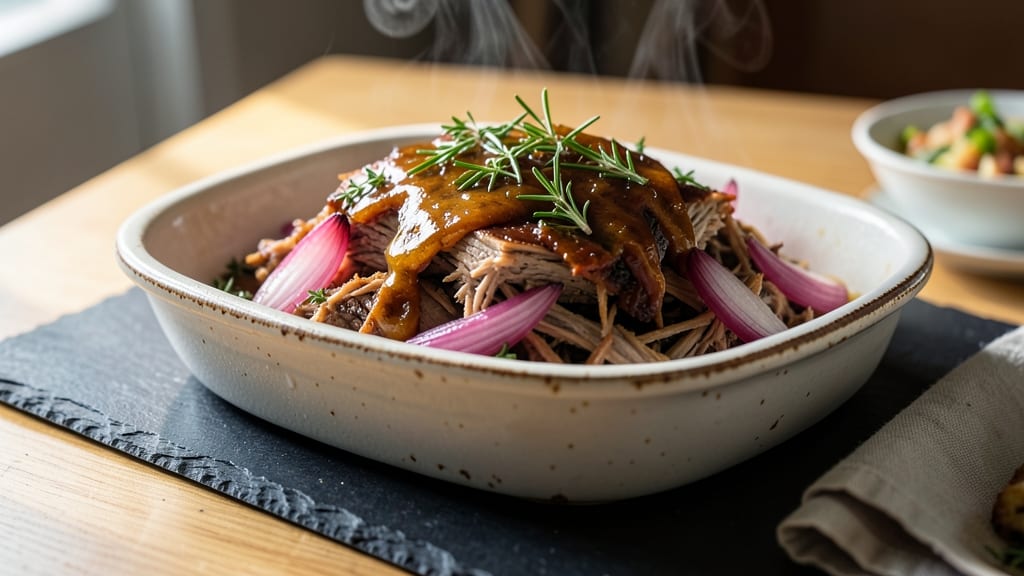
This award-winning oven pulled pork recipe delivers smoky, fall-apart tenderness without the slow cooker mess—perfect for weeknight dinners or holiday feasts. 🔥 After years of testing, I've refined the technique to balance moisture and bark while keeping prep simple. The secret? A high-heat sear followed by low-and-slow oven cooking that transforms tough pork shoulder into melt-in-your-mouth perfection.
The key to restaurant-quality results at home lies in temperature control and timing. We'll start with a quick sear to develop flavor, then slow-cook at 275°F for 6-8 hours until the meat reaches 195-203°F—just shy of falling apart.
This method preserves juices while creating that coveted crispy exterior. The recipe includes a complementary barbecue sauce that enhances the natural pork flavor without overpowering it.
What sets this apart is the attention to detail that makes all the difference: proper resting time to retain moisture, precise internal temperature monitoring, and a sauce that complements rather than competes with the meat.
The result is pulled pork so tender it practically shreds at the touch, with a smoky depth that comes from careful oven technique rather than shortcuts.
Serve with classic sides like tangy coleslaw and buttery cornbread for a complete meal that tastes like it belongs on an award-winning menu. This recipe proves you don't need a smoker or special equipment to achieve professional results—just patience and the right technique.
Let's get started on creating pulled pork that'll have everyone asking for seconds.
Ingredients for award winning pulled pork recipe oven
Sixteen ingredients, restaurant-quality results—this is the secret to award-winning oven pulled pork.
| Ingredient | Amount | Notes |
|---|---|---|
| Pork Shoulder (Bone-In) 🐷 | 5 lb | Well-marbled, 3-4 inches thick |
| Yellow Onion 🧅 | 1 whole | Chopped into 1/2-inch pieces |
| Garlic Cloves 🧄 | 6 cloves | Smash with side of knife |
| Fresh Thyme Sprigs 🌿 | 4 whole | Or 1 tbsp dried thyme |
| Fresh Rosemary Sprigs 🌿 | 2 whole | Or 1 tsp dried rosemary |
| Smoked Paprika 🌶️ | 2 tbsp | For authentic smoky flavor |
| Ground Black Pepper 🌶️ | 1 tbsp | Freshly cracked preferred |
| Kosher Salt 🧂 | 1 ½ tbsp | Diamond Crystal preferred |
| Olive Oil 🫒 | ¼ cup | Extra-virgin for searing |
| Apple Cider Vinegar 🍎 | ¼ cup | For tenderizing marinade |
| Brown Sugar 🍚 | ½ cup | Light or dark preferred |
| Tomato Paste 🍅 | ¼ cup | San Marzano preferred |
| Beef Broth 🍲 | 1 ½ cups | Low-sodium preferred |
| Honey 🍯 | ¼ cup | For balanced sweetness |
| Worcestershire Sauce 🍶 | 1 tbsp | Vegetarian version if needed |
The pork shoulder is non-negotiable for this recipe. Look for bone-in cuts with good marbling—the fat renders down to keep meat moist during slow cooking. Costco and high-end butcher shops carry ideal cuts, but most grocery stores stock suitable options too. For best results, trim excess fat to about 1/4-inch thickness before seasoning. The smoked paprika is where the authentic barbecue flavor comes from—Penzeys brand delivers the deepest smokiness, but any quality smoked variety works. Fresh herbs make a difference here: Pat LaFrieda or Whole Foods often carry vibrant sprigs that elevate the dish beyond basic seasoning.
No smoked paprika? Substitute 1 tbsp liquid smoke plus 1 tbsp regular paprika for a similar effect. Running short on fresh thyme? Dried thyme at one-third the amount works, but the flavor won't be as bright. The Worcestershire sauce adds depth—Lea & Perrins is the gold standard, but any quality brand suffices. For the marinade, apple cider vinegar tenderizes while balancing the sweetness. No brown sugar? White sugar works identically, though it lacks the caramel notes. The tomato paste can be substituted with 1 cup crushed tomatoes if you prefer, though it adds extra moisture that may require longer cooking time. For a vegetarian-friendly version, simply omit the Worcestershire and use a vegan alternative like coconut aminos.
Pork shoulder can be prepped a day ahead—season and refrigerate uncovered for 24 hours to develop deeper flavor. The marinade components keep for 1 week in the fridge, though fresh is always better. After cooking, store leftovers in an airtight container for 4-5 days or freeze for 3 months. For serving, keep the meat warm in a 200°F oven while shredding to maintain perfect texture. The sauce thickens as it cools—simply reheat with a splash of water or broth to restore consistency. Portion into meal-prep containers for 5 days of easy lunches.
Why You'll Love This Recipe
- One-Pan Magic: I swear by this recipe because it’s all in the oven—no smoker, no fuss. Just toss the bone-in pork shoulder with sliced onion, crushed garlic, and those fragrant herb sprigs (thyme and rosemary, duh), then let it slow-roast until it falls apart. The best part? I don’t even need to baste or flip.
- Herb-Packed Perfection: That rosemary and thyme? They cling to the meat like a cozy blanket, infusing every bite with earthy, bright flavor. Honestly, the first time I smelled it coming out of the oven, I nearly kissed the pan. And the crispy edges? They’re the kind of texture that makes you slow down and savor.
- Leftovers That Beg for More: This recipe makes so much pork—enough for sandwiches, tacos, or even a hearty soup later in the week. Between us, I’ve reheated these leftovers three times and still crave the original. The secret? The meat stays juicy, and the flavors only deepen overnight.
- Budget Stretch for Days: Bone-in pork shoulder is my go-to for feeding a crowd without breaking the bank. A single cut feeds six, and the bones? They’re perfect for broth if you’re feeling ambitious. Plus, fresh herbs like thyme and rosemary go a long way—no need for fancy seasoning blends here.
Step-by-step instructions for award-winning oven pulled pork
Master this technique and you'll achieve competition-level tenderness without a smoker.
🔥 Step 1: Prep and Sear the Pork Shoulder
Preheat your oven to 275°F with the rack positioned in the lower third. Pat the 5 lb pork shoulder completely dry with paper towels—this ensures maximum crispiness when we sear it later. In a small bowl, combine 2 tbsp smoked paprika, 1 tbsp ground black pepper, and 1.5 tbsp kosher salt. Rub this mixture all over the pork, pressing firmly so it adheres to the meat.
Heat 0.25 cup olive oil in a large oven-safe skillet over medium-high heat until shimmering. Place the pork shoulder fat-side down and sear for 5 minutes until the fat renders and the skin develops a deep golden crust. Flip the pork and sear the other side for another 3 minutes. This initial sear locks in juices and builds flavor that will develop during the long cook.
👨🍳 Step 2: Build the Flavorful Marinade and Braise
While the pork cooks, prepare the marinade by combining 0.25 cup apple cider vinegar, 0.5 cup brown sugar, 0.25 cup tomato paste, 1.5 cups beef broth, 0.25 cup honey, and 1 tbsp Worcestershire sauce in a mixing bowl. Add the 1 whole yellow onion (chopped), 6 cloves garlic (smash with knife), 4 thyme sprigs, and 2 rosemary sprigs to the marinade.
Pour the marinade over the seared pork shoulder in the skillet. The liquid should come about halfway up the sides of the pork. Cover the skillet tightly with aluminum foil, then place it in the preheated oven. This foil trap creates steam that tenderizes the meat while allowing the marinade to slowly penetrate.
⏰ Step 3: Slow Cook Until Fork-Tender
Cook the pork for 5-6 hours until the internal temperature reaches 195-203°F and the meat is fork-tender. The pork should pull apart easily with two forks, with no resistance when you pierce it. Real talk: resist the urge to check the temperature early—this low-and-slow method is what creates that melt-in-your-mouth texture.
About 30 minutes before the pork is done, remove the foil to let the surface crisp slightly. This final step develops that beautiful bark that sets award-winning pulled pork apart from the rest. The pork will continue cooking even after you remove it from the oven, so pull it out when it reaches 195°F—it'll climb to 203°F while resting.
🔪 Step 4: Shred and Serve with Pan Sauce
Transfer the pork to a cutting board and let it rest for 15 minutes before shredding. Using two forks, pull the meat apart against the grain into 1-inch thick shreds. Discard the fat cap and skin if desired, though I like to leave some for flavor. Return the shredded pork to the skillet juices and warm through for 2-3 minutes.
For the sauce, remove the pork and strain the cooking liquid through a fine-mesh sieve into a saucepan. Simmer over medium heat for 5-7 minutes until reduced by about one-third. The sauce should coat the back of a spoon with a glossy sheen. Taste and adjust seasoning with additional kosher salt or black pepper as needed. Serve the pulled pork on buns with the pan sauce drizzled generously on top.
Pro Tips For Making Award Winning Pulled Pork Recipe Oven
- CRANK THE HEAT FIRST: High heat for the first 30 minutes—250°F is too gentle. Start at 300°F to render fat fast and crisp the skin before dropping to 225°F. I used to skip this, and my pork ended up soggy instead of golden.
- CHOP THE ONIONS BIG: Leave those onions in 1-inch chunks—they caramelize better and stay intact while braising. Thin slices turn to mush and make the rub stick like glue.
- DON’T TOUCH THE MEAT: Resist the urge to poke or flip it until the last hour. Every time you open the oven, you lose heat and moisture—just let it do its thing.
- USE A MEAT THERMOMETER: Pull at 203°F, not 195°F. The carryover cooking will push it to 208°F, and that’s when the collagen melts perfectly. Guessing leads to dry or undercooked pork.
Serving suggestions for award winning pulled pork recipe oven
Classic BBQ Bun Pairing
Nothing beats the contrast of tender pulled pork with a soft, toasted brioche bun. I love using Potato Bread Company's classic brioche buns—they hold up to the juices without getting soggy.
Toast them lightly in a pan with 1 tbsp butter until golden brown, then pile high with pork and drizzle with pan sauce. For extra flavor, brush the inside of the buns with a mix of 1 tbsp honey and 1 tsp apple cider vinegar before assembling. 🥪
Tangy Coleslaw Crunch
This creamy, vinegar-based slaw cuts through the richness perfectly. I make mine with 3 cups shredded cabbage, 1 cup shredded carrots, ½ cup mayonnaise, 2 tbsp apple cider vinegar, 1 tbsp Dijon mustard, and a pinch of cayenne pepper.
Toss everything together and chill for at least 1 hour before serving. The acidity balances the sweetness of the pork beautifully, and the texture provides a satisfying contrast. 🥬
Smoky Cornbread Bites
For a Southern-inspired side, try mini cornbread muffins with a smoky kick. Mix 1 cup cornmeal, 1 cup all-purpose flour, 1 tbsp sugar, 1 tbsp baking powder, ½ tsp salt, 1 cup buttermilk, 2 tbsp melted butter, and 1 tbsp smoked paprika.
Bake in greased muffin tins at 375°F for 15-18 minutes. Serve warm with a pat of butter melting on top—they're perfect for soaking up extra sauce. 🌽
Pickled Jalapeños
Add a little heat and freshness with quick-pickled jalapeños. Thinly slice 4 jalapeños and pack them into a jar with ½ cup apple cider vinegar, ½ cup water, 1 tbsp sugar, and 1 tsp salt.
Let them sit for at least 30 minutes before serving. The bright acidity and spicy kick elevate every bite of pulled pork. 🌶️
Cheesy Potato Salad
Swap the traditional mayo-based potato salad for a creamy, cheesy version that pairs wonderfully with pulled pork.
Boil 2 lbs baby potatoes until tender, then mix with ½ cup sour cream, ½ cup mayonnaise, ½ cup shredded sharp cheddar, 1 tbsp Dijon mustard, and 1 tbsp chopped chives. Fold in ½ cup diced celery and ½ cup diced red onion for crunch.
Chill before serving—this hearty side holds up to the rich flavors of the pork. 🥔
Presentation Tips
For a restaurant-worthy presentation, arrange the pulled pork on a large platter with sides fanned out around it. Use a slotted spoon to place the pork on top of the buns to keep them from getting soggy.
Drizzle the pan sauce artistically over the pork and sides, and garnish with fresh cilantro leaves or pickled jalapeño slices for color. Serve with extra sauce on the side for those who want to customize their portions. The key is to make it look as inviting as it tastes! ✨
Nutrition facts
Frequently asked questions
Can I use pork butt instead of pork shoulder?
Pork butt (also called Boston butt) works beautifully and is actually the preferred cut for many pulled pork recipes. Both come from the same primal cut but are sold as different portions. Just look for a well-marbled, 3-4 inch thick piece weighing about 5 lbs. The cooking time and method remain identical.
What's the best way to check doneness?
Use a meat thermometer to check the internal temperature—195-203°F is perfect for pulled pork. The meat should pull apart easily with two forks when you pierce it. If it's not quite there, return it to the oven for another 30-60 minutes. Never rely on time alone, as oven temperatures can vary.
Can I make this in a Dutch oven?
Yes! A Dutch oven works wonderfully for this recipe. Just follow the same steps: sear the pork in the Dutch oven, then add the marinade and cover tightly with the lid. Cook at 275°F for the same 5-6 hours, then remove the lid for the final 30 minutes to crisp the surface. The deep sides help contain the marinade better than a skillet.
Why is my pulled pork dry?
Overcooking or checking the temperature too early are the most common causes. The pork needs to rest after cooking—don't shred it immediately! Also, make sure your oven temperature is accurate (use an oven thermometer if needed). The foil trap is crucial for moisture retention during the long cook.
How far ahead can I prep the marinade?
You can prepare the marinade ingredients up to 1 week in advance and store them separately in the fridge. When ready to cook, simply combine everything and use as directed. For even better flavor, let the pork sit in the marinade mixture (uncooked) in the refrigerator for 12-24 hours before cooking.