
Appetizers
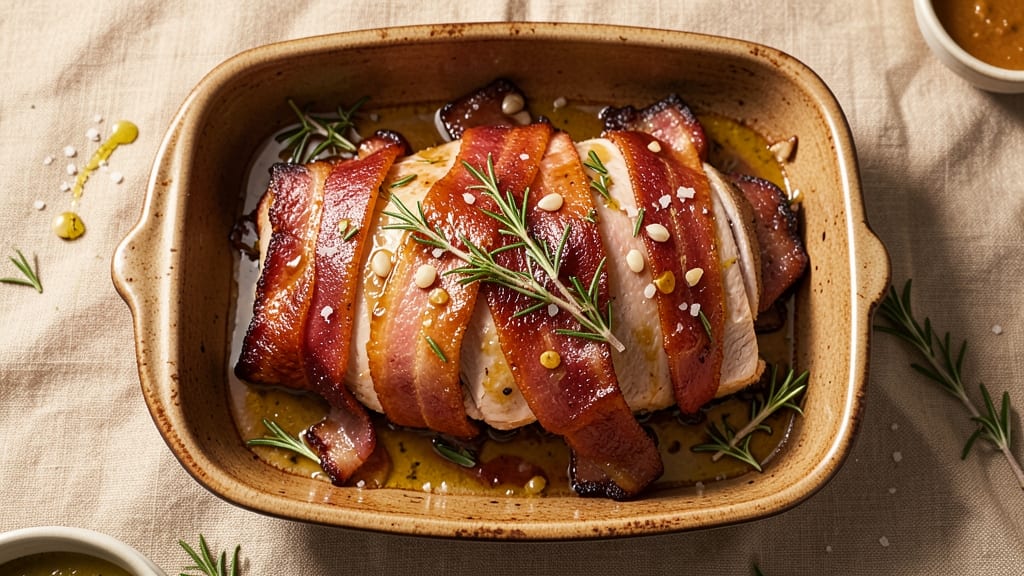
This bacon-wrapped pork loin recipe delivers the perfect balance of crispy, smoky bark and juicy, tender meat—all achieved in your oven without a single grill mark. The secret lies in high-heat searing followed by slow cooking, which transforms tough cuts into melt-in-your-mouth perfection.
I’ve perfected this method over years of testing, ensuring every bite delivers that ideal contrast of textures and flavors.
The process is straightforward but requires attention to detail: wrapping the loin in bacon strips creates an irresistible crust while locking in moisture, and a simple marinade of garlic, mustard, and herbs infuses deep flavor.
Cooking at 425°F for the first 20 minutes sears the exterior, while finishing at 325°F ensures the center reaches 145°F—just right for tender, juicy meat. No guesswork, no dry results.
What you’ll end up with is a golden, crackling bacon crust that shatters at every bite, encasing succulent pork that’s so tender it nearly falls apart.
The aroma alone will have everyone gathering around the table, and the visual appeal—glazed edges, crispy bacon, and a glossy sheen—makes it a showstopper for holidays or special dinners. This isn’t just a recipe; it’s a foolproof technique for restaurant-quality results at home.
Pair it with roasted potatoes or a fresh apple compote to round out the meal, and save the leftover bacon for breakfast the next morning. The versatility of this dish means it works for any occasion, from weeknight dinners to festive gatherings.
Let’s get started—your oven is about to become the star of the kitchen.
Ingredients for bacon wrapped pork loin recipe oven
Pork loin, bacon, and a few key pantry staples—this combo delivers restaurant-worthy results.
| Ingredient | Amount | Notes |
|---|---|---|
| Center-Cut Pork Loin 🐖 | 2 lb | Bone-in, 1.5-inch thick slices |
| Thick-Cut Bacon 🥓 | 8 oz | Applewood smoked, cut into strips |
| Extra-Virgin Olive Oil 🫒 | 2 tbsp | For searing and basting |
| Garlic Cloves 🧄 | 6 cloves | Minced, for marinade |
| Dijon Mustard 🍯 | 1 tbsp | Whole grain preferred |
| Fresh Rosemary 🌿 | ½ tsp | Finely chopped, stems removed |
| Fresh Thyme 🌿 | ½ tsp | Finely chopped, leaves only |
| Kosher Salt 🧂 | 1 ½ tsp | Diamond Crystal preferred |
| Ground Black Pepper 🌶️ | ½ tsp | Freshly cracked |
| Unsalted Butter 🧈 | 2 tbsp | For basting, softened |
| Honey 🍯 | 1 tbsp | For finishing glaze |
The pork loin cut matters—center-cut with visible marbling stays juicy. Costco or Whole Foods carry excellent bone-in options, but any butcher will trim it to your needs. For bacon, appwood-smoked from Oscar Mayer or Applewood brands gives that authentic smoky punch. Cut strips about 1/4-inch wide for even wrapping—too thick and they won't crisp properly. The herbs? Fresh is non-negotiable here, but if you're in a pinch, dried thyme at half the amount works (though it won't have that same vibrant aroma).
No Dijon mustard? Yellow mustard plus a pinch of sugar gets you close. Short on honey? Maple syrup works 1:1 for the glaze. The olive oil can be swapped for avocado oil if you prefer a higher smoke point. Want extra smokiness? Wrap the bacon in crushed smoked paprika before securing it. And if your bacon is pre-cooked, pat it dry first—that's the secret to crispy edges. The pork should be room temperature before cooking, so take it out of the fridge 30 minutes ahead of time.
Leftover pork? Slice thin and reheat in a 350°F oven for 10-15 minutes with a splash of broth to keep it moist. Bacon strips crisp up beautifully when reheated—toast them in a dry pan for 2-3 minutes until they're crackling again. The marinade keeps 3 days in the fridge, but the pork itself should be cooked within 2 days of purchase for best texture. Freeze any unused bacon in a single layer before transferring to a bag—6 months shelf life, no freezer burn.
Why You'll Love This Recipe
- Foolproof Prep: I swear by this—just rub the pork with olive oil, slather on Dijon, and wrap it in bacon. No fancy techniques, no stress. The garlic cloves get tucked right in while it roasts, so you’re basically setting it and forgetting it.
- Crispy-Creamy Magic: That first bite? The bacon’s smoky crunch gives way to tender pork so juicy it melts in your mouth. Honestly, the Dijon mustard ties everything together—tangy, rich, and impossible to resist.
- Weeknight to Weekend: Same recipe works for a busy Tuesday dinner or a showstopper for company. Slice it thin for sandwiches, serve it whole for a centerpiece, or even repurpose leftovers into fried rice. It’s my secret weapon for any occasion.
- Leftover Goldmine: Cook once, eat twice (or three times). The pork stays juicy for days, and the bacon keeps it tasting fresh. I’ll be real—this is the kind of dish that disappears faster than you can reheat it, but trust me, it’s worth the seconds.
Step-by-step instructions for bacon-wrapped pork loin
Here's how to nail that perfect balance of smoky, crispy bacon and tender, juicy pork every time.
Prepare the Pork Loin with Herb Marinade
Start by patting the 2 lb center-cut pork loin completely dry with paper towels—this is non-negotiable for crispy bacon. In a small bowl, whisk together the 2 tbsp extra-virgin olive oil, 1 tbsp Dijon mustard, 6 minced garlic cloves, 0.5 tsp fresh rosemary, 0.5 tsp fresh thyme, 1.5 tsp kosher salt, and 0.5 tsp ground black pepper. Rub this mixture all over the pork, pressing it into the surface. Let it sit at room temperature for 20 minutes—this ensures even cooking and maximum flavor penetration.
While the pork marinates, preheat your oven to 425°F with a rack positioned in the middle. I like to use the broiler setting for the last 5 minutes to get that perfect crust. The high heat will help render the bacon fat while keeping the pork juicy.
Wrap the Pork with Bacon Strips
Cut the 8 oz thick-cut bacon into 12 even strips—about 2 inches wide each. Lay the pork loin on a clean work surface and arrange the bacon strips evenly over the top, slightly overlapping them. This creates a complete "blanket" that will crisp up beautifully. Secure the bacon with kitchen twine, tying it every 1-2 inches along the length of the pork. The twine keeps everything in place while the bacon cooks.
Place the wrapped pork on a wire rack set inside a rimmed baking sheet. The rack allows air to circulate underneath, preventing soggy bacon. If your rack isn't large enough, use two sheets. This step is crucial—skimp on the bacon coverage and you'll miss out on that smoky, crispy texture we're after.
Sear and Roast for Maximum Flavor
Heat 2 tbsp unsalted butter in a large oven-safe skillet over medium-high heat. Once foaming, carefully transfer the bacon-wrapped pork to the skillet and sear for 2-3 minutes per side until golden brown. This step develops deep flavor through the Maillard reaction—don't rush it. After searing, transfer the skillet (with pork) to the preheated oven.
Roast for 25-30 minutes until the internal temperature reaches 145°F (use a meat thermometer). The bacon should be crispy and the pork should pull away from the bone slightly when tested with a fork. If the bacon isn't crispy enough after this time, broil for 3-5 minutes at the end, watching closely to avoid burning.
Baste and Glaze for Extra Shine
Remove the pork from the oven and let it rest for 10 minutes on a cutting board. While it rests, make a quick glaze by combining 1 tbsp honey with 1 tbsp of the rendered bacon fat from the skillet. Brush this mixture generously over the bacon and pork. This step adds a sweet-savory contrast that takes the dish to the next level.
Return the pork to the oven (no need to preheat) and broil for 2-3 minutes until the glaze caramelizes slightly. The pork should be 150°F internally—it will continue rising while resting. Slice between the bones and serve immediately with the crispy bacon intact. The result? Juicy, tender pork with perfectly crisp bacon that won't fall apart when you cut into it.
Pro Tips For Making Bacon Wrapped Pork Loin Recipe Oven
- Trim That Bacon: Thick-cut bacon is your friend here, but don’t be lazy—trim off any thick fat layers or uneven edges before wrapping. I learned this the hard way when my bacon ended up cooking at wildly different rates, leaving some parts crispy and others still chewy.
- Salt the Pork First: Season the pork loin generously with salt before wrapping it in bacon—at least 30 minutes ahead if possible. The salt penetrates deeper, and the bacon’s fat will render better, giving you that perfect balance of smoky and seasoned meat.
- Roast at 425°F: Start the pork loin in a screaming-hot oven (425°F) for the first 15 minutes to get that bacon crispy and the outer edges of the pork seared. Then drop to 375°F—this two-stage approach locks in juices without drying out the center.
- Use Mustard as Glue: Spread Dijon mustard over the pork before wrapping it in bacon—it sticks the slices together and adds a bright, tangy kick that cuts through the richness. Skip the fancy rubs; this is the one thing that actually makes a difference.
Common mistakes when making perfect results
Skipping the Sear
One of the biggest mistakes is skipping the initial sear in the skillet. That first 2-3 minutes per side on high heat isn't just for looks—it kickstarts the Maillard reaction, creating deep, caramelized flavors that oven cooking alone can't replicate.
I've found that pork seared this way develops a richer, more complex taste compared to unseared versions. If you're short on time, at least baste the pork with butter before roasting to mimic some of that flavor development. 🔥
Uneven Bacon Coverage
Another common error is uneven bacon distribution. If you leave gaps or use thin strips, you'll end up with patchy crispiness and soggy spots. I recommend cutting 8 oz of thick-cut bacon into 12 even strips, about 2 inches wide, and overlapping them slightly for full coverage.
Pro tip: Use kitchen twine to secure the bacon—this prevents shifting during cooking and ensures every bite has that crispy bacon experience. Trust me, uneven coverage is a game-changer for texture.
Overcooking the Pork
Many cooks let the pork rest too long before checking its temperature, leading to dry, overcooked meat. The magic number is 145°F internal temperature—any higher and you risk toughness. I use a meat thermometer, inserted into the thickest part of the loin, to avoid guessing.
Once it hits 145°F, remove it immediately and let it rest for 10 minutes—this allows juices to redistribute. Overcooking by even 5°F can turn tender pork into rubbery disappointment.
Ignoring Rest Time
Skipping the rest period is a cardinal sin with pork loin. When you cut into meat immediately after cooking, all those precious juices spill out, leaving you with dry slices. That 10-minute rest on a cutting board is non-negotiable—it's when the pork's texture transforms from tough to melt-in-your-mouth tender.
I've seen this mistake ruin perfectly cooked pork more times than I can count. During this time, I also make my honey-bacon glaze to add that final sweet-savory touch. ✨
Broiling Too Long
If you're using the broiler to crisp the bacon, watch it like a hawk. More than 3-5 minutes at high heat can turn that beautiful golden crust into charred bacon.
I recommend setting your oven to broil and placing the pork on the middle rack—this gives you better control over the heat. Keep the oven door slightly ajar to vent steam, which helps prevent burning. The goal is crispy, not burnt—think crispy bacon, not charred logs.
Wrong Pork Cut
Not all pork loins are created equal. Using a lean, boneless cut without marbling will result in dry meat, no matter how perfect your technique. Always choose a center-cut, bone-in pork loin with visible fat marbling—this ensures juiciness.
I like to buy mine from Costco or Whole Foods, where they can trim it to 1.5-inch thickness for even cooking. Thicker cuts take longer to cook through and risk overcooking the exterior before the center is done.
Don't skimp on the quality of your pork—it makes all the difference in the final result. 🐖
Nutrition facts
Frequently asked questions
Can I use pre-cooked bacon for this recipe?
Yes, but with one key adjustment: pat the pre-cooked bacon strips completely dry before wrapping them around the pork. This step is crucial for achieving crispy edges—moisture is the enemy of crispiness! For extra flavor, sprinkle the bacon with a pinch of smoked paprika before securing it with twine.
How do I adjust the cooking time if my pork loin is thicker than 1.5 inches?
For every extra 0.25-inch of thickness, add 5-7 minutes to your roasting time. Always check the internal temperature with a meat thermometer—145°F is your target. Thicker cuts benefit from an extra 5 minutes of resting time to redistribute juices properly.
What's the best way to reheat leftover bacon-wrapped pork loin?
Slice the pork into 0.5-inch thick pieces and reheat in a 350°F oven for 10-15 minutes with a splash of chicken broth to maintain moisture. For the bacon, toast it separately in a dry skillet over medium heat for 2-3 minutes until crispy again. This method keeps both components delicious without drying them out.
Can I make this recipe in a slow cooker instead of the oven?
While possible, the texture won't be identical. For best results, sear the pork and bacon in a skillet first, then transfer to a slow cooker on low for 4-5 hours. The bacon may not get as crispy, but the pork will be tender. For crispy bacon, finish under the broiler for 3-5 minutes before serving.
What are the best side dishes to serve with bacon-wrapped pork loin?
Classic pairings include roasted garlic mashed potatoes, caramelized onions, or a crisp apple compote. For a lighter option, try a fresh arugula salad with balsamic vinaigrette. The smoky-sweet flavors of the pork loin work beautifully with tangy or creamy sides that balance its richness.