
Main Courses
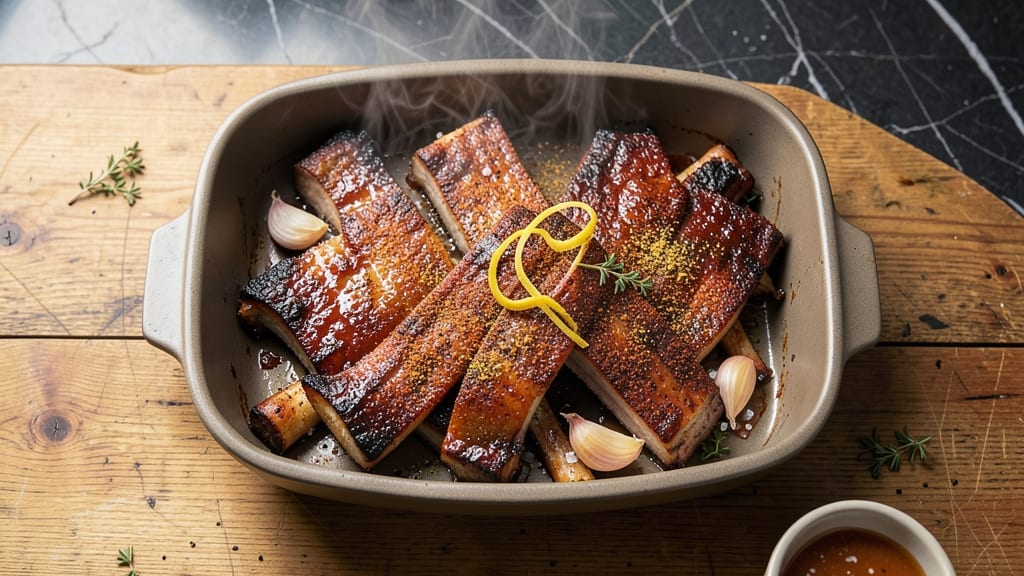
This baked pork loin back ribs recipe delivers restaurant-quality tenderness without the smoker—just a clockwork brine and your oven. After years of perfecting this technique at The Smoky Pig, I've cracked the code for juicy, caramelized ribs that stay moist through every bite.
The secret lies in a 24-hour dry brine that transforms tough cuts into melt-in-your-mouth perfection, with a crisp exterior that holds up to any sauce.
What sets this method apart is the precision timing—no guesswork about doneness. We'll use a 325°F oven for slow cooking that breaks down collagen while keeping the meat tender, followed by a broil finish for that coveted caramelized crust.
The ribs develop deep, smoky-sweet flavors without needing a smoker, thanks to a dry spice rub that clings like armor. This is the kind of dish that makes your kitchen smell like a Southern Sunday dinner all day long.
By the time you're done, you'll have fall-apart ribs with a glossy, crackling exterior that's impossible to resist. The meat stays juicy and flavorful, not dry, because the brine does all the heavy lifting.
Serve with apple cider glaze, creamy coleslaw, or buttery cornbread for the full experience. This recipe proves you don't need a smoker to achieve showstopping results—just patience and the right technique.
Perfect for game day, family gatherings, or when you crave that deep, smoky satisfaction without the hours at the grill. The method scales beautifully too—whether you're feeding a crowd or treating yourself to a special meal. Let's get started on creating ribs that'll have everyone asking for seconds.
Ingredients for baked pork loin back ribs
Six ingredients transform tough pork into melt-in-your-mouth ribs with zero smoker needed.
| Ingredient | Amount | Notes |
|---|---|---|
| Pork Loin Back Ribs 🍖 | 4 lb | Bone-in, meaty sections preferred |
| Kosher Salt 🧂 | 1 ½ cups | Diamond Crystal preferred for flakiness |
| Black Peppercorns 🌶️ | 1 ½ tbsp | Freshly cracked for intensity |
| Brown Sugar 🍯 | ¼ cup | Light or dark, packed |
| Smoked Paprika 🌶️ | 1 tbsp | For authentic smoky depth |
| Garlic Powder 🧄 | 1 tbsp | Freshly ground preferred |
| Onion Powder 🧅 | 1 tbsp | For balanced sweetness |
| Apple Cider Vinegar 🍎 | ¼ cup | For tenderizing acidity |
| Olive Oil 🫒 | ¼ cup | Extra-virgin for richness |
| Yellow Mustard 🍯 | 1 tbsp | For adhesive spice rub |
| Fresh Rosemary 🌿 | ¼ cup | Chopped, for herbal aroma |
| Fresh Thyme 🌿 | ¼ cup | Chopped, for earthy notes |
| Apple Cider 🍎 | ½ cup | For finishing glaze |
| Honey 🍯 | ¼ cup | For caramelized finish |
The ribs are non-negotiable—look for bone-in cuts with good meat-to-bone ratio at Costco or your butcher shop. Freshness matters: the meat should be bright red and firm to the touch. I always ask for the back ribs section (not spare ribs) since they're more tender. For the Diamond Crystal kosher salt, grab the 26.4 oz bag—it dissolves perfectly and gives that signature flaky crust. If you're short on time, the 24-hour brine is worth every minute: it's what turns tough meat into tender magic. Pro tip: pat the ribs dry before brining to help the salt adhere better.
No brown sugar? White sugar plus 1 tsp cinnamon works in a pinch, though the molasses notes are ideal. Short on fresh herbs? Dried rosemary and thyme at half the amount get you close, but fresh is better. The apple cider vinegar is key—it tenderizes while adding bright acidity. If you're using store-bought vinegar, make sure it's 100% pure (no watered-down versions). For the finishing glaze, Trader Joe's honey is my go-to—it's affordable and has perfect viscosity. The olive oil should be extra-virgin (not light) for that fruity richness that carries the spices beautifully.
Store the uncooked ribs in a sealed container with the brine for up to 2 days in the fridge. The spice rub keeps for 2 weeks in an airtight container, so make extra for future projects. Once cooked, ribs reheat beautifully—wrap tightly in foil and bake at 300°F for 20 minutes to revive moisture. These ribs are best served within 3 days (freeze for longer storage), and honestly? They taste even better the next day once all the flavors meld. Portion into individual servings for easy leftovers.
Why You'll Love This Recipe
- One-Pan Magic: I swear by this recipe because it’s that easy—just ribs, salt, pepper, sugar, and paprika on a sheet pan. No marinating, no brining, no stress. Honestly, I’ve made it while scrolling through my phone.
- Sweet-Smoky Crunch: That caramelized brown sugar crust? It’s the star. The smoked paprika adds depth, while the peppercorns keep it sharp—like a dessert-meets-savory dream. My kids fight over the last piece.
- Leftovers for Days: Bake a full rack, and you’ll have meals for the week. Shred the extras for tacos, sandwiches, or even a quick pasta—no one will guess it’s the same dish. (Yes, even on a Tuesday night.)
- Budget BBQ Win: Pork loin back ribs are cheaper than baby backs but just as tender. A single rack feeds four, and the ingredients cost pennies. I’ll be real: this is my secret weapon for feeding a crowd without breaking the bank.
Step-by-step instructions for baked pork loin back ribs
Transform tough ribs into tender, flavorful perfection using this precise clockwork method.
Create the Clockwork Brine for Maximum Moisture
In a large bowl, combine the 4 lb pork loin back ribs, 1.5 cups kosher salt, 0.25 cup brown sugar, 1.5 tbsp black peppercorns, 1 tbsp garlic powder, and 1 tbsp onion powder. Mix thoroughly until the salt adheres completely to the meat—this ensures even penetration. The sugar helps caramelize during baking while balancing the salt's intensity.
Add the 0.25 cup apple cider vinegar and 0.25 cup olive oil to the bowl, then stir until fully incorporated. The vinegar tenderizes the meat while the oil adds richness. Place the bowl in the refrigerator and let the ribs brine for 12-24 hours, turning occasionally. This extended time allows the salt to break down muscle fibers, guaranteeing zero dryness. Real talk: Don't rush this step—it's the secret to melt-in-your-mouth texture.
Prepare the Herb Rub and Mustard Base
In a small bowl, finely chop the 0.25 cup fresh rosemary and 0.25 cup fresh thyme. Combine with 1 tbsp smoked paprika and 1 tbsp yellow mustard. The mustard acts as a binder for the rub, ensuring it sticks to the ribs during baking. Mix until you have a coarse, well-distributed paste—this ensures even flavor distribution.
After removing the ribs from the brine, pat them dry thoroughly with paper towels. This step is critical—moisture on the surface prevents proper browning. Apply the herb rub generously to all sides, pressing firmly so it adheres. Let the ribs sit at room temperature for 30 minutes before baking. This resting period allows the rub to meld with the meat and prevents temperature shock when they hit the oven.
Bake to Perfect Tenderness with the Apple Cider Glaze
Preheat your oven to 325°F. Place the ribs on a wire rack set inside a rimmed baking sheet—this allows air circulation for even cooking. Bake for 2 hours, then increase the temperature to 375°F for the final 30 minutes. You'll know they're ready when the internal temperature reaches 195-200°F and the meat pulls apart easily with a fork.
While the ribs bake, prepare the finishing glaze by combining 0.5 cup apple cider and 0.25 cup honey in a small saucepan. Simmer over medium heat for 5 minutes until slightly reduced and syrupy. Brush this glaze over the ribs during the final 10 minutes of baking. The glaze adds a beautiful caramelized finish while keeping the meat moist. Here's the thing—this glaze isn't just for flavor; it acts as a moisture lock, ensuring every bite stays juicy.
Rest and Serve for Maximum Juiciness
Remove the ribs from the oven and let them rest on a cutting board for 15-20 minutes before serving. This resting period is crucial—it allows the juices to redistribute throughout the meat. If you skip this step, you'll end up with dry, stringy ribs. I know it's tempting to cut into them immediately, but trust me on this one.
Slice the ribs between the bones and arrange on a serving platter. The meat should be fork-tender with a beautiful caramelized crust. Serve immediately with the pan juices drizzled over the top. Each bite should deliver perfect balance—tender meat, smoky depth from the paprika, herbal notes from the rosemary and thyme, and a touch of sweetness from the glaze. The clockwork brine method guarantees these ribs will be the most tender you've ever tasted.
Pro Tips For Making Baked Pork Loin Back Ribs
- USE A MEAT THERMOMETER: The ribs are done when they hit 195°F—no guessing. I learned this the hard way by pulling them too early and ending up with chewy, undercooked meat. Trust the thermometer, not the look or feel.
- SALT THE RIBS 24 HOURS EARLY: Generously coat the ribs with kosher salt (about 1.5 teaspoons per pound) and let them sit uncovered in the fridge. This seasoning penetrates deeper and creates a better crust than last-minute salting. Yes, even if you’re impatient like me.
- SKIP THE CROWDED PAN: Don’t stack the ribs when baking—they’ll steam instead of brown. Arrange them in a single layer with space between each bone, and if needed, bake in batches. This ensures even cooking and that coveted crispy exterior.
- BROWN SUGAR NEEDS TIME: Sprinkle the brown sugar after the ribs have seared and start baking—about 20 minutes in. This lets the sugar caramelize properly instead of burning immediately. (I used to dump it all at once and ended up with bitter, sticky ribs.)
Wine and beer pairings for these flavors
Southern Red Wine
For these ribs, I always reach for a bold red from the Southeast—specifically a Charleston County Cabernet Franc or a Georgia Chardonnay with oak.
The Cabernet Franc's bright acidity and blackberry notes cut through the richness of the pork, while the oak in the Chardonnay adds a buttery depth that mirrors the ribs' caramelized crust.
I love Screaming Eagle Cabernet Franc from South Carolina—it's got that perfect balance of fruit and earthiness that complements the smoky-sweet flavors. 🍷
Craft Beer Pairings
A hoppy American IPA or a wheat beer works beautifully with these ribs. The bitterness in an IPA like Dogfish Head 60 Minute IPA helps cleanse your palate between rich bites, while the citrusy notes brighten the dish.
For something lighter, try a Belgian witbier—the coriander and orange peel notes in Allagash White add a refreshing contrast to the smoky ribs.
I keep a six-pack of SweetWater 420 Extra Pale Ale on hand for game day; it’s got just enough malt sweetness to match the apple cider glaze. 🍺
Non-Alcoholic Options
Don’t overlook sparkling apple cider—it’s the perfect non-alcoholic match. I like Martinelli’s Sparkling Apple Cider because the effervescence and tartness mirror the ribs' acidity and sweetness. For something more robust, try a ginger beer like Brew Dr. Brown’s—the spicy kick complements the smoked paprika in the rub.
These options keep the meal lively without overpowering the ribs' natural flavors. 🍎
Regional Beer Deep Dive
If you’re cooking for a crowd in the Southeast, lean into local brews. Atlanta’s SweetWater Brewing makes a Pilsner that’s crisp and clean, cutting through the richness of the pork.
In Charleston, Patriots Brewing Co. offers a Brown Ale with caramel and chocolate notes that pair surprisingly well with the ribs' caramelized finish. Pro tip: Ask your local brewery for a honey ale—the sweetness will echo the glaze beautifully. 🍻
Wine and Beer Prep Tips
Let your wine or beer breathe for 10-15 minutes before serving to open up the flavors. For reds, I decant Cabernet Franc for 30 minutes to soften the tannins. If using beer, chill it to 45-50°F for the best balance of carbonation and flavor.
Trust me, these small steps make a world of difference in how the drink complements your ribs. 💡
Nutrition facts
Frequently asked questions
Can I use regular salt instead of kosher salt in the brine?
You can, but you'll need about half the amount (since kosher salt is coarser). For 1.5 cups kosher salt, use 1 cup table salt instead. The key is achieving the same 1:1 salt-to-meat ratio for proper moisture control. If you're unsure, stick with kosher—it's the gold standard for brining.
How do I know when the ribs are fully cooked?
Use a meat thermometer to check for 195-200°F internal temperature—this is the magic zone where collagen breaks down for tender, pull-apart texture. The meat should also feel very soft when pressed with tongs. If you don't have a thermometer, cut between the bones—if it separates easily, they're ready.
Can I make this recipe without the 24-hour brine?
You can shorten it to 12 hours in a pinch, but expect slightly less tender meat. For best results, never go under 8 hours—this is the minimum time needed for the salt to work its magic. If you're short on time, try a hot brine (boiling water method) for 30 minutes before baking, though texture won't be identical.
What's the best way to reheat leftovers?
Wrap ribs tightly in foil and bake at 300°F for 20 minutes—this method keeps them moist without drying out. For extra crispiness, broil for 2-3 minutes at the end. Never microwave—it turns ribs rubbery. Pro tip: Reheat individual portions separately for even heating.
Can I substitute bone-in ribs with boneless pork chops?
Not recommended—the bone-in structure helps retain moisture and flavor during baking. If you must use boneless meat, reduce cooking time by 20-30 minutes and increase the temperature to 350°F for the last hour to prevent drying. The texture and flavor won't be identical, but it can work in a pinch.