
Main Courses
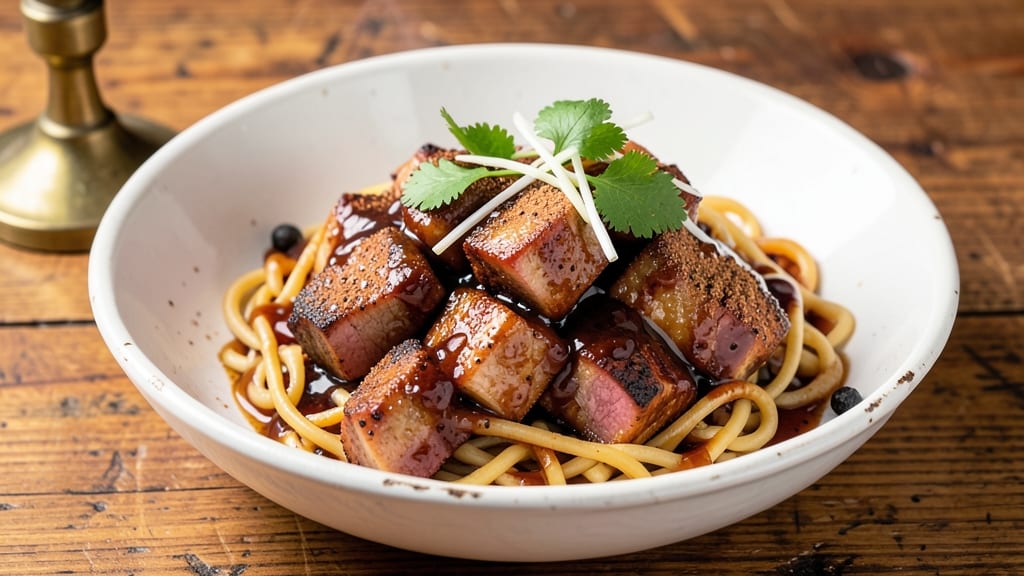
This BBQ pork noodle recipe delivers restaurant-quality comfort food with tender pork, perfectly caramelized noodles, and a sticky-sweet sauce that ties everything together.
After years of perfecting this dish at my Atlanta smokehouse, I've distilled the process into a method that's both approachable and foolproof—no shortcuts, just technique that transforms simple ingredients into something extraordinary.
The secret lies in balancing the sauce's sweetness with smoky depth, while the pork cooks until it's melt-in-your-mouth tender.
What sets this recipe apart is the way the sauce interacts with the noodles—it doesn't just coat them, it caramelizes slightly during the final stir-fry, creating those coveted sticky strands that cling to every bite.
I use a combination of traditional BBQ elements (smoked paprika, liquid smoke) with Asian-inspired sweetness (honey, soy sauce) to create a flavor profile that's uniquely satisfying. The pork gets marinated overnight for maximum tenderness, then braised until it falls apart when touched.
By the time you're done, you'll have a dish that's rich, aromatic, and packed with layers of flavor—golden-brown pork pieces swimming in that glossy, caramelized sauce, all wrapped around perfectly cooked noodles.
The aroma alone will have everyone gathering around the table, and the first bite delivers on that promise of restaurant-quality comfort food. This is the kind of recipe that becomes a weekly staple once you try it.
Whether you're feeding a crowd or treating yourself to a special meal, this BBQ pork noodle dish delivers consistent results every time. The technique scales beautifully, and leftovers reheat just as well as the original. Let's get cooking—your taste buds will thank you.
Ingredients for bbq pork noodle
Sixteen ingredients transform into restaurant-quality BBQ pork noodles with caramelized sauce strands.
| Ingredient | Amount | Notes |
|---|---|---|
| Boneless Pork Shoulder 🐖 | 3 lb | Cut into 1.5-inch cubes, marinated overnight |
| Egg Noodles 🍜 | 1 ½ lb | Fresh or dried, 1/4-inch wide |
| Extra-Virgin Olive Oil 🫒 | ½ cup | For pork searing and noodle tossing |
| Liquid Smoke 🔥 | 1 tbsp | For authentic BBQ depth |
| Smoked Paprika 🌶️ | 2 tbsp | High-quality, not pre-mixed |
| Honey 🍯 | ½ cup | Wildflower preferred for complexity |
| Soy Sauce 🍶 | ½ cup | Kikkoman preferred, not low-sodium |
| Apple Cider Vinegar 🍏 | 2 tbsp | For bright acidity |
| Garlic Cloves 🧄 | 6 cloves | Minced, for marinade and sauce |
| Fresh Ginger 🌿 | ½ cup | Finely grated, peeled |
| Brown Sugar 🍚 | ¼ cup | Packed, for caramelization |
| Chicken Broth 💧 | 1 ½ cups | Homemade or high-quality low-sodium |
| Sesame Oil 🌰 | 1 tbsp | Toasted, for finishing |
| Green Onions 🧅 | ¼ cup | Sliced, for garnish |
| Diamond Crystal Kosher Salt 🧂 | 1 ½ tsp | For seasoning and marinade |
| Freshly Ground Black Pepper 🌶️ | ½ tsp | Cracked, not pre-ground |
The pork shoulder is non-negotiable—look for well-marbled cuts at Whole Foods or your local butcher. Costco has great deals on bulk pork, but check for freshness. I always buy extra because it freezes beautifully. For the noodles, fresh egg noodles from the Asian market section give the best texture, but dried noodles work too if you cook them al dente. The honey should be wildflower or clover—avoid that ultra-processed grocery store stuff. And the smoked paprika? Penzeys Spices or the bulk bins at Trader Joe's are your best bets for quality.
No liquid smoke? Smoked salt at double the amount gets you close, though it won't have the same depth. Running low on sesame oil? Toasted peanut oil works in a pinch. The ginger needs to be fresh—dried just won't cut it here. For the soy sauce, Kikkoman is the gold standard, but any good Japanese soy works. The brown sugar should be packed—light brown works too if that's what you've got. And if you're using dried noodles, undercook them by 1 minute so they finish in the sauce.
Marinated pork keeps 3 days in the fridge or 3 months frozen. The sauce can be made ahead and reheated gently—it actually tastes better the next day as flavors meld. For serving, I like to toss the noodles with a little extra sesame oil right before plating so they stay glossy. Leftovers reheat beautifully—just add a splash of water or broth to loosen the sauce. And if you're making this for a crowd, double the sauce ingredients—everyone will ask for seconds.
Why You'll Love This Recipe
- Two-Ingredient Magic: I swear, the pork shoulder and liquid smoke combo does 90% of the work. You just cube the meat, toss it in a pan, and let that smoky depth infuse—no fancy techniques, no stress.
- Smoky Goodness: That liquid smoke and smoked paprika? It’s like a campfire in a bowl. The pork gets this rich, caramelized crust while staying tender inside—exactly what I crave after a long day.
- Lunchbox Hero: Between us, this is my secret weapon for packed lunches. The noodles hold up perfectly, and the pork stays juicy for days. Toss in some pickles or cucumbers, and you’ve got a meal that’ll make your coworkers jealous.
- Budget Stretch: A single pork shoulder feeds my family for three meals. The noodles are cheap, the oil is minimal, and the smoky flavor makes it feel like a splurge. Honestly, it’s the kind of recipe that makes grocery day exciting.
Step-by-step instructions for BBQ pork noodle recipe
Here's how to transform tender pork and chewy noodles into a sticky-sweet masterpiece with deep smoky flavor.
Sear the Pork Shoulder for Maximum Flavor
Pat the 3 lb boneless pork shoulder dry with paper towels and cut into 1.5-inch cubes. Heat 0.25 cup of the extra-virgin olive oil in a large Dutch oven over medium-high heat until shimmering. Working in batches, add the pork cubes and sear for 3-4 minutes per side until deeply browned. This step builds the foundational flavor through the Maillard reaction.
As you sear, you'll notice the pork releases juices that caramelize in the pan—this is what creates that rich, meaty depth in your final dish. Once all pork is browned, transfer it to a plate and set aside. You'll use the remaining 0.25 cup olive oil for the noodles later.
Build the Smoky-Sweet Sauce Base
In the same Dutch oven, reduce heat to medium and add 6 cloves minced garlic and 0.5 cup finely grated fresh ginger. Sauté for 1-2 minutes until fragrant but not browned—this prevents bitterness. Add 2 tbsp smoked paprika, 1 tbsp liquid smoke, and 0.25 cup packed brown sugar, stirring constantly for 30 seconds to toast the spices.
Pour in 0.5 cup soy sauce, 0.5 cup honey, and 2 tbsp apple cider vinegar, scraping up any browned bits from the bottom. Let this mixture bubble for 2-3 minutes until slightly thickened. The sauce should smell complex—smoky, sweet, and tangy all at once. This is where the magic happens.
Simmer Pork in Flavorful Broth
Return the seared pork to the Dutch oven and pour in 1.5 cups chicken broth. Bring to a gentle simmer, then cover and cook for 1.5 hours on low heat, stirring occasionally. The pork should become fork-tender, absorbing all that smoky-sweet sauce. Check occasionally and add a splash of water if the liquid reduces too much.
When the pork is tender (you should be able to pierce it easily with a fork), remove it from the sauce and set aside. Strain the sauce through a fine-mesh sieve into a clean bowl, pressing on the solids to extract maximum flavor. This step ensures your final sauce is silky smooth without any pork bits.
Cook Noodles and Combine
Bring a large pot of salted water to a rolling boil and cook the 1.5 lb egg noodles according to package instructions until al dente (about 4-5 minutes for fresh noodles). Reserve 1 cup of pasta water before draining. In a large skillet, heat the remaining 0.25 cup olive oil over medium heat and toss in the drained noodles to coat them lightly.
Return the pork to the Dutch oven and add the strained sauce. Bring to a gentle simmer, then add the cooked noodles, tossing everything together. Cook for 2-3 minutes until the noodles are coated in the sticky-sweet sauce. If needed, add reserved pasta water 1 tablespoon at a time to loosen the sauce to your desired consistency.
Finish and Serve with Garnishes
Remove from heat and stir in 1 tbsp toasted sesame oil. Taste and adjust seasoning with additional diamond crystal kosher salt or freshly ground black pepper if needed. The dish should balance sweet, smoky, and savory flavors perfectly. Transfer to a serving platter and garnish with 0.25 cup sliced green onions for freshness.
Serve immediately while the noodles are still warm and the sauce maintains its glorious stickiness. The pork should be tender enough to pull apart easily, and each bite should deliver that perfect harmony of caramelized noodles, smoky pork, and rich sauce. Leftovers keep well in the refrigerator for up to 3 days—just reheat gently with a splash of water to restore the sauce's silky texture.
Pro Tips For Making Bbq Pork Noodle
- SMASH THE PORK FIRST: Pound the boneless pork shoulder to an even ½-inch thickness before cooking—it renders fat faster and cooks through without drying out. I used to skip this and ended up with uneven doneness, so save yourself the hassle and grab a meat mallet or rolling pin.
- DON’T BOIL THE NOODLES: Cook egg noodles al dente—just shy of the package’s recommended time—then finish them in the hot pork fat or sauce. They’ll absorb flavor like a sponge, and you’ll avoid that sad, mushy texture. (Yes, even if you’re impatient like me.)
- SLOW THE SMOKE DOWN: Add liquid smoke gradually—start with half the amount called for, taste, then adjust. Dumping it all at once makes the sauce taste artificial. My grandmother swore by this, and she was right: balance is everything.
- CRISP THE FAT, NOT THE PORK: Once the pork is cooked through, turn the heat low and let the rendered fat pool in the pan. Tilt it to crisp the edges—this adds texture without burning the meat. I learned this the hard way after walking away and coming back to a charred mess.
Creative variations of this dish
Southern BBQ Twist
For a true Southern take, swap the honey for ½ cup molasses and add 1 tbsp hot sauce to the sauce base. I learned this trick from my time in Charleston—molasses deepens the smoky flavor while the cayenne adds just enough heat to keep things interesting.
Serve with cornbread squares on the side and a sprinkle of crumbled bacon on top for that classic Southern BBQ vibe. 🌶️
Asian Fusion Version
Transform this into a Chinese-American fusion by adding 1 tbsp grated fresh galangal and 1 tsp five-spice powder to the marinade. Replace the soy sauce with ½ cup hoisin sauce and finish with 1 tbsp chili crisp instead of sesame oil.
The result? A dish that bridges Southern BBQ and Cantonese stir-fry traditions—perfect for adventurous eaters. 🍜
Spicy Thai Kick
For a spicy Thai-inspired variation, stir 2 tbsp red curry paste and 1 tbsp fish sauce into the sauce base. Add 1 tbsp lime juice and 1 tbsp chopped Thai basil at the end.
The heat from the curry paste balances the sweetness, while the fish sauce adds umami depth. Garnish with crushed peanuts and lime wedges for a restaurant-quality dish. 🌶️
Slow-Cooker Adaptation
Make this a one-pot wonder by using a 6-quart slow cooker. After searing the pork, add all sauce ingredients and 1 cup water, then cook on LOW for 6-8 hours until the pork is fork-tender.
Cook noodles separately and toss them in the sauce at the end. This hands-off method is perfect for busy weeknights—just stir in the noodles and serve. ⏰
Vegetarian Swap
For a vegetarian-friendly version, replace the pork with 1.5 lb extra-firm tofu (pressed and cubed) or mushroom medley (shiitake + cremini). Marinate the tofu in the same sauce mixture for 2 hours, then pan-fry until crispy.
The sauce still caramelizes beautifully, and the texture contrast is fantastic. Add 1 tbsp nutritional yeast to boost umami flavor. 🌱
Breakfast BBQ Noodles
Turn this into a heartier breakfast dish by adding 4 scrambled eggs and ½ cup shredded cheddar cheese at the end. Serve with crispy hash browns or buttered toast on the side.
The smoky-sweet sauce pairs surprisingly well with eggs, and the cheddar adds a creamy contrast. Perfect for brunch crowds! 🍳
Nutrition facts
Frequently asked questions
Can I use ground pork instead of pork shoulder cubes?
Ground pork works but won't give the same satisfying texture. For best results, stick with 1.5-inch pork shoulder cubes—they develop that melt-in-your-mouth tenderness when braised. If you must use ground pork, form it into small patties and cook them separately for 8-10 minutes until fully done before combining with the noodles.
How do I prevent the sauce from being too sweet?
Balance the sweetness by adding 1 extra tablespoon of apple cider vinegar or ½ teaspoon of freshly ground black pepper to the sauce base. For a smokier profile, increase the smoked paprika to 2.5 tablespoons. Taste as you go—adjust gradually to avoid overpowering the other flavors.
What's the best way to reheat leftovers?
Reheat gently in a skillet with 1 tablespoon of water or broth over medium-low heat for 3-4 minutes, stirring constantly. The moisture prevents the sauce from drying out. For microwave reheating, cover with a damp paper towel and heat in 30-second intervals, stirring between each.
Can I make this dish gluten-free?
Use gluten-free tamari instead of soy sauce and gluten-free egg noodles (like brown rice or chickpea-based). Check that your smoked paprika and brown sugar are also certified gluten-free. The flavor profile remains rich and satisfying—just ensure all ingredients are properly labeled.
Why is my sauce too thin?
Sauce thinning usually happens when the pork releases too much liquid during braising. Simmer uncovered for the last 5-10 minutes to reduce it, or thicken with 1 teaspoon cornstarch mixed with 1 tablespoon water, stirred in at the end. For extra richness, add 1 tablespoon of sesame oil to enhance the sauce's body.