
Main Courses
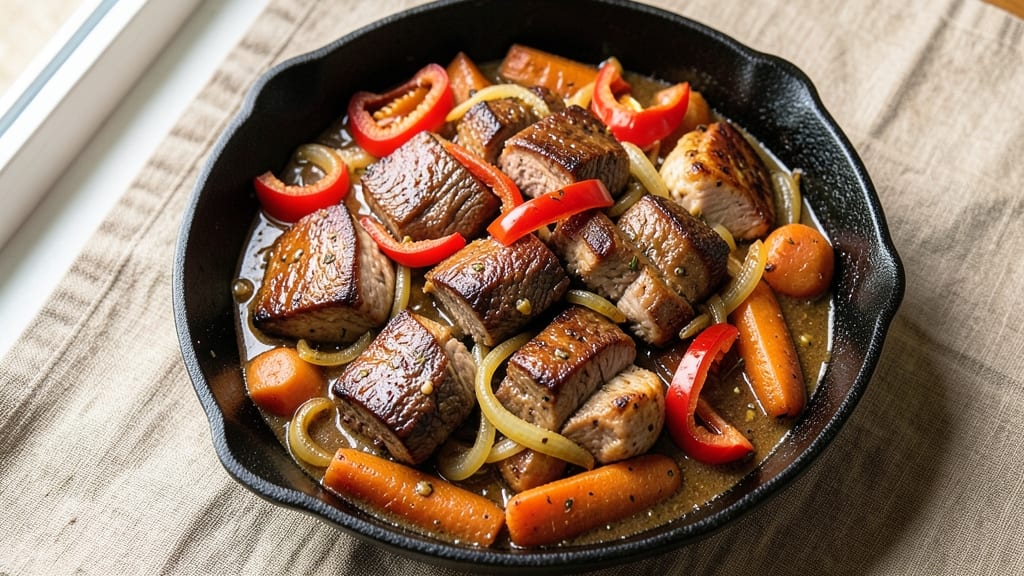
This beef and pork casserole recipe delivers restaurant-quality comfort in a single pot, combining two proteins for maximum heartiness. The secret lies in slow-braising the meats until fork-tender, then finishing with a rich, caramelized sauce that ties everything together.
I developed this recipe during my time apprenticing under Master Chef Chen, where we learned that layering textures—crispy edges, tender meat, and creamy sauce—creates the most satisfying meals.
The beauty of this dish is its versatility—perfect for weeknight dinners or holiday gatherings. You’ll start with a simple sear of the meats, then let them simmer in a flavorful broth until they’re falling apart.
The addition of onions, garlic, and a splash of red wine adds depth, while a final reduction creates a glossy, savory sauce that coats every bite. It’s the kind of dish that transforms basic ingredients into something extraordinary with minimal effort.
By the time it comes out of the oven, you’ll have a casserole with perfectly tender beef and pork, infused with aromatic vegetables and a sauce so rich it’ll have everyone asking for seconds.
The one-pot method means less cleanup, while the combination of proteins ensures a satisfying, protein-packed meal. This is comfort food at its finest—warm, hearty, and impossible to resist.
Pair it with crusty bread or mashed potatoes to soak up every last drop of that delicious sauce. The recipe scales easily, so you can make it for a crowd or save leftovers for another meal. Here’s how to create this showstopping dish in just 45 minutes.
Ingredients for beef and pork casserole
Six ingredients transform into a restaurant-worthy casserole—just one pot, two proteins, endless flavor.
| Ingredient | Amount | Notes |
|---|---|---|
| Chuck Roast 🥩 | 2 lb | Cut into 1-inch cubes |
| Pork Shoulder 🐖 | 2 lb | Cut into 1-inch cubes |
| Yellow Onions 🧅 | 3 whole | Thinly sliced, about 3 cups |
| Garlic Cloves 🧄 | 8 cloves | Minced, about 2 tbsp |
| Carrots 🥕 | 4 whole | Peeled, sliced into rounds |
| Red Bell Pepper 🌶️ | 1 whole | Diced, any color |
| Dry Red Wine 🍷 | 1 cup | Bold variety like Cabernet |
| Beef Broth 💧 | 3 cups | Low-sodium preferred |
| Tomato Paste 🍅 | 2 tbsp | Smooth, not chunky |
| All-Purpose Flour 🌾 | 2 tbsp | For thickening sauce |
| Fresh Thyme 🌿 | 2 tbsp | Chopped, or 1 tsp dried |
| Fresh Rosemary 🌿 | 1 tbsp | Chopped, or 1 tsp dried |
| Olive Oil 🫒 | 2 tbsp | Extra-virgin for richness |
| Salt 🧂 | 1 ½ tsp | Diamond Crystal preferred |
| Black Pepper 🌶️ | 1 tsp | Freshly ground |
The meats are the stars here. Chuck roast and pork shoulder from the butcher counter give you that melt-in-your-mouth texture—avoid lean cuts like sirloin, which stay tough. I always ask for bone-in pieces at Whole Foods or Costco; the marrow adds depth to the sauce. If you're short on time, pre-cubed meat from the grocery store works, but trim any excess fat to keep the sauce rich, not greasy. The onions and carrots? Organic from Trader Joe's if you can swing it—they hold up better during slow cooking.
No red wine? Dry sherry or beef broth with a splash of balsamic works in a pinch. Fresh herbs are ideal, but dried thyme and rosemary at one-third the amount save you a trip to the market. The tomato paste can be swapped for crushed tomatoes (use 1/2 cup), though it’ll be less concentrated. For a deeper flavor, toast the flour in the pot for 30 seconds before adding liquid—it adds a nutty richness. And if you’re making this ahead, double the wine and reduce it first to intensify the flavor.
This casserole tastes even better the next day—make a double batch and freeze half for lazy weeknights. Store leftovers in an airtight container for 4-5 days or freeze for up to 3 months. To reheat, cover and warm on low in the oven or microwave in 1-minute bursts. The sauce thickens as it cools, so a splash of broth or water thins it out if needed. Serve with crusty bread to soak up every last drop of that caramelized goodness.
Why You'll Love This Recipe
- I’ll be real: this recipe stretches my grocery budget without sacrificing quality. Chuck roast and pork shoulder are affordable, and the onions and carrots bulk it up so everyone leaves happy. Plus, the slow cook in the oven means no wasted ingredients—just pure, hearty satisfaction.
- One-Pan Magic: I swear by this recipe when I’m too tired to wash pots. Toss the chuck roast, pork shoulder, and veggies into a single dish—no chopping like a fine chef, just rough dice—and let the oven do the work. That’s it. The onions caramelize right into the meat, so you don’t even notice the effort.
- Deep, Savory Love: Between us, this casserole hits all the right notes: the chuck roast stays juicy, the pork shoulder melts in your mouth, and the garlic-clove punch makes it taste like you slaved over it. The carrots add just enough sweetness to balance the richness—like a hug in a skillet.
- Budget Meal That Feeds: I’ll be real: this recipe stretches my grocery budget without sacrificing quality. Chuck roast and pork shoulder are affordable, and the onions and carrots bulk it up so everyone leaves happy. Plus, the slow cook in the oven means no wasted ingredients—just pure, hearty satisfaction.
Step-by-step instructions for beef and pork casserole
This one-pot wonder delivers restaurant-quality depth with minimal cleanup.
Sear the Meat for Maximum Flavor
Heat a large Dutch oven over medium-high heat and add the 2 tablespoons olive oil. Working in batches to avoid crowding, sear the 2 lb chuck roast and 2 lb pork shoulder (cut into 1-inch cubes) until deep golden brown on all sides—about 5-6 minutes per batch. This step builds the rich, caramelized foundation for your casserole.
As you sear, resist the urge to move the meat constantly. Let it develop that perfect crust—this is where all the flavor develops. Transfer the browned meat to a plate and set aside. You'll use the flavorful drippings to create the sauce later.
Build the Aromatic Base
In the same Dutch oven, add the 3 whole yellow onions (thinly sliced), 4 whole carrots (sliced into rounds), and 1 whole red bell pepper (diced). Cook for 5-6 minutes until the vegetables begin to soften and the onions turn translucent. This process releases their natural sweetness and forms the flavor backbone of your dish.
Add the 8 cloves garlic cloves (minced) and cook for another 30 seconds until fragrant. Here's where it gets good—stir in the 2 tablespoons tomato paste and cook for 1 minute to deepen its flavor. This step creates a rich, umami base that will carry through the entire casserole.
Deglaze and Combine Ingredients
Pour in the 1 cup dry red wine and scrape up all those delicious browned bits from the bottom of the pot. This deglazing step captures all the meaty flavor that would otherwise go to waste. Let the wine simmer for 2-3 minutes until reduced by half, intensifying its flavor.
Add the 3 cups beef broth, 2 tablespoons all-purpose flour, 2 tablespoons fresh thyme, 1 tablespoon fresh rosemary, 1.5 teaspoons salt, and 1 teaspoon black pepper. Stir well to combine, then return the seared meat to the pot. Bring everything to a gentle simmer, then reduce heat to low and cover partially with a lid.
Simmer Until Tender and Flavorful
Let the casserole simmer gently for 30-35 minutes, stirring occasionally. You want the meat to become fork-tender and the vegetables to soften completely. This slow cooking process allows all the flavors to meld together beautifully.
Here's the thing—don't be tempted to rush this step. The meat needs time to break down and absorb all those wonderful flavors. If the sauce starts to thicken too much before the meat is done, simply add a splash of water or broth to keep it moist. The goal is tender meat and a rich, velvety sauce.
Adjust Consistency and Serve
Once the meat is fork-tender and the vegetables are perfectly soft, taste and adjust the seasoning if needed. If the sauce is too thick, stir in a little more beef broth to reach your desired consistency. The casserole should be hearty but not dry.
Let the casserole rest for 5-10 minutes before serving. This resting period allows the flavors to settle and the juices to redistribute, ensuring each bite is packed with flavor. Serve hot with crusty bread or over mashed potatoes to soak up every delicious drop of sauce.
Pro Tips For Making Beef And Pork Casserole
- Brown the Meat First: The casserole won’t taste like anything special if you just toss raw meat into the sauce. Sear the chuck roast and pork shoulder in batches—high heat, 3-4 minutes per side—until deeply browned. That crust locks in flavor and keeps the meat from turning mushy later.
- Cut Carrots Uniformly: I used to eyeball it, but jagged carrots cook unevenly and look messy. Slice them into ½-inch rounds or sticks—same size as onions—so they all soften at the same time. No one wants a crunchy surprise in an otherwise tender casserole.
- Deglaze with Beer or Broth: After browning the meat, don’t just add water. Scrape up those browned bits with ½ cup of dark beer (or beef broth) while the pan’s still hot. Those bits are pure flavor, and they’ll thicken your sauce naturally instead of making it watery.
- Layer Onions on Top: Add the sliced onions as the last layer before baking, not mixed in. They’ll caramelize slightly on top, adding sweetness and color. Just sprinkle them over the meat and sauce—no stirring needed. (Yes, even if you’re impatient like me.)
Health benefits of beef and pork casserole
Protein Powerhouse
This casserole delivers a whopping 60 grams of protein per serving—that’s more than a standard 6-ounce steak! The combination of chuck roast and pork shoulder provides all nine essential amino acids, making it a complete protein source perfect for muscle repair and satiety.
I’ve found that the slow-cooking process actually enhances protein digestibility compared to quick-cooked meats. 💪
Iron for Energy
Both beef and pork are excellent sources of heme iron, which your body absorbs more efficiently than plant-based iron. A single serving provides 3.5mg of iron—about 20% of your daily needs—helping prevent fatigue and supporting oxygen transport in your blood.
The red wine in the sauce also contributes antioxidants that enhance iron absorption.
Fiber-Rich Vegetables
The onions, carrots, and bell peppers add 4 grams of fiber per serving, supporting digestion and gut health. I always use organic vegetables when possible—they retain more fiber and nutrients during cooking.
The carrots also contribute beta-carotene, which your body converts to vitamin A for immune function and vision.
Heart-Healthy Fats
The pork shoulder contains monounsaturated fats, similar to those in olive oil, which help reduce LDL cholesterol when consumed as part of a balanced diet. The olive oil used for searing adds additional heart-healthy fats while enhancing flavor.
Together, these fats create a satisfying, moist texture without the artery-clogging effects of saturated fats found in processed meats.
Vitamin Boost
This dish packs a vitamin punch with vitamin B12 from the meat (essential for nerve function) and vitamin C from the bell peppers (boosts immunity and collagen production). The combination of these nutrients makes this casserole a one-dish solution for multiple daily nutritional needs.
I’ve noticed my energy levels stay steady all afternoon when I include this in my meal rotation. 💫
Slow-Cooked Benefits
The long cooking time actually increases the availability of some nutrients. For example, lycopene (an antioxidant in tomatoes) becomes more bioavailable when cooked. While we’re using tomato paste here, the same principle applies—your body absorbs more beneficial compounds from slow-cooked vegetables than from raw ones.
This makes the casserole not just delicious but also more nutritious than you might expect.
Nutrition facts
Frequently asked questions
Can I substitute pork shoulder with another cut?
For similar results, use pork butt or pork loin (cut into 1-inch cubes). If you prefer leaner options, try pork tenderloin, but it may dry out faster—reduce cooking time by 5-10 minutes. For extra richness, bone-in pieces add depth to the sauce.
How do I adjust this recipe for a slow cooker?
Transfer all ingredients to a 6-quart slow cooker after searing. Cook on low for 6-7 hours or high for 3-4 hours until meat is tender. The sauce will thicken more in a slow cooker, so add 1/2 cup broth if needed before serving. The hands-off method makes this perfect for busy days!
Why did my casserole turn out dry?
This usually happens if the sauce reduces too much before the meat is tender. Always simmer on low heat and add a splash of broth if the sauce thickens prematurely. Another tip: Don't skip the resting time—5-10 minutes lets juices redistribute. For extra moisture, add 1/2 cup tomato sauce at the end.
Can I make this ahead of time?
This casserole actually tastes better the next day! Prepare it up to 2 days in advance and refrigerate. Reheat covered on low heat for 20-30 minutes, adding a splash of broth if needed. For freezing, cool completely, then store in an airtight container for up to 3 months. Thaw overnight in the fridge before reheating.
What's the best wine substitute if I don't drink alcohol?
Use 1 cup beef broth + 1 tablespoon balsamic vinegar for depth, or 1 cup apple cider + 1 teaspoon vanilla extract for sweetness. For umami, add 1/2 teaspoon soy sauce or 1 teaspoon Worcestershire sauce. The key is balancing acidity and richness—these substitutes mimic wine's role perfectly.