
Main Courses
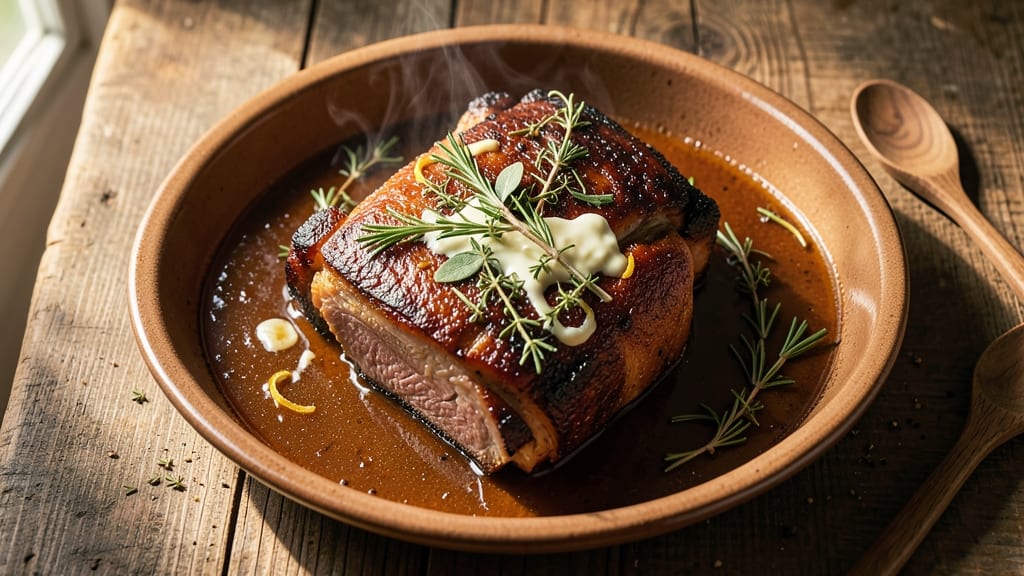
This Berkshire pork roast recipe transforms a simple cut into a centerpiece-worthy dish with a golden herb-butter crust and melt-in-your-mouth tenderness.
After years of perfecting the technique at The Smoky Pig, I've distilled what makes this pork unforgettable: a dry brine that locks in moisture and a compound butter crust that adds depth without overpowering the meat's natural richness.
The secret lies in patience—letting the pork rest before carving ensures those silky shreds that fall apart at the touch of a fork.
What sets this recipe apart is the balance between tradition and technique. We start with a dry brine that works overnight, eliminating the need for salty marinades that can mask the pork's inherent flavor. The herb-butter crust isn't just decorative—it creates a flavorful bark while keeping the interior juicy.
And yes, I know some chefs swear by sous-vide finishing, but this method delivers restaurant-quality results with just your oven and a little attention to temperature control.
By the time you're done, you'll have a roast that looks as impressive as it tastes—golden crust giving way to pink, tender meat that practically melts on your plate. The aroma alone will have your guests anticipating dinner before it's even served.
This isn't just pork; it's a showstopper that makes every occasion feel special, whether it's a holiday feast or a Sunday family dinner.
The beauty of this recipe is its versatility. Serve it with classic apple sauce and roasted potatoes for a traditional spread, or pair it with braised greens and crusty bread for a more elegant presentation.
The leftovers reheat beautifully too—just a quick warm in the oven with a splash of broth to keep them moist. Trust me, once you try this, your idea of pork roast will never be the same.
Ingredients for berkshire pork roast
Six ingredients transform this Berkshire pork into a showstopper with golden crust and melt-in-your-mouth tenderness.
| Ingredient | Amount | Notes |
|---|---|---|
| Berkshire Pork Roast 🐖 | 4 lb | Bone-in, center-cut preferred |
| Kosher Salt 🧂 | 1 ½ tbsp | Diamond Crystal preferred |
| Fresh Thyme 🌿 | ¼ cup | Stems removed, loosely packed |
| Fresh Rosemary 🌿 | ⅛ cup | Needles only, finely chopped |
| Fresh Sage 🌿 | ⅛ cup | Leaves only, chopped |
| Unsalted Butter 🧈 | ½ cup | Cold, cubed, unsalted |
| Black Peppercorns 🌶️ | 1 tbsp | Freshly cracked |
| Garlic Cloves 🧄 | 4 cloves | Smashed, not minced |
| Apple Cider Vinegar 🍏 | 1 tbsp | For brine |
| Olive Oil 🫒 | 2 tbsp | For crust application |
| Fresh Parsley 🌿 | 0.1 cup | Chopped, for garnish |
| Granulated Sugar 🍚 | 1 tsp | For crust caramelization |
The pork is non-negotiable here—Berkshire delivers that marbled richness, but heritage pork works in a pinch. Look for a center-cut roast (like loin or shoulder) at specialty butchers or Whole Foods—their pre-order service guarantees freshness. If you're buying frozen, thaw it in the fridge for 48 hours. The herbs? Fresh is mandatory—dried just won't cut it for that herb-butter crust. I always grab extra thyme and rosemary because they keep for weeks in the freezer if wrapped tightly in parchment.
No fresh herbs? Dried thyme and rosemary at half the amount will get you through, but trust me, it's worth the trip to the market. Short on butter? Vegetable shortening works for the crust (though it won't taste as good), but never sub margarine—the flavor difference is night and day. The apple cider vinegar in the brine is key for tenderizing, but lemon juice works too. For the crust, I like to mix the herbs with the butter first—use your hands to work it into a paste. That's where the magic happens. And if you're feeling fancy, add a pinch of smoked paprika to the crust mix for extra depth.
This roast is all about patience. Brine it overnight in the fridge, then let it sit at room temp for 1 hour before roasting. The crust needs time to develop, so don't rush it—low and slow wins every time. Leftovers? Reheat at 300°F for 20 minutes with a splash of broth to keep them moist. The pork freezes beautifully too—wrap tightly in foil and it'll keep for 3 months. I always make a double batch because the second day is even better. Serve with that apple sauce you've been saving—it's practically a requirement.
Why You'll Love This Recipe
- Five-Ingredient Magic: I swear by this—just the pork, salt, and three herbs. No fancy marinades or last-minute shopping. The secret? Berkshire’s natural richness carries the earthy sage and thyme like a boss.
- Crispy-Perfect Every Time: That golden crust? It’s all about the kosher salt and slow roast. The rosemary infuses the fat, while the thyme keeps it bright—no dry, sad pork here. My kids fight over the slices.
- Sunday Supper Star: Between us, this is my go-to for gatherings. Slice it thin, serve with crusty bread, and suddenly you’re the host who didn’t stress. (Yes, even on a Tuesday night.)
- Leftovers That Don’t Suck: Cold slices in sandwiches? Heaven. Reheated with a splash of broth? Still amazing. I make double and freeze portions—no sad, rubbery pork here. It’s the ultimate lazy-day lifesaver.
Step-by-step instructions for Berkshire pork roast
Here's how to transform that rich Berkshire pork into melt-in-your-mouth perfection with a golden crust.
Prepare the Pork with Brine and Seasoning
Start by combining the 1 tablespoon apple cider vinegar, 1.5 tablespoons kosher salt, and 1 teaspoon granulated sugar in a large bowl. This creates a simple brine that tenderizes the meat and builds flavor from the inside out. Place the 4 lb Berkshire pork roast in a large resealable bag and pour the brine mixture over it, massaging it gently to ensure it coats all surfaces. Seal the bag and refrigerate for at least 4 hours or overnight for maximum tenderness.
After brining, remove the pork from the refrigerator and let it sit at room temperature for 30 minutes before cooking. This step is crucial—it ensures even cooking and prevents chilling the center. While it comes to temperature, prepare your herb butter by combining the 0.5 cup unsalted butter, 0.25 cup fresh thyme, 0.125 cup fresh rosemary, 0.125 cup fresh sage, and 1 tablespoon freshly cracked black peppercorns in a food processor. Pulse until the herbs are finely chopped and evenly distributed throughout the butter.
Sear the Pork for Maximum Flavor
Preheat your oven to 325°F. Heat a large oven-safe skillet over medium-high heat and add the 2 tablespoons olive oil. Once the oil is shimmering, place the pork roast cut-side down in the skillet. Let it sear undisturbed for 8-10 minutes until it develops a deep golden-brown crust. This step is where all the magic happens—the Maillard reaction creates that irresistible flavor and color.
Flip the pork roast and continue searing for another 5-7 minutes on the second side. While it's searing, use a spoon to scrape up any browned bits from the bottom of the pan—these flavorful fond bits will contribute to your final sauce. Once both sides are well-browned, transfer the skillet to the preheated oven.
Roast Until Fork-Tender
Place the herb butter mixture on top of the pork roast, spreading it evenly over the surface. This creates a flavorful crust that will caramelize beautifully during roasting. Cover the skillet loosely with aluminum foil and roast for 2 hours. After this initial cooking time, remove the foil and continue roasting for another 30-45 minutes until the internal temperature reaches 195-200°F—this is when the pork becomes fork-tender and pulls apart easily.
During the last 15 minutes of cooking, increase the oven temperature to 375°F to help crisp the herb butter crust. You'll know it's ready when the crust is deep golden brown and the pork is falling apart when tested with a fork. The juices should run clear, not pink, indicating perfect doneness.
Rest and Shred for Perfect Texture
Remove the pork roast from the oven and transfer it to a cutting board. Let it rest for 20-30 minutes before shredding. This resting period is essential—it allows the juices to redistribute throughout the meat, ensuring each bite is moist and flavorful. While it rests, you can make a quick pan sauce by deglazing the skillet with a splash of water or broth, scraping up all those delicious browned bits.
Once rested, shred the pork using two forks, pulling it apart against the grain for maximum tenderness. The meat should separate easily into silky shreds. Toss the shredded pork with any pan juices and serve immediately, garnished with the 0.1 cup fresh parsley. This dish pairs beautifully with roasted potatoes, crusty bread, or a simple green salad.
Pro Tips For Making Berkshire Pork Roast
- USE A MEAT THERMOMETER: Berkshire pork’s fat renders slower than lean cuts—don’t guess. Pull it at 145°F internal temp (it’ll carryover to 150°F), or you’ll end up with dry, stringy meat that’s overcooked on the outside but still cold inside.
- SALT THE HERBS FIRST: Fresh rosemary and thyme bruise when tossed raw into hot pans. Crush them lightly in your palm with a pinch of kosher salt, then let sit 10 minutes before using—this releases their oils and makes them cling better to the pork’s crust.
- DON’T CROWD THE PAN: If you’re searing, spread the roast in a single layer with room to breathe. I learned this the hard way—overlapping pieces steamed instead of browned, and my whole batch turned out pale and sad.
- REST IT UNDER FOIL: After roasting, tent the pork with foil and let it sit 5-10 minutes before slicing. Yes, it’ll look weirdly shiny, but this traps heat and keeps the juices from pooling on your cutting board. (Your future self will thank you.)
Pro cooking tips for berkshire pork roast
Dry Brine Mastery
I can't stress enough how game-changing the dry brine is for Berkshire pork. Unlike wet brines that can dilute flavor, this method infuses the meat with salt and acid while keeping that incredible marbling intact.
I use 1.5 tbsp kosher salt (Diamond Crystal preferred) and 1 tbsp apple cider vinegar for 4 lbs of pork, massaging it into the meat in a resealable bag. Let it sit uncovered in the fridge for 12-24 hours—this isn't just seasoning, it's a flavor transformation.
The pork develops a perfect crust while staying juicy inside. 💡
Herb Butter Crust Secrets
The herb butter isn't just decoration—it's the flavor bomb of this dish. I blend ½ cup cold unsalted butter with ¼ cup fresh thyme, ⅛ cup rosemary, and ⅛ cup sage until it becomes a paste. The key is using fresh herbs only—dried just won't cut it.
Spread this generously over the seared pork before roasting. For extra depth, I add 1 tsp smoked paprika to the mix. The butter melts during roasting, creating that golden crust while keeping the meat moist. Trust me, this is where the magic happens. 🌿
Temperature Control
This isn't a recipe where you can eyeball the temperature. Start with 325°F for the initial 2 hours to cook the pork gently, then crank it up to 375°F for the final 15 minutes to crisp that herb butter crust.
Use a meat thermometer—I swear by ThermoWorks Smoke—to monitor internal temperature. The pork is perfect when it hits 195-200°F and the juices run clear. That's when it becomes fork-tender and pulls apart beautifully. 🌡️
Resting Like a Pro
Here's where most home cooks mess up: skipping the rest. After roasting, let that pork rest for 20-30 minutes before shredding. This allows the juices to redistribute throughout the meat, preventing dryness. I know it's tempting to dig in immediately, but patience here makes all the difference.
While it rests, use that time to deglaze the pan with a splash of broth—those browned bits make an amazing pan sauce. The first time I skipped resting, I ended up with dry, tough pork. Never again! ⏳
Equipment Essentials
You don't need fancy gadgets, but a few key tools make this recipe shine. First, a heavy-duty cast iron skillet (I love my Lodge 12-inch) for searing—it retains heat perfectly. Second, a meat thermometer is non-negotiable for accurate doneness.
And third, a sharp boning knife (like Wüsthof 8-inch) makes shredding effortless. I also recommend a food processor for blending the herb butter—it distributes the herbs evenly without over-chopping them. These tools might seem like extras, but they're what take home cooking to restaurant quality. 🔥
Leftovers Strategy
This roast makes fantastic leftovers, but reheating wrong can turn tender pork into rubber. My method? Wrap portions in foil and reheat at 300°F for 20 minutes with 2 tbsp broth per pound. The low heat prevents drying out while the broth keeps things moist.
For extra flavor, I sometimes add a pat of butter when reheating. Store leftovers in an airtight container and they'll keep for 4-5 days in the fridge or 3 months in the freezer. Pro tip: Freeze in single portions for easy grab-and-go meals. 💫
Nutrition facts
Frequently asked questions
Why does this recipe call for Berkshire pork specifically?
Berkshire pork is the gold standard for roasts because of its exceptional marbling and flavor. The high fat content ensures melt-in-your-mouth tenderness, while the natural sweetness comes from its heritage breeding. Regular pork lacks this rich, buttery quality—it's what makes this recipe sing. For best results, stick with Berkshire or heritage pork from specialty butchers.
Can I use a different cut of pork for this recipe?
While this recipe was designed for a 4 lb center-cut roast (like loin or shoulder), you can adapt it to other cuts. For smaller cuts (2-3 lbs), reduce cooking time by 30-45 minutes and lower oven temp to 300°F to prevent drying. Tougher cuts like pork shoulder benefit from the long cooking time, while leaner cuts like tenderloin may need extra fat coverage (like wrapping in bacon).
How do I know when the pork is fully cooked?
Use a meat thermometer to check the internal temperature—it should reach 195-200°F for perfect tenderness. The juices should run clear, not pink, when pierced. If using a thermometer isn't an option, cut into the thickest part: the meat should separate easily and feel warm throughout, not cold in the center. Never rely on color alone—pork can appear cooked while still being underdone.
What's the best way to reheat leftovers?
To keep your pork tender, reheat in 300°F oven for 20 minutes with 2 tbsp broth per pound. Wrap portions in foil first to prevent drying. For microwave reheating, use 50% power for 2-3 minutes with a damp paper towel covering. Avoid high heat—it turns pork rubbery. Leftovers stay fresh for 4-5 days in airtight containers.
Can I make this recipe ahead of time?
This roast actually tastes better the next day. Cook and shred it completely, then store in an airtight container for up to 3 days in the fridge. For parties, assemble the roast (brined and seared) up to 24 hours ahead, then refrigerate uncovered to dry the surface slightly before finishing in the oven. The flavors deepen overnight, making it perfect for holiday meals.