
Main Courses
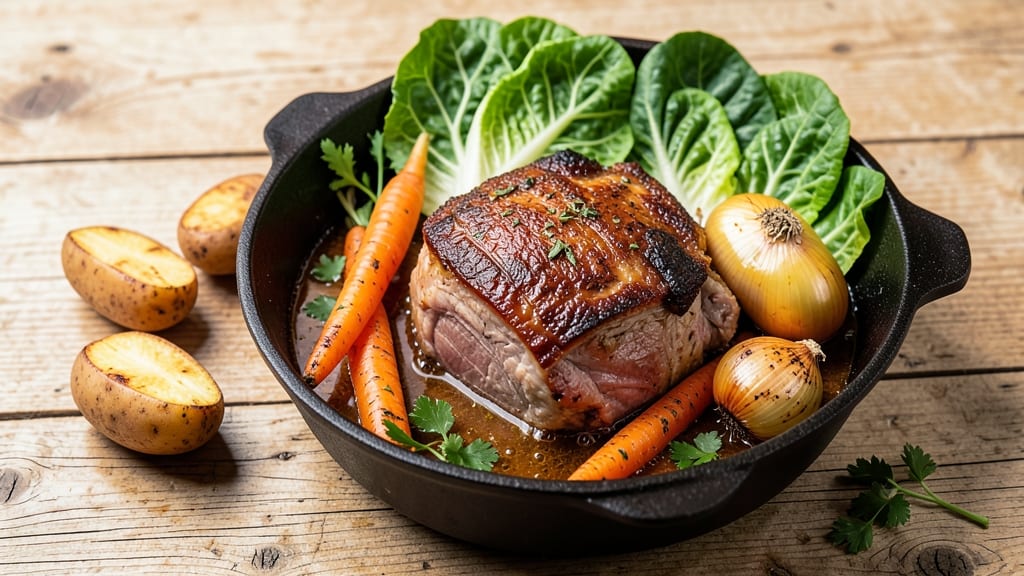
This boiled dinner recipe with pork shoulder delivers the kind of comforting, hearty meal that tastes like home—tender, fall-apart pork, crisp vegetables, and a rich herb gravy that ties it all together.
I perfected this version after years of studying traditional Southern techniques, balancing the slow-cooked tenderness of the pork with the crisp texture of boiled vegetables and the depth of a well-made gravy.
The secret lies in the pork shoulder, which benefits from a long, gentle boil that transforms tough muscle into melt-in-your-mouth shreds. Meanwhile, potatoes, carrots, and cabbage develop a satisfying crunch, while the gravy—made from the pork’s rendered juices—adds a velvety finish.
This method keeps the meal simple but delivers restaurant-quality results, perfect for family gatherings or cozy weeknight dinners.
What sets this recipe apart is the balance of tradition and technique. The pork shoulder is seasoned simply with salt and pepper, allowing its natural flavor to shine, while the vegetables are boiled just until tender-crisp.
The gravy, thickened with a cornstarch slurry, captures all the smoky, herby goodness from the cooking process, ensuring every bite is rich and satisfying.
This boiled dinner is a celebration of Southern comfort food—hearty, flavorful, and deeply comforting. Whether you're feeding a crowd or treating yourself to a classic meal, this recipe delivers the kind of satisfaction that comes from slow-cooked perfection.
Let’s get started on creating a dish that feels like a hug in every bite.
Ingredients for boiled dinner recipe pork shoulder
Six core ingredients deliver the soul of Southern comfort—pork shoulder, crisp vegetables, and herb-infused gravy.
| Ingredient | Amount | Notes |
|---|---|---|
| Pork Shoulder 🥩 | 4 lb | Bone-in, skin-on preferred |
| Russet Potatoes 🥔 | 3 lb | Yukon gold or red preferred |
| Carrots 🥕 | 1 ½ lb | Whole, unpeeled for texture |
| Green Cabbage 🥬 | 1 whole | Heavier heads preferred |
| Yellow Onions 🧅 | 2 whole | Medium-sized, peeled |
| Garlic Cloves 🧄 | 6 cloves | Freshly minced for gravy |
| Fresh Thyme 🌿 | ¼ cup | Stems removed, chopped |
| Fresh Parsley 🌿 | ¼ cup | Flat-leaf preferred |
| Bay Leaves 🌿 | 2 whole | Dried or fresh |
| Kosher Salt 🧂 | 2 tbsp | Diamond Crystal preferred |
| Freshly Ground Black Pepper 🌶️ | 1 tbsp | Coarsely ground |
| Cornstarch 🌾 | ½ cup | For gravy thickening |
| Whole Milk 🥛 | 1 cup | Full-fat for richness |
| Unsalted Butter 🧈 | ½ cup | Cold for gravy |
| Apple Cider Vinegar 🍎 | 1 tbsp | For brightness |
The pork shoulder is non-negotiable—look for a 4-pound bone-in cut with good marbling at Whole Foods or your local butcher. Costco often carries excellent bone-in options at a better price, but avoid pre-cut pieces with excessive trimming. The skin adds flavor, but remove it if you prefer. For vegetables, Yukon gold potatoes and heavy green cabbage heads (10-12 lbs) ensure maximum yield. Carrots should be whole and unpeeled—the skin adds texture and nutrients. Fresh herbs like thyme and parsley from Trader Joe's or local farmers markets provide the brightest flavor, but dried will work in a pinch.
No bone-in pork shoulder? A 4-pound boneless cut works, but render the fat separately for gravy. Substituting sweet potatoes for half the russets adds natural sweetness, though traditionalists may balk. For the gravy, arrowroot powder can replace cornstarch at a 1:1 ratio if you prefer a clearer finish. The apple cider vinegar is essential—it cuts through the richness and brightens the flavors. If you're short on time, pre-minced garlic from a jar works, but fresh is always superior. For a deeper herb profile, add 1 sprig of rosemary to the pot during boiling.
Pork shoulder and vegetables reheat beautifully—store leftovers in an airtight container for up to 5 days in the fridge. For longer storage, freeze portions in single-serving containers for up to 3 months. The gravy thickens as it cools, so add a splash of milk or water when reheating. To save time, prep vegetables the night before and store them in the fridge. The pork can be seasoned and refrigerated overnight, then boiled directly from the cold—just add 15-20 minutes to the cooking time. Gravy keeps for 4-5 days refrigerated or 3 months frozen.
Why You'll Love This Recipe
- One-Pot Wonder: I swear by this for lazy Sundays—just toss everything into a big pot (pork shoulder, potatoes, carrots, cabbage, onions) with broth, throw in a bay leaf, and walk away. No chopping boards, no pans, no stress. The potatoes peel themselves when they’re done—honestly, it’s the kind of meal where you can read a book while it cooks.
- Rich, Deep Flavor: That pork shoulder? It gets tender and infused with the sweetness of onions and carrots until it’s falling apart. The cabbage softens into something almost buttery, and the potatoes? Crispy edges, fluffy inside—like a hug in a bowl. (Yes, even on a Tuesday night.)
- Weeknight Workhorse: I make this for game days, sick kids, or when my in-laws visit—it feeds a crowd without looking like I slaved. Double the batch, and you’ve got leftovers for lunches all week. My kids fight over the carrots, and my husband steals the pork straight from the pot. No complaints there.
- Budget Magic: Pork shoulder is cheap, cabbage lasts forever, and you’re using root veggies that stay fresh. A single pot of this feeds six for under $15—no takeout, no guilt. Here’s what sold me: the taste is restaurant-quality, but the math is grocery-store simple. My wallet thanks me every time.
Step-by-step instructions for boiled dinner with pork shoulder
Transforming a simple pot of water into a hearty, restaurant-worthy meal requires patience and precision.
Prepare and Season the Pork Shoulder
Begin by trimming any excess fat from the 4 lb pork shoulder, leaving about ¼ inch to protect the meat during cooking. Pat it dry with paper towels—this ensures a better sear and prevents the meat from steaming instead of browning.
In a small bowl, combine the 2 tbsp kosher salt, 1 tbsp freshly ground black pepper, and 0.25 cup chopped fresh thyme. Rub this mixture generously over the pork shoulder, making sure to get it into any crevices. The salt will begin drawing out moisture, which is why we'll let it sit uncovered on a wire rack in the refrigerator for at least 1 hour before cooking. This step is crucial for developing that signature crispy exterior.
Build the Vegetable Base and Parboil
While the pork rests, peel and quarter the 3 lb russet potatoes into even chunks. Peel the 1.5 lb carrots but leave them whole for even cooking. Cut the 2 whole yellow onions in half and the 1 whole green cabbage into wedges, removing the tough core. This preparation ensures all vegetables cook uniformly.
In a large stockpot, combine the potatoes, carrots, onions, cabbage, 6 minced garlic cloves, 2 whole bay leaves, and 1 tbsp apple cider vinegar. Add enough cold water to cover the vegetables by about 2 inches. Bring to a boil over high heat, then reduce to a simmer and cook for 10 minutes. This parboiling softens the vegetables slightly and prepares them for the final cook with the pork.
Cook the Pork Shoulder Low and Slow
Remove the parboiled vegetables with a slotted spoon and set aside. Add the seasoned pork shoulder to the pot along with the cooking liquid from the vegetables. The liquid should still cover the pork by about 1 inch. If not, add enough water to reach this level.
Bring the liquid to a gentle simmer over medium-low heat—you should see just a few small bubbles breaking the surface. The key here is maintaining a consistent temperature of 180-190°F. Cover the pot and cook for 2.5 to 3 hours, turning the pork occasionally to ensure even cooking. You'll know it's done when the pork reaches an internal temperature of 205°F and the meat easily pulls apart with two forks. This low-and-slow method guarantees tender, melt-in-your-mouth pork.
Shred the Pork and Make the Gravy
Once the pork is fully cooked, remove it from the pot and let it rest for 10 minutes. Using two forks, shred the pork into bite-sized pieces, discarding any large fat chunks. Return the shredded pork to the pot juices and keep it warm.
Strain the cooking liquid through a fine-mesh sieve into a clean saucepan, pressing on the vegetables to extract as much flavor as possible. Discard the solids. Place the saucepan over medium heat and bring the liquid to a simmer. In a small bowl, whisk together the 0.5 cup cornstarch and 1 cup whole milk until smooth. Slowly pour this mixture into the simmering liquid while whisking constantly to prevent lumps from forming. Cook for 3-5 minutes until the gravy thickens to a smooth, velvety consistency. Stir in the 0.5 cup cold unsalted butter and 0.25 cup chopped fresh parsley, then season with additional salt and pepper if needed.
Serve with Gravy and Crispy Topping
Return the shredded pork to the pot and spoon the gravy generously over the top. For extra texture, heat a skillet over medium-high heat and add the reserved parboiled vegetables. Cook for 5-7 minutes until they begin to crisp at the edges. Serve the pork and vegetables topped with the crispy vegetables and ladled gravy, ensuring each portion gets its share of that rich, herb-infused sauce.
This boiled dinner delivers layers of flavor: tender, smoky pork, perfectly cooked vegetables, and a velvety gravy that ties everything together. The crispy vegetable topping adds just the right contrast to make each bite satisfying.
Pro Tips For Making Boiled Dinner Recipe Pork Shoulder
- Parboil Potatoes First: I learned this the hard way—dumping raw russets into the pot with everything else means they’ll turn to mush while the pork cooks. Cut them into even 2-inch chunks, boil them separately for 8–10 minutes until just fork-tender, then add them to the pot with the pork. This keeps them fluffy and intact, not gluey.
- Score the Pork Shoulder: A thick pork shoulder needs help breaking down evenly. Before seasoning, slash the fat cap in a crosshatch pattern (about ½-inch deep) and the meat in a diamond grid. This lets flavor penetrate deeper and prevents the fat from rendering into a greasy mess during cooking—no one wants a soggy, flavorless cut.
- Don’t Crowd the Pot: I used to pack everything in there like a sardine can, thinking more water would speed things up. Wrong. Overcrowding steams the veggies instead of boiling them, and the pork ends up swimming in its own juices. Keep the pot at ⅔ capacity—add veggies in batches if needed—and stir occasionally to ensure even cooking.
- Add Cabbage Late: Green cabbage releases bitter water when boiled too long, and it turns to limp sludge faster than you’d believe. Save it for the last 10–15 minutes of cooking, or even toss it in raw at the very end if you’re impatient. A quick steam finishes it perfectly—crisp edges, no sad wilt. (Yes, even if you’re the type who skips reading instructions.)
Serving suggestions for leftovers
Classic Southern Style
Serve this boiled dinner just like my grandmother used to—family-style on a large wooden board or platter. Start by placing the shredded pork shoulder in the center, then arrange the crispy vegetables around it in a circular pattern.
Ladle the herb gravy generously over everything, letting it pool beautifully in the middle. I always add a few extra sprigs of fresh parsley for color and a final garnish of cracked black pepper.
This presentation keeps the meal warm and inviting while making it easy for everyone to serve themselves. 🍽️
Bread Basket Essentials
No boiled dinner is complete without warm, crusty bread to soak up that rich gravy. I recommend a honey wheat loaf or sourdough from your local bakery—both stand up to the hearty flavors. For a Southern touch, try cornbread made with Stone Ground Grits cornmeal and a hint of honey.
Serve the bread in a cast iron bread basket (I love my Lodge 1.5-quart) to keep it warm and add rustic charm to your table. 🥖
Pickled Vegetable Pairing
Bright, tangy pickled vegetables cut through the richness of the pork and add a refreshing crunch. Try quick-pickled red cabbage (thinly sliced, tossed with 1 tbsp apple cider vinegar, 1 tsp sugar, and ½ tsp mustard seeds) or pickled okra if you're in the South.
I also love serving pickled jalapeños for those who enjoy a little heat. These pickles balance the meal perfectly and add a pop of color to your plate. 🌶️
Cheese and Charcuterie Additions
For a more elevated touch, set out a small cheese board with sharp cheddar, creamy brie, and aged gouda alongside prosciutto or genoa salami. The salty, fatty flavors complement the pork beautifully.
I also include marinated artichoke hearts and roasted red peppers for extra depth. This isn't just about the boiled dinner—it's about creating a full spread that feels like a celebration. 🧀
Drink Pairings for Comfort
Nothing complements this meal like a Southern sweet tea—brewed strong with 2 tbsp sugar per cup and served over ice. For a non-alcoholic option, sparkling lemonade with a splash of Earl Grey tea adds an elegant twist.
If you're serving alcohol, a dry Riesling or light bourbon (like Buffalo Trace) pairs wonderfully with the rich flavors. I always keep a pitcher of iced hibiscus tea on hand for a refreshing, floral contrast. 🍹
Leftovers Reinvented
Transform leftover boiled dinner into pork and potato hash the next day. Sauté the shredded pork with diced potatoes, onions, and a dash of apple cider vinegar until crispy. Top with a fried egg for a hearty breakfast.
For a quicker option, roll the pork into tacos with slaw, pickled onions, and a drizzle of smoky chipotle mayo. These ideas turn leftovers into something new without extra effort. 💡
Nutrition facts
Frequently asked questions
Why does pork shoulder need to rest after boiling?
Resting the pork for 10 minutes after boiling allows the juices to redistribute throughout the meat, ensuring each bite stays tender and flavorful. Skipping this step can leave your pork dry, especially when shredding. The rest also makes it easier to pull apart cleanly with forks.
Can I use a slow cooker for this recipe?
Place the seasoned pork shoulder in your slow cooker, cover with water (about 1 inch above the meat), and cook on low for 8 hours or high for 5-6 hours. Add vegetables during the last 1 hour of cooking. The gravy will be thinner, so reduce it separately using cornstarch.
How do I know when the pork shoulder is fully cooked?
Use a meat thermometer to check the internal temperature—it should reach 205°F. The meat will also pull apart easily with two forks, leaving no resistance. If you don't have a thermometer, cut into a small section: the juices should run clear, and the meat should be tender.
What's the best way to store leftovers?
Store the pork and vegetables in an airtight container in the fridge for up to 5 days. The gravy keeps separately for 4-5 days or freeze both components for up to 3 months. Reheat gently with a splash of water or milk to restore creaminess.
Can I make this recipe without potatoes?
Yes! Swap potatoes for sweet potatoes (add 15 minutes to cooking time) or turnips for a similar texture. For a lighter option, use green beans or asparagus—just reduce cooking time to 5-7 minutes to avoid mushiness.