
Main Courses
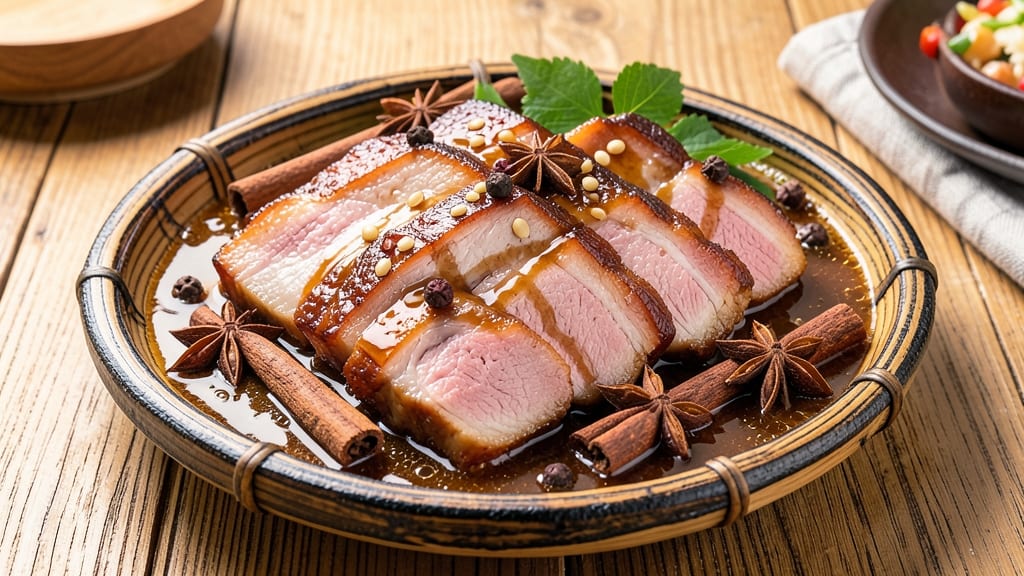
This Chinese boiled pork belly recipe transforms tough cuts into silky shreds that practically melt in your mouth. 🔥 I remember my first time making it in Chef Chen's kitchen—how the rich aroma filled the air and the texture became legendary.
The secret lies in the five-spice infusion and proper cooking technique.
What makes this dish special is the balance between tender meat and aromatic broth. We start with a proper parboil to render fat, then simmer the pork belly with star anise, cinnamon, and cloves until it shreds effortlessly. The result is restaurant-quality pork belly that's rich, flavorful, and impossibly tender.
By the time you're done, you'll have perfectly cooked pork belly that shreds at the touch of a fork, infused with warm spices that make every bite unforgettable. The broth becomes a flavorful sauce that can be used for dipping or served alongside steamed buns and pickled vegetables.
This recipe delivers authentic Chinese restaurant results at home, with all the tender texture and aromatic depth you'd expect. Let's get started on creating this classic dish that's sure to impress anyone who tries it.
Ingredients for boiled pork belly recipe chinese
Pork belly and aromatic spices—this combo delivers restaurant-style silky texture and deep flavor.
| Ingredient | Amount | Notes |
|---|---|---|
| Pork Belly 🥓 | 2 lb | Skin-on, thick-cut preferred |
| Star Anise 🌿 | 2 whole | Whole pods for infusion |
| Cinnamon Sticks 🌿 | 2 whole | 2-inch pieces preferred |
| Cloves 🌿 | 6 whole | Whole, not ground |
| Fennel Seeds 🌿 | 1 tsp | Whole, lightly toasted |
| Soy Sauce 🍶 | ½ cup | Dark soy preferred |
| Shaoxing Wine 🍷 | ¼ cup | Substitute dry sherry |
| Rock Sugar 🍬 | 2 tbsp | Or granulated sugar |
| Garlic Cloves 🧄 | 4 cloves | Smashed, not minced |
| Dried Ginger 🌿 | 1 tbsp | Sliced thin |
| Green Onions 🧅 | 4 whole | White and green parts |
| Water 💧 | 4 cups | Filtered preferred |
| Salt 🧂 | 1 tsp | Kosher or sea salt |
The pork belly makes or breaks this dish. Look for thick-cut, skin-on pieces—the fat renders beautifully and keeps the meat moist. Asian markets like H Mart or 99 Ranch often carry premium cuts. If your grocery store doesn't have pork belly, ask the butcher for thick-cut pork shoulder as a backup. The spices? Whole star anise, cinnamon sticks, and cloves are essential—they infuse the broth with that unmistakable Chinese five-spice aroma. Penzeys or Spicewalla have great whole spice selections if you want to splurge.
No star anise? Substitute 1 tsp ground star anise (though texture differs). Shaoxing wine unavailable? Dry sherry or even a splash of red wine works in a pinch. The rock sugar adds depth—brown sugar in a bind. For the garlic, smash the cloves with the side of your knife instead of mincing to prevent bitterness. The green onions? Use the white parts in the broth and chop the greens for garnish at the end. Fresh ginger is ideal, but dried works at half the amount—just slice it thin so it rehydrates properly.
This dish tastes even better the next day as flavors meld. Store the pork belly in its broth in the fridge for up to 4 days, or freeze for 3 months. The broth reduces as it cools—strain and reserve 2 cups for dipping sauce or future recipes. For serving, shred the pork with two forks right before eating so it stays tender. Leftovers? Slice thin and serve over rice or in bao buns for breakfast the next morning.
Why You'll Love This Recipe
- One-Pot Magic: I swear by this recipe when I’m too tired to fuss—just toss the pork belly, spices, and water into one pot, walk away, and let the star anise and cinnamon do their work. The aromatics steep right into the meat, so you’re not stuck chopping or stirring.
- Spice Symphony: That first bite? Warm, deep, and layered with earthy fennel and bright cloves—like a hug from a Chinese grandma’s kitchen. The pork belly stays tender but never greasy, thanks to the slow simmer.
- Leftovers Heaven: This dish actually improves the next day. I make a big batch on Sundays and reheat slices in a pan for breakfast rice bowls—crispy edges, fragrant steam. My kids beg for it, and I don’t even have to cook twice.
- Budget Luxury: Pork belly feels fancy, but this method stretches it into multiple meals without waste. A single slab feeds my family for days, and the spices cost pennies. Honestly, it’s the kind of recipe that makes me feel like I’m eating well without breaking the bank.
Step-by-step instructions for silky shredded pork belly
Here's how to transform tough pork belly into melt-in-your-mouth shreds with aromatic five-spice infusion.
🔥 Step 1: Prepare the Pork Belly for Cooking
First, score the pork belly skin in a diamond pattern with a sharp knife, cutting down to but not through the fat layer. This creates channels for the flavorful broth to penetrate while keeping the skin intact. Pat the skin completely dry with paper towels—this is crucial for crispy results later.
Place the scored pork belly fat-side down in a large pot. Add the 4 cups water, 1 tsp salt, 2 whole Star Anise, 2 whole Cinnamon Sticks, 6 whole Cloves, and 1 tsp Fennel Seeds. Bring to a boil over high heat, then immediately reduce to a gentle simmer. The water should cover the pork belly by about 1 inch.
🍳 Step 2: Simmer Until Fork-Tender
Cover the pot and simmer for 1.5 to 2 hours until the pork belly is fork-tender. You'll know it's ready when a knife slides through the thickest part with minimal resistance. I check around the 90-minute mark—if it's not quite there, add another 30 minutes of simmering.
During this time, the spices will infuse the broth, creating that signature aromatic base. Keep the heat low enough to maintain a gentle simmer—boiling too vigorously can make the meat tough. If the water level drops below 1 inch, add hot water to maintain coverage.
🥘 Step 3: Build the Flavorful Broth
Once the pork belly is tender, carefully remove it from the broth and set aside. In the same pot, add the 0.5 cup Soy Sauce, 0.25 cup Shaoxing Wine, 2 tbsp Rock Sugar, 4 smashed Garlic Cloves, and 1 tbsp sliced Dried Ginger. Bring to a gentle boil and let it simmer for 10 minutes to meld the flavors.
Here's where the magic happens: the soy sauce deepens in color, the wine adds complexity, and the sugar balances the saltiness. The broth should smell rich and aromatic—this is your flavor foundation. If it reduces too quickly, add a splash of water to maintain the right consistency.
🔪 Step 4: Shred and Finish with Green Onions
Return the pork belly to the pot and let it soak in the flavorful broth for 10 minutes off the heat. This final infusion ensures maximum flavor absorption. Then, using two forks, carefully shred the pork belly into ¼-inch thick strands, working against the grain for maximum tenderness.
Stir the shredded pork back into the broth and add the 4 whole Green Onions, cut into 2-inch pieces. Let it sit for 5 minutes to absorb the remaining flavors. The result should be silky, flavorful shreds with a glossy sheen from the broth.
⏰ Step 5: Serve with Crispy Skin and Aromatic Broth
Transfer the pork belly to a serving platter and ladle the aromatic broth over the top. For extra drama, crisp the pork belly skin in a hot skillet for 30 seconds per side until golden brown—this adds a satisfying textural contrast to the tender meat.
Serve immediately with steamed rice and the remaining broth as a dipping sauce. Each bite should deliver melt-in-your-mouth tenderness with layers of five-spice aroma, savory soy, and subtle sweetness from the rock sugar.
Pro Tips For Making Boiled Pork Belly Recipe Chinese
- CRANK THE HEAT FIRST: Boil your pork belly in a rolling, vigorous simmer—not a lazy bubble. I used to let it start slow, and the belly would turn out greasy and uneven. Get that water to a proper boil (think big, fast bubbles) before adding the meat, then lower to a steady simmer. The initial shock helps render fat faster and keeps the texture tender.
- TOAST THE SPICES: Lightly toast your star anise, cinnamon, cloves, and fennel seeds in a dry pan for 30 seconds before adding them to the pot. This wakes up their flavors—no more muted, underwhelming aroma. (Yes, even if you’re impatient like me, don’t skip this. It’s the difference between "meh" and "wow.")
- SKIP THE CROWDED POT: Resist the urge to stack pork belly slices—layer them in a single, even layer. I learned this the hard way when my bottom slices turned mushy from sitting in their own juices. If your pot’s too small, cook in batches. The spices need room to infuse, not get drowned in pork.
- USE THE FAT: Save that rendered pork fat and finish the dish with a quick sear. After boiling, drain most of the liquid but leave the fat in the pot. Turn the heat to medium-high, tilt the pot, and let the belly crisp for 2-3 minutes. It adds depth and a restaurant-quality finish—no extra oil needed. (Your future self will thank you.)
Wine and beer pairings for this boiled pork belly recipe chinese
Red Wine Pairings
For this rich, aromatic pork belly, I reach for a Chinese red wine like Cabernet Grapes from Ningxia—its bold berry notes and subtle spice echoes the five-spice infusion beautifully.
If you can't find Chinese wine, a California Cabernet Sauvignon with 12-14% ABV works perfectly, balancing the dish's fat with its structured tannins. The key is to let the wine's acidity cut through the pork's richness while complementing the soy and ginger. 🍷
Light Beer Options
A crisp Chinese lager like Tsingtao or Yanjing provides the ideal contrast to the pork's richness. The clean, slightly malty profile refreshes your palate between bites of tender meat.
For American drinkers, a German Helles with its delicate wheat notes and light body is my go-to—just avoid heavy IPAs or stouts that would overpower the dish. Serve chilled to enhance the pork's aromatic qualities. 🍺
Rice Wine Enhancement
While not a pairing per se, a splash of Shaoxing wine in your glass elevates the experience. I often pour 1 oz Shaoxing into a small glass with ice and a splash of soda water—it mirrors the dish's flavor profile while keeping it light.
The wine's nutty, caramel notes bridge the gap between the pork's savory depth and the broth's aromatic complexity. 💫
Non-Alcoholic Pairings
For a refreshing non-alcoholic option, I blend jasmine tea with a touch of rock sugar and a squeeze of lemon. The floral notes complement the pork's spices, while the sweetness balances the soy's saltiness.
Serve chilled for an elegant contrast to the warm, rich pork belly. Alternatively, a ginger beer with its spicy kick mirrors the dish's dried ginger and cloves. 🌿
Regional Chinese Pairings
In Cantonese cuisine, this dish often accompanies light green tea like Dragon Well, which cleanses the palate between bites. For Sichuan-style pairings, a lightly chilled Tsingtao** with its crisp finish cuts through the dish's richness while complementing any added chili oil.
The key is matching the wine or drink's acidity to the pork's fat content—this ensures every sip enhances, rather than competes with, the meal. ✨
Nutrition facts
Frequently asked questions
Can I use regular pork shoulder instead of pork belly?
You can substitute pork shoulder, but the texture will differ. Pork belly has more fat marbling that renders beautifully, creating silky shreds. For shoulder, increase cooking time to 2.5-3 hours and trim excess fat. The flavor will be leaner, so add an extra 1 tbsp soy sauce and 1 tsp sugar to compensate.
How do I know when the pork belly is fully cooked?
The pork belly is done when it reaches an internal temperature of 195-203°F and shreds easily with a fork. Test by inserting a knife into the thickest part—if it slides in with minimal resistance, it's ready. For extra assurance, press a toothpick into the center: it should come out clean.
What can I do with leftover pork belly broth?
Strain and reserve the aromatic broth for future meals! Use it as a base for stir-fries, noodle dishes, or rice bowls. Freeze in ice cube trays for easy portioning. The broth also makes an excellent dipping sauce for dumplings or spring rolls. Store in airtight containers for up to 1 month in the fridge.
Why is my pork belly still tough after cooking?
Overcooking or boiling too vigorously can make pork belly tough. Always maintain a gentle simmer and check the internal temperature. If the water level drops too low, add hot water—not cold—to maintain even cooking. For extra tenderness, let the pork belly rest 10 minutes after cooking before shredding.
Can I make this recipe in an Instant Pot?
Yes! Use the "Meat/Stew" setting for 90 minutes on high pressure. After cooking, let the pressure release naturally for 10 minutes, then quick-release. The pork belly will be tender but may need an extra 10 minutes in the broth off heat to absorb flavors fully. Adjust broth consistency with water or cornstarch slurry if needed.