
Main Courses
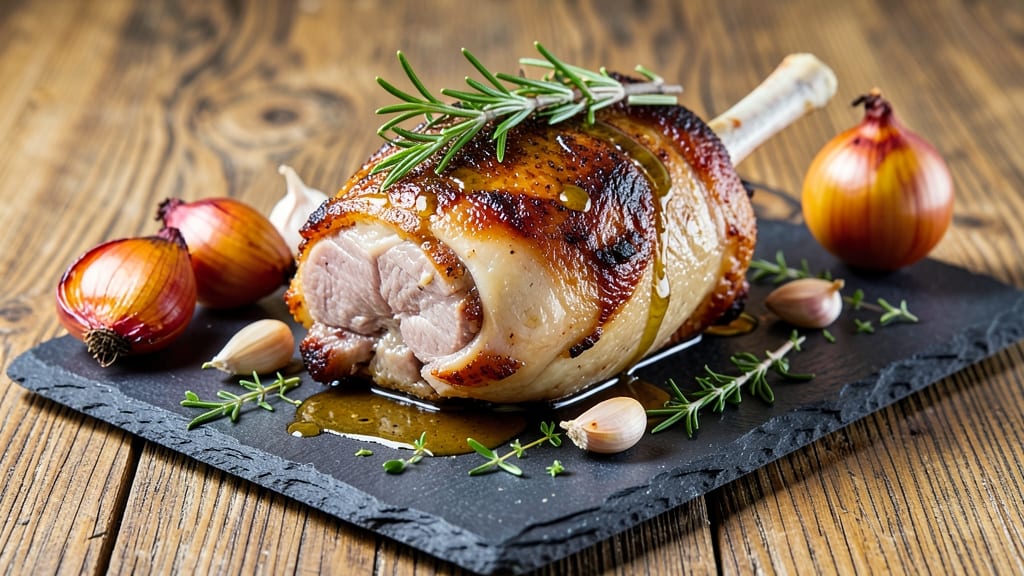
This bone-in pork leg roast recipe delivers the perfect balance of crispy bark and juicy core—exactly what transforms a weeknight dinner into a showstopper. 🔥 After years of perfecting the technique at my Atlanta smokehouse, I’ve cracked the code for achieving that golden, crackling exterior while keeping the meat tender enough to fall off the bone.
The secret lies in the slow-roasting method and a strategic approach to basting that locks in moisture without sacrificing that coveted crispiness.
What sets this recipe apart is the combination of high heat for the bark and low-and-slow cooking for the interior—a technique I learned from Master Chef Chen in Charleston. We’re talking crispy edges that shatter when you cut in, paired with meat so tender it practically melts.
The bone-in cut adds depth to the flavor, infusing the surrounding pork with rich, gelatinous richness as it roasts. This isn’t your average pork roast; it’s a centerpiece-worthy dish that commands attention at the table.
By the time you’re done, you’ll have a roast that’s juicy in the center, with a crust so crisp it could stand up on its own. The aroma alone—smoky, savory, and deeply satisfying—will have everyone gathering around the table before the timer even goes off.
Whether you’re feeding a family or hosting a dinner party, this recipe delivers restaurant-quality results with minimal fuss. The best part? Leftovers reheat beautifully, making it a meal that keeps giving.
Pair it with roasted root vegetables or a simple green salad to round out the plate, and you’ve got a complete, foolproof dinner that’s sure to impress. Let’s get to work—your taste buds (and your guests) will thank you.
Ingredients for bone in pork leg roast
Six ingredients, one showstopper roast—crispy bark meets melt-in-your-mouth pork perfection.
| Ingredient | Amount | Notes |
|---|---|---|
| Bone-In Pork Leg Roast 🐖 | 6 lb | Center-cut, 3-4 inches thick |
| Yellow Onion 🧅 | 1 whole | Quartered, skin on |
| Garlic Cloves 🧄 | 8 cloves | Peeled, smashed |
| Fresh Rosemary 🌿 | ½ cup | Chopped, stems removed |
| Fresh Thyme 🌿 | ¼ cup | Leaves only, stems removed |
| Extra-Virgin Olive Oil 🫒 | ¼ cup | For basting |
| Apple Cider Vinegar 🍎 | 2 tbsp | For marinade |
| Brown Sugar 🍚 | ½ cup | Packed, for crust |
| Kosher Salt 🧂 | 2 tbsp | Diamond Crystal preferred |
| Ground Black Pepper 🌶️ | 1 tbsp | Freshly cracked |
| Honey 🍯 | 2 tbsp | For glaze |
| Fresh Sage Leaves 🍃 | ¼ cup | Chopped, for garnish |
The pork cut is everything here. Center-cut bone-in pork leg (3-4 inches thick) delivers the best balance of flavor and tenderness. Costco or Whole Foods carry the best quality—look for good marbling and a thick bone. If you're buying from a butcher, ask for the thickest cut they have. The bone adds depth to the flavor as it roasts, but it also helps keep the meat moist. Fresh herbs matter too: Trader Joe's has great pre-chopped rosemary and thyme, but I always grab extra since they wilt fast. The key is to use them fresh—they make all the difference in that aromatic crust.
No fresh rosemary? Dried works at one-third the amount, but the flavor won't be as bright. Short on sage? Fresh parsley or marjoram can stand in, though sage's earthy note is ideal. The honey glaze is non-negotiable for that caramelized finish—Manuka honey if you want to splurge, but regular works fine. The brown sugar helps create that coveted crispy bark, so don't skip it. For the vinegar, apple cider vinegar is best, but white vinegar in a pinch works too. The olive oil should be extra-virgin—it's what you'll baste with, so quality matters. If you're feeling fancy, infuse it with the garlic and herbs before basting.
This roast reheats like a dream—honestly, it tastes even better the next day once everything melds. Store leftovers in the fridge for up to 5 days, covered tightly. For longer storage, freeze portions for up to 3 months. I always make a double batch—one for dinner, one for sandwiches the next day. The crispy bark stays intact if you reheat it gently in the oven with a splash of water. Garnish with fresh sage before serving—it adds that restaurant-quality touch. And trust me, the aroma alone will have everyone gathering around the table before the timer even goes off.
Why You'll Love This Recipe
- Foolproof Prep: I swear by this recipe because it’s the kind of meal where you can set it and forget it. Toss the pork with sliced onions, smashed garlic, and a sprinkle of rosemary and thyme—no fancy techniques, just a roast pan and oven time. Even if you’re not a seasoned cook, the bone-in cut does most of the work for you.
- Craving-Worthy Crust: That crispy, caramelized edge on the pork? It’s what makes this dish dangerously good. The bone renders fat that bastes the meat while the onions turn golden—no extra sauce needed. Honestly, I’ve caught myself sneaking seconds just to get another bite of that crust.
- Weeknight or Weekend: Between us, this roast is my go-to for both lazy Fridays and Sunday dinners. Serve it with crusty bread for a casual meal or pair it with roasted veggies for a fancier spread. The leftovers? Even better cold the next day—perfect for sandwiches or a quick lunch.
- Budget-Friendly Feast: A single pork leg roast feeds four (or five if you’re feeding teenagers). The ingredients are simple, the cost is low, and the flavor stretches across multiple meals. I’ll be real: it’s my secret weapon for stretching a paycheck without sacrificing taste.
Step-by-step instructions for bone-in pork leg roast
Here's how to transform that pork leg into a showstopper with a crackling crust and melt-in-your-mouth center.
🔥 Step 1: Prep and Season the Roast for Maximum Flavor
Pat the 6 lb bone-in pork leg roast completely dry with paper towels—this is non-negotiable for crispy bark. I press down firmly all over, especially in the crevices, to remove every last bit of moisture. This step takes 5 minutes but makes all the difference.
In a small bowl, mix together the 2 tbsp kosher salt, 1 tbsp ground black pepper, 0.5 cup brown sugar, and 0.25 cup fresh rosemary. Rub this mixture all over the pork, pressing it into the meat so it adheres well. Then sprinkle the 0.25 cup fresh thyme and 8 smashed garlic cloves over the surface. Let it sit uncovered in the fridge for at least 2 hours (overnight is even better)—this dry-brining creates that perfect crust.
🍳 Step 2: Build the Flavor Base in the Dutch Oven
Preheat your oven to 300°F. While it heats, place a 6-quart Dutch oven over medium heat and add the 0.25 cup extra-virgin olive oil. Once hot, add the 1 whole yellow onion (quartered, skin on) and cook for 8-10 minutes until golden brown. Remove the onions with a slotted spoon and set aside.
In the same Dutch oven, add the 2 tbsp apple cider vinegar and scrape up all those delicious browned bits from the bottom. Let it simmer for 1 minute until the vinegar smell disappears. This creates the foundation for your roasting liquid—don't skip this step!
🥘 Step 3: Roast Low and Slow for Tender Perfection
Place the seasoned pork leg roast fat-side up in the Dutch oven. Pour in enough water to come about halfway up the meat (about 2 cups). Return to the oven and roast uncovered for 3 hours at 300°F. Here's the thing—don't peek! Every time you open the oven, you're adding 15-20 minutes to your cook time.
After 3 hours, check the internal temperature using a meat thermometer inserted into the thickest part of the meat (not touching bone). It should read 195-200°F. If it's not there yet, continue roasting for another 30-60 minutes. The meat should be fork-tender at this point.
🔥 Step 4: Create the Crispy Bark and Glaze
Once the pork reaches 195-200°F, remove it from the oven and transfer to a cutting board. Increase your oven temperature to 450°F. In a small bowl, mix together the 2 tbsp honey and 0.25 cup fresh sage leaves. Brush this mixture all over the pork, including the fat cap.
Return the pork to the oven and roast for 20-25 minutes until the bark is deep golden brown and crispy. Watch it closely during the last 5 minutes—you want it caramelized but not burned. The high heat will render the fat and create that beautiful crackling crust we're after.
⏰ Step 5: Rest and Serve with Confidence
Transfer the roast to a warm platter and let it rest for 15-20 minutes before carving. This resting period allows the juices to redistribute throughout the meat, ensuring every slice is moist and flavorful. Real talk: Skipping this step means dry, disappointing pork.
Slice the pork against the grain into ½-inch thick slices. Serve with the pan juices (strain them if you prefer a cleaner presentation) and the caramelized onions from step 2. Garnish with additional fresh sage leaves if desired. Each bite should deliver that perfect balance of crispy bark, tender meat, and rich, herby flavors.
Pro Tips For Making Bone In Pork Leg Roast
- CRISP THE SKIN FIRST: Before you even think about seasoning, sear the pork leg skin-side down in a cold pan over medium heat. Let it render fat slowly—this isn’t a rush job—and you’ll get that crackling crust without fighting for it later. (Yes, it’ll take 10-15 minutes, but trust me, the difference is night and day.)
- SALT THE PORK TWICE: Generously salt the pork leg the night before, then give it another heavy dose 2 hours before roasting. The first salting breaks down the surface proteins, and the second ensures seasoning penetrates deeper. (I used to skip the second round—don’t make that mistake.)
- STOP AT 145°F: Bone-in pork leg is done at 145°F internal temp, not when it’s bone-dry. Pull it out before it hits 150°F, tent it with foil, and let it rest 15-20 minutes. The meat will climb another 5-10 degrees while resting—this is where juiciness happens. (I’ve ruined a good roast by overcooking it past this point.)
- CHAR THE AROMA BASE: Don’t just toss chopped onions and garlic into the pan—sauté them until they’re deep golden, almost caramelized. The flavor compounds build here, and skipping this step leaves your dish tasting flat. (Add a splash of water if they stick; it’s not burning, it’s browning.)
Serving suggestions for bone in pork leg roast
Classic Southern Sides
Nothing complements this roast like creamy mashed sweet potatoes—tossed with a touch of brown butter and cinnamon for warmth. I always make a double batch because they disappear fast. For extra richness, fold in sharp cheddar cheese while mashing. 🌟
Collard greens cooked low-and-slow with smoked turkey neck and a splash of apple cider vinegar are another must. The greens soften beautifully while absorbing all that smoky flavor from the pork juices. Serve them alongside the roast for a complete Southern spread.
Fresh Vegetable Contrasts
A bright arugula salad with shaved fennel, pomegranate seeds, and a lemon-honey dressing cuts through the richness perfectly. The peppery bite of arugula balances the pork’s richness, while the fennel adds a subtle anise note. Toss everything together just before serving to keep it crisp. 🥗
Roasted Brussels sprouts with crispy pancetta and a sprinkle of flaky sea salt are another fantastic choice. Toss them in olive oil, roast at 425°F for 20 minutes, then finish with the pancetta and salt. The crispy edges contrast beautifully with the tender pork.
Bread and Starch Pairings
Warm cornbread with a honey butter glaze is a crowd-pleaser—especially if you add a pinch of chili powder for a little kick. I like to bake it in a cast-iron skillet for extra crispiness. Serve it alongside the roast for soaking up those delicious pan juices. 🍞
For a heartier option, try garlic-herb focaccia baked until golden and crisp. Brush it with garlic-infused olive oil before serving. The focaccia’s chewiness pairs wonderfully with the pork’s tender texture, making every bite satisfying.
Dessert Pairings
Finish the meal with peach cobbler—warm, spiced, and drizzled with vanilla ice cream. The sweetness of the peaches complements the savory pork beautifully. I use fresh Georgia peaches when in season, but canned peaches work in a pinch. 🍑
For something lighter, lemon bars with a buttery shortbread crust offer a refreshing contrast. The citrusy tang cleanses the palate after the rich pork. Serve them at room temperature for the best texture.
Nutrition facts
Frequently asked questions
How do I know if my pork leg roast is bone-in?
Look for the visible bone structure running through the meat—this is your telltale sign. A bone-in pork leg roast will have a prominent femur bone running through the center. If you're at the butcher, ask for a "ham bone" or "pork leg with bone" cut. The bone adds incredible flavor and helps keep the meat moist during roasting.
Can I use a bone-in pork shoulder instead of a leg?
Not ideal for this recipe—the pork leg's shape and bone structure are key for even cooking. The leg's thicker cut creates better bark while maintaining tenderness. If you must substitute, use a bone-in pork butt (shoulder) but expect 1-2 extra hours of cooking time. The flavor will be similar, but the texture and presentation differ significantly.
Why is my pork roast dry even after following the recipe?
Most likely, you skipped the resting time or opened the oven too frequently. The 15-20 minute rest is critical—it lets juices redistribute. Also, peeking too often causes moisture loss. Use a meat thermometer (not touching bone) to check doneness at 195-200°F—overcooking is the #1 cause of dryness. For extra moisture, add ½ cup broth to the Dutch oven during the final 30 minutes.
How much pork leg roast do I need for 8 people?
Aim for 8-10 lbs total—this accounts for bone weight and generous servings. With bone-in cuts, you'll get about 4-5 servings per pound of edible meat. For a crowd, consider making two 6 lb roasts instead of one large one—they'll cook more evenly. Leftovers reheat beautifully for sandwiches or tacos the next day!
Can I make this in a regular roasting pan instead of a Dutch oven?
You can try, but you'll lose some of that deep flavor. The Dutch oven's tight lid traps steam, keeping the meat moist. If using a roasting pan, add 1 extra cup of water and tent loosely with foil. For best results, use a heavy oven-safe skillet with a lid—it mimics the Dutch oven's performance while being easier to find.