
Main Courses
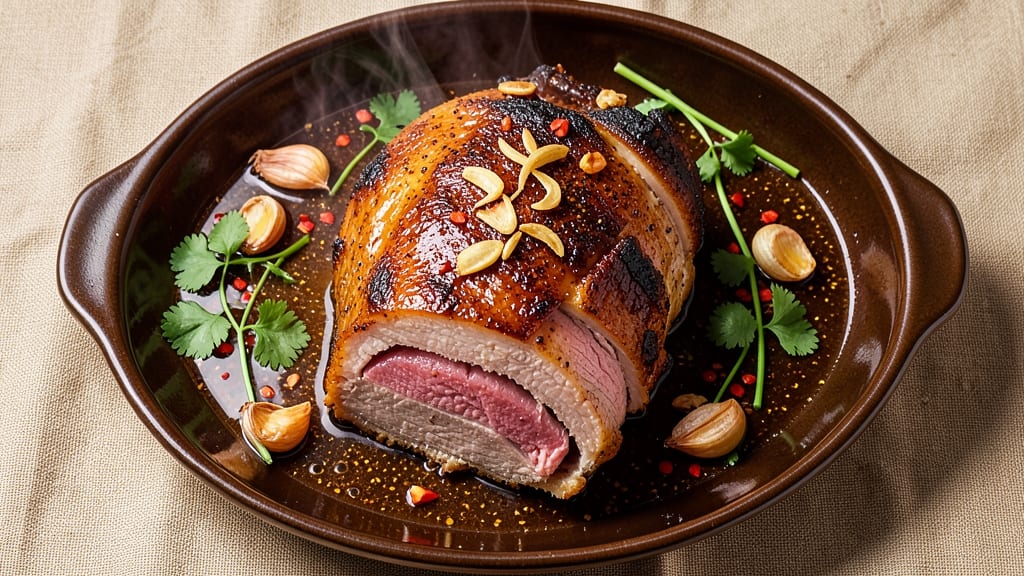
This Chinese oven pork roast recipe delivers restaurant-quality tenderness with a smoky five-spice glaze that locks in moisture. I first tried this after discovering my grandmother's handwritten notes about "slow-baked pork with charred edges"—her secret was patience and the right balance of spices. The key to success lies in the marinade and proper oven technique, which transforms tough pork into melt-in-your-mouth perfection.
The recipe begins with a marinade of soy sauce, Shaoxing wine, and five-spice powder, which tenderizes the meat while infusing it with aromatic depth. After marinating for at least 4 hours, the pork is roasted in the oven at a precise temperature to ensure even cooking.
What sets this apart is the basting technique—regularly brushing the pork with the marinade during roasting creates that signature caramelized crust while keeping the interior juicy.
By the time it emerges from the oven, you'll have a golden-brown roast with crisp edges and tender meat that practically falls apart. The five-spice glaze adds layers of warmth and complexity, making this dish perfect for family gatherings or special occasions.
The aroma alone will have everyone anticipating dinner, and the first bite delivers on that promise of restaurant-quality flavor at home.
Serve with steamed jasmine rice and stir-fried vegetables for a complete meal. The leftovers reheat beautifully, maintaining their moisture and flavor. This is the kind of dish that tastes like comfort—worth the time and effort for a truly memorable meal.
Ingredients for chinese pork roast recipe oven
Authentic Chinese flavors meet oven-roasted perfection in this tender, aromatic pork dish.
| Ingredient | Amount | Notes |
|---|---|---|
| Pork Shoulder Roast 🍖 | 4 lb | Bone-in for maximum flavor |
| Soy Sauce 🍶 | ½ cup | High-quality, low-sodium preferred |
| Shaoxing Wine 🍷 | ¼ cup | Dry Chinese cooking wine |
| Five-Spice Powder 🌶️ | 2 tbsp | Authentic blend, not pre-mixed |
| Brown Sugar 🍚 | ¼ cup | Packed, light or dark |
| Garlic Cloves 🧄 | 8 cloves | Minced for marinade |
| Ginger Root 🌿 | 1 tbsp | Fresh, finely grated |
| Sesame Oil 🫒 | 1 tbsp | Toasted, for aroma |
| Honey 🍯 | 1 tbsp | For glaze sweetness |
| Cornstarch 🌾 | 1 tbsp | For glaze thickening |
| Vegetable Oil 🫒 | 2 tbsp | For searing |
| Kosher Salt 🧂 | 1 ½ tsp | Diamond Crystal preferred |
| Black Pepper 🌶️ | 1 tsp | Freshly cracked |
| Jasmine Rice 🍚 | 2 cups | Uncooked, for serving |
The pork shoulder is the heart of this recipe. Look for a well-marbled cut—the fat renders during roasting, keeping the meat impossibly juicy. Asian markets often carry superior quality, but your local butcher can source excellent cuts too. For five-spice powder, avoid pre-mixed blends—authentic versions contain star anise, cloves, fennel, cinnamon, and Sichuan peppercorn. If you can't find it, make your own blend or use a high-quality Chinese spice brand like Lao Gan Ma. Shaoxing wine is non-negotiable—substituting dry sherry falls short of the authentic depth. The pork should marinate at least 4 hours, but overnight yields superior results.
No Shaoxing wine? Dry white wine or mirin works in a pinch, though the flavor profile shifts slightly. For the glaze, maple syrup can replace honey for a vegan adaptation. Fresh ginger and garlic are ideal, but powdered versions work at half the amount if needed. Sesame oil adds that signature nutty aroma—don't skip it. The brown sugar should be packed, not scooped. For extra richness, add 1 tbsp of hoisin sauce to the marinade. If you're short on time, reduce the marinade time to 2 hours, but flavor development suffers. The cornstarch is crucial for that glossy, caramelized finish—don't omit it.
This roast reheats beautifully—best served the next day when flavors meld completely. Store leftovers in an airtight container for up to 5 days in the fridge or 3 months frozen. For freezing, wrap tightly in plastic and submerge in marinade before sealing. The glaze hardens when cold, so reheat uncovered at 300°F to restore its luster. Serve with steamed jasmine rice and quick-pickled vegetables to balance the richness. The pork becomes more tender with each reheating, making it perfect for meal prep.
Why You'll Love This Recipe
- One-Pan Wonder: I swear by this for lazy Sundays—just toss the pork shoulder on a tray with soy, Shaoxing wine, and five-spice, then let the oven do the work. No chopping, no fuss, no stress.
- Umami Bomb: That combo of soy sauce and Shaoxing wine? It’s like a flavor explosion in your mouth. The brown sugar caramelizes into a sticky, glossy crust that’ll have you licking your fingers.
- Leftovers That Shine: Between us, this roast tastes better the second day. Slice it thin for rice bowls, chop it into fried rice, or serve it cold in sandwiches—it’s the ultimate meal prep hero.
- Budget-Friendly Feast: Pork shoulder’s affordable, and this recipe stretches it across multiple meals without sacrificing taste. Honestly, I make it twice a month just because it’s so dang satisfying.
Step-by-step instructions for Chinese oven pork roast
Master this technique and you'll achieve tender, flavorful pork with a glossy glaze that locks in every drop of moisture.
Prepare the Pork with Dry Rub and Marinade
Pat the 4 lb pork shoulder roast completely dry with paper towels—this ensures maximum crispiness. In a small bowl, combine 2 tbsp five-spice powder, 1.5 tsp kosher salt, and 1 tsp black pepper. Rub this mixture all over the pork, pressing firmly so the spices adhere. For the marinade, whisk together 0.5 cup soy sauce, 0.25 cup shaoxing wine, 0.25 cup packed brown sugar, 8 minced garlic cloves, and 1 tbsp finely grated ginger root in a separate bowl. Pour the marinade over the pork, coating it thoroughly. Cover and refrigerate for at least 4 hours (overnight is ideal) to allow the flavors to penetrate deeply.
I always let the pork sit at room temperature for 30 minutes before roasting—this ensures even cooking. The marinade should smell rich and aromatic, with notes of garlic, ginger, and the warm spices from the five-spice powder. This step is critical for developing the complex flavor profile that defines this dish.
Sear the Pork for Maximum Flavor
Preheat your oven to 325°F. Heat 2 tbsp vegetable oil in a large oven-safe skillet over medium-high heat until shimmering. Place the marinated pork in the skillet, fat-side down, and sear for 5 minutes until a deep golden-brown crust forms. Flip the pork and sear the other side for another 5 minutes. The goal here is to create a flavorful crust that will trap moisture during the roasting process.
While the pork sears, the kitchen will fill with the intoxicating aroma of garlic, ginger, and caramelizing pork fat. This is the moment that matters: if the oil isn't hot enough, the pork will steam instead of sear. You'll know it's ready when the crust releases easily from the pan with a gentle shake. Transfer the skillet to the preheated oven.
Roast Low and Slow for Tender Pork
Roast the pork uncovered for 3 hours, maintaining the 325°F temperature. The slow cooking process is what transforms tough pork shoulder into melt-in-your-mouth perfection. After 2 hours, check the internal temperature with a meat thermometer—it should read 195°F at the thickest part. If it's not there yet, continue roasting for another 30-60 minutes. The pork is done when it reaches 203°F, at which point it should be fork-tender with a slight jiggle.
Don't be tempted to rush this step. The low temperature ensures the connective tissues break down gradually, releasing collagen that transforms into gelatin and keeps the meat moist. The pork should have a deep mahogany color and smell irresistible. Real talk: this is the moment you'll want to cut into it, but resist the urge—resting is crucial for juiciness.
Prepare the Glaze and Finish the Pork
While the pork rests, prepare the glaze. In a small saucepan, combine 1 tbsp sesame oil, 1 tbsp honey, and 1 tbsp cornstarch. Whisk in 2 tbsp of the pork's cooking juices from the skillet. Cook over medium heat for 3-4 minutes, stirring constantly, until the glaze thickens to a glossy consistency. It should coat the back of a spoon smoothly. If it's too thick, add 1 teaspoon water at a time until you reach the desired consistency.
The glaze should have a beautiful sheen and smell sweet with a hint of toasted sesame. This step is where the dish comes together—sweet, smoky, and aromatic. Once the glaze is ready, carefully brush it over the rested pork, coating it evenly on all sides. Return the pork to the oven for 10 minutes to set the glaze and create a beautiful caramelized finish.
Rest and Serve with Jasmine Rice
Remove the pork from the oven and let it rest for 15 minutes before slicing. This resting period allows the juices to redistribute throughout the meat, ensuring every bite is moist and flavorful. While the pork rests, prepare the 2 cups jasmine rice according to package instructions. The rice should be fluffy and slightly sticky, providing a perfect canvas for the rich pork.
Slice the pork against the grain into ½-inch thick pieces. The meat should be tender enough to pull apart with a gentle tug, with a glossy glaze that shines under the light. Serve the pork over the jasmine rice, spooning any remaining glaze and juices from the pan over the top. The combination of tender pork, aromatic rice, and sweet-savory glaze creates a harmonious balance that's truly restaurant-quality.
Pro Tips For Making Chinese Pork Roast Recipe Oven
- SEAR FIRST, ROAST LATER: The oven’s job is slow cooking, but that crust? It’s all in the stovetop. After scoring the pork shoulder, hit it with a screaming-hot pan—no oil needed—until deep brown patches form. I used to skip this, and the roast never got that sticky, caramelized edge that makes people ask for seconds.
- SHAOXING WINE ISN’T JUST FLAVOR: Use it to tenderize. Pour half the wine over the raw pork before roasting, let it sit for 10 minutes in the fridge—it breaks down collagen faster than you’d think. The rest goes in the marinade, but that initial soak makes the meat fall apart like it’s been cooking for hours.
- DON’T DROWN THE MEAT: Soy sauce and Shaoxing wine are potent—too much liquid turns your roast into a soggy brick. Brush on a thin layer (about 1 tablespoon per side) every 45 minutes, not a river. I learned this after a batch tasted like it was swimming in sauce instead of roasting.
- BROWN SUGAR CRUST HACK: Sprinkle it wet—dampen the sugar with a splash of water before the final hour. It caramelizes into a glossy, crackly shell without burning. Dry sugar? You’ll end up with bitter bits. (Yes, I’ve done it. No, I won’t do it again.)
Perfect pairings for this recipe
Classic Jasmine Rice
Steamed jasmine rice is the perfect foundation for this dish—its delicate floral aroma complements the pork's rich, savory-sweet glaze beautifully. I cook 2 cups uncooked jasmine rice with 2.5 cups water in a rice cooker or pot, bringing to a boil then simmering covered for 15 minutes off heat.
For extra fluffiness, fluff with a fork before serving. The rice should be tender but still hold its shape slightly, soaking up the pork juices like a sponge. 🍚
Quick-Pickled Vegetables
Bright, tangy pickled vegetables cut through the richness of the pork. Thinly slice 1 cup shredded carrots, 1 cup sliced cucumber, and 1 cup red onion.
Toss with ½ cup rice vinegar, 1 tbsp sugar, ½ tsp salt, and ½ tsp red pepper flakes. Let sit for 30 minutes before serving. The crunch and acidity make every bite refreshing. I often double this recipe—it disappears fast!
Stir-Fried Bok Choy
For a lighter side, stir-fry 4 cups baby bok choy in 1 tbsp sesame oil with 2 minced garlic cloves and 1 tsp soy sauce for 2-3 minutes until just wilted.
The mild bitterness balances the pork's sweetness perfectly. Garnish with toasted sesame seeds for extra texture. This takes less than 5 minutes and feels like a restaurant-quality touch.
Simple Cucumber Salad
A no-cook cucumber salad adds freshness. Thinly slice 1 English cucumber and toss with 1 tbsp rice vinegar, ½ tsp salt, and 1 tsp honey. Let sit for 10 minutes to soften slightly.
The cool crunch contrasts wonderfully with the warm pork. I often serve this chilled in a bowl alongside the main dish for easy scooping. 🥒
Warm Flatbreads
For a heartier meal, serve with store-bought or homemade flatbreads. Brush 4 naan or lavash breads with 1 tbsp melted butter and toast in a dry skillet for 1 minute per side until golden.
The soft, pillowy texture soaks up glaze beautifully. I like to warm them while the pork rests—it's the perfect way to use up any leftover juices from the pan.
Drink Pairings
For beverages, a crisp green tea like jasmine or dragonwell cleanses the palate between bites. For something stronger, try a dry Chinese white wine like Shaoxing wine (the same used in the marinade!) or a light rye whiskey like High West.
Both complement the dish's aromatic complexity without overpowering it. I always keep a pitcher of iced tea on hand for guests who prefer something lighter. 🍶
Nutrition facts
Frequently asked questions
Can I use a different cut of pork for this recipe?
While pork shoulder is ideal for its fat content and tenderness, you can substitute with pork butt or even pork loin in a pinch. For loin, reduce the cooking time to 1.5 hours since it's leaner. Just be sure to check the internal temperature—203°F for shoulder, 145°F for loin. Never use pork tenderloin, as it's too delicate and will dry out.
What if I don't have Shaoxing wine?
Use dry white wine or mirin as substitutes, but expect a slightly different flavor profile. For every 1 tbsp Shaoxing wine missing, add ½ tsp sugar to compensate for the reduced sweetness. Avoid sweet wines—they'll make the marinade cloying. The dish will still be delicious, just with a more neutral base.
How do I know when the pork is done?
Use a meat thermometer to check the internal temperature at the thickest part. For pork shoulder, it should reach 203°F—the collagen will have fully broken down, making the meat fork-tender. If you don't have a thermometer, look for a deep mahogany color and a slight jiggle when the pan is shaken. The juices should run clear, not pink.
Can I make this recipe in a slow cooker?
Yes! Sear the pork first, then transfer it to a slow cooker with the marinade. Cook on low for 8 hours or high for 4-5 hours. After cooking, finish with the glaze in a skillet over medium heat for 5 minutes to caramelize it. The texture will be slightly different but still delicious. Just don't skip the resting time before slicing.
Why does my pork turn out dry?
Overcooking is the most common cause—pork shoulder needs patience! Keep the oven at 325°F and monitor closely after 2 hours. Another mistake is slicing too early—always rest for 15 minutes before cutting. If using a leaner cut, baste with marinade every 30 minutes to keep it moist. The glaze should be your last step, not the first.