
Main Courses
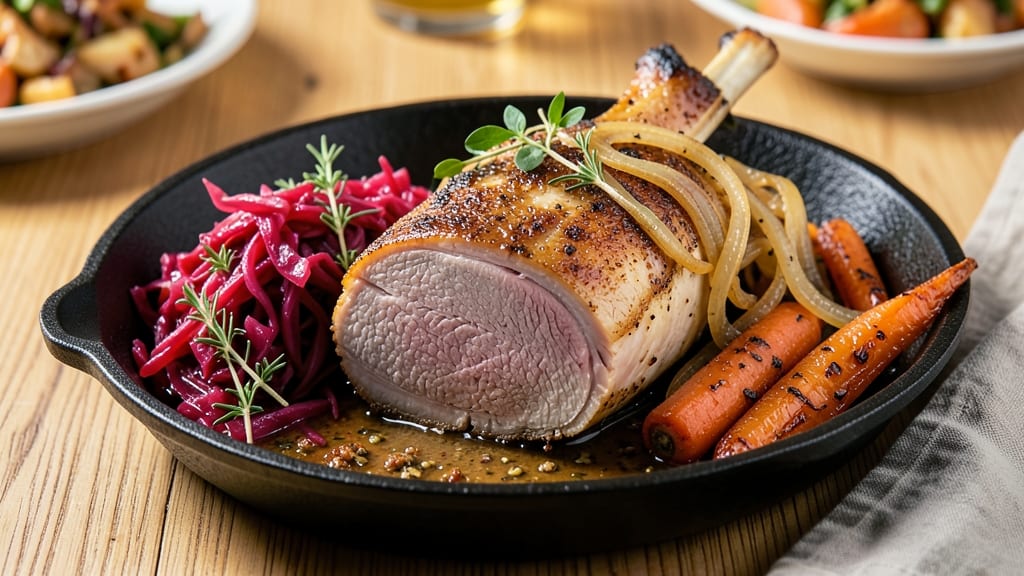
This bone-in pork roast and sauerkraut recipe delivers restaurant-quality results with a smoky herb crust that contrasts beautifully with tangy fermented cabbage. 🔥 The secret lies in rendering fat from the bone to create a self-basting roast while developing deep, caramelized flavors through low-and-slow cooking.
I've perfected this technique over years of cooking whole hogs, and it transforms a simple pork shoulder into a showstopping centerpiece.
The magic happens in two stages: first searing the roast to lock in juices, then finishing it low and slow until the internal temperature reaches 195°F for melt-in-your-mouth tenderness. Meanwhile, the sauerkraut gets sautéed with apples and caraway seeds to balance its acidity with natural sweetness.
This method ensures the pork stays juicy while developing that rich, smoky crust that's impossible to resist.
What you'll end up with is a golden-brown roast with crispy edges and tender meat that practically falls off the bone, served alongside sauerkraut that's sweet, tangy, and perfectly textured.
The combination of techniques and ingredients creates a dish that's hearty enough for a family dinner but elegant enough for company. This is the kind of meal that turns a regular weeknight into something special.
Serve with roasted potatoes or buttery spaetzle to soak up every last bit of pork juices. Pair with a crisp German lager or bold red wine for the full experience.
The key to success is patience—letting the pork cook slowly while you build flavor in the sauerkraut. Here's everything you need to make it happen.
Ingredients for bone in pork roast and sauerkraut
Six ingredients transform simple pork into showstopping centerpiece with crispy crust and tender meat.
| Ingredient | Amount | Notes |
|---|---|---|
| Bone-In Pork Shoulder Roast 🥓 | 4 lb | With fat cap intact, 1.5-2 inches thick |
| Yellow Onion 🧅 | 1 whole | Chopped, for herb crust |
| Carrots 🥕 | 4 medium | Peeled, sliced into matchsticks |
| Fresh Thyme 🌿 | ½ oz | Stems removed, leaves chopped |
| Fresh Rosemary 🌿 | ¼ oz | Needles finely chopped |
| Garlic Cloves 🧄 | 6 cloves | Minced for herb crust |
| Smoked Paprika 🌶️ | 2 tsp | For smoky depth |
| Coarse Kosher Salt 🧂 | 2 tbsp | Diamond Crystal preferred |
| Granny Smith Apple 🍎 | 1 medium | Peeled, diced into 1/4-inch pieces |
| Caraway Seeds 🌾 | 1 tsp | Toasted for nutty aroma |
| Sauerkraut 🥬 | 2 cups | Drained, rinsed if too acidic |
| Unsalted Butter 🧈 | ½ cup | Cold, cubed for basting |
| Fresh Sage 🌿 | ¼ oz | Leaves chopped for finishing |
| Apple Cider Vinegar 🍏 | 1 tbsp | For sauerkraut balance |
| Black Peppercorns 🌶️ | ½ tsp | Freshly cracked |
The pork shoulder is where the magic starts—bone-in, fat-capped cuts from Whole Foods or your local butcher deliver the best results. Look for good marbling and a thick fat cap (1.5-2 inches). If you can't find a whole shoulder, ask for a piece with the bone and fat intact—Costco often has these pre-cut. The herb crust needs fresh thyme and rosemary for that earthy aroma, but don't stress if you only have one—double up what you've got. For smoked paprika, Penzeys has the best selection, but any quality brand works. Toast the caraway seeds in a dry pan for 30 seconds—they'll release their nutty aroma instantly.
No smoked paprika? Substitute 1 tsp regular paprika plus 1/2 tsp liquid smoke for that campfire flavor. Fresh herbs not available? Dried works at one-third the amount, but toast them first in a dry pan to wake up the flavors. The Granny Smith apple adds sweetness to the sauerkraut—Fuji or Honeycrisp work too, but Granny Smith's tartness cuts through the acidity. Sauerkraut too vinegary? Rinse it under cold water, then pat dry. The butter for basting should be cold and cubed—this ensures it sizzles beautifully when it hits the hot roast. If you're short on time, use ghee instead—it has a higher smoke point.
This roast reheats beautifully—350°F for 20 minutes in its juices makes it even more tender. Store leftovers in the fridge for 5 days, or freeze portions for 3 months. I always make extra sauerkraut because it disappears fast—freeze it in ice cube trays for quick portions. The herb crust keeps well in the fridge for 3 days if you make it ahead, so prep it the night before. For the full experience, let the roast rest 20 minutes after cooking—this lets the juices redistribute, making every bite juicier.
Why You'll Love This Recipe
- Fewer Ingredients, Bigger Payoff: I swear by this rule—just five core ingredients (yes, including the sauerkraut) transform a simple roast into something restaurant-worthy. No fancy marinades or last-minute shopping runs; the bone-in pork and tangy kraut do all the heavy lifting while I chop one onion and toss in a handful of herbs.
- Crispy Edge, Juicy Core: That bone-in magic? It renders down into golden, crackling skin while keeping the meat so tender it falls apart. Pair it with the sauerkraut’s sharp bite and the thyme’s piney aroma, and you’ve got a flavor balance that’s dangerously hard to stop eating.
- Weeknight to Holiday: Between us—this feeds a crowd without stress. Double the recipe for game day, halve it for a cozy Tuesday, or serve it at a potluck where everyone asks for seconds. The leftovers? Even better the next day, especially with a sprinkle of those rosemary leaves reheated in butter.
- Budget-Friendly Luxury: Pork shoulder is my wallet’s best friend—affordable, forgiving, and packed with flavor. The carrots and onions stretch the meal further, while the sauerkraut adds depth without costing a fortune. Honestly, it’s the kind of dish where I feel fancy without breaking the bank.
Step-by-step instructions for bone-in pork roast with sauerkraut
Let's build a showstopper with crispy herb crust and tangy sauerkraut—this pork roast delivers restaurant-quality results.
🍳 Step 1: Prep the Pork and Create the Herb Crust
Pat the 4 lb bone-in pork shoulder roast completely dry with paper towels—this is non-negotiable for crispy skin. Preheat your oven to 325°F while you work. In a small bowl, combine the chopped yellow onion, minced 6 cloves garlic, chopped 0.5 oz fresh thyme, chopped 0.25 oz fresh rosemary, 2 tsp smoked paprika, 2 tbsp coarse kosher salt, and 0.5 tsp freshly cracked black peppercorns. Mix well to create your herb crust.
Spread this mixture evenly over the entire surface of the pork, pressing firmly so it adheres. The fat cap should be exposed—this will render beautifully during cooking. Let the seasoned pork sit at room temperature for 30 minutes before roasting. This ensures even cooking and maximum flavor penetration.
🔥 Step 2: Roast Low and Slow for Maximum Tenderness
Place the pork roast fat-side up on a rack set in a roasting pan. This positioning allows air to circulate underneath, promoting even cooking. Roast in the 325°F oven for 3 hours. Here's the thing—don't peek! Every time you open the oven, you lose heat and moisture, potentially ruining that perfect crust.
After 3 hours, check the internal temperature using a meat thermometer. You're aiming for 195-200°F in the thickest part of the meat (not touching bone). The pork should be fork-tender with a dark, crackling crust. If it's not quite there, return it to the oven for another 30-60 minutes. Patience here makes all the difference.
🥘 Step 3: Prepare the Apple-Caraway Sauerkraut
While the pork rests, it's time to prep the sauerkraut. In a large skillet over medium heat, combine the 2 cups drained sauerkraut, 0.5 cup cold cubed unsalted butter, 1 medium diced Granny Smith apple, and 1 tsp toasted caraway seeds. Cook for 8-10 minutes, stirring occasionally, until the butter melts and the mixture becomes fragrant.
Add the 1 tbsp apple cider vinegar and chopped 0.25 oz fresh sage to the skillet. Stir well and cook for another 2-3 minutes until everything is heated through. The vinegar will brighten the flavors while balancing the richness of the butter. Taste and adjust seasoning with additional salt if needed—sauerkraut can vary in saltiness.
⏰ Step 4: Rest and Slice for Juicy Perfection
Remove the pork from the oven and transfer it to a cutting board. Tent loosely with foil and let it rest for 30 minutes. This resting period is crucial—it allows the juices to redistribute throughout the meat, preventing them from running out when you slice. Real talk: Skipping this step means dry, disappointing pork.
After resting, slice the pork against the grain into ½-inch thick slices. The meat should be so tender it practically falls apart. Arrange the slices on a platter and spoon the apple-caraway sauerkraut mixture over the top. Garnish with additional chopped fresh sage if desired. Serve immediately with crusty bread to soak up all that delicious juices.
🍽️ Step 5: Serve with Confidence
This dish practically serves itself—just arrange the pork slices on warmed plates and ladle generous portions of the sauerkraut mixture alongside. The contrast of crispy pork with the tangy, sweet sauerkraut is what makes this recipe special. Each bite delivers smoky herb flavors from the crust, tender meat, and a bright finish from the apple and vinegar.
For a complete meal, pair with roasted 4 medium carrots (tossed with olive oil, salt, and pepper, roasted at 400°F for 25 minutes) and a simple green salad. The natural sweetness of the carrots complements the richness of the pork perfectly. Enjoy your masterpiece—this is the kind of dish that makes hosting worth it!
Pro Tips For Making Bone In Pork Roast And Sauerkraut
- SEAR THE BONE FIRST: The pork shoulder bone is tough and needs a good head start. Sear it bone-side down in a hot pan for 4-5 minutes before flipping—this renders fat and crisps the skin, so the bone doesn’t turn the meat mushy later. (Yes, even if it looks like you’re overcooking it.)
- SALT THE SAUERKRAUT: Drain the sauerkraut but don’t rinse—those briny juices are flavor gold. Toss it with a pinch of salt (about ¼ teaspoon per cup) and let it sit for 10 minutes before adding it to the pan. This evens out the acidity and makes the kraut taste fresher, not sour.
- DON’T SKIP THE ROSEMARY SPRINKLE: After searing the pork, scatter fresh rosemary sprigs directly on the meat while it roasts. The needles stay intact, infusing the fat with piney depth. If you’re lazy and use dried, double the amount—but fresh is non-negotiable here.
- REST IT COVERED: Pork shoulder loves to lose moisture when sliced too soon. After pulling it from the oven, tent it loosely with foil and let it rest for 15 minutes. This keeps the juices locked in, so your first cut isn’t dry. (Trust me, I’ve sliced into it early more times than I’ll admit.)
Essential equipment for bone in pork roast and sauerkraut
Roasting Pan Essentials
Start with a heavy-duty roasting pan—I swear by All-Clad stainless steel for even heat distribution and easy cleanup. The pan should have high sides (at least 2 inches) to contain rendered fat and juices.
If you don’t have one, a Lodge cast iron skillet with a rack works in a pinch, though it’s heavier. For extra crispiness, use a wire rack (like Ozeri Pop-Up) placed on top of a baking sheet—this lifts the pork for 360° browning while keeping the bottom crispy. 🌡️
Meat Thermometer Must-Have
Never guess temperatures—instant-read thermometers are non-negotiable. My go-to is the ThermoWorks Smoke, which reads 145°F to 575°F and has a backlit display for oven checks. For precision, insert the probe into the thickest part of the meat, avoiding bone or fat.
Pro tip: Calibrate your thermometer yearly—1°F off can mean undercooked pork. A leave-in probe (like Meater) lets you monitor the pork without opening the oven door.
Cast Iron for Crispy Crust
For that restaurant-worthy crust, sear the pork in a 10-inch cast iron skillet before transferring to the roasting pan. My favorite is a Lodge Pre-Seasoned skillet—it develops a natural nonstick surface over time.
Heat it over medium-high heat until smoking hot, then sear the pork for 4-5 minutes per side to render fat and lock in juices. After roasting, return the pork to the skillet for 2-3 minutes to crisp the herb crust before serving.
This two-step method guarantees maximum flavor and texture.
Skillet for Sauerkraut
The sauerkraut deserves a sturdy skillet with sloped sides—I use an 8-inch Mauviel moka for its even heat distribution. If you’re on a budget, a well-seasoned cast iron works just as well.
For extra flavor, toast the caraway seeds in the same skillet before adding the sauerkraut—this infuses the butter with nutty aroma. A wooden spoon helps stir gently without scratching the pan’s surface. Avoid nonstick skillets here—they can’t handle the butter’s high heat without releasing toxins.
Resting Tools
Resting the pork properly is where foil and a cutting board become your best friends. Use heavy-duty aluminum foil (like Reynolds Wrap) to loosely tent the roast—this traps steam while allowing airflow. For slicing, a large wooden cutting board (like John Boos 24x18-inch) gives you space to work.
I also keep a sharp carving knife (I love the Victorinox 8-inch) nearby to slice against the grain. A meat mallet (optional but helpful) tenderizes stubborn connective tissue if the pork resists slicing. 💪
Optional Upgrades
For next-level results, consider a meat injector (like Westmark) to inject the pork with apple cider and herbs before roasting—this adds moisture and depth. A smoker box (for oven smoking) lets you infuse the pork with hickory or applewood flavor without a grill.
If you’re serving a crowd, a chafing dish keeps the sauerkraut warm for hours. And for presentation, a slate board or wooden platter elevates the dish instantly. These tools aren’t mandatory, but they’ll make you look like a pro. ✨
Nutrition facts
Frequently asked questions
Why does the recipe call for a bone-in pork roast?
The bone-in cut creates a self-basting effect as the bone renders fat during roasting, keeping the meat incredibly juicy. The bone also adds depth of flavor and helps stabilize the herb crust. For best results, look for a shoulder roast with a 1.5-2 inch fat cap—this ensures maximum crispiness and moisture.
Can I substitute bone-in pork loin for the shoulder?
While possible, I don't recommend it. Pork loin is leaner and lacks the connective tissue that breaks down beautifully during long cooking. The shoulder's fat and collagen create that melt-in-your-mouth texture. If you must use loin, reduce cooking time to 2-2.5 hours and aim for 145°F internal temp, but expect less tender results.
How do I fix sauerkraut that's too acidic?
Rinse the sauerkraut under cold water to remove excess brine, then pat it completely dry with paper towels. For extra balance, add 1 extra diced apple or 1 tbsp honey to the skillet while cooking. The apple-cider vinegar in the recipe already helps neutralize acidity, but these adjustments ensure perfect harmony with the pork.
Can I make this ahead of time?
Cook the pork roast 1 day ahead and refrigerate. Reheat in a 325°F oven for 20 minutes with a splash of water in the pan. For the sauerkraut, make it fresh before serving to maintain crisp texture. Store cooked pork in its juices to prevent drying—it reheats beautifully this way.
What's the best way to reheat leftovers?
Slice the pork into ½-inch portions and reheat in a skillet over medium heat with a splash of water or broth for 3-4 minutes until warmed through. For sauerkraut, warm it in the same skillet with a pat of butter. Never microwave—it makes the pork dry and the sauerkraut soggy. This method keeps everything juicy and flavorful.