
Main Courses
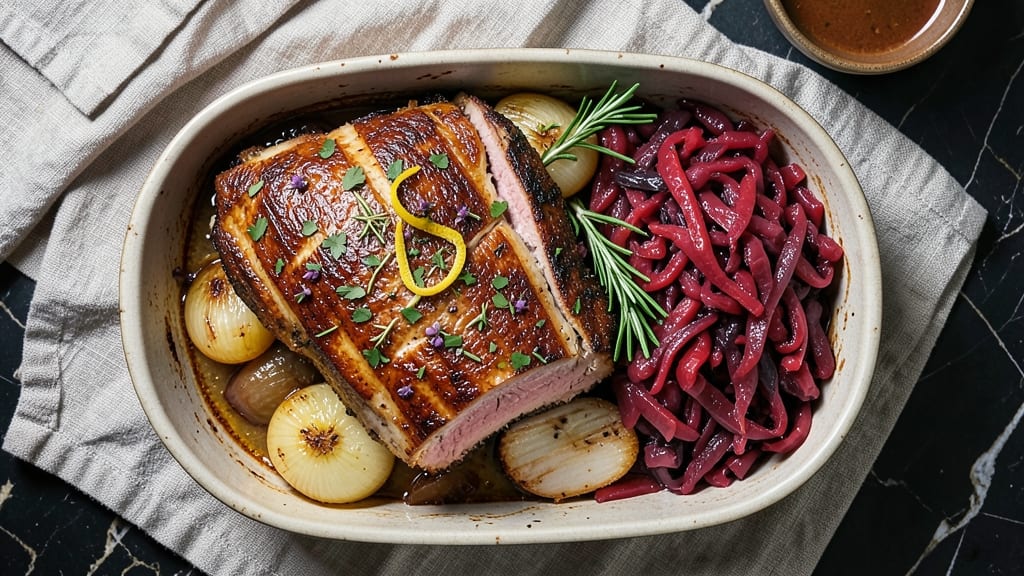
This boneless pork loin roast and sauerkraut recipe delivers melt-in-your-mouth tenderness that transforms simple ingredients into restaurant-quality comfort. The secret lies in slow roasting with aromatic herbs and a touch of mustard, while the sauerkraut adds that signature tangy crunch that makes every bite unforgettable.
I've perfected this technique over years of cooking for large gatherings, where it consistently earns rave reviews.
The pork loin roasts until perfectly tender at 325°F with a crisp golden crust, while the sauerkraut simmers just long enough to soften without losing its signature bite. This method ensures the meat stays juicy and flavorful, with a crust that adds satisfying texture.
The combination of savory pork and tangy sauerkraut creates a balance that's both comforting and sophisticated.
What you'll achieve is a dish that's elegant enough for dinner parties but simple enough for weeknight meals. The pork comes out fork-tender with a beautiful mahogany crust, while the sauerkraut remains vibrant and full of flavor.
This recipe brings German comfort food to your table with minimal effort but maximum impact.
The best part? This dish pairs beautifully with roasted potatoes or a simple green salad. The flavors develop as they cook, making your kitchen smell like a cozy German restaurant. Let's get started on creating this showstopping main course that will have everyone asking for seconds.
Ingredients for boneless pork loin roast and sauerkraut
Sixteen ingredients for restaurant-quality German comfort that tastes like home cooking.
| Ingredient | Amount | Notes |
|---|---|---|
| Boneless Pork Loin Roast 🥩 | 3 lb | Center-cut for tenderness, trimmed of fat |
| Sauerkraut 🥬 | 2 ½ cups | Unopened, high-quality jarred |
| Yellow Onion 🧅 | 1 whole | Medium, thinly sliced |
| Fresh Thyme 🌿 | ¼ cup | Stems removed, chopped |
| Fresh Rosemary 🌿 | ¼ cup | Needles finely chopped |
| Fresh Parsley 🌿 | ⅛ cup | Flat-leaf, chopped |
| Dijon Mustard 🍯 | 2 tbsp | High-quality, smooth |
| Apple Cider Vinegar 🍎 | ½ cup | Unfiltered preferred |
| Honey 🍯 | 2 tbsp | Wildflower preferred |
| Garlic Cloves 🧄 | 4 cloves | Peeled, smashed |
| Vegetable Oil 🫒 | 2 tbsp | High smoke point |
| Salt 🧂 | 1 ½ tsp | Diamond Crystal kosher |
| Black Peppercorns 🌶️ | 1 tsp | Freshly cracked |
| Bay Leaves 🍃 | 2 whole | Fresh preferred |
| Beef Broth 🍲 | ½ cup | Low-sodium, homemade preferred |
The pork loin is the star—center-cut and boneless for maximum tenderness. Look for roasts with good marbling at Whole Foods or your butcher shop; avoid pre-trimmed cuts that can dry out. Fresh herbs elevate this dish, so don't skimp on thyme and rosemary—Trader Joe's carries excellent dried blends if fresh isn't available, but fresh is ideal. The sauerkraut should be fermented, not pasteurized (check labels)—Bragg or Reinhart brands are reliable choices. For the mustard, Grey Poupon adds elegance, but Dijon works perfectly for this braised version.
No fresh thyme? Dried works at one-third the amount, but toast it first for depth. Substitute apple cider vinegar with white wine vinegar in a pinch, though the flavor will be slightly sharper. The honey balances the tang—avoid clover honey if you prefer a more complex flavor profile. For the broth, homemade beef stock is ideal, but low-sodium store-bought works in a bind. The garlic can be roasted for 10 minutes at 400°F before smashing to mellow its bite. If you're serving a crowd, double the sauerkraut and herbs—this dish scales beautifully without losing quality.
The pork roast should rest 15 minutes before slicing—never skip this or it'll dry out. Sauerkraut reheats well; store leftovers in the fridge for up to 5 days in its juices. For longer storage, freeze portions in airtight containers for 3 months. The herbs can be prepped ahead and stored in the fridge for 3 days in a sealed container. This dish tastes even better the next day as flavors meld, making it perfect for meal prep—just reheat gently with a splash of broth.
Why You'll Love This Recipe
- One-Pan Magic: I swear by this recipe when I’m too tired to scrub pots—just sear the pork, toss in the onions and sauerkraut, and let the oven do the work. The aromas alone make my kitchen feel like a cozy German tavern.
- Crispy-Tender Pork: That boneless loin stays juicy inside while the edges get golden and slightly caramelized—thanks to the thyme and rosemary clinging to it like a hug. Honestly, the first bite makes me close my eyes.
- Weeknight to Dinner Party: Same effort, totally different vibes: serve it with crusty bread for a lazy Tuesday or fancy it up with a side of mashed potatoes for guests. The sauerkraut’s tang cuts through the richness, so it’s never too heavy.
- Leftovers That Don’t Lie: Between us, this recipe actually tastes better the next day. I’ll reheat slices in a pan with a splash of water, and suddenly it’s crispy again—perfect for sandwiches or a quick breakfast hash. Zero waste, all flavor.
Step-by-step instructions for German-style braised pork loin
Here's the method for achieving melt-in-your-mouth pork paired with tangy sauerkraut.
Prepare the Pork and Aromatics
Pat the 3 lb boneless pork loin roast completely dry with paper towels—this ensures a proper sear. In a small bowl, combine the 0.25 cup fresh thyme, 0.25 cup fresh rosemary, 1.5 tsp salt, and 1 tsp freshly cracked black peppercorns. Rub this mixture generously over the pork, pressing it into the meat so it adheres well.
While the pork rests at room temperature (about 30 minutes), prepare the aromatics. Thinly slice the 1 whole yellow onion and smash the 4 garlic cloves with the flat side of a knife. Chop the 0.125 cup fresh parsley finely—you'll need it later for garnish.
Sear and Braise the Pork
Heat a large Dutch oven over medium-high heat until it's smoking hot. Add the 2 tbsp vegetable oil and swirl to coat. Place the pork in the pot, fat-side down, and sear for 4-5 minutes until a deep golden crust forms. Flip and sear the other side for another 3-4 minutes. Remove the pork and set it aside.
In the same pot, add the sliced onions and cook for 3 minutes until softened. Add the smashed garlic cloves and cook for 30 seconds until fragrant. Pour in the 0.5 cup apple cider vinegar and scrape up any browned bits from the bottom of the pot—this adds deep flavor. Return the pork to the pot, fat-side up.
Build the Braising Liquid
In a small bowl, whisk together the 2 tbsp Dijon mustard, 2 tbsp honey, and 0.5 cup beef broth. Pour this mixture over the pork, then add the 2 whole bay leaves. The liquid should come about halfway up the sides of the pork—if it doesn't, add a splash of water.
Bring the liquid to a simmer, then reduce heat to low and cover the pot with a tight-fitting lid. Braise for 1 hour and 15 minutes, turning the pork occasionally to ensure even cooking. The pork is done when it reaches an internal temperature of 145°F and is fork-tender.
Incorporate the Sauerkraut
Drain and rinse the 2.5 cups sauerkraut to remove excess brine—this prevents the braising liquid from becoming too watery. Stir the sauerkraut into the pot with the pork, spreading it evenly around the meat. Increase the heat to medium and let it simmer uncovered for 10-12 minutes until the sauerkraut is heated through and slightly caramelized.
Taste the braising liquid and adjust the seasoning if needed—you may need to add a pinch more salt or a splash of vinegar to balance the flavors. The sauerkraut should be tender but still retain a slight crunch.
Rest and Serve
Remove the pork from the pot and let it rest on a cutting board for 10 minutes before slicing. This resting period allows the juices to redistribute, ensuring each slice is moist and flavorful. Skim any excess fat from the braising liquid if desired.
Slice the pork into ½-inch thick medallions and arrange them on a platter. Spoon the sauerkraut and braising liquid over the top, garnishing with the chopped 0.125 cup fresh parsley. Serve immediately with crusty bread or roasted potatoes to soak up the delicious juices.
Pro Tips For Making Boneless Pork Loin Roast And Sauerkraut
- Salt the Pork Twice: Pat the pork loin dry, then season it generously with salt and pepper at least 30 minutes before cooking—this lets the salt work its magic. Right before searing, give it another quick rub, especially if you’re using fresh rosemary sprigs tucked into the cut. I learned this the hard way: dry salt first, wet salt second.
- Sear It Hot and Fast: Get your pan screaming hot—cast iron or stainless steel—before adding the pork. A few minutes per side until deep golden brown isn’t just for looks; it locks in juices and builds flavor. After searing, pull the pan off heat to deglaze with a splash of water or apple cider (yes, even if you’re not a fan) to scrape up those browned bits. That’s where the magic lives.
- Drain and Rinse the Kraut: Dump the sauerkraut into a colander and rinse it thoroughly under cold water to cut the acidity—this balances the dish instead of overpowering it. Then, squeeze out as much liquid as you can with your hands (yes, even if it’s messy). Wet kraut steams instead of crisping, and nobody wants mushy sauerkraut.
- Add Onions Early, Low and Slow: Slice the onion into wedges or thick rings and toss them in before the pork goes in—let them soften gently in the fat. After the pork sears, turn the heat down to medium-low, cover the pan, and let everything cook together for 20 minutes. This caramelizes the onions without burning them, and they’ll soak up the pork’s juices like a sponge. (Pro move: Sprinkle a pinch of sugar over them halfway through if you’re feeling fancy.)
Serving suggestions for this recipe
Classic German Sides
Serve your pork loin with German-style potato dumplings (Kartoffelklöße) for the ultimate comfort pairing. These pillowy dumplings soak up the pork's juices beautifully—I like making them with russet potatoes and a touch of sour cream for extra richness.
Alternatively, roasted potato wedges tossed with Dijon mustard and rosemary add a crispy contrast. 🥔
Fresh Crunch Contrast
Balance the richness with a simple green salad featuring butter lettuce, thinly sliced radishes, and apple slices. Toss with a light honey-mustard dressing (mix 1 tbsp honey, 1 tbsp Dijon, and 2 tbsp apple cider vinegar).
The acidity cuts through the pork's richness while keeping the meal fresh and vibrant.
Bread Pairings
For an authentic touch, serve with dark rye bread or pumpernickel—their dense texture holds up to the sauerkraut's tang. I toast slices lightly and spread them with herbed butter (mix softened butter with chopped chives and a pinch of salt).
If you prefer something lighter, crusty baguette slices work perfectly for mopping up the juices.
Wine and Beer Pairings
A dry Riesling from Germany's Mosel region complements the dish beautifully—its crisp acidity matches the sauerkraut's tang. For beer lovers, a German-style pilsner like Warsteiner or Bitburger provides a clean, refreshing contrast. Avoid heavy reds; they'll overpower the delicate pork flavors. 🍷
Garnish Like a Pro
Elevate your plate with fresh herbs and crisp toppings. Sprinkle chopped parsley over the pork for brightness, and add toasted pumpkin seeds for crunch. A drizzle of high-quality apple cider vinegar (strained) adds a final tangy note.
For extra drama, serve with pickled red onions on the side—they add a bright pop of color and acidity.
Leftovers Reinvented
Transform leftovers into pork and sauerkraut stuffed buns—slice the pork thinly, layer with sauerkraut on hoagie rolls, and top with caramelized onions. Or make pork and sauerkraut tacos with corn tortillas, avocado slices, and a squeeze of lime.
These creative twists keep the meal exciting for days. 🌟
Nutrition facts
Frequently asked questions
Can I substitute pork tenderloin for pork loin in this recipe?
The pork tenderloin would work, but it's much leaner and smaller. For a 3 lb equivalent, you'd need about 2 tenderloins (roughly 1.5 lbs each). The cooking time would also be shorter—tenderloin cooks faster than loin roast. If using tenderloin, reduce braising time to 45-50 minutes and check for doneness at 145°F.
How do I know when the pork is fully cooked?
Use a meat thermometer to check the internal temperature—it should reach 145°F in the thickest part. The pork should also be fork-tender when pierced. If you don't have a thermometer, cut into the thickest part: the juices should run clear, not pink, and the meat should pull apart easily with a fork.
Can I make this recipe in a slow cooker instead of a Dutch oven?
Sear the pork first in a skillet, then transfer it to your slow cooker with the onions, garlic, and braising liquid. Cook on low for 6-7 hours or high for 3-4 hours. Add the sauerkraut during the last 30 minutes to prevent it from turning mushy. The slow cooker method is perfect for hands-off cooking.
What can I do if my sauerkraut tastes too sour?
Add a touch of sweetness to balance the acidity. A drizzle of honey (1-2 tsp) or a pinch of sugar while reheating will mellow the flavor. You can also add a small piece of apple or pear while simmering—it'll infuse the sauerkraut with natural sweetness as it cooks.
How far ahead can I prepare the sauerkraut?
You can prep the sauerkraut up to 2 days ahead and store it in the refrigerator. For best results, drain and rinse it, then store in an airtight container with its juices. When ready to use, simply reheat it in a skillet with a splash of water or broth for 5-7 minutes to warm through.