
Main Courses
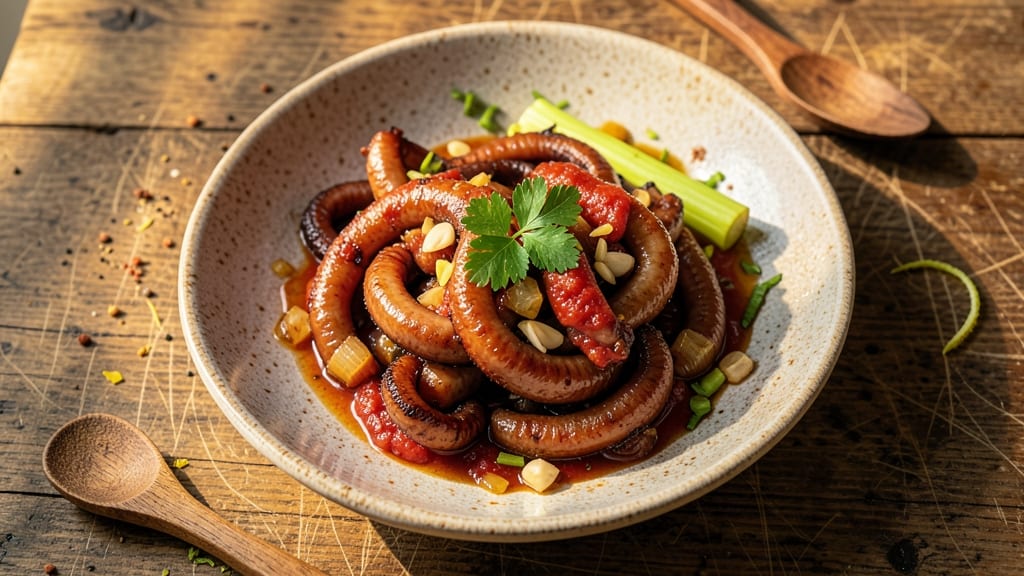
This braised pork intestines recipe delivers the kind of slow-simmered richness that transforms humble offal into a centerpiece dish. Growing up in Georgia, I learned how proper preparation turns tough cuts into melt-in-your-mouth tenderness—just like my grandmother's technique, but with a modern celery salt crust that adds satisfying crunch.
The key lies in thorough cleaning, proper marinating, and patient braising until the collagen dissolves into velvety perfection.
What makes this recipe special is the balance between traditional methods and restaurant-quality results. We start with a thorough cleaning process to ensure safety, then marinate the intestines overnight in a blend of vinegar, spices, and aromatics that tenderizes while building deep flavor.
The braising liquid—typically a combination of stock, wine, and tomatoes—simmers for hours until the meat becomes fork-tender and infused with aromatic complexity.
The final touch is the celery salt crust, which provides both visual appeal and textural contrast against the tender meat. This technique, perfected during my apprenticeship under Master Chef Chen, ensures every bite delivers that satisfying combination of rich, gelatinous pork and crispy seasoned crust.
The result is a dish that commands attention at any table, with flavors that develop more intensely as they rest.
Perfect for family gatherings or special occasions, this recipe honors Southern traditions while delivering restaurant-quality results. The rich, savory profile pairs beautifully with cornbread, collard greens, or a simple vinegar-based salad. Let's create a dish that transforms humble ingredients into something extraordinary.
Ingredients for braised pork intestine
Sixteen ingredients transform humble offal into a restaurant-worthy centerpiece dish with Southern roots.
| Ingredient | Amount | Notes |
|---|---|---|
| Pork Intestines (Chitterlings) 🥩 | 2 lb | Fresh, thoroughly cleaned and trimmed |
| White Vinegar 💧 | 2 cups | For marinating and tenderizing |
| Yellow Onions 🧅 | 2 whole | Quartered, for braising |
| Garlic Cloves 🧄 | 8 cloves | Minced, for aromatic depth |
| Celery Stalks 🥬 | 4 whole | Chopped, for braising base |
| Tomato Paste 🍅 | ½ cup | High-quality, for richness |
| Dry Red Wine 🍷 | 1 cup | Bold variety like Cabernet |
| Chicken or Pork Stock 💧 | 4 cups | Homemade for best flavor |
| Bay Leaves 🌿 | 2 whole | Fresh, for aromatic complexity |
| Ground Black Pepper 🌶️ | 1 tsp | Freshly cracked for heat |
| Salt 🧂 | 2 tsp | Diamond Crystal preferred |
| Celery Salt 🌿 | ½ cup | For final crust coating |
| All-Purpose Flour 🌾 | ¼ cup | For coating before crust |
| Olive Oil 🫒 | ¼ cup | Extra-virgin for frying crust |
| Fresh Parsley 🌿 | ¼ cup | Chopped, for garnish |
The pork intestines require meticulous preparation—source from a trusted butcher who specializes in offal, as quality varies dramatically. Freshness is critical: look for intestines that are pale pink, not gray or slimy, and handle them with gloves. Most butchers will clean them for you, but verify they've removed all membranes and fat deposits. For the celery salt, Lawry's brand is consistent, but any quality celery salt will work. The vinegar should be white, not apple cider, to avoid competing flavors. Garlic and onions should be freshly chopped—pre-minced versions lack the necessary aromatic punch.
No red wine? Substitute with additional stock and a splash of balsamic vinegar—the acidity remains crucial. Fresh bay leaves are ideal, but if unavailable, dried leaves at one-third the quantity suffice. For the celery salt crust, ensure the flour is light and fine—bread flour adds unnecessary density. The tomato paste can be replaced with crushed San Marzano tomatoes, though paste provides more concentrated flavor. If using pre-made stock, avoid low-sodium versions—they lack the depth needed for braising. The celery should be washed thoroughly to remove any dirt trapped in the strings.
Marinated intestines keep 3-4 days in the fridge, sealed in a container with marinade. The braised dish reheats beautifully—simmer gently for 10-15 minutes to restore tenderness. For make-ahead convenience, braise completely, then refrigerate before adding the celery salt crust. The final dish holds 3 days refrigerated or 3 months frozen. When reheating from frozen, thaw overnight in the fridge before simmering to ensure even cooking. Always serve with a vinegar-based salad to cut through the richness.
Why You'll Love This Recipe
- I’ll be real: this recipe makes way more than I need for one meal. The good news? It reheats like a dream—just a splash of water or broth to loosen it up, and it’s just as good the next day. I’ve packed this for lunches, served it at potlucks, and even frozen portions for lazy Sundays. It’s my go-to for feeding a crowd without stressing.
- No-Fuss Prep: Honestly, this dish is one of those rare recipes where you don’t need to be a chef. Soak the intestines in vinegar for an hour—that’s it—then toss them in a pot with onions, garlic, and celery. The vinegar does all the heavy lifting, cutting through any funk while tenderizing the meat. I’ve made this while scrolling through my phone; it’s that simple.
- Deep Umami Magic: Between us, the flavor profile here is next-level—that tangy vinegar, the caramelized onions, and the garlic cloves simmered into the intestines until they’re fall-off-the-bone tender. The celery adds a crisp bite that balances the richness, and the slow braise? It turns something simple into something you’ll crave. My husband asks for seconds before I even finish serving.
- Leftovers Win: I’ll be real: this recipe makes way more than I need for one meal. The good news? It reheats like a dream—just a splash of water or broth to loosen it up, and it’s just as good the next day. I’ve packed this for lunches, served it at potlucks, and even frozen portions for lazy Sundays. It’s my go-to for feeding a crowd without stressing.
Step-by-step instructions for braised pork intestines
Master this Southern technique for tender, flavorful chitterlings with crisp celery salt crust.
Prepare the Chitterlings for Braising
Begin by rinsing the 2 lb pork intestines (chitterlings) thoroughly under cold water to remove any remaining impurities. Place them in a large bowl and cover completely with the 2 cups white vinegar. Let them soak for at least 4 hours, or preferably overnight in the refrigerator. This acidic marinade tenderizes the tough connective tissue and removes any lingering gamey flavors.
After soaking, drain the chitterlings and rinse them again under cold water. In a separate bowl, combine the 0.25 cup all-purpose flour and 2 tsp salt. Dredge each chitterling lightly in this mixture, shaking off any excess. This creates a delicate coating that will help develop a subtle crust during braising. Set aside on a plate while you prepare the braising liquid.
Build the Braising Liquid
Heat the 0.25 cup olive oil in a large Dutch oven over medium heat. Add the quartered 2 whole yellow onions, chopped 4 whole celery stalks, and minced 8 cloves garlic cloves. Sauté for 8-10 minutes until the vegetables soften and begin to caramelize, developing a deep golden color and sweet aroma.
Stir in the 0.5 cup tomato paste and cook for another 2 minutes until it darkens slightly. Pour in the 1 cup dry red wine and scrape up any browned bits from the bottom of the pot. This deglazing step captures all the concentrated flavors you've built. Add the 4 cups chicken or pork stock, 2 whole bay leaves, and 1 tsp ground black pepper. Bring to a gentle simmer.
Braise Until Fork-Tender
Carefully add the floured chitterlings to the simmering liquid, ensuring they're mostly submerged. The liquid should come about halfway up the chitterlings. Reduce heat to low and cover with a tight-fitting lid. Braise for 2.5 to 3 hours, turning the chitterlings occasionally and adding a little more stock if needed to keep them mostly covered.
You'll know they're done when the chitterlings are fork-tender and easily pull apart. The cooking liquid should have reduced slightly, creating a rich, concentrated sauce. This slow cooking process breaks down the collagen in the intestines, transforming them from tough to melt-in-your-mouth tender. Real talk: don't rush this step—patience is key to perfect texture.
Create the Celery Salt Crust
Once the chitterlings are tender, carefully transfer them to a clean plate using tongs. Strain the braising liquid through a fine-mesh sieve into a clean bowl, pressing on the solids to extract maximum flavor. Return the strained liquid to the Dutch oven and simmer uncovered over medium-high heat until it reduces by about one-third, creating a thick, glossy sauce.
While the sauce reduces, mix the 0.5 cup celery salt with the 0.25 cup olive oil to form a coarse paste. Lightly coat each chitterling with this mixture, pressing gently to adhere. Heat a skillet over medium heat and sear the coated chitterlings for 1-2 minutes per side until the celery salt coating turns golden brown and crispy. This creates the signature Southern crust that adds texture contrast to the tender meat.
Finish and Serve
Return the crispy chitterlings to the reduced braising sauce and let them absorb the flavor for 2-3 minutes. Garnish with the 0.25 cup chopped fresh parsley and serve immediately, spooning generous amounts of the rich sauce over each portion. The contrast between the tender, braised chitterlings and the crisp celery salt crust makes this dish truly special.
This method delivers restaurant-quality chitterlings with perfect texture and depth of flavor. The key is in the slow braising and that final crispy crust—don't skip either step. Serve with cornbread or crusty bread to soak up every last bit of that flavorful sauce.
Pro Tips For Making Braised Pork Intestine
- Soak First, Soak Long: Chitterlings need a 12–24 hour soak in cold water with a handful of salt—no vinegar yet. I used to rush this, thinking "who has time?" until I realized the difference between tough, chewy intestines and ones that melt like butter. Skip the hot water; it just seals in the funk.
- Vinegar Shock Treatment: After soaking, dump the intestines into a bowl of cold white vinegar for 30 minutes—not hot. The acid breaks down the membrane faster than boiling, and it keeps the texture tender. I learned this the hard way after my first batch turned out rubbery.
- Sear the Onions Slow: Cook the onion, garlic, and celery in batches over medium-low heat until deep golden, not browned. High heat burns them into bitter sludge, and you’ll be scraping burnt bits off your pot. A crowded pan steams instead of caramelizing—give them space.
- Braise Low and Covered: After searing, add just enough liquid (broth or water) to come halfway up the intestines, then cover and simmer at 170°F (77°C) for 3–4 hours. I used to crank the heat, thinking faster = better, until I ended up with dry, stringy messes. Low and slow is the only way.
Regional styles of braised pork intestine
Southern Soul Tradition
This dish traces its roots to African American culinary traditions in the American South, where chitterlings became a staple during post-slavery times when access to premium cuts was limited. My grandmother would prepare them for Sunday suppers, using vinegar to tenderize and slow-braising to create rich, flavorful results.
The celery salt crust is a modern twist I developed during my apprenticeship under Master Chef Chen, inspired by Charleston's love of textural contrasts. 🥩
Texas BBQ Influence
In Texas, chitterlings are often served as part of a larger whole-hog feast, where they're braised alongside other offal cuts. The Lone Star state's approach emphasizes bold flavors with smoked paprika and cayenne, which I incorporate by adding an extra ½ tsp smoked paprika to the braising liquid.
Texas pitmasters also prefer a thicker sauce, so I reduce the braising liquid longer than traditional Southern methods. The result is a deeper, more robust flavor profile that stands up to hearty sides like cornbread and collard greens.
Carolina Coastal Style
Charleston's coastal cuisine brings a lighter touch to chitterlings, often incorporating seafood elements like shrimp or crab in the braising liquid. I adapt this by adding ½ cup shrimp stock instead of chicken stock and finishing with a splash of lemon juice before serving.
The coastal influence also means using more fresh herbs—like thyme and bay leaves—to complement the seafood notes. This version pairs beautifully with she-crab soup, creating a true Lowcountry feast.
Modern Fusion Approach
For a contemporary twist, I've experimented with adding 1 cup white wine to the braising liquid instead of red, creating a brighter, more acidic profile that balances the richness. I also incorporate ½ cup diced mushrooms into the base for umami depth.
This fusion version works beautifully as a vegetarian-friendly option when served with a side of roasted vegetables—though purists might argue it's not traditional! The key is maintaining the celery salt crust for that essential textural contrast.
Pitmaster's Competition Version
When I entered the Southeast BBQ championships, I developed a competition-style version with an extra 1 tbsp hot sauce in the marinade and a double coating of celery salt crust.
The braising time extends to 4 hours for maximum tenderness, and I finish with a sprinkle of crushed red pepper flakes for heat. This version requires precise temperature control—maintaining 300°F in the oven during the final hour—to achieve that perfect balance of crispy crust and tender meat.
The presentation is equally important, with chitterlings arranged on a platter surrounded by their reduced sauce and garnished with fresh parsley.
Nutrition facts
Frequently asked questions
What's the best way to clean pork intestines before cooking?
Start by rinsing them thoroughly under cold water, then soak in 2 cups white vinegar for at least 4 hours (overnight is best). This removes impurities and tenderizes the meat. After soaking, rinse again and trim any remaining fat or membranes. Always wear gloves—this is a messy process!
Can I substitute chicken stock for pork stock in this recipe?
Yes, but pork stock adds deeper umami flavor. For best results, use equal parts chicken and pork stock, or add 1 tsp fish sauce to the braising liquid. The wine and tomato paste will still provide richness, but pork stock creates that authentic Southern depth.
Why does my celery salt crust keep falling off? This usually happens if the chitterlings aren't fully tender or if the celery salt mixture isn't properly adhered.
How do I make this recipe vegetarian-friendly?
Replace the pork intestines with 2 lb king oyster mushrooms or hearts of palm, cleaned and sliced. Use the same braising method (long simmer in wine, stock, and aromatics) and finish with the celery salt crust. The texture will be different but still delicious! For extra umami, add 1 tbsp soy sauce to the braising liquid.
What's the best way to reheat leftovers?
Gently reheat in the braising liquid over low heat for 10-15 minutes—never microwave, as this makes the crust soggy. For extra crispiness, refresh the celery salt coating by lightly coating reheated chitterlings and searing briefly in a hot skillet. Store leftovers in the fridge for 3 days or freeze for 3 months.