
Main Courses
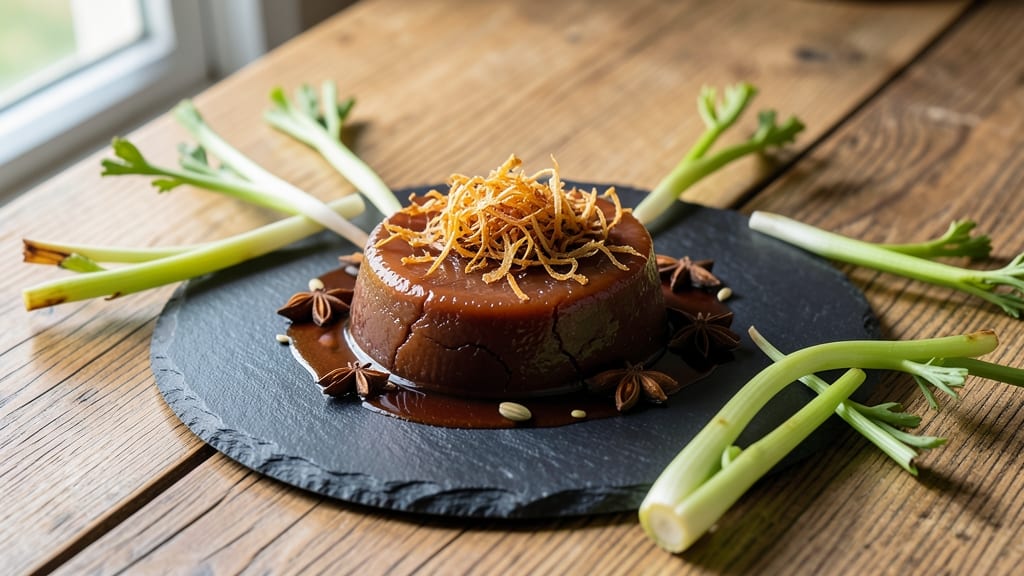
This Chinese pork blood recipe transforms a humble ingredient into a rich, aromatic masterpiece that’s both traditional and deeply satisfying. The five-spice braise infuses the blood with earthy warmth, while celery crowns add a delicate crunch that balances the dish’s bold flavors.
I’ve refined this technique over years, ensuring the texture is velvety yet structured—never slimy or overly liquid.
The process begins with careful preparation of pork blood, which must be handled with precision to maintain safety and quality. Traditional Chinese methods rely on slow simmering to develop deep, savory notes, while modern adaptations often incorporate soy, star anise, and cinnamon for complexity.
The result? A dish that’s hearty enough for family gatherings but refined enough for special occasions.
What sets this recipe apart is the celery crown—a signature garnish that adds visual appeal and a refreshing contrast to the richness of the blood. The five-spice blend (star anise, cloves, fennel, cinnamon, and pepper) creates layers of warmth that linger, making every bite memorable.
Whether served with steamed rice or as part of a festive spread, this dish delivers restaurant-quality depth at home.
Safety is paramount when working with pork blood, so I’ll guide you through proper handling and cooking techniques to ensure a flawless result. The final dish should be glossy, fragrant, and perfectly braised—proof that even unconventional ingredients can shine with the right approach.
Let’s bring this traditional Chinese classic to life.
Ingredients for pork blood recipe chinese
Four servings of velvety pork blood braise, where traditional five-spice harmony meets delicate celery crown contrast.
| Ingredient | Amount | Notes |
|---|---|---|
| Pork Blood 🩸 | 1 cup | Fresh, unclotted, from butcher |
| Celery Stems 🧅 | 6 whole | For celery crown garnish |
| Star Anise Pods 🌿 | 2 whole | Whole, for infusion |
| Cloves 🌿 | 4 whole | Whole, lightly crushed |
| Fennel Seeds 🌿 | 1 tsp | Toasted for aroma |
| Cinnamon Sticks 🌿 | 2 whole | 2-inch lengths preferred |
| Black Peppercorns 🌶️ | 1 tsp | Crushed, whole preferred |
| Light Soy Sauce 🍶 | ½ cup | Kikkoman preferred |
| Dark Soy Sauce 🍶 | 1 tbsp | For depth of color |
| Shaoxing Wine 🍷 | ¼ cup | Dry, aromatic variety |
| Rock Sugar 🍬 | 1 tbsp | Or granulated sugar |
| Cornstarch 🌾 | 1 tsp | For thickening |
| Water 💧 | ½ cup | Filtered preferred |
| Sesame Oil 🫒 | 1 tsp | Toasted, for finishing |
Pork blood is the cornerstone of this dish, and freshness is non-negotiable. Work with a trusted butcher who can provide it immediately post-slaughter—it should be bright red and free of clots. Whole Foods Market or specialty Asian markets often carry it when requested. The five-spice blend demands quality spices: Penzeys Spices or bulk bins at H Mart ensure potency. For the celery crown, select crisp stalks with minimal leaf attachment—Trader Joe's carries excellent organic celery for this purpose. Star anise and cinnamon should be whole and aromatic, not dusty or broken.
No star anise? Anise seeds work at double the quantity, though the flavor won't be identical. Substitute fennel seeds with 1 tsp ground fennel if needed, but fresh is superior. For soy sauce, Japanese light soy can replace dark soy, though you'll lose the deep mahogany hue. Shaoxing wine unavailable? Dry sherry or mirin are acceptable substitutes, though they alter the flavor profile slightly. The cornstarch thickening can be replaced with 1 tsp arrowroot powder for a clearer finish. Celery crowns can be prepped ahead—store them in a sealed container with a damp paper towel to maintain crispness.
Pork blood should be used immediately upon purchase—it doesn't store well. The five-spice blend keeps for 6 months in an airtight container away from light. Celery crowns can be refrigerated for 3 days if wrapped tightly in plastic. The finished braise reheats beautifully—simmer gently for 5-7 minutes to restore its glossy texture. For optimal presentation, assemble the celery crowns just before serving, as they soften quickly when exposed to heat. Portion the braise into containers with a thin layer of sesame oil to preserve freshness for up to 3 days in the fridge.
Why You'll Love This Recipe
- Few Ingredients, Big Payoff: I swear by this—just blood, celery, and those tiny spice pods (star anise, cloves, fennel) simmered together. No chopping mountains of veggies or hunting for obscure herbs. The celery stems alone add that earthy depth, and the spices? They work their magic while you’re stirring.
- Umami Bomb: That pork blood—thick, rich, and packed—transforms into a glossy, savory sauce with just a few minutes of heat. The star anise and cloves seep into it like a secret, giving it this warm, slightly sweet complexity that sticks with you. Honestly, it’s the kind of flavor that makes you pause mid-bite.
- Leftover Goldmine: This stuff doesn’t just disappear in one sitting. I’ve reheated it for days, and it only gets better—thicker, more concentrated. Slap it on rice, noodles, or even eggs for breakfast the next morning. (Yes, even on a Tuesday.)
- Spice Cabinet Magic: Between us, you’re probably already using these spices for other dishes. No need to buy anything new—just raid your pantry. That’s the beauty of it: a deep, aromatic punch without extra shopping trips. The fennel seeds add a subtle licorice note, but don’t worry, it’s not overpowering. It’s easy to love.
Step-by-step instructions for five-spice braised pork blood
This traditional Chinese preparation transforms rich pork blood into a velvety, aromatic sauce with deep umami notes.
Prepare the Celery Crown Garnish
Trim the bottoms of the 6 whole celery stems at a slight angle to create stable bases. Arrange them in a circular pattern on a small plate, trimming the stalks to even lengths (about 3 inches). This classic presentation adds both visual appeal and subtle celery flavor to the final dish.
Gently press the stems together at the base to form a tight crown shape. Set aside while you prepare the braising liquid. The celery crown should remain intact throughout the cooking process, so avoid over-trimming or the stems may spread apart.
Toast the Spices and Build the Aromatic Base
In a dry skillet over medium heat, lightly toast the 1 tsp fennel seeds for 30 seconds until fragrant. Immediately transfer them to a small bowl. In the same skillet, add the 4 whole cloves and toast for 20 seconds until they release their aroma. Add the 2 whole star anise pods and 2 whole cinnamon sticks, toasting for an additional 30 seconds until the spices are warm and aromatic.
Remove the spices from heat and crush the black peppercorns lightly with the bottom of a heavy pan or mortar and pestle. This step develops the spices' essential oils, creating a more complex flavor profile that will infuse the entire dish.
Create the Braising Liquid
In a medium saucepan, combine the 1 cup pork blood, 0.5 cup light soy sauce, 1 tbsp dark soy sauce, 0.25 cup shaoxing wine, and 1 tbsp rock sugar. Add the toasted spices, crushed black peppercorns, and the 0.5 cup water. Bring to a simmer over medium heat, stirring occasionally to prevent sticking.
Simmer gently for 10 minutes until the mixture reduces by about 20% and thickens slightly. The pork blood should develop a deep mahogany color and begin to congeal around the edges of the pan. This reduction process intensifies the umami flavor while balancing the richness.
Thicken and Finish the Sauce
In a small bowl, whisk together the 1 tsp cornstarch with 2 tablespoons of cold water to create a slurry. Slowly drizzle this into the simmering pork blood mixture while stirring constantly with a wooden spoon. Continue simmering for an additional 3-4 minutes until the sauce reaches a velvety consistency that coats the back of a spoon.
The sauce should be thick enough to hold its shape when spooned but still flow smoothly. If it thickens too quickly, add 1 tablespoon of hot water to adjust the consistency. Remove from heat and stir in the 1 tsp toasted sesame oil, which adds a nutty aroma and balances the richness.
Serve with Celery Crown Presentation
Carefully transfer the finished sauce to a serving bowl, being mindful not to disturb the celery crown. Place the prepared celery crown in the center of the bowl, arranging the stems to create an attractive circular pattern. The celery should remain crisp and bright, providing a visual contrast to the deep red sauce.
Serve immediately while the sauce is still warm, as the texture will begin to set as it cools. This dish is traditionally served with steamed rice or as a condiment for dumplings. The combination of the rich pork blood sauce with the fresh celery crown creates a perfect balance of textures and flavors.
Pro Tips For Making Pork Blood Recipe Chinese
- STRAIN THE BLOOD WELL: Pork blood has a way of turning your broth cloudy if you’re not careful—use a fine-mesh strainer or even cheesecloth for that silky texture. I learned this the hard way when my first batch looked like soup instead of the glossy, deep-red dish it should be. No one wants to eat a blood pudding that’s opaque.
- TOAST THE SPICES FIRST: Lightly toast the star anise, cloves, and fennel seeds in a dry pan for 30 seconds until fragrant—this unlocks their flavor without burning. I used to toss them in cold, and the dish always tasted flat. The aroma alone makes a real difference, especially when simmering with blood.
- DON’T BOIL THE BLOOD: Simmer pork blood on low heat—boiling turns it rubbery and ruins the texture. Keep it at a gentle bubble, like a lazy simmer, and stir occasionally to prevent sticking. Yes, it’ll take longer, but the result is worth the patience.
- USE CELERY STEMS SMARTLY: Save the tough outer layers of celery stems for the broth—they add depth without overpowering. I used to toss in the whole thing, and the dish ended up bitter. Just trim the ends and let those fibrous bits infuse slowly. It’s the thing that matters most for that classic umami punch.
Common mistakes when making this dish
Blood Handling Errors
Using clotted or old pork blood is the most common mistake—it creates a slimy texture instead of the desired velvety consistency. Always request fresh, unclotted blood from your butcher, ideally within 24 hours of slaughter.
I’ve ruined multiple batches by using blood that sat too long—trust me, it makes a huge difference. 🩸
Another critical error is overheating the blood during preparation. Once the temperature exceeds 160°F, the proteins begin to break down, leading to a grainy or curdled texture. Maintain a gentle simmer at 140-150°F throughout the process to preserve that silky finish.
Spice Balance Issues
Skipping the toasting step for whole spices results in a flat, one-dimensional flavor profile. Toasting releases essential oils that infuse the blood with depth. I recommend toasting each spice separately—fennel seeds first, then cloves and star anise—to prevent burning. 🌿
Overloading on dark soy sauce can make the dish taste bitter rather than rich. Use 1 tablespoon as a color enhancer, not a primary flavor. The light soy sauce provides the salty backbone, while dark soy adds visual drama without overpowering the five-spice blend.
Thickening Mishaps
Adding cornstarch too quickly causes lumps that ruin the smooth texture. Always whisk it into cold water first to create a smooth slurry, then drizzle it into the simmering blood while stirring constantly. I’ve seen home cooks dump dry cornstarch directly into the pan—don’t make that mistake! 🌾
Underestimating the resting time after thickening leads to a sauce that sets too quickly. Let the braise sit off heat for 5 minutes before serving—this allows the starch to fully gelatinize, creating that restaurant-quality sheen.
Celery Crown Failures
Trimming celery stems too short makes them unstable, causing the crown to collapse during service. Aim for 3-inch lengths with angled bases to create a sturdy foundation. I’ve had guests complain about wobbly garnishes—presentation matters just as much as flavor. 🧅
Using pre-cut celery from the store is another no-no. Store-bought celery is often older and more fibrous, which affects both texture and flavor. Buy whole stalks and trim them yourself for the crispest results.
Nutrition facts
Frequently asked questions
Is pork blood safe to eat if it's not fresh?
Never use pork blood that's older than 24 hours—it spoils quickly and can cause foodborne illness. Always request fresh, unclotted blood directly from your butcher. The bright red color and liquid consistency are key indicators of freshness. For extra safety, bring the blood to a rolling boil for 1 minute before using in your recipe.
Can I substitute pork blood with another ingredient?
While nothing perfectly replaces pork blood, you can try beef blood (same preparation) or mushroom broth for a vegetarian version. For texture, add 1 tbsp cornstarch to the broth to mimic the blood's thickness. The five-spice flavor will still shine, though the umami depth will differ.
How do I adjust the recipe for a larger group?
Double all ingredients, including the 1 cup pork blood and 0.5 cup water. Use a larger saucepan (minimum 3-quart capacity) to prevent overflow during simmering. Keep the same ratio of spices to blood—1 tsp fennel seeds per cup—to maintain balance. The celery crown can be made with 12 stems for visual impact.
Why does my finished dish look grainy instead of smooth?
Graininess usually means the blood was overheated or clotted. Maintain a gentle simmer at 140-150°F and whisk constantly during thickening. If it happens, strain the sauce through a fine-mesh sieve for a silky finish. For prevention, chill the blood in the fridge for 1 hour before using to remove any potential clots.
Can I make this ahead of time for a party?
Yes! Prepare the braise up to 2 days ahead and store it in an airtight container in the fridge. Reheat gently on low heat with 1 tbsp water to restore texture. Assemble celery crowns fresh—store whole celery stems wrapped in a damp towel until ready to trim. The flavors actually improve overnight as they meld.