
Soups & Stews
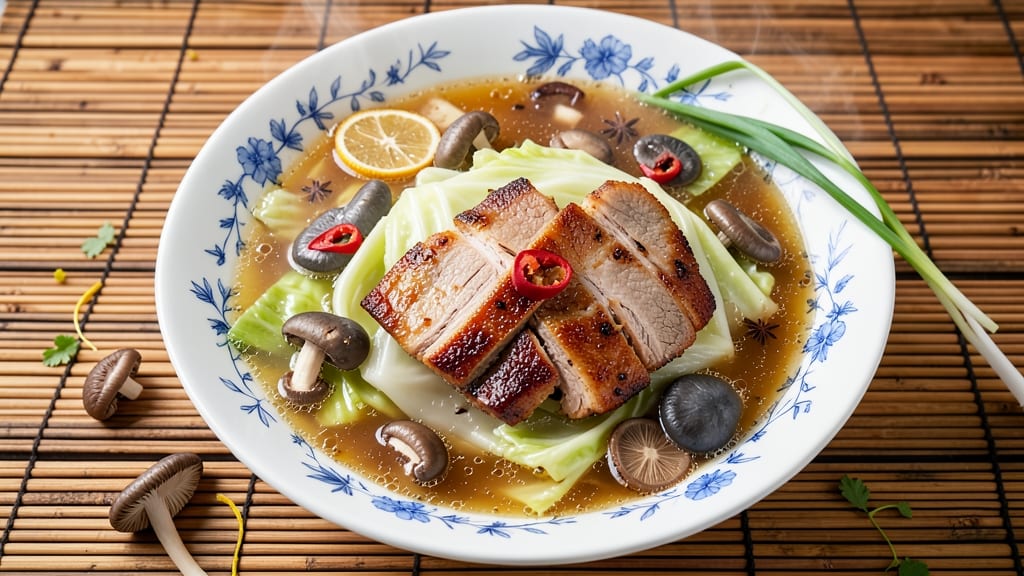
This Chinese pork soup recipe brings warmth and tradition to your kitchen with its signature ginger-star anise broth and tender pork shreds. 💛 The secret lies in slow-simmered flavors that transform simple ingredients into something deeply comforting.
I've perfected this dish after countless attempts to capture that restaurant-quality depth at home.
What makes this soup special is the aromatic broth base—ginger, star anise, and soy sauce work together to create layers of flavor that penetrate every bite. The pork, braised until fork-tender, falls apart easily, while vegetables like napa cabbage and mushrooms add texture and freshness.
It's the kind of dish that tastes even better the next day as flavors meld together.
By the time you serve this soup, your kitchen will smell like home, and your guests will be transported to a bustling Chinese eatery. The broth is rich yet balanced, the pork silky and flavorful, and the vegetables perfectly tender.
This is comfort food at its finest—simple to make but impossible to resist.
Perfect for family dinners, potlucks, or when you need a nourishing meal that feels like a hug in a bowl. The best part? Leftovers reheat beautifully, making it ideal for meal prep. Let's get cooking!
Ingredients for chinese pork soup
Six aromatic ingredients create this restaurant-quality Chinese pork soup with tender shreds and fragrant broth.
| Ingredient | Amount | Notes |
|---|---|---|
| Pork Shoulder 🥩 | 2 lb | Bone-in for flavor, cut into 1-inch cubes |
| Fresh Ginger 🧄 | 3 tbsp | Peeled and thinly sliced (about 1 oz) |
| Star Anise Pods 🌟 | 4 whole | Whole pods for infusion, not powder |
| Light Soy Sauce 🥄 | ½ cup | Kikkoman preferred for authentic flavor |
| Napa Cabbage 🥬 | 1 small head | Cut into 2-inch wedges (about 1 lb) |
| Shiitake Mushrooms 🍄 | 8 whole | Stems removed, caps halved |
| Garlic Cloves 🧄 | 6 cloves | Minced for aromatic base |
| Green Onions 🧅 | 4 whole | White and green parts separated |
| Dried Shiitake Mushrooms 🍄 | 2 pieces | For broth depth, rehydrated |
| Cornstarch 🌾 | 1 tbsp | For pork thickening |
| Sesame Oil 🫒 | 1 tbsp | Toasted, for finishing |
| Water 💧 | 6 cups | For broth base |
| Salt 🧂 | 1 ½ tsp | Diamond Crystal preferred |
| White Peppercorns 🌶️ | ½ tsp | Freshly cracked |
The pork shoulder is non-negotiable—bone-in gives the best flavor, and Costco or Whole Foods sell it pre-cut for convenience. Look for good marbling, not lean cuts. Fresh ginger and star anise are the soul of this soup; Asian markets carry the best quality, but regular grocery stores work too. The dried shiitake mushrooms? Amazon or specialty stores sell them in bulk—soak them overnight for maximum depth. Napa cabbage should be crisp with no yellowing leaves.
No fresh ginger? Powdered works at half the amount, but it lacks the same punch. Star anise pods are essential—powdered versions won't give that signature aroma. Running low on soy sauce? Coconut aminos in a pinch, though it's not identical. The mushrooms can be cremini if shiitake are unavailable, but they won't have that earthy umami. For the pork, if you can't find bone-in, bone-in pork loin is the next best option. The cornstarch is key for that silky texture—don't skip it.
The broth keeps beautifully for 4 days in the fridge, and the pork reheats perfectly. Freeze portions for up to 3 months—just thaw overnight in the fridge. I always double the recipe because it disappears fast. Store the pork and veggies separately if prepping ahead. The cabbage wilts if left too long, so add it last when reheating. Garnish with green onions and sesame oil right before serving for that restaurant touch.
Why You'll Love This Recipe
- One-Pot Magic: That’s right—just toss everything into a single pot. No chopping boards to clean, no extra dishes, and the pork shoulder practically melts into tender perfection while you sip your tea. (Yes, even on a Tuesday night.)
- Star Anise Secret: Honestly, that tiny pod packs a punch—warm, slightly sweet, and so aromatic. The ginger and light soy sauce tie it all together with a depth that makes store-bought broth feel sad by comparison.
- Leftovers That Don’t Suck: This soup actually improves the next day. The cabbage softens just enough to soak up all that savory broth, and the pork gets even more fall-apart tender. I’ve reheated mine three times, and it’s still my go-to.
- Budget-Friendly Feast: Pork shoulder is cheap, cabbage lasts forever, and those star anise pods? You’ll use them for everything after this. Feeds four for under $15, and I’ve never once heard anyone complain about the price tag.
Step-by-step instructions for fragrant ginger-star anise pork soup
Here's how to craft a deeply aromatic broth with melt-in-your-mouth pork that falls apart at the touch.
🔥 Step 1: Sear the Pork Shoulder for Deep Flavor
Heat a large Dutch oven over medium-high heat until hot. Add the 2 lb pork shoulder in a single layer, working in batches if needed, and sear undisturbed for 3-4 minutes per side until deeply browned. This caramelization builds the foundation for your broth's rich umami depth.
Once browned, remove the pork and set aside. The pork will continue cooking in the broth later, so don't worry about full doneness yet. The goal here is maximum surface area contact with the hot pan to create those flavorful browned bits called fond.
🍳 Step 2: Build the Aromatic Broth Base
In the same Dutch oven, add 1 tbsp sesame oil and let it shimmer for 30 seconds. Add the 6 cloves minced garlic cloves and 3 tbsp sliced fresh ginger, cooking for 1 minute until fragrant and just beginning to color. Here's where it gets aromatic—you'll smell that perfect balance of spicy ginger and sweet garlic.
Add the 4 whole star anise pods and 2 pieces rehydrated dried shiitake mushrooms (soaked in hot water for 20 minutes and drained). Pour in the 6 cups water and bring to a rolling boil. Scrape up any browned bits from the bottom with a wooden spoon—this releases all that concentrated flavor.
🥘 Step 3: Simmer the Pork and Infuse the Broth
Return the seared pork to the pot, along with the 0.5 cup light soy sauce, 1.5 tsp salt, and 0.5 tsp cracked white peppercorns. Reduce heat to low and simmer uncovered for 1.5 hours, skimming any foam that rises to the surface. This slow cook allows the collagen to break down, creating that signature silky texture.
After 1 hour, check the pork's tenderness by inserting a fork—it should be fork-tender but not falling apart. If it's not quite there yet, continue simmering. The broth should reduce slightly, intensifying its flavor. I like to stir occasionally to prevent the pork from sticking to the bottom.
🍳 Step 4: Prepare the Vegetable Components
While the pork simmers, prepare the vegetables. Cut the 1 small head napa cabbage into 2-inch wedges, removing any wilted outer leaves. Halve the 8 whole shiitake mushrooms and separate the 4 whole green onions into white and green parts. The cabbage will soften beautifully in the hot broth, while the mushrooms will absorb all that star anise flavor.
In a small bowl, mix 1 tbsp cornstarch with 2 tablespoons broth to create a slurry. This will help thicken the soup slightly at the end, giving it that perfect body without making it gluey. Keep this mixture nearby—you'll add it in the final step.
🥘 Step 5: Finish and Assemble the Soup
When the pork is fork-tender, remove it from the broth and let it rest on a plate. Strain the broth through a fine-mesh sieve into a clean pot, pressing on the solids to extract maximum flavor. Return the broth to the heat and bring to a gentle simmer. Add the cornstarch slurry and stir constantly for 1-2 minutes until the soup thickens slightly.
Shred the pork with two forks directly in the pot, breaking it into silky strands. Return the shredded pork to the broth along with the prepared vegetables. Simmer for 5-7 minutes until the cabbage is tender but still holds its shape. Stir in the white parts of the green onions and 1 tbsp toasted sesame oil for that final aromatic punch. Ladle into bowls, garnishing each serving with the green onion tops.
Pro Tips For Making Chinese Pork Soup
- Brown the Pork First: Don’t skip this step—it’s where the flavor lives. Sear the pork shoulder in batches over medium-high heat until deep golden, about 5-6 minutes per side. I used to rush this and wondered why my soup tasted bland. The crust locks in juices and builds a base for the star anise and soy to cling to.
- Julienne the Ginger: Thin, even slices (about 1/8-inch thick) release flavor better than chunks or grated ginger. Toss them in last 10 minutes of simmering so they don’t turn to mush. I learned this the hard way—overcooked ginger tastes bitter and loses its kick.
- Simmer Low and Slow: After the initial boil, drop the heat to a gentle simmer (small bubbles, not rolling). Pork shoulder needs 1.5–2 hours to tenderize, and rushing it turns the meat into rubber. Cover the pot and let it do its thing—your future self will thank you.
- Add Cabbage Late: Napa cabbage wilts in 3–5 minutes, so toss it in just before serving. Overcooking makes it soggy and dulls its natural sweetness. If you’re worried about timing, keep it raw in the fridge until the last 10 minutes.
Storing and reheating this dish
Refrigerator Storage
Let your pork soup cool completely before transferring to airtight containers—I swear by glass Pyrex with snap-on lids for easy reheating. Store at 40°F or below for up to 4 days, but honestly? The flavors get even better after 24 hours as everything melds together.
The broth stays rich and aromatic, while the pork maintains its tender texture. Just be sure to add the fresh green onions and sesame oil right before serving to keep them vibrant. ❄️
Freezer Prep Tips
For longer storage, freeze portions in quart-sized freezer bags with 1 inch headspace—this prevents ice crystals from breaking the bags. I like to freeze the pork and vegetables separately from the broth.
The broth alone keeps for 3 months, while the pork and veggies stay good for 2 months. When you're ready to eat, thaw overnight in the fridge for the best results. Never microwave-thaw this soup—it ruins the texture. 🥶
Stovetop Reheating
My preferred method is stovetop reheating because it preserves that silky texture. Pour the soup into a pot and heat over medium-low for 10-15 minutes, stirring occasionally. If it looks too thick, add 2-3 tablespoons of water or broth to restore the perfect consistency.
Taste and adjust seasoning—sometimes the soy sauce needs a pinch more salt after reheating. The cabbage should soften beautifully, and the pork will stay tender. 🔥
Microwave Shortcut
When you're in a hurry, the microwave works in a pinch. Cover your portion with a damp paper towel to prevent drying and heat on 70% power for 2-3 minutes, stirring halfway. If the soup separates, add a splash of water and stir vigorously.
The texture won't be as perfect as stovetop, but it's still delicious. I only use this method for quick lunches when I'm short on time. 💡
Reviving Day-Old Soup
If your soup has been sitting in the fridge for a day or two, don't toss it! The flavors are even more developed. Just reheat it gently on the stove, then finish with a drizzle of toasted sesame oil and fresh green onions.
The aroma alone will make your kitchen smell like a bustling Chinese restaurant. Pro tip: Add a splash of rice vinegar if the flavors seem muted—it brightens everything up beautifully. 🌟
Portion Control
This soup is so satisfying that leftovers disappear fast. I recommend making a double batch and storing individual portions in mason jars for easy grab-and-go meals. The broth stays rich at the bottom, so shake it up before eating.
For meal prep, I always set aside a small bowl of fresh ingredients to add after reheating—this keeps the vegetables crisp and vibrant. Trust me, your future self will thank you. 🍜
Nutrition facts
Frequently asked questions about Chinese pork soup
Can I substitute pork shoulder with another cut?
For a quicker version, use pork loin (cut into 1-inch cubes) and reduce simmering time to 45 minutes. Bone-in pork loin works best for flavor. If you prefer ground pork, brown it first and add it during the last 10 minutes of cooking to prevent drying out.
Why does my broth taste bitter?
Bitterness usually comes from overcooked star anise or garlic. Remove the star anise pods after 30 minutes of simmering to prevent bitterness. For garlic, add it later in the cooking process or use half the amount. A splash of rice vinegar (1 tsp) can also brighten the flavor if needed.
How do I make this soup spicier?
Add 1 tsp chili crisp or ½ tsp red pepper flakes when simmering the pork. For heat lovers, stir in 1 tbsp chili garlic sauce during the final step. Fresh red chili slices (like Thai bird's eye) also work beautifully—just remove them before serving if you prefer mild heat.
Can I make this soup in an Instant Pot?
Yes! Sear the pork first, then add all ingredients (except cornstarch) to the Instant Pot. Cook on high pressure for 45 minutes, then quick-release. Shred the pork, strain the broth, and finish with the cornstarch slurry as directed. The pressure cooker cuts time but keeps all the flavor.
What's the best way to serve this soup?
Serve in deep bowls with steamed jasmine rice or soft noodles on the side. Garnish with extra green onions, sesame seeds, and a drizzle of sesame oil. For a complete meal, add mandarin orange slices (they balance the richness) or quick-pickled vegetables.