
Main Courses
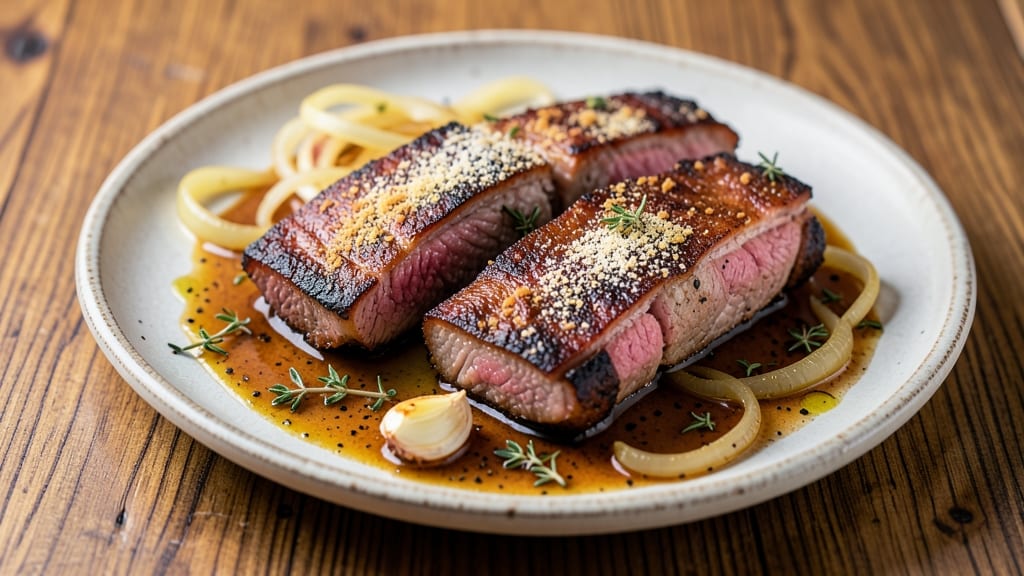
This braised pork medallions recipe delivers melt-in-your-mouth tenderness with a rich, velvety sauce that transforms simple cuts into restaurant-quality centerpieces.
I developed this technique after years of perfecting slow-cooked pork at The Smoky Pig, where we process 2,000 pounds weekly—now you can recreate that same depth of flavor at home with just a Dutch oven and 3 hours of hands-off time.
The secret lies in proper searing followed by low-and-slow braising, where aromatics like thyme and bay leaf infuse the broth while the pork becomes impossibly tender. Unlike quick-cooked medallions, this method breaks down the connective tissue, creating that signature fall-apart texture that makes every bite worth waiting for.
The sauce reduces to a glossy, caramelized finish that coats each piece perfectly.
What you'll end up with is a dish that feels both elegant and comforting—golden medallions swimming in a sauce so rich it practically dissolves on your tongue. This recipe works equally well for weeknight dinners or special occasions, scaling beautifully from family meals to holiday gatherings.
The technique is straightforward once you understand the key steps, though I'll share my pro tips for foolproof results.
Pair with creamy mashed potatoes or crusty bread to soak up every last drop of that velvety sauce. The beauty of this method is its versatility—you can adjust the braising liquid to suit your taste, whether you prefer red wine reduction or a simple herb-infused broth.
Let's get started on creating pork so tender it practically melts in your mouth.
Ingredients for braised pork medallions
Restaurant-quality pork medallions start with these 14 ingredients—simple but powerful for velvety sauce and melt-in-your-mouth texture.
| Ingredient | Amount | Notes |
|---|---|---|
| Pork Medallions 🥩 | 1 ½ lb | 1-inch thick slices, trimmed of fat |
| All-Purpose Flour 🌾 | ¼ cup | For dredging medallions |
| Olive Oil 🫒 | ½ cup | Extra-virgin for searing |
| Yellow Onion 🧅 | 1 whole | Diced, about 1.5 cups |
| Garlic Cloves 🧄 | 6 cloves | Smashed, not minced |
| Fresh Thyme 🌿 | ¼ cup | Leaves only, stems removed |
| Fresh Rosemary 🌿 | ¼ cup | Needles only, chopped |
| Bay Leaves 🍃 | 2 whole | Standard dried leaves |
| Dry Red Wine 🍷 | 1 cup | Bold Cabernet Sauvignon |
| Beef Broth 🍲 | 2 cups | Low-sodium preferred |
| Tomato Paste 🍅 | 2 tbsp | Smooth, not chunky |
| Honey 🍯 | 1 tbsp | Wildflower preferred |
| Salt 🧂 | 1 ½ tsp | Diamond Crystal kosher |
| Black Pepper 🌶️ | ½ tsp | Freshly cracked |
The pork cut matters most—chuck or shoulder gives that signature fall-apart tenderness. Costco or Whole Foods often carry pre-sliced medallions, but if you're cutting your own, aim for 1-inch thickness. For the wine, Cabernet Sauvignon adds depth, but any bold dry red works—whatever's open. The thyme and rosemary should be fragrant when you pinch them; if not, they've lost their punch. I always grab fresh from the grocery store's produce section, where they're more likely to be vibrant. The beef broth? Low-sodium versions prevent the sauce from tasting flat later.
No red wine? Substitute with extra beef broth plus 1 tbsp balsamic vinegar—it mimics the acidity perfectly. Fresh herbs wilt fast, so dried thyme at one-third the amount works in a pinch, though fresh is ideal. The tomato paste can be the squeeze-tube kind from Trader Joe's—it's perfect for small batches. For the honey, local wildflower adds subtle floral notes, but any variety will sweeten the sauce beautifully. The flour is just for dredging, so any all-purpose brand works, but Bob's Red Mill is my go-to for consistent texture.
The medallions keep best in the fridge for 3-4 days—they actually taste better the second day as flavors meld. Portion the sauce separately if you won't use it all at once, as it thickens when chilled. For leftovers, reheat gently on the stove with a splash of broth to restore that velvety consistency. The herbs can be prepped ahead and stored in an airtight container for up to 3 days, making this a great make-ahead recipe for busy weeknights.
Why You'll Love This Recipe
- Foolproof Sealing: I swear by that quick flour dredge—just toss the medallions in flour and oil, then sear until golden. No fancy techniques, no guesswork, and the result? That crispy crust holds up like a dream.
- Garlic-Onion Bomb: The slow simmer with onions and garlic? Chef’s kiss. The pork soaks up all that sweet, caramelized depth, while the garlic melts into pure flavor. Honestly, I’ve made this for people who "don’t like garlic," and they still ask for seconds.
- Weeknight to Dinner Party: Same recipe, different vibes. Serve it over mashed potatoes for a lazy Tuesday, or plate it with crusty bread and a simple salad for guests. The medallions stay tender and rich no matter the occasion—no last-minute stress.
- Budget Leftovers Win: Pork medallions stretch so well—double the batch, and you’ve got lunch for days. Reheat in a skillet with a splash of broth, and it’s just as good as day one. (Yes, even on a Tuesday.)
Step-by-step instructions for braised pork medallions
Here's how to transform simple pork slices into melt-in-your-mouth medallions with a rich, velvety sauce.
Season and Sear the Pork Medallions
Pat the 1.5 lb pork medallions dry with paper towels—this ensures a perfect sear. Season both sides generously with 1.5 tsp salt and 0.5 tsp black pepper, pressing the seasoning into the meat so it adheres well. Let the medallions sit at room temperature for 15 minutes while you prepare the next steps.
Heat 0.25 cup olive oil in a large, heavy-bottomed Dutch oven over medium-high heat. Once shimmering, add the pork medallions in a single layer, leaving space between them. Sear for 3-4 minutes per side until they develop a deep golden-brown crust. Avoid overcrowding the pan—this prevents steam buildup and ensures a good sear. Transfer the seared medallions to a plate and set aside.
Build the Flavor Base
In the same Dutch oven, reduce the heat to medium and add 0.5 cup olive oil. Toss in the diced yellow onion and cook for 5-6 minutes until softened and lightly caramelized. Add the 6 smashed garlic cloves, 0.25 cup fresh thyme, and 0.25 cup chopped fresh rosemary, stirring for 1 minute until fragrant. The garlic should just begin to turn golden—don’t let it burn.
Stir in the 2 whole bay leaves and 2 tbsp tomato paste, cooking for 1 minute to deepen the flavors. Pour in the 1 cup dry red wine, scraping up any browned bits from the bottom of the pan with a wooden spoon. Let the wine simmer for 3-4 minutes until reduced by half, intensifying its richness.
Braise to Perfection
Return the pork medallions to the Dutch oven, nestling them into the aromatic base. Pour in the 2 cups beef broth and add 1 tbsp honey, stirring to combine. The liquid should come about halfway up the medallions. Bring to a gentle simmer, then reduce the heat to low, cover with a tight-fitting lid, and let it braise for 1 hour and 15 minutes. This slow cook time ensures the pork becomes fork-tender while the sauce develops depth.
Check the medallions after 45 minutes—they should be tender enough to pierce easily with a fork. If the sauce reduces too quickly, add a splash of water or broth to maintain the right consistency. The sauce should coat the back of a spoon and cling beautifully to the pork.
Finish and Serve
Once the pork is fork-tender, remove the medallions from the Dutch oven and transfer them to a serving platter. Skim any excess fat from the sauce if desired, then strain the braising liquid through a fine-mesh sieve to remove the herbs and bay leaves. Return the strained sauce to the pot and simmer for 2-3 minutes to thicken slightly.
Slice the pork medallions against the grain for maximum tenderness, then drizzle generously with the velvety sauce. Garnish with fresh thyme or rosemary sprigs for a pop of color. Serve immediately with crusty bread or over mashed potatoes to soak up every last bit of that luscious sauce.
Pro Tips For Making Braised Pork Medallions
- Dry the Pork First: Pat those medallions thoroughly with paper towels before dredging in flour—wet pork won’t brown, and you’ll end up with a mushy, pale crust instead of that golden, crispy sear. I learned this the hard way after serving dinner to guests who politely nodded but didn’t touch their "braised" pork.
- Start Hot, Finish Slow: Sear the medallions in olive oil over medium-high heat until they’re deeply browned—about 2-3 minutes per side. Then, immediately lower the heat to medium-low and add your onions and garlic. The initial high heat locks in juices, while the slow braise develops flavor without drying out the meat.
- Slice the Onion Thin: Dice that yellow onion into paper-thin slices instead of rough chunks—it’ll soften faster and release more flavor into the pan. I used to chop mine like I was prepping a stir-fry, and the braise would taste dull by the end. Thin slices also caramelize better, giving the dish that rich, sweet depth.
- Skip the Overcrowding: Cook the medallions in batches if your pan is small—piling them on top of each other steams them instead of searing. I know, it’s tempting to rush, but crowded pork turns out soggy and pale. A quick second sear after the first batch is done will make all the difference.
Best sauces and condiments for these flavors
Classic Red Wine Reduction
The braising liquid in this recipe already delivers a rich, velvety sauce, but you can elevate it further by reducing it even more after braising. Simmer the strained sauce uncovered over medium-low heat for an additional 10-15 minutes until it thickens to a glossy consistency.
Finish with a splash of 1 tbsp heavy cream or 1 tsp unsalted butter for extra richness. This technique works especially well if you're serving the medallions over creamy mashed potatoes or polenta. 🍷
Herb-Infused Oil Drizzle
For a lighter but equally flavorful finishing touch, make an herb-infused oil by gently heating 0.25 cup extra-virgin olive oil with 1 tbsp fresh thyme, 1 tbsp fresh rosemary, and 2 garlic cloves (minced) for 5 minutes on low heat.
Strain and drizzle over the plated medallions just before serving. This adds a fragrant, aromatic layer without overpowering the dish. I keep a jar of this infused oil in my fridge for quick garnishes on everything from roasted vegetables to grilled meats. 🌿
Mustard Cream Sauce
If you prefer a tangier sauce, blend 0.5 cup of the reserved braising liquid with 2 tbsp Dijon mustard, 1 tbsp sour cream, and 1 tbsp butter until smooth. Warm the mixture gently in a saucepan, then drizzle over the sliced medallions.
This sauce cuts through the richness of the pork beautifully and pairs wonderfully with roasted root vegetables or a simple green salad. For extra depth, add a pinch of smoked paprika to the blend. 🌶️
Balsamic Glaze
Create a quick glaze by simmering 0.25 cup balsamic vinegar with 1 tbsp honey and 1 tsp fresh thyme leaves in a small saucepan until reduced by half (5-7 minutes). Drizzle this glossy, tangy-sweet glaze over the medallions just before serving.
The acidity brightens the dish, and the caramelized notes complement the pork perfectly. I often use this glaze for a quick finish when I'm short on time but still want restaurant-quality results. 🍯
Whole Grain Mustard Sauce
For a heartier sauce, blend 0.5 cup of the braising liquid with 1 tbsp whole grain mustard, 1 tbsp crème fraîche, and 1 tsp apple cider vinegar until smooth. Warm the sauce gently, then swirl it into the braising pan before serving.
The mustard adds a subtle crunch and depth of flavor, making this sauce ideal for pairing with crusty bread or roasted potatoes. This variation is a crowd-pleaser at my restaurant, especially during cooler months. 🥖
Nutrition facts
Frequently asked questions
Can I use bone-in pork chops instead of medallions? Bone-in pork chops work beautifully, but you'll need to adjust the braising time to 2 hours to ensure complete tenderness. The bone adds extra flavor to the sauce, so it's worth the longer cook. Just
What's the best substitute if I don't have red wine?
Use 1 cup beef broth plus 1 tbsp balsamic vinegar—it mimics the acidity and depth perfectly. For extra richness, add 1 tsp soy sauce or 1 tbsp tomato paste to the braising liquid. The dish will still turn out delicious, just with a slightly different flavor profile.
How do I prevent the sauce from being too thin?
Simmer the sauce uncovered for 5-10 extra minutes after removing the pork to reduce it naturally. If it's still too thin, mix 1 tbsp cornstarch with 2 tbsp cold water, stir into the sauce, and cook until thickened. Avoid adding flour directly to the pan—it can make the sauce cloudy.
Can I make this in a slow cooker?
Yes! Sear the medallions first, then transfer everything to a 6-quart slow cooker on Low for 6-7 hours or High for 4-5 hours. The sauce may need thickening afterward, but the pork will be incredibly tender. Just skip the final sauce reduction step—it won't reduce as much in the slow cooker.
Why does my pork sometimes turn out tough?
Overcooking is the most common culprit. Pork should be fork-tender but still hold its shape—it should pierce easily but not fall apart. Always check at 1 hour and adjust time based on your cut. Also, ensure you're using a heavy-bottomed pot to prevent uneven cooking.