
Main Courses
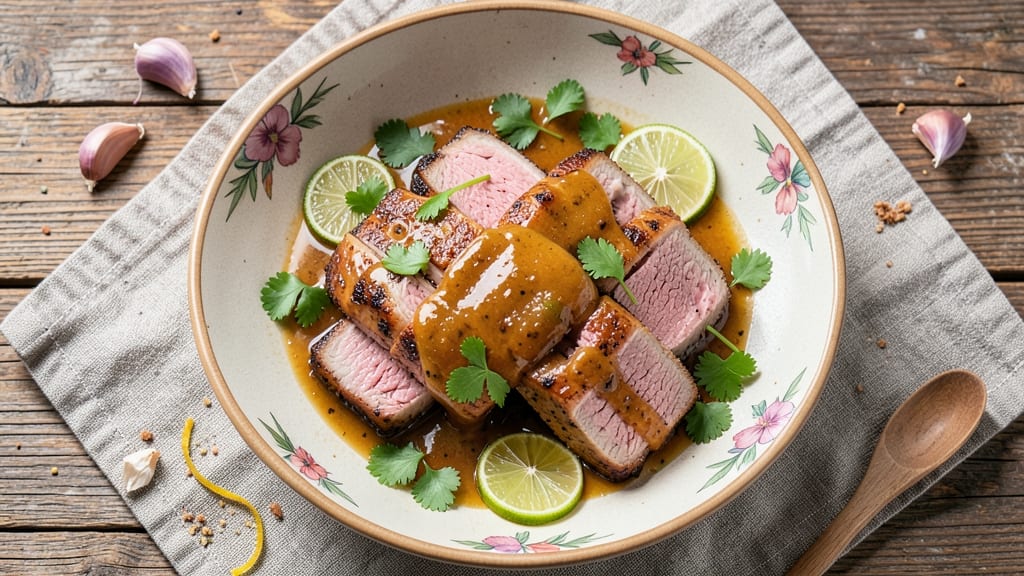
This Brazilian pork tenderloin recipe brings the bold flavors of the Amazon to your table with a cachaça marinade that tenderizes while infusing citrus zing. I first discovered this technique while working with Brazilian pitmasters in Charleston, where they taught me how cachaça transforms tough cuts into melt-in-your-mouth perfection.
The secret lies in marinating overnight—allowing the cachaça's acidity to break down fibers while the citrus brightens every bite.
The recipe starts with a simple yet powerful marinade of cachaça, lime juice, garlic, and cilantro, which we'll let work its magic for at least 12 hours. After that, the pork cooks quickly over high heat—just 15 minutes—until it reaches 145°F internally, ensuring juicy results without drying out.
The smoky char from a cast-iron skillet or grill adds depth, while the marinade caramelizes into a sticky, flavorful crust.
What you'll end up with is pork so tender it nearly falls apart at the touch, with layers of citrusy brightness and subtle smokiness that make every bite unforgettable.
The recipe pairs beautifully with farofa (toasted cassava flour) or a simple black bean stew, creating a meal that feels both festive and approachable. This is the kind of dish that transports you to a Brazilian churrascaria without ever leaving your kitchen.
For those who love Brazilian flavors, you can take it further by adding a touch of smoked paprika or even serving with a side of moqueca-inspired shrimp.
The technique is straightforward, but the results are restaurant-quality—proof that even simple cuts of pork can become extraordinary with the right approach. Let's get cooking!
Ingredients for brazilian pork tenderloin
Nine bold ingredients transform simple pork into Amazonian-inspired melt-in-your-mouth perfection.
| Ingredient | Amount | Notes |
|---|---|---|
| Pork Tenderloin 🥩 | 1 ½ lb | Center-cut for even cooking |
| Cachaça 🍹 | ½ cup | Brazilian sugar cane spirit |
| Fresh Lime Juice 🍋 | ¼ cup | Strained, no pulp |
| Garlic Cloves 🧄 | 6 cloves | Minced, for marinade |
| Fresh Cilantro 🌿 | ¼ cup | Chopped, stems removed |
| Olive Oil 🫒 | 2 tbsp | Extra-virgin for richness |
| Smoked Paprika 🌶️ | 1 tbsp | For smoky depth |
| Kosher Salt 🧂 | 1 ½ tsp | Diamond Crystal preferred |
| Ground Black Pepper 🌶️ | ½ tsp | Freshly ground |
| Orange Zest 🍊 | 1 tbsp | For citrus brightness |
| Brown Sugar 🍚 | 1 tbsp | Lightly packed |
| Fresh Lime Zest 🍋 | 1 tbsp | For aromatic punch |
The pork tenderloin is non-negotiable here—center-cut ensures even cooking and maximum tenderness. Local butchers or high-end grocery stores like Whole Foods carry the best cuts, but any well-marbled tenderloin works. Look for vibrant color and firm texture. Cachaça is the soul of this dish—Leão or Caninha brands are my go-tos, but any quality Brazilian cachaça will do. If you can't find it, white rum works in a pinch, though it lacks that authentic depth. Fresh lime juice is key; bottled won't cut it—the tartness needs to be bright and immediate. For the cilantro, I always grab extra—half goes in the marinade, half gets tossed over the finished dish for that fresh herb pop.
No cachaça? White rum or vodka with a splash of orange juice gets you close, though the flavor will be subtly different. The garlic can be roasted for a sweeter note, but raw minced works just fine. Smoked paprika is essential for that Brazilian churrascaria vibe—Penzeys or Goya brands are reliable. The zest should be freshly grated; pre-packaged zest loses its punch fast. For the brown sugar, light is best—it dissolves better and doesn't overpower the citrus. If you're feeling adventurous, add a pinch of ground coriander to the marinade for extra complexity. The marinade should be thick but pourable—adjust the lime juice if needed to reach the right consistency.
Marinate the pork for at least 12 hours—overnight is ideal. Store it in a sealed container in the fridge, with the marinade fully coating the meat. The pork will keep 3-4 days in the marinade, but flavor peaks after 24 hours. Cook within that window for best results. After cooking, any leftovers reheat beautifully in a skillet with a splash of the reserved marinade. Portion into containers for easy lunches—this reheats like a dream. The marinade itself? Strain it after using, then store it in a jar for up to 1 week. Use it to baste future proteins or drizzle over grilled veggies.
Why You'll Love This Recipe
- One-Pan Magic: I swear by this—just sear the pork, toss in the cachaça and lime, and let the oven do the work. No chopping boards, no extra pans, just that sticky, caramelized goodness with zero fuss.
- Taste Like a Favor: That first sip of cachaça into the pan? It’s like a flavor bomb—bright, citrusy, and just a little boozy without tasting like a cocktail. The garlic and cilantro tie it all together with a fresh kick that lingers.
- Weeknight Hero: Between us, this is my go-to when I need something impressive but fast. Serve it over rice, slice it for tacos, or even toss it in a salad—it’s the one dish that works for lunch, dinner, or a last-minute BBQ.
- Leftovers That Don’t Suck: Honestly, I make extra because the pork stays juicy for days. Shred it for sandwiches, slice it for breakfast tacos, or reheat it in a skillet with a splash of cachaça for that same punch. No dry, sad meat here.
Step-by-step instructions for cachaça-marinated pork tenderloin
Here's how to transform simple pork into restaurant-quality tenderness with bold Brazilian flavors.
Prepare the Citrus-Smoked Marinade
In a large bowl, combine the 0.5 cup Cachaça, 0.25 cup Fresh Lime Juice, 2 tbsp Olive Oil, 1 tbsp Smoked Paprika, 1.5 tsp Kosher Salt, 0.5 tsp Ground Black Pepper, 1 tbsp Orange Zest, 1 tbsp Brown Sugar, and 1 tbsp Fresh Lime Zest. Whisk vigorously until the brown sugar dissolves completely and the mixture becomes fragrant.
This marinade works its magic through three key components: the acidity from lime juice tenderizes the meat, the Cachaça adds depth without overpowering, and the smoked paprika brings that signature Brazilian BBQ flavor. The orange zest and lime zest create a bright citrus aroma that'll make your kitchen smell amazing.
Marinate the Pork for Maximum Tenderness
Place the 1.5 lb Pork Tenderloin in a resealable plastic bag or shallow dish. Pour the marinade over the pork, ensuring it's completely coated on all sides. Seal the bag or cover the dish, then refrigerate for at least 4 hours (I prefer 8 hours for maximum flavor penetration). Turn the pork occasionally to ensure even exposure to the marinade.
Here's the thing - pork tenderloin cooks quickly, so we want to maximize its exposure to the marinade before it hits the heat. The Cachaça and citrus will break down the muscle fibers, creating that melt-in-your-mouth texture we're after. Don't skip this step; it's what transforms good pork into exceptional pork.
Sear the Pork for Perfect Crust
Remove the pork from the refrigerator and let it sit at room temperature for 15 minutes before cooking. Heat a heavy skillet over medium-high heat until it's smoking hot. Add the pork and sear on all sides for 2-3 minutes per side until you develop a deep golden-brown crust. You'll know it's ready when it releases easily from the pan.
This searing step creates the Maillard reaction that gives the pork its rich, caramelized flavor. Don't be tempted to move the pork around - let it develop that crust undisturbed. If you notice the marinade smoking excessively, reduce the heat slightly to prevent burning while still maintaining a good sear.
Roast to Perfect Medium-Rare
Preheat your oven to 400°F. Transfer the seared pork to a baking dish and roast for 12-15 minutes until the internal temperature reaches 140°F (medium-rare). This is the sweet spot for pork tenderloin - it'll continue cooking slightly as it rests, reaching 145°F (the safe minimum temperature) without becoming dry.
Here's where it gets tricky - pork tenderloin has very little fat, so it's easy to overcook. Use a meat thermometer for accuracy, and remove the pork as soon as it hits 140°F. The center should still look slightly pink, and it should feel springy to the touch. Overcooking by just 5°F can turn perfectly tender meat into something dry and tough.
Rest and Serve with Garnish
Transfer the pork to a cutting board and let it rest for 10 minutes before slicing. This resting period allows the juices to redistribute throughout the meat, ensuring each bite is as moist as the first. While it rests, finely chop the 0.25 cup Fresh Cilantro and the 6 cloves Garlic Cloves (if you didn't use them in the marinade).
Slice the pork against the grain into ½-inch thick medallions. Garnish each serving with the chopped cilantro and a drizzle of any remaining marinade from the pan. The combination of tender meat, bright citrus, and smoky spices creates a perfect balance of flavors that's truly Brazilian-inspired. Serve with black beans, roasted sweet potatoes, or a simple green salad to round out the meal.
Pro Tips For Making Brazilian Pork Tenderloin
- Sear First, Then Braise: After browning the pork tenderloin in a hot pan with oil, don’t rush to add the cachaça-lime mixture—let it develop a deep crust first. I used to skip this, and the dish always tasted flat; that caramelized layer locks in flavor when the liquid comes in.
- Use Room-Temp Cachaça: Cold cachaça dulls the garlic and lime—pour it straight from the bottle into a warm saucepan or let it sit for 10 minutes. My grandmother swore by this, and she was right: the flavors meld better when the alcohol isn’t fighting the heat.
- Don’t Overcrowd the Pan: When deglazing with cachaça and lime, keep the heat medium-high and let the liquid reduce without adding extra pork juices. I learned this the hard way—crowding turns the sauce watery and steals the pork’s moisture.
- Pulse Garlic Lightly: A quick 3-4 pulses in the food processor breaks the garlic enough to infuse the sauce without turning it into paste. Too fine? It burns. Too chunky? It sits like rocks. Find that middle ground—it makes a real difference.
Essential equipment for great brazilian pork tenderloin
Cast-Iron Skillet
You simply can't beat a well-seasoned cast-iron skillet for searing this Brazilian pork. I swear by my Lodge Pre-Seasoned 10.25-inch—it develops that perfect crust while distributing heat evenly. The deep sides help contain the marinade's caramelization, and the weight ensures consistent contact.
Pro tip: Preheat your skillet until it's smoking hot before adding the pork to get that signature churrascaria crust. 🔥
Meat Thermometer
Pork tenderloin has a narrow window between perfect tenderness and dryness, so a high-quality instant-read thermometer is non-negotiable. I trust my ThermoWorks Smoke—it reads temperatures in 0.1°F increments and has a durable probe that withstands marinade splatters.
Aim for 140°F internal temperature (it'll rise to 145°F while resting). Without a thermometer, you're guessing, and that's how you end up with overcooked pork.
Resealable Plastic Bag
For marinating, I use quart-sized resealable plastic bags (like Glad Press'n Seal) because they maximize surface area contact between the pork and marinade. The bags are also freezer-safe, so you can marinate overnight without worrying about leaks.
If you don't have bags, a shallow glass dish with a tight-fitting lid works too—just make sure the pork is fully submerged in the marinade. Trust me, this makes all the difference in tenderness.
Heavy-Duty Cutting Board
A thick, stable cutting board is essential for slicing the rested pork against the grain. My Maple Hollow 16x12-inch board handles the weight of the pork while providing enough surface area to work comfortably.
The grain direction is critical—slicing perpendicular to the muscle fibers ensures each bite has that melt-in-your-mouth texture. A sharp 8-inch chef's knife (like Wüsthof Ikon) pairs perfectly with this board for clean, precise cuts.
Oven Thermometer
Your oven's temperature display is often inaccurate, which is why I keep an oven thermometer (like Thermoworks Oven Thermometer) nearby. Preheat your oven to 400°F, but verify it's actually hitting that mark—many ovens run 25°F hotter or cooler than set.
This ensures your pork roasts evenly and hits the perfect 140°F internal temperature without overcooking. Precision here is key for juicy results.
Citrus Zester
A microplane or citrus zester (like OXO Good Grips) is a game-changer for extracting those bright, aromatic zest strips from the orange and lime. Fresh zest adds layers of flavor that pre-packaged zest can't match.
I use it for both the marinade and garnishing the finished dish—those tiny zest flecks add a pop of color and citrus brightness that elevates the entire presentation. It's a small tool with a big impact.
Nutrition facts
Frequently asked questions
Can I substitute cachaça in this recipe?
Yes, but the flavor will change slightly. For an authentic Brazilian taste, use white rum or vodka with 1 tablespoon extra lime juice to mimic the acidity. If you're in a pinch, even bourbon works, though it adds a sweeter note. The key is balancing the citrus and alcohol content—aim for about ½ cup total liquid in the marinade.
How do I know when the pork is fully cooked?
Use a meat thermometer for perfect results—the pork should reach 140°F internally (it'll rise to 145°F while resting). The center should look slightly pink and feel springy to the touch. Without a thermometer, cut into the thickest part—juices should run clear, not pink. Overcooking by 5°F turns tender meat dry, so pull it out promptly!
What are the best sides to serve with this dish?
Classic Brazilian pairings include farofa (toasted cassava flour), black beans with bacon, or grilled plantains. For a lighter option, try a citrus salad with avocado and cilantro. The smoky-sweet pork also complements roasted sweet potatoes or a simple green salad with lime vinaigrette. Think "bright, fresh, and slightly smoky" to balance the rich flavors.
Can I make this recipe ahead of time?
Marinate the pork for up to 3 days ahead—flavor intensifies over time. For the full meal, cook the pork 1 day ahead, slice it, and reheat in a skillet with a splash of reserved marinade (just 2-3 minutes on medium heat). Store leftovers in an airtight container, and the flavors will deepen overnight. Reheat gently to avoid drying out.
Why does my pork turn out dry?
Overcooking is the #1 culprit—pork tenderloin has almost no fat, so it dries out fast. Always use a thermometer and pull it at 140°F. Other common mistakes: skipping the rest time (let it rest 10 minutes before slicing) or cutting against the grain too early. For extra juiciness, baste with reserved marinade during cooking.