
Main Courses
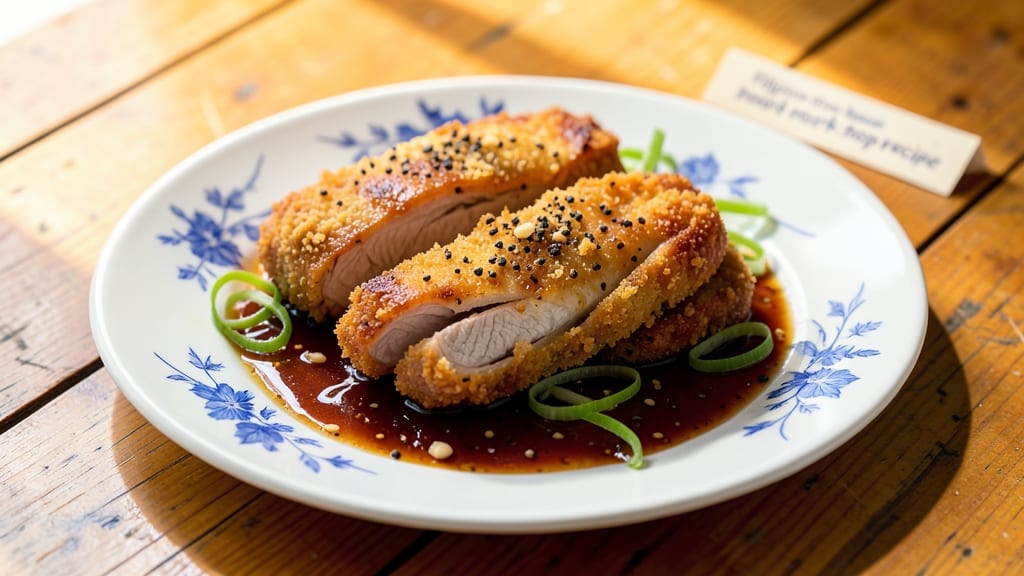
This breaded pork chop Filipino recipe brings the crispy, golden crunch of classic lechon kawali to your kitchen—where tender pork meets a fragrant soy-ginger gravy that makes every bite unforgettable.
I first tasted this dish at a family gathering in Manila, where the sizzle of lard-fried pork filled the air and became the star of the meal. The secret lies in the double-breading technique and the slow simmering of the sauce, which transforms simple ingredients into something restaurant-worthy.
What sets this recipe apart is the balance of textures and flavors: the crispy breaded exterior gives way to juicy pork, all smothered in a glossy sauce that's tangy from soy sauce, bright from ginger, and just sweet enough from a touch of banana ketchup.
Unlike many breaded pork recipes, this one uses lard for frying—it's worth the effort, as it creates a golden crust that stays crispy even when served with rice.
The marinade, a mix of soy sauce, calamansi (or lime), and garlic, infuses the pork with deep umami flavor before it hits the pan.
By the time you plate this dish, you'll have a restaurant-quality meal that pairs perfectly with steamed jasmine rice, atchara (pickled papaya), or garlic fried rice. The sauce clings to the pork like a silky blanket, while the breading holds its shape, delivering that satisfying crunch with every bite.
This is comfort food at its finest—simple enough for a weeknight dinner but impressive enough for guests. Let's get cooking.
For those who love Filipino flavors, this recipe is a game-changer. The combination of lard-fried pork and soy-ginger gravy is a staple in Filipino homes, but it's often overlooked in mainstream cooking.
Here, I've simplified the process without sacrificing authenticity, so you can enjoy the same flavors that make this dish a favorite in the Philippines. Ready to make it?
Ingredients for breaded pork chop filipino
Four pork chops, crispy outside, juicy inside—this Filipino classic needs just 13 ingredients.
| Ingredient | Amount | Notes |
|---|---|---|
| Pork Chops 🥩 | 1 ½ lb | Bone-in, center-cut preferred |
| Lard 🧈 | 2 cups | For frying, not vegetable oil |
| All-Purpose Flour 🌾 | 1 ½ cups | For first breading layer |
| Cornstarch 🌾 | ½ cup | For second breading layer |
| Soy Sauce 🍶 | ½ cup | Filipino or Japanese preferred |
| Calamansi Juice 🍋 | ¼ cup | Or lime juice substitute |
| Garlic Cloves 🧄 | 6 cloves | Minced for marinade |
| Fresh Ginger 🌿 | 2 tbsp | Grated, for marinade |
| Banana Ketchup 🍅 | ¼ cup | Filipino brand preferred |
| Water 💧 | ½ cup | For sauce consistency |
| Salt 🧂 | 1 tsp | Kosher or sea salt |
| Black Pepper 🌶️ | ½ tsp | Freshly ground |
| Vegetable Oil 🫒 | 2 tbsp | For greasing pan |
The pork chops make or break this dish. Bone-in, center-cut stays juicier than boneless—look for thick-cut chops at your local butcher or Filipino grocery stores like 99 Ranch or H Mart. If you can't find lard, beef tallow works, but don't substitute with vegetable oil—it won't give that authentic golden crust. The double-breading trick (flour first, cornstarch second) is non-negotiable for that restaurant-style crunch. I always buy extra cornstarch because it's the secret weapon here.
No calamansi? Lime or lemon juice works, but it won't be exactly the same—calamansi has that unique tang. Banana ketchup is a Filipino staple, but store-bought Filipino brands like Silver Swan are easy to find online. Short on time? Mix 1 tbsp tomato paste with 1 tbsp sugar for a quick substitute. The soy sauce should be Filipino or Japanese—regular American soy sauce is too salty. For the ginger, fresh is best, but if you're in a pinch, use 1 tsp ground ginger (though it won't be as bright).
Lard stays fresh for 6 months in the fridge, so buy in bulk if you can. The breading mix (flour + cornstarch) keeps for 1 month in an airtight container—perfect for making extra for future meals. Leftovers? The pork chops reheat beautifully in a skillet with a splash of water for 3-4 days. The sauce thickens as it sits, so if it's too thin after reheating, simmer it uncovered for 2 minutes. Store it in the fridge for 5 days, or freeze portions for 3 months.
Why You'll Love This Recipe
- Crispy in Minutes: I swear by the lard trick—those pork chops hit the pan and turn golden in under 10 minutes. No waiting for oven magic, just sizzle and satisfaction.
- Savory Umami Bomb: That soy sauce marinade? It’s the secret weapon. The breading stays crisp, but the inside stays juicy with a deep, salty-sweet punch that makes me want seconds.
- Weeknight & Potluck Star: Serve it with rice for a quick dinner or bring it to gatherings—it’s hearty enough to feed a crowd but simple enough to make when you’re exhausted. (Yes, even on a Tuesday night.)
- Budget-Friendly Leftovers: Pork chops stretch further than you’d think, and the leftovers reheat beautifully. I’ll be real: my kids actually ask for these over takeout, and they cost half the price.
Step-by-step instructions for crispy lard-fried pork chops
Here's how to achieve that signature Filipino crunch and savory sauce every time.
Marinate the Pork Chops for Maximum Flavor
In a shallow dish, combine the 0.5 cup soy sauce, 0.25 cup calamansi juice, 6 cloves minced garlic, 2 tbsp grated fresh ginger, 1 tsp salt, and 0.5 tsp black pepper. Add the 1.5 lb pork chops and turn to coat completely. Let them marinate for at least 30 minutes at room temperature - this ensures deep flavor penetration and tender meat.
I like to press the marinade into the meat with my fingers, especially on the thickest parts. The acidity from the calamansi juice will start breaking down the proteins, making the pork even more tender when fried. Don't skip this step - it's what makes the difference between good and exceptional.
Create the Double Breading Station
Set up two shallow dishes. In the first, place the 1.5 cups all-purpose flour and mix in 1 tsp salt. In the second dish, combine the 0.5 cup cornstarch with 1 tsp salt. These two layers create that signature crispy texture - the flour gives structure while the cornstarch adds extra crunch.
Pat each marinated pork chop dry with paper towels before breading. This step is crucial for getting that golden, crispy crust. I like to work in batches so I don't overcrowd the dishes, which can make the breading uneven. The cornstarch layer should be particularly light - just enough to coat the surface without making it too thick.
Fry to Golden Perfection in Lard
Heat the 2 cups lard in a large skillet over medium-high heat until it reaches 350°F - use a thermometer for accuracy. The lard should be hot enough to sizzle when you add the first chop, but not smoking. Carefully add 2-3 pork chops at a time, making sure they're spaced out.
Fry for 3-4 minutes per side until the breading is deep golden brown and crispy. The cornstarch layer will give you that satisfying crunch you're after. Don't move them around too much - let them develop that crust. I press down gently on the fillets during the first minute to prevent curling. When they're golden and the internal temperature reaches 145°F, transfer to a paper towel-lined plate to drain excess lard.
Prepare the Savory Soy-Ginger Gravy
In the same skillet (with any leftover lard), add 0.25 cup banana ketchup and cook for 1 minute until it starts to bubble. Pour in 0.5 cup water and scrape up any browned bits from the bottom - these contain all the flavor. Add the 0.5 cup soy sauce and bring to a gentle simmer for 3-4 minutes until the sauce thickens slightly.
Here's the thing - the banana ketchup adds that signature Filipino sweetness that balances the savory soy sauce. The sauce should coat the back of a spoon but still be pourable. If it's too thick, add a splash more water. Taste and adjust seasoning - you might want to add a pinch more salt or pepper depending on your preference.
Finish and Serve with Crispy Perfection
Return the fried pork chops to the skillet with the sauce and spoon the gravy over them. Let them cook for just 1-2 minutes to heat through and absorb some of that delicious sauce. The chops should be juicy inside with that crispy golden crust on the outside.
Serve immediately while everything is hot. The contrast between the crispy exterior and tender interior, paired with that rich soy-ginger sauce, is what makes this dish so special. I like to garnish with extra minced garlic and a sprinkle of black pepper right before serving - it adds that final touch of flavor and presentation.
Pro Tips For Making Breaded Pork Chop Filipino
- Pound Chops First: Thin pork chops cook faster and stay juicier—skip the thick ones unless you want dry, overcooked centers. A meat mallet or rolling pin (even a heavy pan) works; aim for about ½-inch thickness. I learned this the hard way when my first batch turned out like shoe leather.
- Mix Lard and Cornstarch: The Filipino trick is using lard—not oil—for that signature crispy crust. Melt 2 tablespoons lard with 2 tablespoons cornstarch until it’s thick but not greasy (about 2 minutes). This combo clings better to the pork and fries up golden instead of soggy. (Yes, even if you’re skeptical about lard.)
- Double-Dip the Pork: Pat the pork dry, dredge in flour, dip in soy sauce (just enough to coat), then back in flour. The soy adds flavor but won’t make it soggy if you let it sit for 30 seconds between dips. I was lazy and skipped this once—big mistake. The crust stuck like glue.
- Fry in Batches: Crowd the pan, and the temperature drops, leading to greasy, uneven cooking. Use a deep skillet and fry 2 chops at a time over medium-high heat. The lard should sizzle but not smoke—if it does, lower the heat. Patience here means a perfect crust every time.
Flavor customization for breaded pork chop filipino
Spicy Heat Level
For those who love a kick, add 1 tbsp sambal oelek or 1 tsp chili flakes directly to the marinade. I like to mix it with the soy sauce and calamansi juice before coating the pork.
If you want to keep it mild, reduce the garlic to 4 cloves and omit the ginger entirely—it naturally adds warmth. For a medium heat, add ½ tsp ground black pepper to the cornstarch breading layer. 🌶️
Sweet-Tangy Balance
Adjust the sauce's sweetness by adding more banana ketchup—try ¼ cup extra for a sweeter profile. For tanginess, increase the calamansi juice to ⅓ cup in the marinade. I once served this with a side of sliced cucumbers drizzled with extra calamansi juice for a refreshing contrast.
The key is balancing these flavors so the soy sauce's umami shines through.
Herb Infusions
Swap the black pepper for 1 tsp ground coriander in the marinade for an earthy twist. Or, add 2 tbsp chopped fresh cilantro to the sauce at the end for a bright finish.
I also love adding 1 tsp fish sauce to the marinade—it deepens the savory notes without overpowering. For a herbaceous touch, sprinkle chopped green onions on top before serving.
Smoky Depth
For a smoky flavor, add ½ tsp smoked paprika to the cornstarch breading layer. Or, after frying, place the pork chops on a wire rack over a tray and broil for 1-2 minutes to crisp the breading and add a subtle smokiness.
I’ve also used ½ cup chicken broth instead of water in the sauce for a richer, deeper flavor profile.
Vegetarian Adaptation
Swap the pork chops for 1.5 lb extra-firm tofu pressed for 30 minutes to remove excess water. Cut the tofu into ½-inch thick slices and follow the same breading and frying steps.
For extra flavor, marinate the tofu in 1 tbsp soy sauce, 1 tbsp calamansi juice, and 1 tsp garlic powder for 20 minutes. The texture will be different but still delicious!
Extra Crispy Technique
For an even crispier crust, chill the breaded pork chops for 15 minutes in the fridge before frying. This firms up the breading, preventing it from absorbing too much lard. Another trick?
Use 1 tbsp cornstarch in the flour mixture—this creates a lighter, airier crust. I also recommend frying in smaller batches to maintain the oil temperature at 350°F. 🔥
Nutrition facts
Frequently asked questions
Why does this recipe use lard instead of vegetable oil for frying?
Lard creates that signature golden, crispy crust that's impossible with vegetable oil. The higher smoke point and animal fat content give the breading an authentic Filipino texture that stays crisp even when served with sauce. Plus, it adds subtle richness that complements the soy-ginger flavors perfectly.
Can I make this recipe ahead of time?
The pork chops can be breaded and refrigerated for up to 24 hours before frying—just let them sit at room temperature for 30 minutes before cooking. The sauce is best made fresh, but you can prepare all components (except frying) a day ahead. For serving, reheat in a skillet with a splash of water to restore crispiness.
What's the secret to getting extra crispy breading?
Three things: double-breading (flour first, cornstarch second), chilling breaded chops 15 minutes before frying, and maintaining 350°F oil temperature. Also work in small batches—overcrowding drops the temperature and makes breading soggy. The cornstarch layer is your secret weapon for that satisfying crunch.
What sides pair best with this Filipino pork chop?
Steamed jasmine rice is essential, but try these classic pairings: atchara (pickled papaya) for tangy contrast, garlic fried rice for extra flavor, or sautéed string beans with garlic. For a complete meal, add a simple slaw with calamansi dressing—the acidity cuts through the richness beautifully.
How do I fix soggy breading?
If your breading turns out soggy, it's likely from oil that's too cool or breading that absorbed too much moisture. For next time: pat chops completely dry before breading, use cornstarch in the second coating, and maintain proper oil temperature. If it happens, broil for 1-2 minutes to crisp up the breading before serving.