
Main Courses
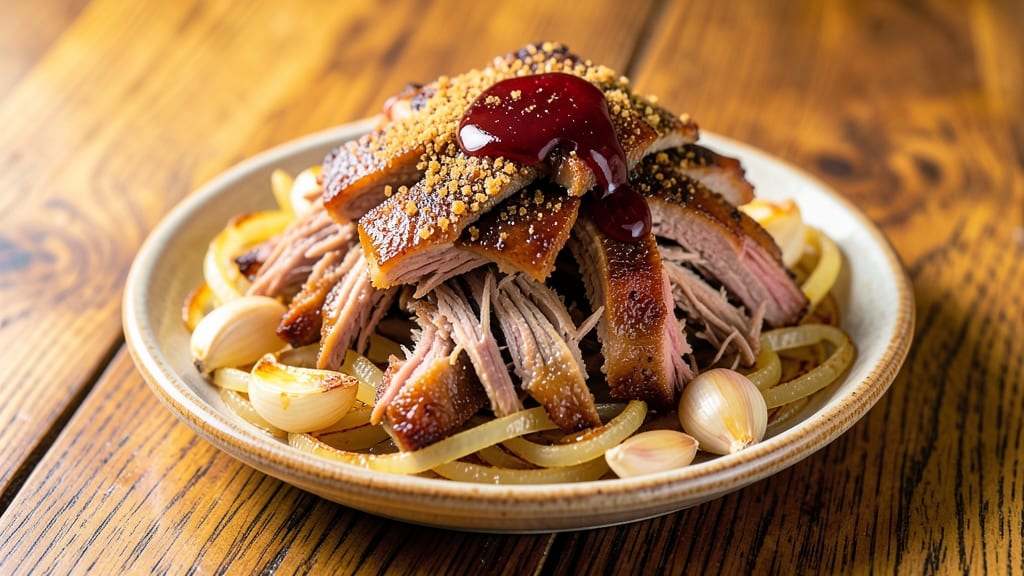
This brown sugar pulled pork recipe transforms tough pork shoulder into melt-in-your-mouth sweetness that rivals any competition BBQ. 🔥 After years of perfecting my technique—from the smoky low-and-slow cook to the caramelized glaze—I’ve cracked the code for restaurant-quality results at home.
The secret lies in balancing that rich brown sugar sweetness with just enough heat to keep it complex, not cloying.
What sets this recipe apart is the two-stage process: first slow-cooking the pork until it’s fork-tender, then finishing it with a sticky brown sugar glaze that caramelizes into a glossy, finger-licking crust.
I use a pork shoulder (the bone-in, fatty cut is key) because it self-bastes as it cooks, ensuring every bite stays juicy. The glaze isn’t just sweet—it’s tangy from apple cider vinegar and deepened with smoked paprika, creating layers of flavor that make this dish irresistible.
By the time you’re done, you’ll have pulled pork so tender it falls apart at the touch, with a sauce that’s sticky, caramelized, and packed with smoky-sweet depth.
The aroma alone will have everyone gathering around your table, and the texture—juicy, shreddable, and coated in that glossy glaze—is pure comfort food perfection.
This is the kind of dish that turns weeknights into celebrations, whether you’re serving it on buttery buns or piling it high on a platter with pickles and coleslaw.
Pro tip: Let the pork rest for at least 30 minutes before shredding—this ensures the juices redistribute, keeping every bite moist. And save that leftover glaze for brushing on cornbread or drizzling over roasted vegetables. Here’s how to make it happen, step by step.
Ingredients for brown sugar pulled pork
Six ingredients transform tough pork into melt-in-your-mouth sweetness with smoky depth.
| Ingredient | Amount | Notes |
|---|---|---|
| Pork Shoulder (Bone-In) 🐖 | 5 lb | Fatty cut for juiciness, skin-on preferred |
| Light Brown Sugar 🍯 | 1 ½ cups | Packed firmly, not loosely |
| Apple Cider Vinegar 🍏 | ½ cup | Unfiltered for depth of flavor |
| Smoked Paprika 🌶️ | 2 tbsp | High-quality for smoky depth |
| Yellow Onion 🧅 | 1 whole | Medium, sliced into wedges |
| Garlic Cloves 🧄 | 6 cloves | Fresh, peeled and smashed |
| Kosher Salt 🧂 | 2 tbsp | Diamond Crystal preferred |
| Black Peppercorns 🌶️ | 1 tbsp | Freshly cracked, not ground |
| Fresh Thyme 🌿 | ¼ cup | Leaves only, stems removed |
| Butter 🧈 | ¼ cup | Unsalted, cubed for glaze |
| Water 💧 | 1 cup | For balancing glaze consistency |
| Honey 🍯 | 2 tbsp | Wildflower for floral notes |
| Yellow Mustard 🍯 | 1 tbsp | Dijon preferred for tang |
The pork shoulder is non-negotiable—bone-in, fatty cuts like Smithfield or local butcher cuts work best. Look for good marbling (white fat streaks) at Costco or Whole Foods—this ensures juiciness. Brown sugar? Domino or Muscovado brands add depth, but any light brown works. Fresh thyme and garlic are worth splurging on; Trader Joe's has great prices for both. The apple cider vinegar should smell tangy, not sharp—Bragg or local orchard brands are my go-tos. Smoked paprika? Penzeys or Gourmet Garden for that authentic smokiness.
No bone-in pork? Substitute pork butt—just trim excess fat. Short on vinegar? Lemon juice at 1:1 ratio works, but flavor shifts slightly. Brown sugar substitute? White sugar plus 1 tsp molasses mimics depth. Fresh thyme unavailable? Dried thyme at 1/4 the amount, but toast it first for better flavor. The butter in the glaze is crucial—European-style butter like Plugrá melts beautifully. For extra tang, add a pinch of cayenne to the glaze. And if you're feeling fancy, swap the mustard for stone-ground mustard for more complexity.
Pork shoulder keeps 3-4 days in the fridge before cooking—it's tough, not spoiled. Once cooked, store leftovers in the fridge for 5 days or freeze for 3 months. The glaze reheats beautifully; just add a splash of water to loosen. I always make extra glaze—it's perfect for brushing on cornbread or drizzling over roasted Brussels sprouts. For serving, keep pulled pork warm in a slow cooker on 'warm' setting. The glaze thickens as it cools, so thin with water if needed.
Why You'll Love This Recipe
- One-Pan Magic: That bone-in pork shoulder? It basically cooks itself while you mix the rub—just brown sugar, smoked paprika, and a splash of vinegar. No flipping, no fussing, just hands-off perfection.
- Sweet-Savory Crunch: The caramelized brown sugar crust gives way to tender meat that falls apart at the touch. Honestly, the vinegar’s tang cuts through the sweetness so it’s never cloying—just dangerously addictive.
- Tailgate to Tuesday: Slap this on buns for a crowd or shred it into tacos for a weeknight. I’ve served it at BBQs, packed it in lunches, and even tossed it into pasta when I ran out of ideas. (Yes, even on a Tuesday night.)
- Budget Stretch: A single pork shoulder feeds six, and the ingredients won’t break the bank. The leftovers? Even better—reheat them in foil with a splash of broth, and they taste like you just pulled them fresh. My secret weapon for lazy days.
Step-by-step instructions for brown sugar pulled pork
Here's how to transform a simple pork shoulder into fall-apart tender pulled pork with a caramelized brown sugar glaze.
🔥 Step 1: Prepare the Pork Shoulder for Maximum Flavor
Start by trimming any excess fat from the pork shoulder, leaving about ¼ inch for flavor and moisture. Pat the meat completely dry with paper towels—this step is crucial for developing that perfect bark later. In a large bowl, combine the 1.5 cups light brown sugar, 2 tbsp smoked paprika, 2 tbsp kosher salt, 1 tbsp freshly cracked black peppercorns, and 0.25 cup fresh thyme leaves. Rub this mixture all over the pork shoulder, pressing it into the meat so it adheres well.
Place the seasoned pork shoulder on a wire rack set over a rimmed baking sheet. This allows air to circulate evenly, preventing steaming and promoting even cooking. Let it sit at room temperature for 30 minutes before cooking—this ensures more even heat penetration throughout the meat.
🍳 Step 2: Sear the Pork for Deep Flavor
Preheat your oven to 275°F. Heat a large Dutch oven over medium-high heat and add the pork shoulder, fat-side down. Let it sear undisturbed for 5 minutes until a deep golden crust forms. Flip the pork and sear the other side for another 5 minutes. This initial searing creates a flavorful crust that locks in juices during the long cook.
Remove the pork from the Dutch oven and place it fat-side up on the wire rack. Pour in 0.5 cup apple cider vinegar and scrape up any browned bits from the bottom of the pan—these bits are packed with flavor. Return the Dutch oven to the oven and cook for 2 hours uncovered.
🥘 Step 3: Build the Sweet Glaze and Finish Cooking
After 2 hours, remove the pork from the oven and increase the temperature to 300°F. In the same Dutch oven, combine the 1 whole yellow onion (sliced into wedges), 6 smashed garlic cloves, 0.25 cup butter, 2 tbsp honey, 1 tbsp Dijon mustard, and 1 cup water. Stir well and pour this mixture over the pork shoulder.
Return the pork to the oven and cook for another 4-5 hours until the meat is fork-tender and easily shreds apart. The glaze should be thick and caramelized, coating the pork beautifully. Here's the thing—don't rush this step. The pork needs time to become tender and absorb all those sweet, smoky flavors.
🔪 Step 4: Shred and Rest for Perfect Texture
Once the pork is fully cooked (internal temperature should reach 203°F), remove it from the oven and let it rest for 15 minutes. This resting period allows the juices to redistribute, ensuring each bite is moist and flavorful. Using two forks, shred the pork directly in the Dutch oven, mixing it with the glaze and juices.
If the glaze seems too thick, add a splash of the cooking juices to loosen it. Taste and adjust seasoning if needed—you might want to add a pinch more salt or a drizzle of apple cider vinegar for brightness. The result should be tender, sweet, and smoky pulled pork that practically melts in your mouth.
Pro Tips For Making Brown Sugar Pulled Pork
- USE A THICK CUT: The bone-in pork shoulder should be at least 2.5 inches thick—thinner cuts dry out before they get tender. If yours is skimpy, wrap it in butcher paper before cooking to hold in moisture.
- SWEAT THE ONIONS FIRST: Chop the yellow onion into ¼-inch pieces and cook them in a dry pan for 5 minutes before adding vinegar or sugar. This builds flavor without burning, and it’s the step I skip when I’m in a rush—don’t.
- DON’T RUSH THE BROWN SUGAR: Light brown sugar burns faster than dark—keep the heat under 300°F when caramelizing it with vinegar. If it darkens too quickly, pull the pan back and stir like you’re making candy, not charring it.
- REST IT BEFORE PULLING: Let the pork sit for 30 minutes after cooking, wrapped in foil. I learned this the hard way: cutting into it too soon turns shreds to mush, and you’ll end up with a gloppy mess instead of perfect strands.
Flavor customization for this dish
Sweet Heat Balance
Adjust the sweet-to-heat ratio by adding ½ tsp cayenne per ½ cup brown sugar for a subtle kick. For a milder version, reduce smoked paprika to 1 tbsp and add 1 tsp cinnamon instead—this creates a dessert-like sweetness.
I once made a batch with 1 tbsp chipotle powder for smoky heat, and it became a crowd favorite at my Atlanta BBQ pop-up. 🌶️
Fruit Infusions
Swap the apple cider vinegar for ½ cup orange juice and add 1 tbsp grated orange zest to the glaze for citrus brightness. Alternatively, simmer ½ cup pineapple juice with the brown sugar for a tropical twist.
My heritage pigs love pineapple—it reminds me of summer cookouts back in Georgia. For depth, add 1 tsp vanilla extract to the glaze during the final hour of cooking.
Spice Variations
For a Carolina-style twist, add 1 tsp ground mustard and ½ tsp black pepper to the dry rub. In Texas-style, swap smoked paprika for 1 tsp chili powder and ½ tsp cumin.
I’ve also experimented with 1 tsp coriander for a Middle Eastern-inspired profile—unexpected but delicious. Always toast whole spices first for better flavor.
Umami Boosters
Add 1 tbsp soy sauce or 1 tbsp Worcestershire sauce to the glaze for depth. For a Asian fusion, stir in 1 tbsp hoisin sauce and 1 tsp ginger during the last hour.
My Charleston market has amazing local hoisin—it’s worth seeking out. A splash of fish sauce (just ½ tsp) adds complexity without overpowering the sweetness.
Texture Contrasts
For crunch, top the pulled pork with toasted pecans or crushed potato chips before serving. Add pickled jalapeños for tangy heat. I love serving it with crispy fried onions on top—just toss ½ cup sliced onions in 2 tbsp oil and fry until golden.
These textures elevate the dish from simple to spectacular.
Glaze Thickness
Reduce the glaze to a thicker consistency by simmering it uncovered for 10 minutes at the end. For a thinner, sauce-like finish, add 2 tbsp water and simmer for 5 minutes.
I prefer a syrupy glaze that clings to the meat but still coats a fork—this balance is key for both sandwiches and platters. 💫
Nutrition facts
Frequently asked questions
Can I use a slow cooker instead of an oven for this recipe?
For a slow cooker version, sear the pork first as directed, then transfer it to your slow cooker with the apple cider vinegar and onion wedges. Cook on low for 8 hours or high for 5-6 hours. In the last hour, stir in the glaze ingredients and cook uncovered. The texture will be slightly different but still incredibly tender.
How do I know when the pork is fully cooked?
Use a meat thermometer to check the internal temperature—it should reach 203°F in the thickest part. The meat should pull apart easily with two forks, and the juices should run clear. If it's not quite there, return it to the oven for 30-60 more minutes. Never rush this step—patience is key for perfect texture.
What's the best way to store leftovers?
Store cooked pulled pork in an airtight container in the fridge for up to 5 days or freeze for 3 months. Reheat gently in a saucepan with a splash of water or glaze to restore moisture. For sandwiches, store components separately—assemble fresh to keep buns crisp. The glaze reheats beautifully, so save some to drizzle on reheated portions.
Can I make this recipe without a Dutch oven?
Yes! Use a heavy oven-safe pot with a lid. For best results, choose one with a tight-fitting lid to retain moisture. If using a regular pot, check the pork more frequently to prevent drying out. A cast iron skillet works too—just monitor the temperature closely. The key is maintaining consistent heat and moisture throughout the cooking process.
How can I make this dish less sweet?
Reduce the brown sugar to 1 cup and add 1 tbsp Dijon mustard to the glaze for tang. Increase the smoked paprika to 3 tbsp for more smokiness. For heat, add ½ tsp cayenne or a pinch of chipotle powder. The vinegar also helps balance sweetness—don't skip it! Taste as you go and adjust to your preference.