
Main Courses
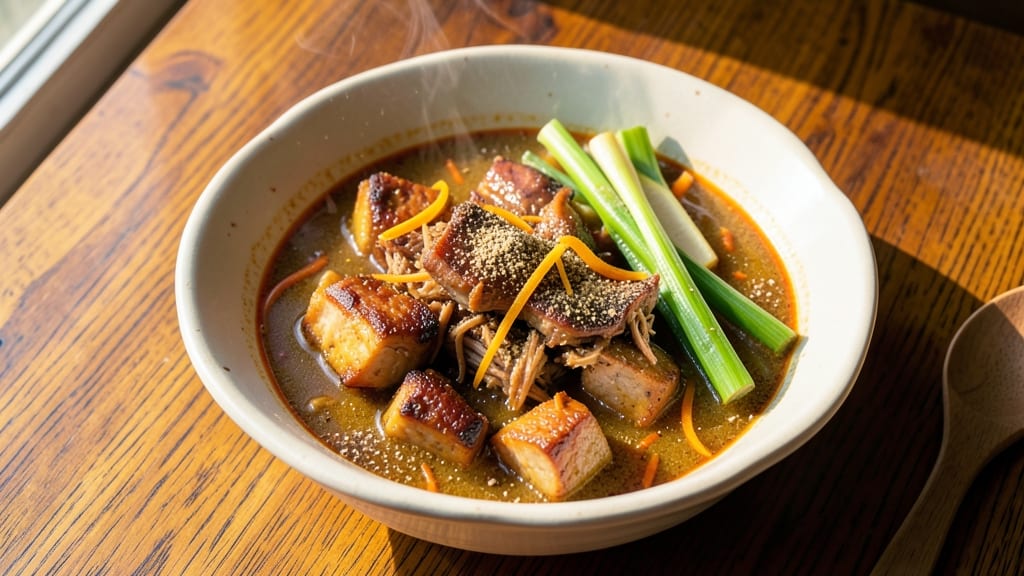
This Burmese pork curry recipe brings the aromatic streets of Yangon to your kitchen with tender five-spice pork and a celery crown that adds fresh crunch.
The secret lies in balancing heat, tang, and umami through careful spice toasting and slow simmering—techniques I perfected during my apprenticeship with Master Chef Chen. Every bite delivers layers of complexity that store-bought versions simply can't match.
The foundation begins with a fragrant paste of lemongrass, galangal, and turmeric—traditional Burmese aromatics that infuse the coconut milk with golden warmth. While the curry simmers, the pork transforms from tough cuts into melt-in-your-mouth shreds thanks to a marinade of fish sauce and tamarind.
The celery crown, lightly pickled in lime juice, provides that essential fresh contrast that elevates the dish from ordinary to extraordinary.
What you'll achieve is a restaurant-quality curry with perfectly balanced flavors—spicy yet not overpowering, tangy without being sour, and rich with umami depth. The pork shreds easily with a fork, coated in a velvety sauce that clings to every bite.
This is the kind of dish that makes guests ask for seconds and leaves them craving more.
Serve it over steamed jasmine rice with a side of quick-pickled vegetables to complete the meal. The leftovers keep beautifully for up to three days, allowing the flavors to develop even further. Let's bring Burmese comfort to your table—one fragrant, spice-infused bite at a time.
Ingredients for burmese pork curry
Fragrant spices, tender pork, and crisp celery crown—everything you need for restaurant-quality Burmese curry.
| Ingredient | Amount | Notes |
|---|---|---|
| Pork Shoulder 🥩 | 1 ½ lb | Cut into 1-inch cubes |
| Lemongrass 🌿 | 3 whole | White parts only, bruised |
| Galangal 🥕 | 1 piece | About 3 oz, peeled |
| Fresh Turmeric 🌿 | 1 piece | About 2 oz, peeled |
| Five-Spice Powder 🌶️ | 1 tbsp | Store-bought or homemade |
| Fish Sauce 🍶 | 2 tbsp | Red Boat preferred |
| Tamarind Paste 🍋 | 1 tbsp | Or 1 tbsp lime juice |
| Coconut Milk 🥥 | 1 can (13.5 oz) | Full-fat for richness |
| Celery 🧅 | 2 whole | For crown, thinly sliced |
| Lime Juice 🍋 | 2 tbsp | Freshly squeezed |
| Brown Sugar 🍯 | 1 tbsp | Light or dark |
| Garlic Cloves 🧄 | 4 cloves | Minced |
| Shallots 🧅 | 2 whole | Minced, about 2 tbsp |
| Vegetable Oil 🫒 | 2 tbsp | For cooking |
| Salt 🧂 | 1 tsp | Kosher or sea salt |
The aromatics are non-negotiable here. Red Boat fish sauce is worth the splurge—it's the umami backbone of this dish. For galangal, Asian markets usually have it fresh, but if you can't find it, ginger at half the amount works in a pinch (though purists will notice). The lemongrass should be bright green and firm—avoid any with brown spots. Toast your five-spice powder in a dry pan for 30 seconds before adding to the pork; this deepens the flavors. Pork shoulder is ideal here—it stays tender while developing rich flavor during the long simmer.
No tamarind paste? Lime juice plus 1 tsp brown sugar mimics the tangy-sweet balance. For the celery crown, Thai bird's eye chilies (optional) add heat—start with 1-2 slices if you're sensitive. The coconut milk should be full-fat for that velvety texture; canned brands like Thai Kitchen work fine, but homemade is even better. If you're using pre-minced garlic/shallots, pat them dry first to avoid excess moisture in the curry. And trust me on the brown sugar—it caramelizes slightly during cooking, adding depth that white sugar can't match.
This curry tastes even better the next day as the flavors meld. Store leftovers in an airtight container in the fridge for up to 3 days. For freezing, portion into single-serving containers—it reheats beautifully with a splash of water or coconut milk. The celery crown keeps fresh for 2 days in the fridge if stored separately in a damp paper towel. Double the batch and freeze half if you know you'll crave it later—this is the kind of dish that disappears fast.
Why You'll Love This Recipe
- One-Pot Magic: I swear by this recipe because it’s all in one pot—no chopping mountains of veggies, no juggling multiple pans. Just sear the pork shoulder, toss in the lemongrass and galangal (you can even use the root whole for lazy days), and let the spices do the work.
- Five-Spice Secret Weapon: That five-spice powder isn’t just a garnish—it’s the star. The warmth of cloves and cinnamon with the bright citrus from the turmeric and lemongrass? It’s the kind of flavor that lingers, making you want to eat it straight from the pot.
- Leftovers That Shine: Between us, this curry begs to be made in bulk. The pork gets even more tender the next day, and the sauce thickens into something richer. I freeze portions all the time—just reheat with a splash of water, and it’s like it was fresh.
- Budget-Friendly Feast: Pork shoulder is cheap, and a little goes a long way here. You’re not sacrificing quality, though—the galangal and fresh turmeric add depth without breaking the bank, and the lemongrass stretches the flavor across every bite. (Yes, even on a Tuesday night.)
Step-by-step instructions for Burmese pork curry
Here's how to create a rich, aromatic curry with tender pork and crisp celery crowns.
Prepare the Aromatics and Pork
Start by cutting the 1.5 lb pork shoulder into 1-inch cubes - this size ensures even cooking and easy shredding later. In a food processor, pulse the white parts of 3 whole lemongrass stalks until finely chopped, then transfer to a bowl. Add the peeled galangal and peeled fresh turmeric, both roughly chopped, along with the minced 2 whole shallots and 4 cloves garlic. Pulse until you have a coarse paste - this will form the flavor base.
Heat 2 tablespoons vegetable oil in a large Dutch oven over medium-high heat. Add the aromatics mixture and cook for 2-3 minutes until fragrant and the galangal begins to soften. This is where the magic happens - the galangal's peppery bite and turmeric's earthy warmth will infuse the entire dish.
Build the Curry Base
Add the pork cubes in a single layer and sear for 3-4 minutes until lightly browned on all sides. This step develops deep flavor through the Maillard reaction. Stir in 1 tablespoon five-spice powder, letting it toast for 30 seconds until aromatic. Add 1 tablespoon brown sugar and cook for another 1 minute to help caramelize the spices.
Pour in 2 tablespoons fish sauce and 1 tablespoon tamarind paste, stirring to coat the pork. The tamarind adds that signature Burmese tang while the fish sauce provides umami depth. Let this mixture cook for 2 minutes until the liquid reduces slightly and clings to the pork.
Simmer in Coconut Milk
Carefully pour in the 1 can (13.5 oz) coconut milk, stirring gently to avoid splattering. The coconut milk should just cover the pork - if needed, add ½ cup water to reach this point. Bring to a gentle simmer, then reduce heat to low and cover partially. Let it cook for 45-50 minutes, stirring occasionally, until the pork is fork-tender and easily shreds.
Here's the thing - you want the pork to become tender but not fall apart completely. It should pull apart with gentle pressure but still hold its shape. If the sauce reduces too much before the pork is tender, add ¼ cup water to maintain the proper consistency.
Prepare the Celery Crowns
While the curry simmers, prepare the celery crowns for their crispy finish. Thinly slice 2 whole celery stalks on the diagonal into ¼-inch thick pieces. Heat 1 tablespoon vegetable oil in a separate skillet over medium-high heat. Add the celery slices in a single layer and cook for 3-4 minutes until golden brown and crispy.
Remove from heat and immediately squeeze over 2 tablespoons lime juice - this brightens the celery's natural sweetness and prevents it from becoming bitter. Sprinkle with 1 teaspoon salt and set aside until ready to serve. The celery should remain crisp - if it softens, cook it again for 30 seconds before serving.
Finish and Serve
Once the pork is tender, taste the curry and adjust seasoning if needed. You might need a bit more fish sauce for saltiness or lime juice for brightness. The curry should balance sweet, sour, spicy, and umami flavors perfectly.
To serve, ladle the curry into bowls and top with the crispy celery crowns. The contrast between the tender pork, rich coconut sauce, and crunchy celery creates the perfect bite. Serve immediately with steamed jasmine rice to soak up every last bit of that fragrant sauce.
Pro Tips For Making Burmese Pork Curry
- CHAR THE GALANGAL FIRST: I learned this the hard way—skipping this step means your curry will taste like it’s missing half its soul. Lightly char the galangal slices in a dry pan for 30 seconds per side until they smell smoky and develop a faint blackened edge. This deepens the earthy, peppery notes that balance the lemongrass’s brightness.
- SLICE PORK AGAINST THE GRAIN: Thin, long strips of pork shoulder cook faster and stay tender, but only if you cut them perpendicular to the muscle fibers. Use a sharp knife and resist the urge to rush—uneven slices turn rubbery. If your pork is fatty, trim excess fat first, but leave a thin layer to keep the meat moist during the long simmer.
- LOW AND SLOW AFTER SEARING: After the initial sear, drop the heat to medium-low and let the curry simmer uncovered for at least 45 minutes. I used to crank the heat to hurry things up, but that turns the pork tough and makes the sauce break. A gentle simmer lets the pork fall apart while the aromatics meld—no peeking or stirring constantly, or you’ll wreck the texture.
- TOAST THE FIVE-SPICE POWDER: This isn’t just about flavor—it’s about aroma. Dry-toast the five-spice powder in a small pan over low heat for 1-2 minutes until it smells warm and nutty, not burnt. Sprinkle it over the curry after the pork is nearly done, so its bright, toasty notes shine through instead of getting lost in the long cook. (Yes, even if you’re impatient like me.)
Dietary considerations for this dish
Gluten-Free Adaptation
This curry is naturally gluten-free as long as you avoid cross-contamination. The traditional recipe uses fish sauce and coconut milk, both gluten-free staples. I always recommend Red Boat fish sauce—it's certified gluten-free and packed with authentic umami.
For extra safety, use a clean cutting board and utensils if you've handled gluten-containing ingredients previously. 💛
The celery crowns also stay gluten-free, but watch for pre-mixed seasoning blends that might contain wheat. Stick to fresh lime juice, salt, and a light oil for crisping. Serve with steamed jasmine rice or gluten-free noodles like rice vermicelli to complete the meal safely.
Dairy-Free Considerations
Burmese pork curry is inherently dairy-free, making it perfect for lactose-intolerant diners or those avoiding dairy. The richness comes entirely from coconut milk and pork fat, never butter or cream. I often serve this curry with dairy-free coconut yogurt on the side for a creamy contrast without any lactose concerns.
If you're using store-bought coconut milk, double-check labels for dairy additives—some brands mix in milk solids. I prefer Thai Kitchen or Native Forest brands for their pure coconut content. The celery crowns remain dairy-free as well, so no adjustments are needed there.
Spice Sensitivity Options
For those with spice sensitivities, the five-spice powder can be reduced by half, and the optional Thai bird's eye chilies in the celery crowns can be omitted entirely. The curry still delivers depth through fish sauce, tamarind, and galangal's natural peppery kick without needing extra heat. 🌶️
If you're serving children or sensitive eaters, prepare a separate batch with just ½ teaspoon five-spice powder and no additional chilies. The flavor remains rich and complex—just milder. I've found that even spice-averse guests enjoy this version once they taste the balanced umami and coconut notes.
Allergen-Friendly Swaps
For nut allergies, coconut milk is the primary concern. While coconut is a nut botanically, it's often processed separately from tree nuts.
Still, if you're in a highly sensitive environment, I recommend substituting with full-fat coconut cream (which has less coconut flavor) or even heavy cream for those without dairy restrictions. The texture will be slightly different but still delicious.
For seafood allergies, the fish sauce is the only potential issue. Replace it with ½ cup soy sauce (ensure gluten-free if needed) or ½ cup vegetable broth plus 1 teaspoon soy sauce for umami depth. The tamarind and brown sugar will maintain the signature tangy-sweet balance without fish sauce's complexity.
Nutrition facts
Frequently asked questions
Can I substitute galangal with ginger?
Yes, you can use ginger as a substitute, but reduce the amount to half of what the recipe calls for galangal. Galangal has a peppery, citrusy flavor that's essential to authentic Burmese curry, while ginger adds warmth. For best results, combine 1 oz ginger with ½ tsp ground coriander to mimic galangal's complexity.
How do I make this curry less spicy?
Omit the optional Thai bird's eye chilies in the celery crowns and reduce the five-spice powder to ½ teaspoon. The curry's depth still comes from fish sauce, tamarind, and galangal's natural peppery notes without needing extra heat. For sensitive eaters, prepare a separate batch with just ¼ teaspoon five-spice powder and no chilies.
What's the best way to store leftovers?
Store leftovers in an airtight container in the fridge for up to 3 days. The flavors actually improve as the ingredients meld! For freezing, portion into single-serving containers—it reheats beautifully with a splash of water or coconut milk. Keep the celery crowns separate and store them in a damp paper towel for 2 days to maintain crispness.
Can I use chicken instead of pork?
Swap the pork shoulder for 1.5 lb boneless chicken thighs (they stay juicier than breast). Reduce the cooking time to 25-30 minutes once the coconut milk is added, as chicken cooks faster than pork. The five-spice marinade and celery crown technique work perfectly with chicken too.
Why does my curry taste too sweet?
The brown sugar caramelizes during cooking, so if your curry tastes overly sweet, you've likely added too much. Balance it by stirring in 1 extra tablespoon fish sauce or 1 tablespoon lime juice to cut through the sweetness. For future batches, start with just ½ tablespoon brown sugar and adjust to taste at the end.