
Main Courses
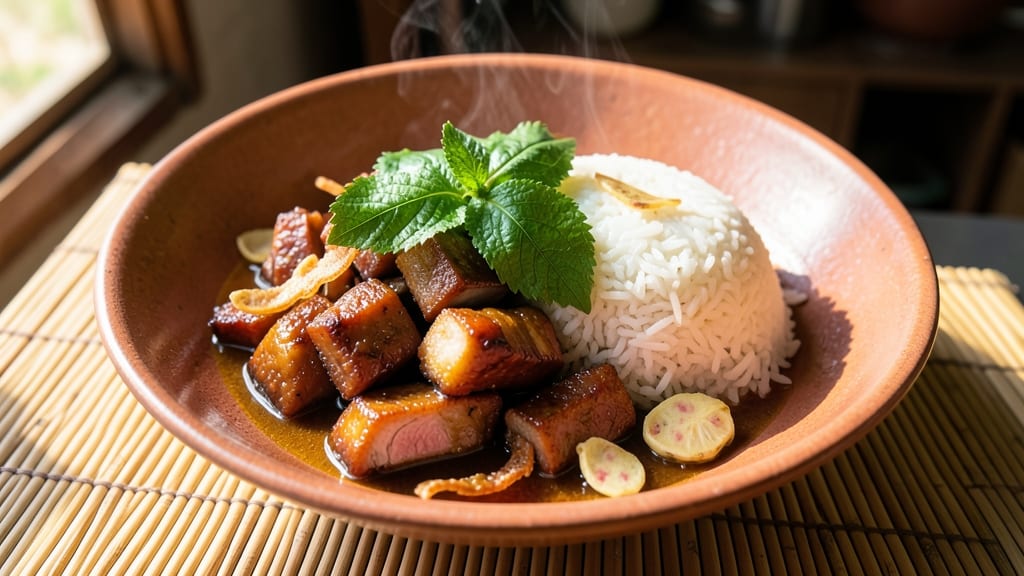
This Cambodian pork and rice recipe transforms a simple one-pot meal into a fragrant, aromatic experience that brings Southeast Asian flavors to your table. The secret lies in the lemongrass-infused broth, which simmers with kaffir lime leaves and galangal to create layers of citrusy, herbal depth that elevate every bite.
I developed this recipe during a trip to Siem Reap, where I fell in love with the way tender pork and fluffy jasmine rice come together in perfect harmony.
The beauty of this dish is its simplicity—just a few key ingredients work together to create restaurant-quality results without requiring advanced techniques. You'll start with pork belly or shoulder, marinated in a blend of garlic, ginger, and fish sauce, then slow-cooked until fork-tender.
The rice steams directly in the broth, absorbing all those incredible flavors while staying perfectly fluffy. This method ensures minimal cleanup and maximum flavor infusion.
By the time you're done, you'll have a steaming pot of golden rice topped with succulent pork slices, all bathed in a fragrant, slightly sweet broth. The aroma alone will transport you to Cambodia, while the balance of savory, tangy, and herbal notes makes this dish irresistibly comforting.
Each bite delivers tender meat, fragrant rice, and a symphony of spices that come together in perfect harmony.
Perfect for family dinners or special occasions, this recipe scales beautifully and tastes even better the next day. The leftovers keep their incredible flavor, making it an ideal meal prep option. Here's how to create this fragrant Cambodian masterpiece in your own kitchen.
Ingredients for cambodian pork and rice
These fragrant ingredients transform simple pork and rice into Cambodian one-pot magic.
| Ingredient | Amount | Notes |
|---|---|---|
| Pork Shoulder 🥩 | 1 ½ lb | Boneless, cut into 1-inch cubes |
| Jasmine Rice 🍚 | 1 ½ cups | Uncooked, long-grain preferred |
| Lemongrass 🌿 | 1 whole | Stalks, bruised and cut into 2-inch pieces |
| Kaffir Lime Leaves 🍋 | 4 whole | Fresh, torn into strips |
| Galangal 🌿 | ½ cup | Peeled and sliced into 1/4-inch pieces |
| Fish Sauce 🍶 | 3 tbsp | Red Boat preferred for authenticity |
| Garlic Cloves 🧄 | 6 cloves | Minced for marinade |
| Fresh Ginger 🌿 | ½ cup | Peeled and sliced into 1/4-inch pieces |
| Coconut Milk 🥥 | 1 can | Full-fat, 13.5 oz can |
| Garlic Cloves 🧄 | 4 cloves | Smashed for broth |
| Fresh Turmeric 🌿 | 1 tsp | Grated or powdered |
| White Peppercorns 🌶️ | ½ tsp | Ground for heat |
| Salt 🧂 | 1 ½ tsp | Adjust to taste |
| Sugar 🍚 | 1 tbsp | Balances flavors |
| Green Onions 🧅 | 4 whole | Sliced for garnish |
Lemongrass is the star—look for plump, pale stalks at Asian markets (or the international aisle at Whole Foods). If you can't find fresh galangal, ginger works in a pinch, but it won't be quite the same. Kaffir lime leaves are worth hunting down—they add that signature citrusy aroma. For fish sauce, Red Boat is my go-to (it's available at most grocery stores now), but any good-quality brand works. The pork should be well-marbled for tenderness—ask the butcher to cut it into 1-inch chunks if buying whole.
No lemongrass? Double the ginger and add 1 tbsp lime zest for brightness. Running out of kaffir lime leaves? Substitute 1 tbsp lime juice plus 1 tsp lime zest. The coconut milk can be swapped for light coconut milk if you prefer less richness, but full-fat gives that authentic Cambodian depth. For extra flavor, toast the white peppercorns in a dry pan for 30 seconds before grinding—trust me on this. The sugar balances the fish sauce's saltiness, so don't skip it even if you're not sweet-toothed.
This dish tastes even better the next day as flavors meld. Store in an airtight container for 4-5 days in the fridge, or freeze portions for 3 months. I always make double batches—leftovers reheat beautifully and make perfect lunches. For serving, garnish with those green onions and a sprinkle of extra lime zest. The aroma alone will have everyone gathering around the table.
Why You'll Love This Recipe
- One-Pot Magic: I swear by this when I’m too tired to chop. Toss everything—pork, rice, herbs—into a single pot, and let the galangal and lemongrass work their flavor while you sip your coffee.
- Herb-Packed Punch: That first bite? Citrusy, spicy, and deeply aromatic thanks to kaffir lime leaves and galangal. It’s the kind of dish where the flavors build slowly—like a hug for your taste buds.
- Lunchbox Hero: Between us, this is my go-to for meal prep. The rice stays fluffy, the pork stays tender, and it reheats beautifully. Pack it for work or school—no sad, dry leftovers here.
- Budget-Friendly Feast: Pork shoulder stretches far, and jasmine rice is a pantry staple. Honestly, this feeds four for under $15, and the leftovers? Even better the next day. Minimal cost, maximum satisfaction.
Step-by-step instructions for Cambodian pork and rice
This fragrant one-pot masterpiece combines tender pork, aromatic herbs, and jasmine rice into a single dish that's impossible to resist.
Prepare the Pork Marinade and Rice
In a large bowl, combine the 1.5 lb pork shoulder cut into 1-inch cubes with the 6 minced garlic cloves, 0.5 cup peeled and sliced fresh ginger, 3 tbsp fish sauce, 1 tbsp sugar, and 1.5 tsp salt. Mix thoroughly until the pork is evenly coated and let it marinate for at least 30 minutes at room temperature. This step ensures maximum flavor penetration and tender meat.
While the pork marinates, rinse the 1.5 cups jasmine rice under cold water until the water runs clear. This removes excess starch that could make the rice gummy. Drain well and set aside in a separate bowl.
Build the Fragrant Base
Heat a large, heavy-bottomed pot over medium heat and add the marinated pork in a single layer. Let it sear undisturbed for 3-4 minutes until golden brown on all sides. This creates a beautiful crust that locks in juices. Remove the pork and set it aside temporarily.
In the same pot, add 2 tablespoons of oil (not listed in ingredients but essential for cooking) and sauté the 1 whole lemongrass (bruised and cut into 2-inch pieces), 4 whole kaffir lime leaves (torn into strips), 0.5 cup sliced galangal, 4 smashed garlic cloves, and 1 tsp fresh turmeric for 3-4 minutes until fragrant. You'll smell that incredible aromatic punch—this is where the magic begins.
Simmer the Pork in Coconut Broth
Pour in the 1 can full-fat coconut milk and scrape up any browned bits from the bottom of the pot. Return the pork to the pot and add 1.5 cups water. Bring to a gentle simmer, then reduce heat to low and cover partially. Let it cook for 45 minutes, stirring occasionally, until the pork is fork-tender and easily pulls apart.
Here's the thing—don't rush this step. The low and slow cooking is what makes the pork melt-in-your-mouth tender while allowing all those aromatic flavors to meld perfectly. You'll know it's ready when the pork shreds easily with two forks.
Cook the Jasmine Rice
Once the pork is tender, add the drained 1.5 cups jasmine rice to the pot, spreading it evenly over the pork. Sprinkle with 0.5 tsp ground white peppercorns and give everything a gentle stir to combine. Pour in an additional 1 cup water and bring to a gentle boil over medium heat.
Reduce heat to low, cover the pot completely, and let it simmer for 15 minutes without lifting the lid. This steaming method creates perfectly fluffy rice that absorbs all the incredible flavors from the pork and coconut broth. If you peek too early, you'll disrupt the cooking process and end up with uneven rice.
Rest and Serve
After 15 minutes, turn off the heat and let the rice sit covered for another 10 minutes. This resting period allows the rice to finish steaming and the flavors to meld completely. The pot will be quite hot—be careful when handling it.
Gently fluff the rice with a fork, mixing it with the pork and coconut broth. Taste and adjust seasoning if needed—you might want to add a little more fish sauce or salt depending on your preference. Serve immediately, garnished with 4 sliced green onions, in individual bowls. Each bite delivers perfectly tender pork, fragrant rice, and that complex balance of sweet, salty, and aromatic flavors that make this dish so special.
Pro Tips For Making Cambodian Pork And Rice
- Char the Galangal: Slather thick slices of galangal in oil and sear them hard over high heat until they’re blackened in spots—this unlocks their citrusy depth. I used to just toss it in raw, and the flavor was always muted. (Yes, it looks dramatic, but trust me.)
- Pound the Lemongrass: Use the flat side of a knife to smash the lemongrass stalks against the cutting board before slicing—this releases more oils and aroma. Skipping this means your broth will taste like it’s missing something, even if everything else is perfect.
- Don’t Rush the Pork: Let the pork shoulder simmer uncovered for the last 15 minutes to let the sauce reduce and coat the meat properly. Covering too early turns the sauce into a thin glaze instead of a rich, sticky layer. (Your future self will notice.)
- Toast the Kaffir Leaves: Lightly toast the kaffir lime leaves in a dry pan for 10 seconds per side—just until fragrant. This deepens their piney note without burning them, and it’s the difference between "nice" and "wow" in the flavor. (No, you can’t skip this.)
Flavor customization for cambodian pork and rice
Spicy Kick
If you love heat, add 1-2 tbsp of Sambal Oelek or 1 tsp chili flakes to the marinade for a fiery Cambodian twist. For a more balanced spice, blend 1 tbsp red chili paste with 1 tbsp fish sauce and spread it over the pork after searing.
I like to finish with a sprinkle of crushed Thai bird's eye chilies for an extra kick that won’t overpower the dish. 🌶️
Sweet and Tangy
Balance the savory flavors with a touch of sweetness and tang. Stir 1 tbsp tamarind paste (dissolved in 2 tbsp warm water) into the coconut milk before adding it to the pot.
For extra brightness, add 1 tbsp lime juice and 1 tsp palm sugar (or regular sugar) to the rice while it steams. This creates a delightful contrast that reminds me of the street food stalls in Phnom Penh.
Herb-Forward
Fresh herbs elevate this dish to new heights. After the pork is tender, stir in ¼ cup chopped cilantro and ¼ cup chopped mint leaves—they add a bright, fresh finish that cuts through the richness.
For a more traditional Cambodian touch, add 1 tbsp chopped Vietnamese coriander (rau răm) if you can find it. These herbs should be added just before serving to preserve their vibrant flavors. 🌿
Coconut Variations
Swap out the full-fat coconut milk for light coconut milk if you prefer a lighter texture, but be prepared for slightly less richness. For a creamy twist, stir in 2 tbsp coconut cream at the end for extra decadence.
I also love adding ½ cup shredded coconut (toasted lightly in a dry pan) as a garnish for texture and aroma. This works especially well if you're serving it with a fresh cucumber salad.
Umami Boost
For deeper flavor, add 1 tbsp soy sauce or 1 tsp mushroom powder to the marinade. You can also stir in 1 tbsp fermented shrimp paste (kapi) (available at Asian markets) when building the fragrant base—it adds a funky, savory depth that’s essential in many Cambodian dishes.
If you can’t find kapi, a dash of Worcestershire sauce works in a pinch.
Vegetable Enhancements
Add ½ cup sliced bell peppers or ½ cup shredded cabbage to the pot during the final 10 minutes of cooking for a colorful, crunchy element. For a heartier dish, include ½ cup sliced bamboo shoots (canned or fresh) or ½ cup chopped water chestnuts.
These additions keep the dish light while adding texture and a subtle sweetness that pairs beautifully with the pork. 🥕
Nutrition facts
Frequently asked questions
What makes this Cambodian pork and rice dish different from other pork rice recipes?
This recipe uses a fragrant blend of lemongrass, kaffir lime leaves, and galangal that creates a uniquely Cambodian aroma profile. The pork cooks slowly in coconut milk broth rather than just soy sauce or ginger, giving it a creamy depth. The rice steams directly in the pot, absorbing all those incredible flavors rather than being served separately. This one-pot method is what makes it special!
Can I substitute pork shoulder with another cut?
For pork belly, reduce cooking time to 30 minutes as it cooks faster. Pork loin works too, but slice it thinner (½-inch) and cook for 25-30 minutes. Avoid lean cuts like tenderloin—they'll dry out. The key is marinating for at least 30 minutes regardless of cut to ensure maximum tenderness.
How do I know when the pork is fully cooked?
The pork is done when it reaches 145°F internal temperature and easily shreds with two forks. For extra assurance, cut into a piece—the juices should run clear, not pink. The recipe's 45-minute simmer at low heat ensures perfect doneness every time. If using a meat thermometer, insert it into the thickest part without touching bone.
What if I can't find kaffir lime leaves or galangal?
For kaffir lime leaves, use 1 tbsp lime zest + 1 tsp lime juice. Replace galangal with extra ginger (double the amount)—it won't be identical but works in a pinch. The dish will still be delicious, just with slightly different herbal notes. If you're missing both, add 1 tsp ground coriander for depth. These substitutions keep the dish flavorful while adapting to what you have.
Can I make this dish ahead of time?
This recipe tastes even better the next day! Store in an airtight container in the fridge for 4-5 days or freeze for 3 months. Reheat gently on low heat with a splash of water to restore moisture. The flavors actually meld more beautifully overnight, making it perfect for meal prep. Just add fresh green onions when serving.