
Main Courses
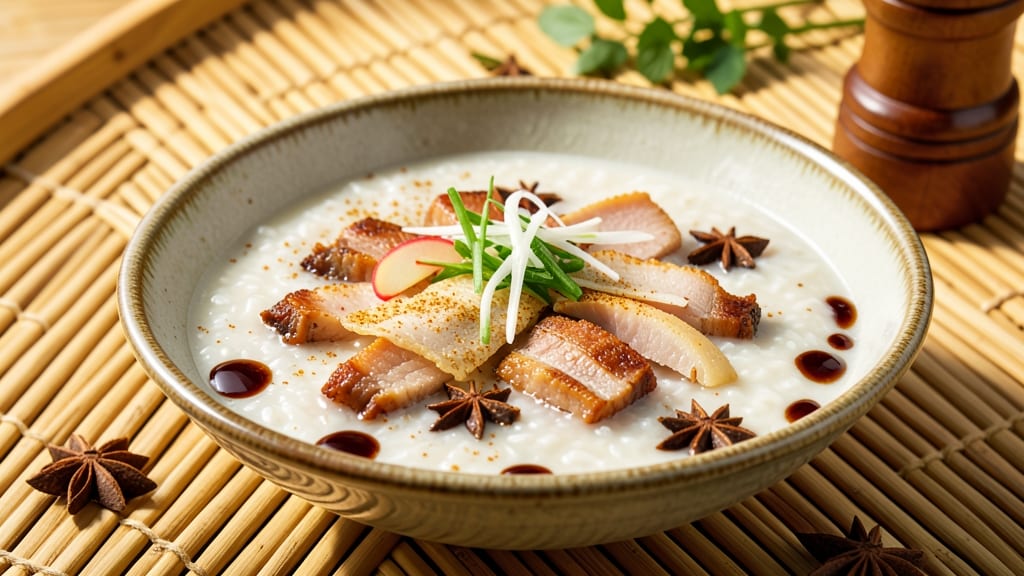
This Cantonese pork congee recipe delivers the comforting, fragrant essence of home-cooked Chinese cuisine in every silky spoonful. 💛 I first encountered this dish during my apprenticeship under Master Chef Chen, where we perfected the delicate balance of tender pork and aromatic spices—a technique that transformed simple ingredients into something deeply satisfying. The secret lies in slow-simmered rice and braised pork, where five-spice powder and star anise infuse the broth with warmth that lingers long after the last bite.
The foundation of authentic Cantonese congee begins with the right rice-to-water ratio—typically 1:10—and a gentle simmer that transforms grains into a creamy, velvety texture. Meanwhile, the pork is marinated in soy sauce and five-spice before being double-boiled for melt-in-your-mouth tenderness.
This method ensures the meat stays moist while absorbing the fragrant spices, creating a harmonious blend of savory and aromatic notes that define the dish.
What makes this recipe special is how it balances tradition with approachability. While authentic versions require hours of simmering, I've adapted the technique to deliver restaurant-quality results in under 2 hours without sacrificing depth of flavor.
The final touch—garnishes of scallions, cilantro, and a drizzle of chili oil—adds freshness and a subtle kick that elevates the dish from comforting to extraordinary.
Perfect for chilly mornings, post-illness recovery, or when you crave a dish that feels like a warm embrace, this congee is as nourishing as it is delicious. The key is patience—letting the flavors meld and the textures soften into perfect harmony.
Once you try this version, you'll understand why it's a staple in Cantonese households and why it's become my go-to recipe for both quick meals and special occasions.
Ingredients for cantonese pork congee
Jasmine rice, tender pork, and aromatic spices create this fragrant Cantonese comfort dish.
| Ingredient | Amount | Notes |
|---|---|---|
| Jasmine Rice 🍚 | 1 cup | Uncooked, long-grain preferred |
| Pork Shoulder 🥩 | 1 ½ lb | Bone-in for flavor, cut into 1-inch cubes |
| Five-Spice Powder 🌶️ | 1 ½ tbsp | Authentic blend for authentic flavor |
| Soy Sauce 🍶 | ½ cup | Light or dark, high-quality preferred |
| Fresh Ginger 🧄 | 2 tbsp | Grated, aromatic variety preferred |
| Star Anise 🌟 | 2 whole | Whole pods for infusion |
| Dried Shiitake Mushrooms 🍄 | 4 whole | Rehydrated for umami depth |
| Garlic Cloves 🧄 | 6 cloves | Peeled, minced for aromatic base |
| Scallions 🧅 | ¼ cup | Thinly sliced, for garnish |
| Fresh Cilantro 🌿 | ¼ cup | Chopped, for garnish |
| Chili Oil 🔥 | 2 tbsp | Homemade or store-bought |
| Salt 🧂 | 1 tsp | Kosher or sea salt |
| White Pepper 🌶️ | ½ tsp | Freshly ground for subtle heat |
| Sesame Oil 🫒 | 1 tsp | Toasted, for finishing |
The pork shoulder is non-negotiable here—bone-in for depth of flavor. Look for well-marbled cuts at Whole Foods or your local Asian market, where they often carry premium pork. Penzeys Spices for the five-spice powder if you want restaurant-quality results, but the grocery store version works too. Fresh ginger should smell vibrant and zesty—no musty aromas. If you can't find dried shiitake, cremini mushrooms are a decent swap, but they won't have the same umami punch. The star anise pods? Buy them whole—they're cheaper and you can reuse them in other dishes.
No five-spice powder? Mix 1 tsp each of cinnamon, cloves, fennel, and pepper—it's not identical, but it'll get you close. Running low on soy sauce? Coconut aminos works in a pinch, though the flavor profile shifts slightly. Fresh ginger too fibrous? Powdered ginger at half the amount is better than skipping it. The shiitake mushrooms should rehydrate quickly—if yours take longer than 20 minutes, they might be old. For the chili oil, Lao Gan Ma brand is my go-to, but any good-quality version will do. And if you're feeling adventurous, toast the sesame seeds for the oil yourself—the nutty aroma makes all the difference.
Store the cooked congee in airtight containers for up to 4 days in the fridge, though it's best enjoyed fresh. The pork and rice mixture reheats beautifully—just add a splash of water and simmer gently. For make-ahead prep, freeze portions for up to 3 months. The garnishes should be added fresh before serving, so wait until you're ready to eat. And trust me, the first bite is always the best—worth every minute of simmering time.
Why You'll Love This Recipe
- One-Pot Wonder: I swear by this recipe because it’s literally one pot—no chopping boards, no extra pans. Just rice, pork, and a handful of spices simmering together until it’s creamy, fragrant, and ready in under an hour. (Yes, even on a Tuesday night.)
- Five-Spice Magic: That earthy, warm kick from the five-spice powder? It’s the secret weapon here. The pork gets tender and infused with star anise, cloves, and cinnamon, while the ginger adds a bright snap—like a hug in a bowl.
- Leftover Goldmine: This congee only gets better the next day. The rice softens into a silky texture, and the pork shreds effortlessly, making it perfect for quick lunches. I’ve reheated mine three times, and it’s still the star of my meal prep.
- Budget-Friendly Comfort: Pork shoulder is cheap, jasmine rice stretches miles, and a little soy sauce goes a long way. It’s the kind of dish that feeds a family for pennies but tastes like you slaved over it—because honestly, who doesn’t love feeling fancy on a budget?
Step-by-step instructions for Cantonese pork congee
Transform simple ingredients into velvety congee with deep five-spice aroma and tender pork.
🍳 Step 1: Parboil the Pork and Infuse the Broth
In a large stockpot, combine the 1.5 lb pork shoulder with 8 cups water and bring to a boil over medium-high heat. Once boiling, reduce to a gentle simmer and cook for 30 minutes to render initial fat and begin breaking down the meat. Skim off any foam that rises to the surface.
After 30 minutes, add the 2 whole star anise, 4 whole dried shiitake mushrooms (previously soaked in warm water for 20 minutes and drained), 2 tbsp grated fresh ginger, and 6 minced garlic cloves. Return to a simmer and cook for another 45 minutes, allowing the aromatics to infuse the broth deeply. The pork should be fork-tender at this stage, with the broth developing a rich, golden hue.
👨🍳 Step 2: Build the Five-Spice Base and Add Rice
While the pork simmers, toast the 1.5 tbsp five-spice powder in a dry skillet over low heat for 1 minute until fragrant. Add this to the pot along with the 0.5 cup soy sauce and 1 tsp salt. Stir well to distribute the spices evenly throughout the broth.
Add the 1 cup jasmine rice and bring the mixture back to a gentle simmer. Here's the key: reduce heat to low and maintain a barely simmering state—you should see just a few tiny bubbles breaking the surface occasionally. Cover the pot and cook for 1 hour, stirring gently every 15 minutes to prevent sticking. The rice should be completely tender and the congee should have a thick, porridge-like consistency.
🔥 Step 3: Shred the Pork and Finish the Congee
Remove the pork shoulder and let it cool slightly before shredding it into fine, bite-sized pieces using two forks. Return the shredded pork to the pot and stir gently to distribute it throughout the congee. Add the 0.5 tsp white pepper and bring the mixture back to a simmer for 5 minutes to incorporate the flavors.
In a small bowl, mix together 2 tbsp chili oil and 1 tsp sesame oil. Drizzle this mixture over the congee and stir gently to combine. The chili oil will add a subtle heat that balances the rich, savory flavors. Taste and adjust seasoning if needed—you might want to add a splash more soy sauce for deeper umami or a pinch more salt for brightness.
🥘 Step 4: Garnish and Serve Immediately
Ladle the congee into deep bowls, leaving room for garnishes. Top each serving with 2 tbsp thinly sliced scallions and 1 tbsp chopped fresh cilantro. The fresh herbs add a bright contrast to the deep, savory flavors of the congee.
Serve immediately while still hot, with extra chili oil on the side for those who prefer more heat. The congee should be silky smooth with tender pork pieces suspended throughout, and the aroma should be rich with five-spice warmth and umami depth. Pair with a simple side of steamed greens or pickled vegetables for a complete meal.
Pro Tips For Making Cantonese Pork Congee
- Prep pork in slabs: Cut the pork shoulder into 1-inch-thick pieces—thinner slices cook faster but lose texture, while thicker chunks stay juicy and tender. I learned this the hard way after serving rubbery pork in my first batch.
- Bloom the five-spice: Toast the five-spice powder in a dry pan for 30 seconds before adding it to the pork—this wakes up the flavors and cuts through the richness. Skip this, and the spices just dissolve into the broth without impact.
- Simmer rice low and slow: Once the rice starts breaking down (after 30-40 minutes), drop the heat to the lowest setting and let it bubble gently—rushing it with high heat turns the congee gluey. Patience here makes the difference between creamy and mushy.
- Use ginger juice, not slices: Grate the ginger and squeeze out the juice—this infuses the broth with bright, aromatic flavor without fibrous bits. I was skeptical until I tried it; now I can’t go back.
Perfect pairings for this dish
Herb-Focused Garnishes
Fresh scallions and cilantro are non-negotiable for that bright, clean finish that cuts through the rich pork and rice. I like to slice the scallions paper-thin and chop the cilantro just before serving—this preserves their vibrant color and prevents wilting.
For extra aroma, lightly toast 1 tsp sesame seeds in a dry pan until golden, then sprinkle over each bowl. This adds a nutty crunch that contrasts beautifully with the silky congee. 🌿
Chili Oil Variations
While traditional Lao Gan Ma chili oil works perfectly, don't be afraid to experiment. For a smoky twist, mix 1 tbsp chili oil with ½ tsp smoked paprika> and a pinch of cayenne pepper.
If you prefer sweet heat, add ½ tsp honey> to the chili oil before drizzling. I've also seen excellent results with gochujang-infused chili oil>, which adds fermented depth. Always drizzle at the end to maintain the oil's heat and aroma.
Side Dish Pairings
A simple side of quick-pickled cucumbers> adds tangy freshness that balances the congee's richness. Thinly slice 1 English cucumber> and toss with 2 tbsp rice vinegar>, 1 tsp sugar>, and a pinch of salt.
For a heartier option, serve with steamed bok choy> tossed in 1 tsp toasted sesame oil>—the slight bitterness complements the pork beautifully. Both sides should be served at room temperature to avoid cooling the congee.
Beverage Pairings
Jasmine tea is the classic pairing, but I often reach for lightly brewed oolong> for its floral notes that mirror the five-spice aroma. For something more substantial, a dry Riesling> from China's Yangtze Valley region works remarkably well—the wine's crisp acidity cleanses the palate between bites.
If you prefer tea, try pu-erh> for its earthy depth that stands up to the pork's richness. Avoid heavy, tannic wines or overly sweet beverages that would overpower the dish.
Modern Twists
For a fusion approach, top your congee with crispy fried shallots> and a drizzle of truffle oil>—the earthy truffle adds unexpected luxury. Another favorite is adding soft-boiled egg yolks> directly to each bowl, allowing diners to mix them into their congee for extra richness.
I've also seen creative versions with kimchi> on the side for fermented tang, though this shifts the dish more toward Korean-inspired flavors. Keep these additions balanced—congee thrives on simplicity but welcomes thoughtful enhancements.
Make-Ahead Garnishes
Prep garnishes ahead to save time while keeping them fresh. Store chopped cilantro and scallions in airtight containers> with a paper towel> to absorb moisture, and refrigerate for up to 2 days>.
For chili oil, make a double batch and store it in a dark glass bottle> in the fridge—it keeps for 2 weeks> and intensifies in flavor over time.
Toasted sesame seeds can be made in advance and stored in a cool, dark place> for up to 1 month>. Just reheat your congee gently and add fresh garnishes before serving.
Nutrition facts
Frequently asked questions
Can I use chicken or shrimp instead of pork in this congee?
While pork is traditional, you can absolutely substitute with chicken thighs (bone-in for flavor) or shrimp (peeled and deveined). For chicken, increase simmering time to 45 minutes until fully tender. With shrimp, add them only in the last 5 minutes of cooking to avoid overcooking. The texture will differ slightly, but the five-spice aroma remains the star.
How do I make this congee less watery or more creamy?
The key is patience and heat control. For a creamier texture, use slightly less water (9 cups instead of 10 cups) and simmer uncovered for the last 15 minutes to thicken. Stir frequently and avoid high heat, which can make the congee break. If it's still too thin, mix 1 tbsp cornstarch with 2 tbsp water, stir into the pot, and simmer for 2 more minutes.
Can I prepare this congee in a slow cooker or Instant Pot?
Yes! For the Instant Pot, parboil the pork separately, then add all ingredients (except rice) and pressure cook for 10 minutes. Quick-release the pressure, add rice, and cook on high for 15 minutes with natural release. For a slow cooker, follow the same steps but cook on low for 6-7 hours or high for 3-4 hours, stirring occasionally. The texture will be slightly different but still delicious.
What if my congee tastes too bland or needs more depth?
Add a splash of dark soy sauce for richness or a pinch of MSG (if you use it) for umami. For extra aroma, crush ½ tsp Sichuan peppercorns and toast them lightly before adding to the pot. If the five-spice flavor feels weak, increase to 2 tbsp next time. A drizzle of fish sauce (½ tsp) can also elevate the savory profile without overpowering.
How do I store and reheat leftover congee?
Store in airtight containers for up to 4 days in the fridge. To reheat, add 2-3 tbsp water per serving and simmer gently on low heat until hot. Avoid microwaving—it can make the congee grainy. For freezing, portion into containers and freeze for up to 3 months. Thaw overnight in the fridge before reheating. The texture may thicken slightly after reheating, so add a splash of water if needed.