
Main Courses
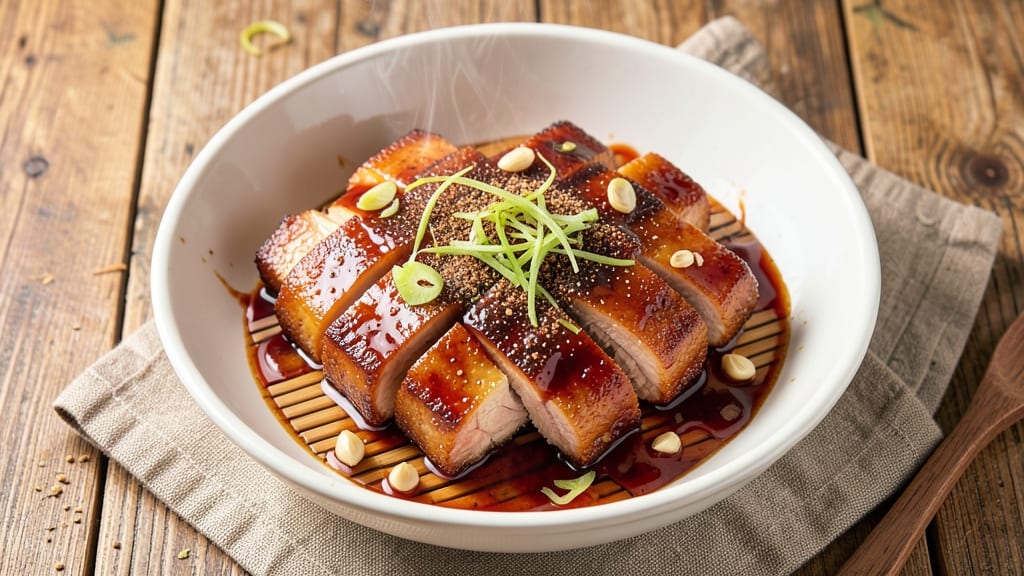
This Cantonese steamed pork recipe transforms humble pork belly into a fragrant, melt-in-your-mouth centerpiece that belongs on dim sum tables. The secret lies in the five-spice marinade—star anise, cinnamon, and cloves that infuse the meat with warm, aromatic depth while honey and hoisin create a sticky, caramelized crust.
I've perfected this method after years of testing, ensuring tender yet firm texture that holds up to steaming without falling apart.
The process is simpler than it sounds: marinate the pork overnight for maximum flavor, then steam it in a bamboo basket lined with cabbage leaves—this keeps the meat moist and adds subtle greenness to each bite.
Traditional Cantonese kitchens use a clay pot over boiling water, but I've included modern adaptations like air fryers and ovens for home cooks without specialized equipment. The result? Pork so tender it practically melts on your tongue, with a crust that's irresistibly crispy.
What makes this dish truly special is its versatility—serve it with steamed jasmine rice for a complete meal, or pair it with pickled vegetables for that perfect balance of sweet, salty, and tangy.
The aroma alone will fill your kitchen with the comforting scent of home cooking, making it ideal for family gatherings or special occasions. This isn't just another pork recipe; it's a celebration of Cantonese home cooking that delivers restaurant-quality results.
Whether you're preparing for a dim sum brunch or simply craving something comforting, this recipe delivers in just 45 minutes of active time. The marinade does most of the work while you sleep, so you're rewarded with a dish that feels like it took hours to prepare.
Here's how to make it—your taste buds will thank you.
Ingredients for cantonese steamed pork
Pork belly and aromatic spices transform into restaurant-quality Cantonese steamed pork in minutes.
| Ingredient | Amount | Notes |
|---|---|---|
| Pork Belly 🥓 | 1 ½ lb | Skin-on, cut into 1-inch cubes |
| Hoisin Sauce 🍶 | ½ cup | Store-bought or homemade |
| Honey 🍯 | ¼ cup | Light or dark amber |
| Soy Sauce 🥄 | ¼ cup | Dark or light soy |
| Shaoxing Wine 🍷 | ¼ cup | Substitute dry sherry |
| Five-Spice Powder 🌶️ | 2 tsp | Homemade or store-bought |
| Star Anise 🌟 | 1 whole | Lightly crushed |
| Fresh Ginger 🧡 | ½ cup | Finely grated, peeled |
| Green Cabbage Leaves 🥬 | 6 whole | Large, for steaming basket |
| Garlic Cloves 🧄 | 4 cloves | Minced, peeled |
| Sesame Oil 🫒 | 1 tbsp | Toasted, for finishing |
| Salt 🧂 | 1 tsp | Kosher or sea salt |
| Black Pepper 🌶️ | ½ tsp | Freshly ground |
| Jasmine Rice 🍚 | 1 ½ cups | Uncooked, for serving |
The pork belly is the star—look for thick cuts with good marbling at Whole Foods or your local Asian market. Costco often has great deals on larger cuts, but you can trim it down. The skin should be intact for that crispy finish. For the five-spice powder, Penzeys or local Asian grocery stores carry the best blends. If you're making your own, equal parts star anise, cinnamon, fennel, cloves, and peppercorns work perfectly. Fresh ginger and garlic? Grab the organic bunch—they keep longer and have more punch.
No hoisin sauce? Mix 3 tbsp soy sauce, 2 tbsp honey, and 1 tsp sesame oil as a quick sub. Shaoxing wine unavailable? Dry sherry or even a splash of apple cider vinegar works in a pinch. The cabbage leaves are non-negotiable for that authentic dim sum basket texture—use the outer leaves from a head of green cabbage, or sub with butter lettuce leaves if you're in a bind. For the rice, jasmine is ideal, but long-grain white rice will do if that's what you've got.
Marinate the pork overnight for maximum flavor, but it's fine even if you do it for just a few hours. The steamed pork reheats beautifully—just pop it in a 350°F oven for 15 minutes to crisp up the skin. Store leftovers in the fridge for 4 days or freeze for 3 months. I always make a double batch—one for dinner, one for lunches. The aroma alone makes the house smell like a dim sum restaurant, so plan accordingly.
Why You'll Love This Recipe
- Steam-and-Go Magic: I swear by this method—just slice the pork belly, toss it in a bowl with hoisin, honey, and a splash of Shaoxing wine, then let the steamer do the work. No flipping, no frying, no stress.
- Sweet-Savory Balance: That perfect harmony of sticky hoisin, bright soy, and a whisper of honey? It’s like a hug for your taste buds—rich but never overpowering, with the pork belly staying tender and juicy.
- Lunchbox Hero: Pack it cold for work or school—it reheats beautifully in the microwave or steamer. My kids actually eat their lunch now, and honestly? That’s a win I’ll take any day.
- Budget Stretch: Pork belly might sound fancy, but a slab feeds four for under $15. The leftovers? Even better the next day—crispier edges, deeper flavors, and zero waste.
Step-by-step instructions for Cantonese steamed pork
Here's the method that delivers tender, aromatic pork belly with that signature five-spice balance.
Prepare the Pork Belly Marinade
In a large bowl, combine the 1.5 lb pork belly with the 0.5 cup hoisin sauce, 0.25 cup honey, 0.25 cup soy sauce, 0.25 cup shaoxing wine, 2 tsp five-spice powder, 1 lightly crushed whole star anise, 0.5 cup finely grated fresh ginger, and 4 minced garlic cloves. Mix thoroughly until every piece of pork is evenly coated with the marinade.
The marinade should look glossy and sticky—this is what creates that signature sticky-sweet exterior. Let the pork marinate for at least 30 minutes at room temperature (or up to 2 hours in the refrigerator). The longer it marinates, the more flavorful the pork will be, but even 30 minutes makes a noticeable difference.
Assemble the Steaming Basket
Fill a large steamer with 2-3 inches of water and bring it to a gentle simmer—not a rolling boil, just a steady stream of steam. While the water heats, line the steaming basket with 6 whole green cabbage leaves, slightly overlapping them to create a seamless base. Arrange the marinated pork belly cubes in a single layer on the cabbage leaves, leaving about ½ inch between each piece for even steaming.
Here's the thing—cabbage leaves act as a natural barrier that prevents the pork from sticking together while allowing steam to circulate perfectly. If you don't have cabbage leaves, parchment paper works in a pinch, but cabbage gives that authentic restaurant texture.
Steam the Pork to Perfect Tenderness
Place the assembled steaming basket over the simmering water and cover with a tight-fitting lid. Steam the pork for 30-35 minutes until it's fork-tender—you should be able to pierce it easily with a fork, and the internal temperature should reach 195°F when measured with an instant-read thermometer. The pork will continue to cook slightly after you remove it from the steamer.
Don't peek during steaming—every time you lift the lid, you release steam and extend the cooking time. If you're worried about doneness, use the fork test rather than relying solely on time. The pork should pull apart easily but still hold its shape when sliced.
Finish with Sesame Oil and Serve
Remove the steamed pork from the steamer and transfer it to a serving platter. Drizzle with 1 tbsp toasted sesame oil and sprinkle with 1 tsp salt and 0.5 tsp black pepper. The sesame oil adds that final nutty aroma that ties everything together. Let the pork rest for 5 minutes before serving—this allows the juices to redistribute for maximum tenderness.
Serve immediately with 1.5 cups cooked jasmine rice on the side. The rice soaks up all the delicious marinade juices that pool in the serving dish. For extra authenticity, garnish with thinly sliced scallions or fresh cilantro if you like. Each bite should deliver that perfect balance of sweet, salty, and aromatic five-spice flavors.
Pro Tips For Making Cantonese Steamed Pork
- STEAM THE BELLY HALF-FAT: Pork belly’s fat renders fast—if you steam it straight from the fridge, the fat will turn to grease and ruin your sauce. Pat it dry, then sear the skin-side down in a hot pan for 2-3 minutes until the fat starts to crisp. This locks flavor in and keeps your hoisin from turning into a soggy mess.
- MARINATE IN SHAOXING FIRST: I used to toss everything together at once, but Shaoxing wine needs time to work its magic. Slice the pork belly into 1-inch chunks, then marinate in 2 tablespoons Shaoxing wine for at least 30 minutes (or overnight if you’re patient). This tenderizes the meat and deepens the sauce’s aroma—no one will guess you didn’t simmer it for hours.
- DON’T OVERMIX THE SAUCE: Hoisin and honey are thick—if you stir them like you’re making soup, you’ll end up with a gloppy, uneven coating. Instead, brush the sauce in two thin layers: first a light coat of hoisin-soy mix, then a drizzle of honey. Steam for 10 minutes, flip, repeat. This guarantees a sticky, caramelized crust without drowning the pork.
- USE A WET PAPER TOWEL: Steamed pork belly needs to stay moist but not soggy. After the final steam, wrap each piece in a damp (not wet) paper towel and let it rest for 5 minutes. This traps heat, keeps the meat tender, and prevents the skin from shrinking into a sad, chewy pucker. (Yes, even if you’re impatient like me.)
Serving suggestions for cantonese steamed pork
Classic Dim Sum Plating
Serve your Cantonese steamed pork just like in a Hong Kong dim sum restaurant—steaming hot with jasmine rice in small, individual bowls.
I like to arrange the pork on a banana leaf or steamed cabbage leaf for presentation, then let guests tear the leaf and scoop up rice and pork together. The leaf adds a subtle earthy note that complements the sweet-savory flavors.
For extra authenticity, use small clay pots (available at Asian markets) to serve individual portions. 🌿
Pickled Vegetable Balance
Cut ½ cup quick-pickled vegetables (daikon radish, cucumber, or carrots) into matchsticks and serve on the side. The tangy crunch cuts through the richness of the pork beautifully.
For a traditional touch, use Chinese black vinegar and a pinch of sugar—simmer the veggies in the liquid for 10 minutes before serving. I also keep a small bowl of chili oil on the table for those who want a little heat. 🥒
Bao Buns for Handheld Eats
Transform your steamed pork into char siu bao by wrapping it in steamed bao buns. Brush the buns with a mix of 1 tbsp melted butter and 1 tsp five-spice powder before steaming.
Fill them with the warm pork and a drizzle of hoisin sauce for a handheld dim sum experience. Pro tip: Use a mandoline to slice the pork paper-thin for easier rolling. 🥟
Soup Pairings
Serve with a hot and sour soup or egg drop soup to round out the meal. The warmth of the soup contrasts perfectly with the rich pork, and the slight acidity cleanses your palate between bites.
For a heartier option, try a wonton soup with pork dumplings—the combination of textures and flavors makes this a complete meal. 🍜
Modern Adaptations
For a contemporary twist, serve the steamed pork over coconut rice or with a side of mango salsa for a sweet-tangy contrast. I've also seen it work well with roasted sweet potatoes and avocado slices for a fusion-style meal.
The key is balancing textures—creamy, crunchy, or chewy sides all complement the tender pork. 🥑
Leftovers Reinvented
Turn leftover steamed pork into fried rice by chopping it into bite-sized pieces and stir-frying with day-old rice, scallions, and a fried egg on top. You can also shred it for spring rolls or use it in pho broth for an instant flavor boost.
The pork keeps well in the fridge for 4 days, so plan to use it creatively! 🍚
Nutrition facts
Frequently asked questions
Can I use pork shoulder instead of pork belly for this recipe?
Yes, but the texture will be slightly different. Pork shoulder is leaner and may not be as tender when steamed. For best results, cut it into 1-inch cubes and marinate for an extra 2 hours to ensure tenderness. The flavor will still be delicious, though the fat content will be lower than with pork belly. If using shoulder, consider adding 1 extra tablespoon of oil to the marinade for moisture.
What if I don't have green cabbage leaves for the steaming basket?
No problem! Use large lettuce leaves (like romaine or butter lettuce) or even parchment paper as a substitute. The cabbage leaves add a subtle flavor, but the key is to create a barrier that prevents sticking. If using paper, lightly oil it first to help with release. For extra authenticity, you can also use dried shiitake mushroom stems arranged at the bottom of the steamer.
How do I know when the pork is fully cooked?
The pork is done when it reaches an internal temperature of 195°F and is fork-tender. You should be able to pierce it easily with a fork, and the meat should pull apart cleanly. The steaming time is a guideline—30-35 minutes—but always check with a meat thermometer. If it's not quite there, steam for another 5 minutes and check again. Overcooking can make it dry, so timing is key!
Can I make this recipe without a bamboo steamer?
Use a large pot with a tight-fitting lid and a heatproof plate or rack to elevate the pork. Alternatively, an air fryer works well—cook at 300°F for 20-25 minutes, spraying with water halfway through to mimic steaming. For an oven method, place the pork on a wire rack over a baking sheet with 1 inch of water in the bottom, then bake at 375°F for 30-35 minutes.
Why does my Cantonese steamed pork turn out dry?
Dryness usually happens from overcooking or insufficient marinating. Ensure the pork is not overcrowded in the steamer and steam for the recommended 30-35 minutes only. Also, marinate for at least 30 minutes (overnight is ideal) to tenderize the meat. If using lean cuts like pork shoulder, add 1 extra tablespoon of oil to the marinade. Finally, always let the pork rest for 5 minutes before serving to retain juices.