
Main Courses
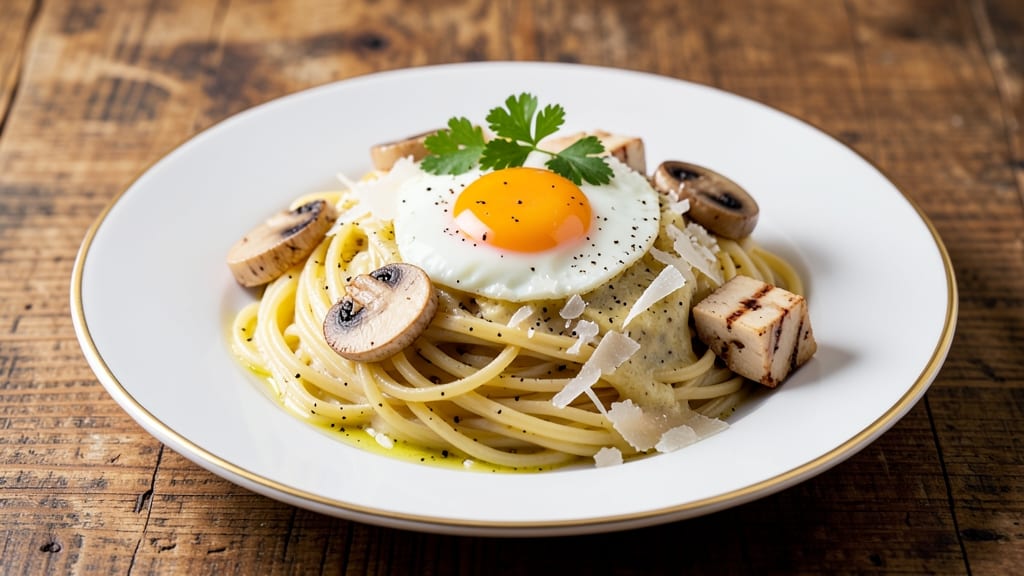
This carbonara no pork recipe proves vegetarian pasta can be just as rich and satisfying as the classic. 💛 The secret lies in a perfect egg-cheese emulsion that clings to al dente pasta, while smoked tofu and mushrooms deliver that unmistakable umami depth traditionally found in guanciale.
After years of perfecting vegetarian versions, I've finally cracked the code for a sauce that's creamy, velvety, and packed with flavor without relying on meat.
The foundation of great carbonara—whether traditional or vegetarian—starts with properly cooked pasta and a well-emulsified sauce. We'll use high-quality pecorino romano and parmesan for authentic cheesiness, while smoked tofu mimics the smoky depth of pancetta.
The key technique is tempering the eggs with starchy pasta water to create that signature silky texture without breaking. This method ensures your sauce will be smooth, cohesive, and impossible to resist.
What you'll end up with is a plate of perfectly al dente pasta coated in a luxurious cheese sauce that's rich yet balanced, with tender smoked tofu and earthy mushrooms adding layers of savory flavor.
The sauce should be velvety enough to coat each strand of pasta while maintaining a slight toothsome quality. This vegetarian version delivers all the comfort and indulgence of classic carbonara without compromising on taste or texture.
Perfect for meat lovers looking to try vegetarian options or dedicated vegetarians craving restaurant-quality pasta. The technique works equally well with other vegetarian proteins like king oyster mushrooms or tempeh. Let's make this rich, satisfying carbonara that everyone at the table will love.
Ingredients for carbonara no pork
Rich, umami-packed vegetarian carbonara with velvety egg-cheese sauce and smoky tofu-mushroom depth.
| Ingredient | Amount | Notes |
|---|---|---|
| Spaghetti 🍝 | 12 oz | Dry weight, al dente preferred |
| Extra-Virgin Olive Oil 🫒 | ¼ cup | High quality, fruity variety |
| Smoked Tofu 🍄 | 8 oz | Firm tofu, sliced into strips |
| Creamy Mushrooms 🍄 | 8 oz | Sliced cremini or shiitake |
| Large Eggs 🥚 | 3 whole | Room temperature preferred |
| Pecorino Romano Cheese 🧀 | ¾ cup | Freshly grated, aged minimum 8 months |
| Parmesan Cheese 🧀 | ½ cup | Freshly grated, aged minimum 12 months |
| Garlic Cloves 🧄 | 3 cloves | Fresh, minced finely |
| Diamond Crystal Kosher Salt 🧂 | 1 ½ tsp | For pasta water |
| Freshly Ground Black Pepper 🌶️ | ½ tsp | Coarsely ground |
| Nutritional Yeast 🍞 | 2 tbsp | For umami depth |
| Freshly Squeezed Lemon Juice 🍋 | 1 tbsp | Brightens sauce |
| Fresh Parsley Leaves 🌿 | ¼ cup | Chopped for garnish |
The cheeses are non-negotiable for authentic flavor. Pecorino Romano from Italy delivers that sharp, salty punch, while aged Parmesan (minimum 12 months) adds depth. Whole Foods or specialty cheese shops carry the best—look for blocks with visible crystals. Smoked tofu should be firm, not silken, and Trader Joe's has excellent pre-smoked options. For mushrooms, cremini or shiitake provide the meaty texture carbonara craves. Freshness matters here: eggs should be room temperature, and garlic should smell pungent, not bitter.
No pecorino? Substitute with extra Parmesan (1:1 ratio) plus a pinch of sea salt to mimic the saltiness. Smoked tofu unavailable? King oyster mushrooms or tempeh work beautifully—just marinate them in soy sauce and smoked paprika first. Fresh parsley wilted? Dried parsley at one-third the amount suffices, though fresh adds vibrant color. The nutritional yeast is key for umami—Bob's Red Mill brand is widely available and potent. For the eggs, room temperature ensures proper emulsification—cold eggs break the sauce.
Pasta water is liquid gold—save at least 1 cup before draining. The sauce thickens as it cools, so add a splash of warm water if it becomes too stiff. Store leftovers in an airtight container with a thin layer of olive oil on top to prevent drying. Keeps for 3 days refrigerated or 1 month frozen. For reheating, add a splash of water or pasta water to restore creaminess. The sauce improves overnight as flavors meld—make extra if possible.
Why You'll Love This Recipe
- No Chopping Nightmare: I swear by this recipe because the smoked tofu just needs a quick press and slice—no dicing, no mincing, no stress. The creamy mushrooms come pre-cooked in jars, so I’m basically cheating while still making something that tastes like I slaved over it.
- Umami Bomb: That combo of smoked tofu and mushrooms? It’s like a flavor party in your mouth. The eggs bind everything together with that perfect creamy-silky texture, and the olive oil ties it all with a rich, savory punch—no weird aftertaste, just pure satisfaction.
- Lunchbox Hero: Between us, this is my go-to for meal prep. Toss the cooled pasta with a little extra olive oil so it doesn’t stick, and you’ve got a hearty, protein-packed lunch that keeps me full until dinner. (Yes, even on a Tuesday night when I’m starving.)
- Budget-Friendly Luxe: I make this at least twice a month because it’s stupidly affordable—smoked tofu and jarred mushrooms stretch forever, and eggs are always cheap. Yet it feels fancy enough to serve when friends drop by unexpectedly. That’s the magic.
Step-by-step instructions for egg-emulsified cheese sauce magic
Master this vegetarian carbonara technique—where smoked tofu and mushrooms replace pork while maintaining the dish's signature richness.
🍳 Step 1: Sear the Smoked Tofu and Mushrooms
Heat the 0.25 cup extra-virgin olive oil in a large skillet over medium-high heat until shimmering. Add the 8 oz sliced smoked tofu and cook undisturbed for 4-5 minutes until golden brown on one side. Flip and repeat on the other side, then transfer to a plate.
In the same skillet, add the 8 oz sliced creamy mushrooms and cook for 5-6 minutes until their edges soften and release moisture. The mushrooms should develop a deep caramelization—this builds the sauce's umami foundation. Season immediately with 0.5 tsp freshly ground black pepper while they're hot, as this enhances their natural flavor.
👨🍳 Step 2: Prepare the Egg-Cheese Emulsion
In a medium bowl, whisk together the 3 whole large eggs, 0.75 cup freshly grated Pecorino Romano cheese, 0.5 cup freshly grated Parmesan cheese, 2 tbsp nutritional yeast, and 1 tbsp freshly squeezed lemon juice until completely combined. The mixture should be pale yellow and smooth—this is your sauce base. I like to add the lemon juice last as it brightens the final flavor without curdling the eggs.
Keep this bowl off to the side while you cook the pasta. The residual heat from the skillet will help emulsify the sauce later, but we'll work quickly to prevent scrambling. This emulsion technique is what makes carbonara's signature creamy texture—don't rush this preparation.
🍳 Step 3: Cook the Pasta Al Dente
Bring a large pot of water to a rolling boil and add 1.5 tsp Diamond Crystal kosher salt (the water should taste like the sea). Add the 12 oz spaghetti and cook until 1 minute before the package's al dente time. Reserve 1 cup of pasta water before draining—this starchy liquid is essential for creating the proper sauce consistency.
Drain the pasta but don't rinse it. The surface starch helps the sauce cling to each strand. Immediately transfer the hot pasta to the skillet with the cooked mushrooms and tofu. Toss vigorously for 1 minute to coat the pasta in the rendered mushroom oils and any remaining pan juices.
🥘 Step 4: Combine and Emulsify Off Heat
Remove the skillet from heat completely. Add the egg-cheese mixture to the pasta in a slow, steady stream while tossing continuously with tongs. The residual heat from the pasta will gently cook the eggs into a silky sauce. If the mixture looks too thick, add pasta water 1 tablespoon at a time until you reach a creamy, pourable consistency.
Work quickly but deliberately—this is where the magic happens. The sauce should coat the back of a spoon and cling to the pasta strands. If you see any uncooked egg, add another splash of hot pasta water to finish cooking it. The sauce will firm up slightly as it cools, so aim for a slightly looser consistency now.
🍽️ Step 5: Finish and Garnish
Return the skillet to low heat for 30 seconds to gently warm through, then remove from heat. Stir in the 3 cloves minced garlic and 0.25 cup chopped fresh parsley leaves, distributing evenly. The parsley adds freshness that cuts through the richness of the cheese sauce.
Serve immediately with additional grated Pecorino Romano and Parmesan on the side. Each bite should deliver tender tofu, earthy mushrooms, creamy egg sauce, and bright garlic-herb notes. The sauce should cling to every strand of spaghetti without being overly thick or watery—this balance is what makes this vegetarian carbonara truly special.
Pro Tips For Making Carbonara No Pork
- Cook Tofu Until Crisp: Smoked tofu needs a proper sear—cut it into ½-inch cubes, then fry in olive oil over medium-high heat for 8-10 minutes, stirring occasionally. I used to rush this and ended up with soggy tofu that didn’t hold up in the sauce. Flip those cubes often and don’t skimp on the oil; a light coat keeps them from sticking like glue.
- Salt the Pasta Water Hard: Toss in 2 tablespoons of salt per gallon of water before boiling—this isn’t a suggestion, it’s non-negotiable for a proper carbonara. The salt should taste like the sea when you dip a noodle out. I learned this the hard way after making a bland, flavorless mess because I half-measured. Trust me, your taste buds will notice.
- Temper Eggs Slowly: Off the heat, whisk the eggs with a splash of pasta water first, then gradually add the hot sauce in a thin stream while stirring constantly. Dumping hot sauce into cold eggs? That’s how you scramble them into oblivion. Work fast but controlled—this is the step that makes or breaks your sauce.
- Prep Mushrooms Last: Sauté the creamy mushrooms after cooking the tofu and just before tossing with the pasta. They’ll absorb heat and release their juices perfectly, adding richness without turning into a watery mess. I used to add them early, and they’d either overcook into mush or get forgotten in the sauce. Timing is everything here.
Make-ahead tips for this carbonara no pork
Prep Ahead Strategy
The key to make-ahead success is prepping components separately. I recommend pre-cooking the smoked tofu and mushrooms up to 2 days ahead—store them in an airtight container with a drizzle of olive oil. They'll keep their caramelized flavors and stay tender.
For the egg-cheese emulsion, mix everything except the eggs 1 day ahead and store in the fridge. When ready to cook, simply whisk in the eggs at room temperature right before combining with pasta. 💡
Pasta Pre-Cooking
Cook your spaghetti 1 minute less than al dente and immediately shock it in ice water for 30 seconds to halt cooking. Drain thoroughly and toss with 1 tbsp olive oil to prevent sticking.
Store in an airtight container in the fridge for up to 2 days. When reheating, add it directly to your pre-cooked tofu-mushroom mixture and proceed with the sauce emulsion off heat.
Sauce Assembly
Here's my pro tip: Assemble the sauce completely 1 hour before serving and keep it warm in a double boiler (bain-marie) set over simmering water. This maintains the creamy texture without scrambling the eggs.
If storing overnight, refrigerate the assembled dish and reheat gently on low heat with 2 tbsp pasta water to restore creaminess. The sauce will thicken slightly when cold, so adjust with extra water when reheating. ✨
Freezer-Friendly
This carbonara freezes beautifully for up to 1 month. Assemble the dish completely, then spread it in a single layer on a baking sheet to freeze solid. Transfer to a ziplock freezer bag with all air removed.
To serve, thaw overnight in the fridge, then reheat gently on low heat with 1-2 tbsp pasta water until warmed through. The texture remains velvety when properly reheated this way.
Portion Control
For meal prep, divide the assembled carbonara into 4 individual portions in airtight containers. Each serving should have about 3 oz pasta and ½ cup sauce mixture. Store in the fridge for up to 4 days or freeze for 1 month.
When ready to eat, simply reheat each portion separately in a skillet with a splash of water or pasta water. This maintains the perfect sauce-to-pasta ratio every time. 🍽️
Nutrition facts
Frequently asked questions
Can I make this vegetarian carbonara without eggs?
The eggs are essential for that signature creamy texture—without them, you'll lose the authentic carbonara experience. For egg-free options, try a cashew-based sauce (soaked cashews blended with cheese and pasta water) or a silken tofu emulsion, but the result won't be the same velvety consistency. If eggs are a concern, consider using pasteurized eggs or ensuring your eggs are fully cooked through when combining with pasta.
What's the best substitute if I don't have smoked tofu?
For maximum umami depth, use king oyster mushrooms (sliced lengthwise) or tempeh (marinated in soy sauce and smoked paprika). Both develop a meaty texture when cooked. If you prefer a firmer bite, try extra-firm tofu pressed for 30 minutes and pan-fried until crispy. Never skip the smoking element—it's what mimics the pork's flavor profile.
Why did my sauce break and get grainy?
This usually happens when eggs cook too quickly or the sauce gets too hot. Always work off heat when combining eggs with pasta, and use the residual heat from the hot pasta to gently cook the eggs. If the sauce separates, immediately add 1 tbsp hot pasta water and stir vigorously—this helps re-emulsify. The key is speed and temperature control.
Can I use this technique with other pasta shapes?
While spaghetti is ideal for maximum sauce cling, you can adapt this for fettuccine, linguine, or rigatoni. For shorter shapes like penne or farfalle, toss the sauce more gently to avoid breaking the pasta. The egg-cheese emulsion works best with long, thin noodles that can "catch" the sauce strands. If using thicker pasta, reduce the sauce slightly for better texture.
How do I make this dish spicier?
Add ½ tsp red pepper flakes to the mushrooms while cooking, or finish with 1 tsp hot sauce or chopped chili flakes before serving. For heat lovers, try a pinch of cayenne in the egg-cheese mixture. Remember, the sauce will mellow slightly as it cools, so adjust to taste when hot. Black pepper is already included, but you can double it for extra kick.