
Main Courses
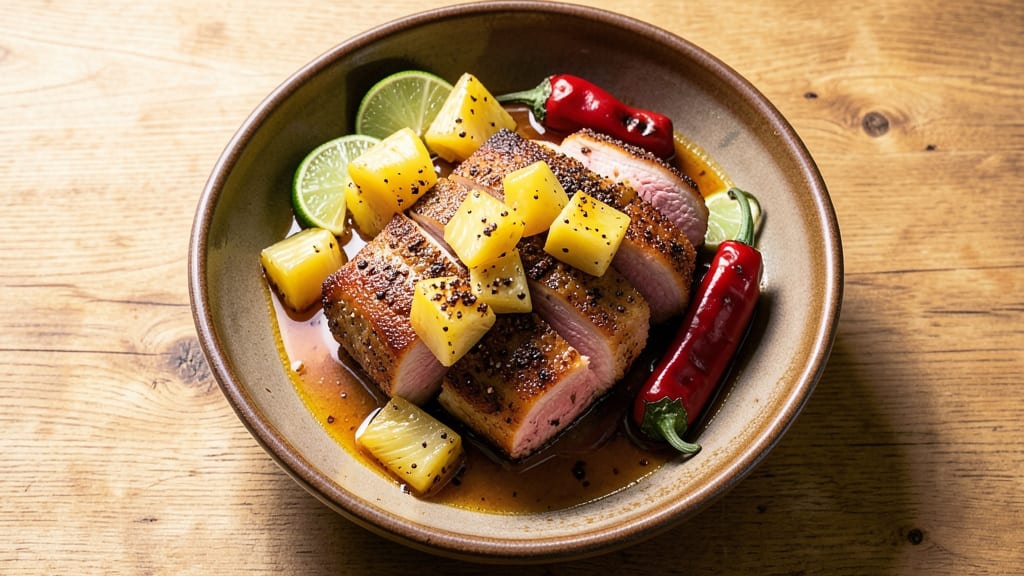
This Caribbean pork belly recipe brings bold island flavors to your table with a perfect balance of sweet pineapple and fiery Scotch Bonnet—just like the dishes I perfected during my time working with Caribbean pitmasters in Charleston.
The secret lies in marinating the pork belly overnight in a blend of jerk spices, citrus, and a touch of rum, which tenderizes the meat while infusing it with layers of flavor.
Trust me, this isn’t your average pork belly—it’s crispy on the outside, melt-in-your-mouth tender inside, and packed with that signature Caribbean heat and sweetness that’ll have everyone asking for seconds.
The magic happens when you slow-roast the pork belly until it’s fall-apart tender, then finish it with a quick sear in a screaming-hot pan to get that crispy bark. While it cooks, the marinade reduces into a sticky glaze that caramelizes beautifully, creating pockets of flavor in every bite.
I’ve tested this recipe countless times—whether for a Sunday family dinner or a backyard BBQ—and it never fails to impress, delivering restaurant-quality results with minimal fuss. The best part? You can make the marinade ahead of time, so the prep work is light, and the flavor development happens overnight.
What you’ll end up with is a dish that’s equal parts indulgent and vibrant—a sweet pineapple and Scotch Bonnet crisp that’s crispy, sticky, and impossible to resist.
The pineapple adds a bright, juicy contrast to the rich pork, while the Scotch Bonnet brings that signature Caribbean kick without overpowering the dish. Serve it with a side of festival (that’s Caribbean coleslaw for the uninitiated) or some roasted plantains to round out the meal.
This is the kind of dish that turns a simple weeknight dinner into a celebration.
Whether you’re cooking for a crowd or treating yourself to a special meal, this recipe delivers foolproof results every time. The technique is straightforward, but the flavor payoff is extraordinary—just like the dishes I’ve been perfecting for years in my kitchen. Let’s get cooking!
Ingredients for caribbean pork belly
Six ingredients transform pork belly into Caribbean gold—sweet, spicy, and crispy perfection.
| Ingredient | Amount | Notes |
|---|---|---|
| Pork Belly 🥓 | 3 lb | Skin-on, cut into 1-inch thick slices |
| Fresh Pineapple 🍍 | 1 ½ cups | Diced, with juice reserved |
| Scotch Bonnet Peppers 🌶️ | 2 whole | Seeds removed, finely chopped |
| Dark Brown Sugar 🍯 | ½ cup | Packed, for marinade |
| Jerk Seasoning 🌿 | ¼ cup | Homemade or store-bought blend |
| Fresh Lime Juice 🍋 | ½ cup | Freshly squeezed |
| Rum 🍹 | ¼ cup | Dark rum, 180-proof preferred |
| Extra-Virgin Olive Oil 🫒 | ¼ cup | For marinade and searing |
| Garlic Cloves 🧄 | 6 cloves | Minced for marinade |
| Fresh Ginger 🌿 | 1 tbsp | Grated, for marinade |
| Allspice Berries 🌶️ | 1 tsp | Crushed, for marinade |
| Salt 🧂 | 1 ½ tsp | Diamond Crystal preferred |
| Black Peppercorns 🌶️ | ½ tsp | Freshly cracked |
| Coconut Milk 🥥 | ½ cup | Full-fat, for basting |
The pork belly is non-negotiable—look for thick-cut pieces with good marbling at Whole Foods or your local butcher shop. I always ask for the belly to be cut into 1-inch slices for even cooking. Fresh pineapple is a must; canned won’t cut it—the texture and flavor are completely different. For the Scotch Bonnet peppers, handle with gloves—they’re hotter than habaneros. If you can’t find them, habanero with seeds removed works in a pinch, but tone down the amount. The jerk seasoning? Make your own if possible—store-bought blends often lack depth, but Epico or Schaller’s are solid shortcuts.
No dark rum? Substitute equal parts bourbon or even apple cider vinegar—it’ll still tenderize the meat, just without the boozy depth. The pineapple juice is key—reserve it all for the marinade; don’t drain it. Fresh ginger and allspice are non-negotiable for that authentic Caribbean punch, but if you’re missing one, double the other. For the coconut milk, full-fat is essential—light versions won’t give you that rich, creamy finish. And if you’re worried about the heat level, start with one Scotch Bonnet and adjust to taste.
Marinate the pork belly overnight—24 hours minimum—for maximum tenderness. Store the marinade in a sealed container in the fridge. The cooked pork belly keeps 3-4 days in the fridge, but it’s best served fresh. For make-ahead prep, cook the pork belly fully, then reheat in a 300°F oven until crispy again. The leftovers? Shred and use in tacos or fried rice—trust me, it’s even better the second time around.
Why You'll Love This Recipe
- One-Pan Magic: I swear by this—just sear the pork belly, toss in the pineapple chunks and Scotch bonnet, then let the jerk seasoning and brown sugar work their magic while you sip something cold. No chopping boards, no extra pots, just one sheet pan that smells like a Caribbean vacation.
- Sweet Heat Balance: That first bite? The crispy pork belly gives way to juicy meat, then boom—the pineapple’s tang cuts through the jerk’s smokiness while the Scotch bonnet adds just enough fire to make your taste buds dance. Honestly, I’ve never met a flavor combo this reliable.
- Weeknight Crowd-Pleaser: Between us, this is the dish I make when my in-laws show up unannounced or my book club wants to eat instead of talk about books. It’s hearty enough for a family dinner but fancy enough for guests—plus, the leftovers reheat like a dream (yes, even the pineapple stays juicy).
- Budget Stretch Star: Pork belly might sound fancy, but it’s actually my wallet’s best friend—one slab feeds four, and the jerk seasoning and brown sugar make it taste like you spent hours. I’ll be real: I’ve stretched this into tacos, fried rice, and even breakfast hash. Versatile? Absolutely.
Step-by-step instructions for Caribbean pork belly
This recipe transforms simple pork belly into a fragrant, caramelized masterpiece with tropical heat and sweetness.
Prepare the Pork Belly and Marinade
Cut the 3 lb pork belly into 1-inch thick slices and place them in a large bowl. In a separate bowl, combine the 0.5 cup dark brown sugar, 0.25 cup jerk seasoning, 0.5 cup fresh lime juice, 0.25 cup rum, 0.25 cup extra-virgin olive oil, 6 cloves minced garlic, 1 tbsp grated fresh ginger, 1 tsp crushed allspice berries, 1.5 tsp salt, and 0.5 tsp cracked black peppercorns. Whisk until the sugar dissolves completely.
Pour the marinade over the pork belly, ensuring every slice is well-coated. Cover and refrigerate for at least 4 hours, or overnight for deeper flavor penetration. The marinade should penetrate the meat, giving it that signature Caribbean sweetness and spice that will caramelize beautifully during cooking.
Sear the Pork Belly for Crispy Skin
Remove the pork belly from the marinade (reserve the marinade) and pat it dry with paper towels—this is crucial for achieving that coveted crispy skin. Heat a large oven-safe skillet over medium-high heat and add the slices of pork belly, skin-side down. Let them sear undisturbed for 8-10 minutes until the skin is deeply golden and crispy, and the fat begins to render.
Flip the slices and sear the other side for another 5-6 minutes. The pork belly should be firm to the touch and the skin should crackle when pressed. Transfer the skillet to a 400°F preheated oven and pour the reserved marinade over the pork belly. Baste occasionally with the marinade as it cooks, ensuring the flavors meld perfectly.
Braise with Pineapple and Scotch Bonnet
While the pork belly is in the oven, dice the 1.5 cups fresh pineapple (reserve the juice) and finely chop the 2 whole Scotch Bonnet peppers (seeds removed). Add the pineapple and Scotch Bonnet peppers to the skillet, spreading them evenly over the pork belly. Pour in the reserved pineapple juice and 0.5 cup coconut milk to create a luscious, slightly sweet braising liquid.
Cover the skillet with a lid or foil and bake for 1 hour and 15 minutes, or until the pork belly is fork-tender and the internal temperature reaches 195°F. The pineapple and Scotch Bonnet peppers will infuse the pork belly with a vibrant, tropical heat that balances the richness of the meat. The coconut milk adds a creamy depth that ties everything together.
Rest and Serve with Crispy Perfection
Remove the pork belly from the oven and let it rest for 10-15 minutes before slicing. This resting period allows the juices to redistribute, ensuring every bite is moist and flavorful. The skin should remain crispy, while the meat inside will be tender and infused with the marinade, pineapple, and Scotch Bonnet flavors.
Slice the pork belly into ½-inch thick pieces and serve immediately, spooning the caramelized braising liquid over the top. The contrast of the crispy skin, tender meat, and sweet-spicy sauce is what makes this dish truly unforgettable. Pair it with steamed rice or roasted plantains for a complete Caribbean feast.
Pro Tips For Making Caribbean Pork Belly
- CRACK THE BELLY FIRST: Skip the fight with a meat mallet—score the fat cap in a crosshatch pattern with a sharp knife before seasoning. This lets the jerk marinade and pineapple juices penetrate deeper, so you’re not left with a chewy center while the outside burns. (Yes, it looks messy, but the payoff is worth it.)
- CHAR THE PEPPERS DRY: Toss whole Scotch bonnets in a screaming-hot skillet for 30 seconds per side until their skins blacken slightly. This deepens their smoky heat without overwhelming the pork’s caramelized crust. Just don’t walk away—burnt peppers taste like ash, and no one wants that.
- BASTE WITH PINEAPPLE JUICE: Every 15 minutes during roasting, spoon the rendered pork fat and any accumulated pineapple juice back over the belly. The acid breaks down collagen faster than plain fat alone, and the sugar in the juice helps form a glossy, sticky glaze instead of a dry crust. (Pro move: Keep a small bowl of the juice on hand.)
- REST UNDER FOIL: After pulling the pork from the heat, tent it loosely with foil and let it sit for 10 minutes. This traps steam so the meat stays juicy while the fat firms up—critical when slicing against the grain. Cutting too soon turns your perfect belly into a greasy, stringy disappointment. (I learned this after serving a plate that looked like it lost a fight with a cheese grater.)
Make-ahead tips for leftovers
Marinade Prep Ahead
I always make the marinade first—it’s the flavor foundation. Combine all ingredients in a bowl and whisk until the dark brown sugar dissolves completely. Store it in an airtight container in the fridge for up to 3 days before using.
This gives you flexibility to marinate the pork belly whenever you're ready—no last-minute stress. 🌿
Pork Belly Prep
Cut the 3 lb pork belly into 1-inch thick slices and place them in a large bowl. Pour the marinade over the slices, ensuring full coverage. Cover and refrigerate for at least 4 hours, but overnight is ideal for maximum tenderness.
I often prep this the night before so the flavors meld perfectly while I sleep. ⏰
Slow-Cooking Strategy
For busy days, I recommend slow-cooking the pork belly ahead of time. After searing, transfer it to a 300°F oven instead of 400°F and cook for 2-3 hours until tender.
Once fully cooked, store it in an airtight container and reheat in a 400°F oven for 10-15 minutes to restore crispiness. The meat stays juicy and flavorful. 🔥
Sauce Make-Ahead
The braising sauce with pineapple and Scotch Bonnet peppers can be made separately. Simmer the diced pineapple, chopped peppers, and 0.5 cup coconut milk in a saucepan for 15 minutes, then cool and store in the fridge for up to 2 days.
When ready to serve, simply reheat and spoon over the pork belly. This shortcut saves time without sacrificing flavor. 🍍
Leftovers Reinvention
Shred leftover pork belly and use it in creative ways—like tacos, fried rice, or even a Caribbean-style breakfast hash. Store cooked pork belly in an airtight container in the fridge for 3-4 days or freeze for up to 3 months.
The crispy skin stays intact when reheated properly, making it perfect for meal prep. 💡
Equipment Shortcuts
No oven-safe skillet? Use a heavy-bottomed pot or Dutch oven. If you don’t have a meat thermometer, check doneness by inserting a fork—it should slide in easily when the pork belly is tender. I keep a Thermoworks Smoke thermometer handy for precision, but it’s not mandatory. 🌡️
Nutrition facts
Frequently asked questions
Can I substitute Scotch Bonnet peppers with something milder?
For a milder kick, use habanero peppers (remove seeds) or jalapeños—just halve the quantity. If you prefer no heat, omit the peppers entirely and add 1 extra tablespoon of grated ginger for depth. The pineapple will still provide natural sweetness to balance the dish.
How do I get the skin extra crispy without burning the meat?
Pat the pork belly completely dry before searing, then use medium-high heat and let it cook undisturbed for 8-10 minutes per side. The key is patience—don’t rush it! For extra crispiness, broil for 2-3 minutes at the end. I also recommend using a wire rack in a baking sheet to allow air circulation.
Can I make this recipe in a slow cooker?
Yes, but with adjustments. Sear the pork belly first, then place it in the slow cooker with the marinade, pineapple, and Scotch Bonnet. Cook on low for 6-8 hours or high for 4 hours. Add coconut milk at the end to avoid curdling. The skin won’t be as crispy, but the meat will be incredibly tender.
What’s the best way to reheat leftover pork belly?
Reheat in a 400°F oven for 10-15 minutes on a wire rack to restore crispiness. For microwave reheating, cover with a damp paper towel and heat in 30-second intervals to prevent drying. Leftovers stay fresh for 3-4 days in the fridge or 3 months frozen.
What sides pair best with this dish?
Serve with Caribbean festival (coleslaw), steamed rice, or roasted plantains for a complete meal. For extra flavor, add a side of black beans or grilled pineapple slices to complement the dish’s tropical notes.