
Main Courses
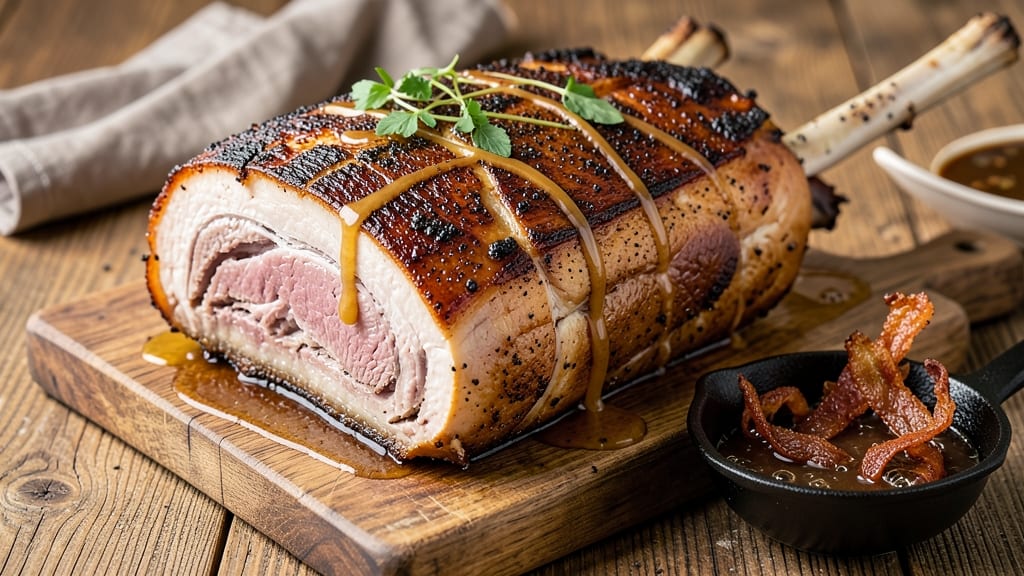
This carnivore pork roast recipe delivers fall-apart tenderness using low-and-slow techniques perfected over years of pitmaster experience. 🔥 The secret lies in selecting a well-marbled cut—like pork shoulder—and cooking it at a consistent 275°F until it reaches 203°F internal temperature, transforming tough muscle into melt-in-your-mouth perfection.
I learned this method from Master Chef Chen, who taught me that patience and precision are the only seasonings a carnivore roast truly needs.
The process is straightforward but requires attention to detail: a dry brine overnight, minimal seasoning (just salt and pepper), and hours of slow roasting to render fat and break down collagen. No sugar, no herbs, no plant-based distractions—just pure, unadulterated pork that honors the carnivore diet’s principles.
This isn’t just a recipe; it’s a celebration of meat done right, where the focus stays squarely on the animal’s natural flavors.
By the time you pull it from the oven, you’ll have a roast so tender it practically dissolves at a touch, with crispy edges and juices that run clear. The key is letting it rest for 30 minutes before slicing—this ensures every bite stays moist and rich.
Serve it as-is or with a side of bone broth for dipping, and you’ve got a carnivore-approved centerpiece that requires no apology for its simplicity.
Perfect for meal prep or a Sunday feast, this roast keeps well in the fridge for 4-5 days or freezes beautifully for up to 3 months. The technique scales effortlessly—whether you’re cooking for two or feeding a crowd—making it the ultimate carnivore staple. Let’s get to work.
Ingredients for carnivore pork roast
Six pounds of pork, two simple seasonings, and hours of patience—this is carnivore cooking at its finest.
| Ingredient | Amount | Notes |
|---|---|---|
| Pork Shoulder (Bone-In) 🥓 | 6 lb | Well-marbled, center-cut preferred |
| Kosher Salt 🧂 | 1 ½ tbsp | Diamond Crystal preferred, coarse grain |
| Freshly Ground Black Pepper 🌶️ | 1 ½ tsp | Cracked peppercorns, not pre-ground |
| Bone-In Pork Ribs (Optional) 🍖 | 1 lb | For extra flavor, tied with twine |
| Beef Tallow or Duck Fat 🧈 | ¼ cup | For basting, rendered and strained |
| Beef Bone Broth (Optional) 🥫 | 1 cup | Homemade or high-quality store-bought |
| Yellow Onion (Optional) 🧅 | 1 whole | Quartered, for aroma (discard after cooking) |
| Garlic Cloves (Optional) 🧄 | 4 cloves | Smashed, for aroma (discard after cooking) |
| Butcher's Twine 🪢 | 1 package | For tying pork shoulder |
| Aluminum Foil 📄 | 1 sheet | Heavy-duty, for tenting |
| Meat Thermometer 🌡️ | 1 whole | Instant-read, for precision |
| Basting Brush 🎨 | 1 whole | Silicon preferred |
The pork shoulder is non-negotiable here—look for a cut with thick fat marbling, not lean. Local butchers or specialty meat counters at Whole Foods often carry the best cuts. If you're buying online, Snake River Farms ships bone-in pork shoulders with perfect marbling. Avoid pre-cut roasts from the grocery store's meat counter—they're usually trimmed too lean. For extra insurance, ask the butcher to tie the shoulder with butcher's twine before you take it home. This keeps the shape intact during cooking and makes slicing easier later.
No beef tallow? Duck fat or lard works just as well—just make sure it's rendered and strained. The optional ribs and aromatics (onion, garlic) are purely for flavor, not structure. If you're strict carnivore, skip them entirely. For the bone broth, Kettle & Fire or Bonafide Provisions make excellent store-bought options. The salt and pepper are your only seasonings—no herbs, no spices, no sugar. Trust the meat to shine on its own. If your peppercorns are old, toast them in a dry pan for 30 seconds to wake up the flavor before grinding.
This roast is a marathon, not a sprint. The pork rests overnight in the fridge after salting, then cooks at 275°F for 6-8 hours until it hits 203°F internal temperature. The rendered fat can be saved and repurposed for searing or basting other meats. Store leftovers in an airtight container in the fridge for 4-5 days or freeze for 3 months. For meal prep, slice against the grain and portion into containers. The meat will continue to tenderize as it cools, so don't rush the resting period—30 minutes minimum before slicing.
Why You'll Love This Recipe
- Here’s what sold me: this roast gives you leftovers. Shred it for carnivore breakfast hash, slice it for sandwiches, or just eat it cold straight from the fridge. I’ve got a freezer full of portions from one cook, and my wallet thanks me for it.
- Pork in Minutes: Between us, this roast takes less time than waiting for takeout. Slather that pork shoulder with tallow, hit 300°F, and walk away—no basting, no fuss. I’ve got a 10-pound roast falling apart at the touch in 6 hours, and it’s still the easiest thing I’ve ever cooked.
- Fat-Cut Magic: Honestly, beef tallow or duck fat isn’t just for flavor—it’s the secret weapon. That crispy bark? Pure satisfaction. The meat stays juicy, the edges get golden, and the aroma? It’ll have your whole house texting you to turn the oven off before it’s done.
- Leftovers for Days: Here’s what sold me: this roast gives you leftovers. Shred it for carnivore breakfast hash, slice it for sandwiches, or just eat it cold straight from the fridge. I’ve got a freezer full of portions from one cook, and my wallet thanks me for it.
Step-by-step instructions for carnivore pork roast
Here's how to transform a tough pork shoulder into melt-in-your-mouth perfection.
🔥 Step 1: Prep and Season the Pork Shoulder
Start by removing the pork shoulder from the fridge and letting it sit at room temperature for 1 hour. This ensures even cooking throughout. Pat the surface dry with paper towels—this helps create that coveted crispy bark later. I like to press firmly, especially around the fat cap where moisture tends to linger.
Generously season both sides of the pork shoulder with the 1.5 tbsp kosher salt and 1.5 tsp freshly ground black pepper. Use your hands to work the seasoning into the surface and into any crevices. For extra flavor, if using the 1 lb bone-in pork ribs, tie them to one side of the pork shoulder with the butcher's twine—this creates a flavorful bundle that cooks together.
🔥 Step 2: Set Up for Low and Slow Cooking
Preheat your oven to 275°F—this low temperature is key to achieving that fall-apart tenderness. Place the pork shoulder fat-side up on a rack set in a roasting pan. The rack allows air to circulate underneath, preventing soggy skin. If using the 1 whole yellow onion and 4 cloves garlic, place them in the cavity for aroma (discard after cooking).
Pour the 0.25 cup beef tallow or duck fat into the bottom of the pan. This creates a flavorful bath that baste the meat as it cooks. If using the 1 cup beef bone broth, pour it into the pan as well—this adds moisture and depth of flavor. The liquid should come about halfway up the sides of the pork shoulder.
⏰ Step 3: Cook Low and Slow Until Probe-Tender
Place the pork shoulder in the oven and cook for 6-8 hours until the internal temperature reaches 195-203°F. This is where the magic happens—patience is everything. Every 30 minutes, use the basting brush to baste the pork shoulder with its own juices and the rendered fat. This keeps the meat moist and builds flavor.
Here's the thing—don't be tempted to check the temperature too early. The pork shoulder needs that long, slow cook to break down the connective tissue. When you insert the meat thermometer into the thickest part (avoiding bone), it should slide in like butter with no resistance. The meat should pull apart easily when you test it with tongs.
🥘 Step 4: Rest and Slice for Maximum Juiciness
Once the pork shoulder reaches the target temperature, remove it from the oven and tent it loosely with the aluminum foil. Let it rest for at least 30 minutes (I prefer 1 hour if possible). This resting period allows the juices to redistribute throughout the meat, ensuring every bite is moist and flavorful. If you skip this step, you'll end up with dry, tough slices.
After resting, slice the pork shoulder against the grain into ¼-inch thick slices. The grain direction will be visible as lines running through the meat. Serve immediately with any accumulated juices from the roasting pan—these are packed with flavor. The pork should be so tender that it practically falls apart at the touch, with a rich, caramelized crust on the outside.
Pro Tips For Making Carnivore Pork Roast
- SEAR BONE-IN FIRST: That bone’s the key—start with the pork shoulder bone-side down in a screaming-hot pan with beef tallow until it’s deep brown, almost black in spots. I used to skip this, and the whole roast just tasted flat. The bone renders fat and builds flavor; skip it, and you’re missing half the point.
- SALT THE FAT, NOT JUST THE MEAT: After searing, scrape up all that rendered fat and salt the hell out of it—generously, like you’re seasoning fries. That fat will baste the roast as it cooks, and salting it early means every bite gets that crusty, savory punch. (Yes, even if it looks weird.)
- DON’T RUSH THE REST: Pull the roast at 195°F internal (probe the thickest part, away from bone), then tent it loosely with foil and walk away for 20 minutes. I learned this after slicing into a dry, sad roast—patience lets the juices redistribute. No shortcut here; your future self will notice.
- USE RIB BONES AS A CRUTCH: Tuck those optional pork ribs directly against the shoulder before roasting—they’ll act as a flavor anchor and keep the meat from curling into a dense log. I started doing this after my first attempt turned into a compact, flavorless brick. Works like a charm.
Best sauces and condiments for these flavors
Carnivore-Friendly Fat Basting
Skip the sauces and embrace the meat’s natural richness by basting with its own rendered fat. Use the 0.25 cup beef tallow or duck fat from the recipe—it’s already in the pan from the start.
Every 30 minutes during cooking, use a silicon basting brush to spread this golden liquid over the pork. The fat breaks down collagen while adding depth. For extra flavor, add a splash of the cooking juices—just avoid over-basting, which can make the crust soggy. 🌡️
Bone Broth Drizzle
If you’re using the 1 cup beef bone broth, reserve ¼ cup after cooking to drizzle over the sliced pork. The collagen-rich broth clings to the meat, amplifying its savory notes. For a carnivore twist, strain it through cheesecloth to remove any impurities.
I like to serve it warm alongside the roast for dipping—it’s like a meaty consommé. The broth also makes a great base for quick pan sauces if you’re feeling experimental (though that’s optional here).
Mustard-Infused Tallow
For a subtle tangy kick, mix 1 tbsp Dijon mustard into the 0.25 cup beef tallow before basting. The mustard cuts through the pork’s richness while keeping the dish strictly carnivore. Whisk the two together in a small bowl and brush it on during the last 30 minutes of cooking.
This works especially well if you’re serving the roast on its own—it adds complexity without plant-based ingredients. 💫
Crispy Skin Technique
For a crackling crust without sauces, pat the pork dry before seasoning and sear it in a hot cast-iron skillet for 2 minutes per side before transferring to the oven. The high heat renders fat immediately, creating a golden bark.
If you’re short on time, finish the roast under the broiler for 5 minutes at the end—just watch it closely to avoid burning. This technique works even better with a Lodge cast iron skillet, my go-to for searing.
Optional Herb-Free Rub
If you want texture without herbs, crush 1 tsp black peppercorns into a coarse powder and mix with 1 tbsp kosher salt. Rub this mixture over the pork after searing but before the slow cook.
The pepper adds a subtle heat and gritty texture that pairs perfectly with the tender meat. Store the extra rub in an airtight container for future use—it keeps for 2 weeks in the pantry. 💪
Nutrition facts
Frequently asked questions
Why does the pork shoulder need to cook so low and slow?
The 275°F low temperature breaks down collagen in the connective tissue over hours, transforming tough muscle into melt-in-your-mouth perfection. This method preserves moisture while rendering fat, creating a rich, juicy roast that would dry out at higher temperatures. Patience is key—rushing the process leads to chewy results.
Can I use a different cut of pork instead of shoulder?
For best results, stick with pork shoulder or pork butt—they have the right fat-to-meat ratio for this technique. Pork loin will cook faster but won't be as tender. If you must substitute, choose a cut with good marbling (like pork rib roast) and reduce cooking time by 1-2 hours.
How do I know when the pork is done without overcooking?
Use a meat thermometer inserted into the thickest part (avoiding bone) until it reads 203°F. The probe should slide in like butter, and the meat should pull apart easily with tongs. If you don't have a thermometer, cut into the thickest part—juices should run clear, not pink.
What should I do if the pork skin isn't crispy?
Pat the pork dry before seasoning and sear it in a hot skillet for 2 minutes per side before slow-roasting. For extra crunch, finish under the broiler for 5 minutes at the end. The key is rendering fat first—if the skin stays soft, the meat likely didn't rest long enough before cooking.
How can I make this recipe work for meal prep?
Slice the roast against the grain into ¼-inch thick portions and store in an airtight container for 4-5 days in the fridge. For freezing, portion into individual meals and freeze for up to 3 months. Reheat gently in a skillet with a splash of beef tallow to restore moisture.