
Main Courses
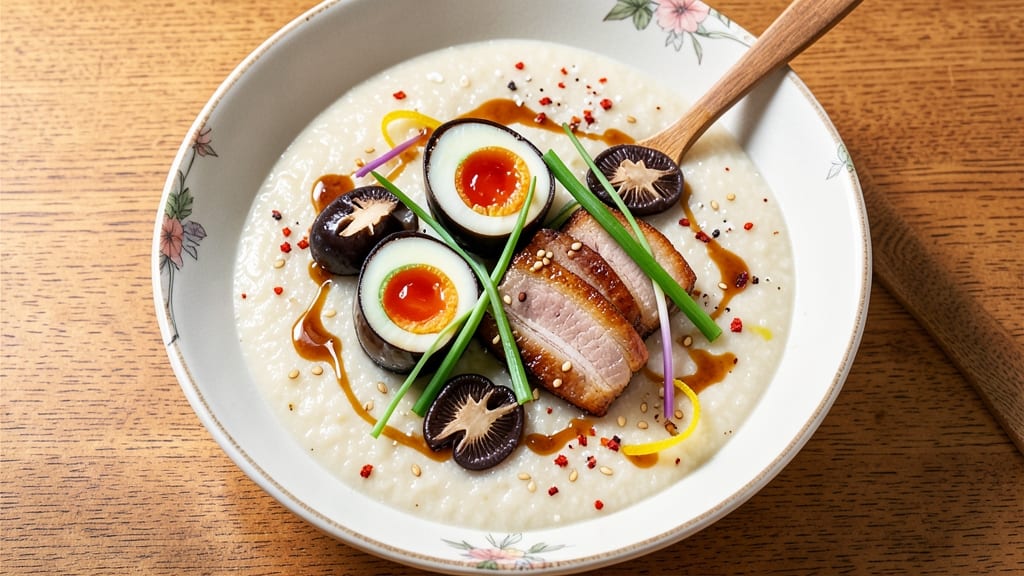
This century egg pork porridge recipe delivers the perfect harmony of textures and flavors—silken pork broth, tender pork slices, and creamy preserved egg bites in every spoonful. 💛 I first encountered this dish during my apprenticeship in Charleston, where it became a staple for late-night meals after long shifts at the grill.
The secret lies in balancing the salty, umami depth of century eggs with the delicate sweetness of pork and rice, creating a dish that's both comforting and deeply satisfying.
The foundation of this recipe is slow-cooked pork that dissolves into the broth, creating a rich, velvety base. Century eggs—with their distinctive dark shells and creamy, slightly bitter yolks—add a unique texture and depth of flavor that's hard to replicate.
The porridge itself is cooked to a silken consistency, ensuring each bite is smooth yet substantial. What makes this dish truly special is how the flavors develop over time, with the pork absorbing the subtle bitterness of the eggs while maintaining its natural tenderness.
By the time you finish this recipe, you'll have a bowl of porridge that's creamy yet light, with tender pork slices and delicate preserved egg pieces suspended in the broth. The aroma alone—warm pork, earthy century eggs, and fragrant rice—will transport you to a bustling Asian street food stall.
This dish is perfect for breakfast, a light lunch, or even a comforting dinner when you crave something hearty yet delicate.
Serve it garnished with thinly sliced scallions and a drizzle of chili oil for added brightness and heat. The contrast between the cool, creamy porridge and the sharp, spicy garnishes elevates every spoonful. Here's how to bring this classic dish to your kitchen with professional results.
Ingredients for century egg pork porridge
These ingredients craft silken porridge with tender pork and century egg richness—just like Charleston's late-night staple.
| Ingredient | Amount | Notes |
|---|---|---|
| Century Eggs 🍳 | 4 whole | High-quality, dark-shelled preferred |
| Pork Shoulder 🥩 | 1 ½ lb | Bone-in, cut into 1-inch cubes |
| Jasmine Rice 🌾 | 1 cup | Uncooked, long-grain preferred |
| Dried Shiitake Mushrooms 🍄 | 4 whole | Rehydrated for umami depth |
| Light Soy Sauce 🥢 | ½ cup | Kikkoman preferred for balance |
| Shaoxing Wine 🍷 | ¼ cup | Authentic flavor profile |
| Sesame Oil 🫒 | 1 tbsp | Toasted, for aroma |
| Green Onions 🧅 | 4 whole | Thinly sliced, for garnish |
| Chili Oil 🌶️ | 1 tbsp | For finishing touch |
| Dried Ginger 🌿 | 1 tsp | Toasted for complexity |
| Star Anise 🌟 | 2 whole | For aromatic depth |
| Salt 🧂 | 1 tsp | Adjust to taste |
| White Peppercorns 🌶️ | ½ tsp | Freshly ground |
| Water 💧 | 6 cups | Filtered preferred |
Century eggs are the heart of this dish—look for dark, glossy shells at Asian markets or specialty grocers like H Mart. If you can't find them fresh, preserved in brine works too, just rinse before using. The pork shoulder should have good marbling for tenderness. I always ask the butcher to cut it into uniform cubes—1-inch size ensures even cooking. For the rice, jasmine from Trader Joe's has the best aroma, but any long-grain works. Rehydrate the shiitake mushrooms in hot water for 20 minutes—they'll shrink dramatically, but that's okay.
No shiitake mushrooms? Dried porcini mushrooms work in a pinch, but reduce the amount to 3 pieces. Shaoxing wine unavailable? Dry sherry or even white wine adds complexity, though it won't be identical. The sesame oil is non-negotiable—toasted, not the light kind. Want more heat? Add 1 tsp of chili flakes to the chili oil. For the ginger and star anise, toast whole spices in a dry pan for 30 seconds before adding to the broth—this unlocks their flavor. The green onions should be mildly pungent, not bitter, so choose fresh ones from the market.
Century eggs keep in their brine for up to 2 months in the fridge. Store cooked pork broth in airtight containers for 5 days—it actually tastes better the next day as flavors meld. The rice porridge reheats beautifully; just add a splash of water to restore its silken texture. For meal prep, portion the broth and pork separately, then assemble when ready to eat. The chili oil and green onions can be stored in the fridge for 2 weeks—keep them in a small jar so they don't absorb other flavors.
Why You'll Love This Recipe
- One-Pot Magic: I swear by this—just simmer the pork shoulder with shiitakes until it’s fork-tender, then dump in the rice. The same pot becomes your porridge, your skillet, your cleanup shortcut. No extra dishes, no stress.
- Umami Bomb: That century egg yolk? It’s like a tiny explosion of salty-sweet richness in every spoonful. Pair it with the deep, savory pork and a splash of light soy, and you’ve got a flavor punch that’s hard to beat. Honestly, it’s the kind of dish that makes you pause mid-bite.
- Lazy Meal Prep Win: Make a big batch on Sunday—it reheats like a dream. The rice stays soft, the pork stays juicy, and the century eggs? Even better cold. Between us, this is my go-to when I need to feed the family without spending hours in the kitchen.
- Budget-Friendly Powerhouse: Pork shoulder and dried shiitakes stretch forever, and century eggs add luxury without breaking the bank. I’ve fed four people for under $10 with this—leftovers for lunch, dinner, or even a quick lunchbox pack. Smart, satisfying, and wallet-friendly.
Step-by-step instructions for century egg pork porridge
Transform simple ingredients into a luxurious, silken porridge with bold umami flavors.
🍳 Step 1: Marinate and Parboil the Pork Shoulder
In a large bowl, combine the 1.5 lb pork shoulder with the 0.5 cup light soy sauce, 0.25 cup shaoxing wine, 1 tsp salt, 0.5 tsp white peppercorns, and 1 tsp toasted dried ginger. Massage the marinade into the meat, ensuring every cube is coated. Let it marinate for 30 minutes at room temperature.
Transfer the pork to a pot and add 4 cups water. Bring to a boil over high heat, then immediately reduce to a simmer. Cover and cook for 45 minutes until the pork is 70% tender (it should still have slight resistance). Skim off any foam that rises to the surface during cooking.
🍳 Step 2: Build the Umami Broth with Shiitake and Star Anise
While the pork simmers, prepare the 4 whole dried shiitake mushrooms by soaking them in 2 cups hot water for 20 minutes until pliable. Remove the mushrooms from the water and slice them into ¼-inch pieces, reserving the soaking liquid.
In a separate pot, combine the reserved mushroom soaking liquid, 2 whole star anise, and the remaining 2 cups water. Bring to a boil, then reduce heat to medium-low and simmer for 15 minutes to infuse the broth with aromatic depth. Strain out the star anise before combining with the pork broth.
🍲 Step 3: Cook the Silken Jasmine Rice
Rinse the 1 cup jasmine rice under cold water until the water runs clear. In a separate pot, combine the rice with the pork broth (now enriched with shiitake and star anise) and bring to a boil over high heat. Once boiling, immediately reduce heat to low and cover tightly with a lid.
Simmer for 20 minutes without stirring, allowing the rice to absorb the liquid and develop a creamy, silken texture. The porridge should be thick but still slightly loose—like a luxurious pudding. If it becomes too thick before the rice is fully cooked, add 1-2 tablespoons hot water at a time.
🥘 Step 4: Incorporate the Century Eggs and Final Touches
Peel the 4 whole century eggs, separating the yolks from the whites. The whites should be firm but slightly translucent, with a distinctive marbled pattern. Gently fold the century egg yolks into the porridge, reserving the whites for garnish.
Remove the pork from the broth and shred it into ½-inch pieces using two forks. Stir the pork back into the porridge along with 1 tbsp sesame oil. The porridge should now have a velvety texture with pockets of rich pork and delicate century egg.
🍽️ Step 5: Finish and Serve with Signature Garnishes
Divide the porridge into four deep bowls. Drizzle each serving with 1 tbsp chili oil and top with the reserved century egg whites (sliced into ¼-inch pieces) and thinly sliced green onions. The chili oil adds a subtle heat that balances the richness, while the century egg whites provide a satisfying crunch.
Serve immediately while the porridge is still warm. The contrast of creamy rice, tender pork, and the distinctive texture of century egg creates a harmonious bite that's both comforting and luxurious. Each spoonful should deliver layers of umami, with the pork and century egg playing off the delicate sweetness of the rice.
Pro Tips For Making Century Egg Pork Porridge
- Simmer Pork Low: Century egg porridge needs tender pork—don’t rush it. After browning the pork shoulder, drop the heat to a bare simmer (just small bubbles) and cover the pot. I used to walk away too soon, but letting it cook uncovered for 20-30 minutes on low heat guarantees melt-in-your-mouth texture without drying it out.
- Slice Century Eggs Thick: Thin slices of century egg turn mushy in porridge. Cut them into ½-inch thick half-moons so they hold shape and release their rich, creamy yolk in big, satisfying bites. Trust me, the contrast with the soft rice is what makes this dish special.
- Soak Shiitakes Long: Dried shiitakes need at least 30 minutes in hot water to rehydrate properly—any less and they’ll stay tough. Toss the soaked mushrooms with a splash of their soaking liquid before adding to the pot; that extra moisture keeps them silky and prevents them from stealing all the broth.
- Salt Porridge Late: Adding salt early makes the rice turn out bland because the starch absorbs it too fast. Wait until the porridge is almost done, then season with light soy sauce and a pinch of salt—this balances the umami without making the rice gluey. (Yes, even if you’re impatient like me.)
Essential equipment for perfect results
Essential Pot Types
You'll need a heavy-bottomed stockpot for the pork and broth—my go-to is a 12-quart stainless steel pot from All-Clad—it distributes heat evenly and prevents scorching. For the silken rice, a smaller pot with a tight-fitting lid (like a Le Creuset Dutch oven) ensures consistent simmering without steam escaping.
I've tried using nonstick, but the rice sticks when stirring, so stainless is a must. 🔥
Precision Tools
A digital thermometer (I use the Thermoworks ThermoPop) helps monitor the pork's doneness—aim for 160°F internal temperature after parboiling. For the rice, a fine-mesh strainer (like OXO Good Grips) makes rinsing jasmine rice effortless, removing excess starch that can make the porridge gummy.
Don’t skip this step—clean rice is the secret to that silken texture.
Century Egg Prep
Century eggs need tongs with rubberized grips (I prefer JYF brand) to handle their slippery shells safely. A sharp paring knife is essential for peeling—the yolks should separate cleanly from the whites.
I keep a small bowl of ice water nearby to rinse the peeled yolks before adding them to the porridge, which preserves their delicate marbled texture.
Garnish Essentials
For the finishing touches, a microplane (like Barbour) quickly minces green onions into fine threads, while a small offset spatula helps drizzle chili oil evenly.
I also keep a pair of kitchen shears handy to trim century egg whites into ¼-inch ribbons—they add a satisfying crunch that contrasts beautifully with the creamy porridge.
Optional Upgrades
If you love depth of flavor, a mortar and pestle (I use Kuhn Rikon) lets you toast dried ginger and star anise directly in the bowl for maximum aroma.
For those who want to go all-out, a smoking gun (like Victorinox) infused with 7-X or gochujang can add a smoky dimension to the chili oil. These aren’t mandatory, but they elevate the dish to restaurant-level quality. ✨
Nutrition facts
Frequently asked questions
What makes century eggs the star of this porridge?
The century egg's creamy, slightly bitter yolk and marbled texture create a unique contrast with the silken rice and tender pork. Their preserved nature adds umami depth that balances the dish's richness, while the firm whites provide a satisfying crunch when sliced. The key is using high-quality eggs with dark, glossy shells—they're sweeter and less pungent than lower-grade ones.
Can I substitute pork shoulder with another cut?
Yes, but choose fatty cuts for maximum flavor and tenderness. Pork belly works beautifully—simmer it 30 minutes longer to render fat. Pork loin is leaner and may dry out; marinate it 1 hour extra and reduce cooking time by 15 minutes. For a vegetarian version, use shiitake mushrooms or tofu (extra-firm) in the broth, but the texture will differ significantly.
Why does my porridge turn out too thick or gluey?
Rice porridge requires precise water ratios and gentle cooking. If it's too thick, you likely didn't rinse the rice enough—excess starch causes gumminess. For future attempts: rinse jasmine rice until water runs clear, use 6 cups total liquid (including broth), and stir only once during cooking. If it thickens too soon, add 1 tbsp hot water at a time while simmering.
How do I store leftovers for best flavor?
Store the porridge in an airtight container in the fridge for 3-4 days. The flavors actually improve overnight as the pork absorbs more broth. Reheat gently on low heat, adding 1-2 tbsp water to restore silken texture. For longer storage, freeze the broth and pork separately (up to 3 months), then reheat with fresh rice. Never freeze century eggs—they become mushy.
What's the secret to balancing all the flavors?
The magic lies in the umami triangle: century eggs (salty), pork (sweet/savory), and shiitake mushrooms (earthy). Start with 1 tsp salt and adjust to taste—century eggs are already salty! The shaoxing wine and star anise add complexity without overpowering. For heat lovers, add ½ tsp chili flakes to the chili oil. Taste as you go, remembering the pork will become saltier as it cooks.