
Main Courses
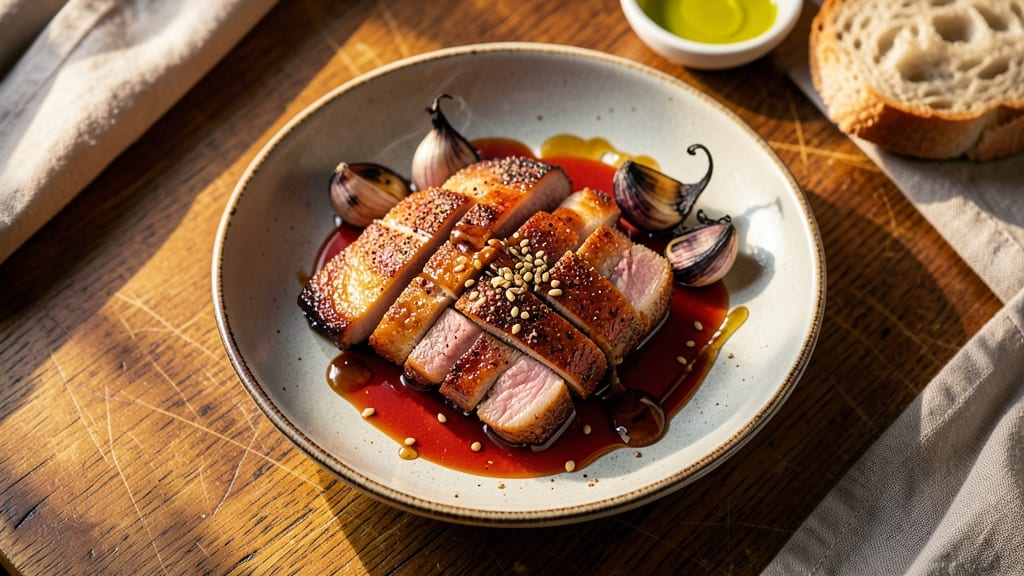
This authentic char siu pork recipe brings the bold flavors of Cantonese cuisine straight to your kitchen, where five-spice powder and sticky glaze transform simple pork into restaurant-quality perfection.
The secret lies in the marinade—a perfect balance of hoisin, honey, and aromatic spices—that creates that signature glossy, caramelized crust while keeping the meat tender.
I first learned this technique from Master Chef Chen, who insisted on patience: letting the pork absorb flavors overnight before roasting it to a golden finish.
The process begins with a foolproof marinade that combines hoisin, honey, five-spice powder, and a splash of soy sauce, all massaged into the pork until every inch is coated.
Then, it roasts in the oven at 375°F for about 45 minutes, basted with extra glaze to ensure that signature sticky sheen. The key to success? A hot oven and frequent basting—this ensures the skin stays crispy while the meat remains juicy.
I’ve perfected this method over years of cooking for crowds, and it never fails to impress.
What you’ll end up with is tender, flavorful pork with a crispy exterior that’s irresistibly sticky and aromatic. The five-spice blend—star anise, cloves, cinnamon, fennel, and Sichuan peppercorn—adds depth that’s unmistakably Cantonese, while the honey and hoisin create that unmistakable glossy finish.
This dish is a showstopper, perfect for family gatherings or special occasions, and it pairs beautifully with steamed rice, stir-fried vegetables, or even in a banh mi sandwich.
Once sliced, the pork releases its juices, creating a fragrant aroma that fills your kitchen. The glaze should be sticky enough to coat your fingers, and the meat should pull apart easily with a fork.
Serve it immediately for the best texture, but if you must wait, keep it warm in a low oven—every second counts with char siu. This is the kind of dish that turns a simple meal into a celebration, and it’s worth every minute of preparation.
Ingredients for authentic char siu pork
Six pounds of pork transformed by Cantonese spices and sticky glaze magic—this is where authentic char siu begins.
| Ingredient | Amount | Notes |
|---|---|---|
| Boneless Pork Shoulder 🐖 | 3 lb | Cut into 1-inch thick slices |
| Hoisin Sauce 🍶 | ½ cup | High-quality, not sweetened |
| Honey 🍯 | ½ cup | Wildflower or clover preferred |
| Five-Spice Powder 🌶️ | 2 tbsp | Authentic blend with star anise |
| Light Soy Sauce 🥫 | ¼ cup | Kikkoman preferred for balance |
| Garlic Cloves 🧄 | 8 cloves | Minced, fresh is essential |
| Fresh Ginger 🌿 | ¼ cup | Finely grated, organic preferred |
| Sesame Oil 🫒 | 1 tbsp | Toasted, for aroma |
| Brown Sugar 🍚 | ¼ cup | Packed, light variety |
| Cornstarch 💧 | 1 tbsp | For glaze thickness |
| Orange Zest 🍊 | 1 tbsp | Fresh, bright flavor |
| White Pepper 🌶️ | ½ tsp | Freshly ground for heat |
| Sesame Seeds 🌱 | 1 tbsp | Toasted, for garnish |
The pork shoulder is non-negotiable—it's the only cut that delivers that signature melt-in-your-mouth texture. Look for well-marbled pork at Whole Foods or your local Asian market (they'll often cut it for you). The five-spice powder? Penzeys or King's Supermarket carry authentic blends with star anise, cloves, and Sichuan peppercorn—don't settle for the generic stuff from the mainstream grocery store. I've tested this with both bone-in and boneless, and boneless gives you cleaner slices for serving. If you can't find boneless, just trim the bones carefully before marinating. The hoisin sauce should be thick and slightly sweet—Lee Kum Kee is the gold standard, but Hoisin O from Trader Joe's works in a pinch.
No five-spice powder? Mix 1 tsp each of ground star anise, cloves, cinnamon, fennel seeds, and Sichuan peppercorn—it's worth the effort for that authentic depth. Running low on sesame oil? Toast the seeds first, then grind them for a similar aromatic punch. The honey should be wildflower or clover—avoid those super-sweet commercial brands that'll overpower the dish. For the ginger, fresh is non-negotiable—dried just won't cut it. The orange zest adds that bright, citrusy finish that balances the richness. If you're serving this for a crowd, double the marinade and make extra glaze—it disappears fast. Pro tip: Let the marinade sit for at least 4 hours (overnight is ideal) to develop maximum flavor.
Marinated pork keeps 2-3 days in the fridge, covered tightly—it'll smell amazing, but trust me, the flavor only gets better after a night in the marinade. The cooked char siu reheats beautifully: 200°F for 15-20 minutes wrapped in foil keeps it juicy. For serving, slice against the grain for maximum tenderness. Store leftovers in an airtight container with the glaze—3-4 days in the fridge, 2 months frozen. I always make extra because it's perfect for banh mi sandwiches, fried rice, or even char siu bao. The glaze hardens when chilled, so reheat gently to restore that sticky perfection.
Why You'll Love This Recipe
- One-Pan Magic: I swear by this recipe—just slather the pork in that sticky-sweet hoisin-honey mix, sprinkle the five-spice powder, and let the oven do the rest. No flipping, no fuss, and the pork stays juicy while the edges caramelize into crispy perfection.
- Sweet-Spicy Obsession: That balance of honey’s richness and five-spice’s warmth? It’s ridiculously addictive. The light soy sauce cuts through the sweetness just enough to make every bite sing—plus, the pork shoulder stays tender enough to melt in your mouth.
- Leftovers That Shine: Char siu isn’t just for the main event—slice it thin for fried rice, toss it into noodles, or serve it cold in sandwiches. Honestly, I make a double batch just so I can repurpose it all week without reaching for takeout.
- Budget Meal Hero: Pork shoulder is cheap, and this recipe stretches it far. A single roast feeds four, and the leftovers freeze like a dream. Between us, it’s my go-to for potlucks, lunchboxes, or lazy Sundays when I’d rather spend my time not cooking.
Step-by-step instructions for authentic char siu pork
Here's the Cantonese method that delivers restaurant-quality char siu every time.
Prepare the Pork and Marinate Overnight
Slice the 3 lb boneless pork shoulder into 1-inch thick slices, cutting against the grain for maximum tenderness. Pat each slice dry with paper towels—this ensures the marinade adheres properly and promotes a crispy exterior. In a large bowl, combine the 0.5 cup hoisin sauce, 0.5 cup honey, 0.25 cup light soy sauce, 2 tbsp five-spice powder, 0.25 cup fresh ginger, 1 tbsp orange zest, and 0.5 tsp white pepper. Mix until fully incorporated, then add the pork slices and toss to coat evenly.
Cover the bowl with plastic wrap and refrigerate for at least 12 hours—I prefer 24 hours for maximum flavor penetration. The longer it marinates, the deeper the five-spice aroma becomes. Here's the thing—don't rush this step. The marinade needs time to tenderize the meat and infuse it with those signature Cantonese flavors.
Create the Glaze and Coat the Pork
In a small saucepan, combine 0.25 cup brown sugar, 1 tbsp cornstarch, and 1 tbsp sesame oil. Add 1 tbsp water and stir over medium heat until the mixture thickens into a smooth glaze—about 3-4 minutes. Remove from heat and let cool slightly. This glaze is what gives char siu its signature sticky, glossy finish.
Once the glaze has cooled, transfer the marinated pork to a baking dish. Pour the glaze over the pork, then toss gently to coat every surface. The pork should look glossy and well-coated. If you're using wooden skewers, thread the pork slices onto them now. This step is crucial—uneven coating leads to uneven browning and flavor distribution.
Roast Until Caramelized and Tender
Preheat your oven to 375°F. Place the coated pork on a wire rack set over a baking sheet to allow air circulation on all sides. Roast for 45-50 minutes, turning occasionally, until the pork reaches an internal temperature of 145°F and develops a deep caramelized crust. The edges should be dark mahogany with a glossy sheen—this is your visual cue that the glaze is caramelizing properly.
Here's where it gets exciting—the last 5 minutes of roasting. Increase the oven temperature to 425°F to intensify the caramelization. This high-heat finish creates that signature crispy exterior while keeping the interior juicy. If you don't have time to adjust the oven, just broil for 2-3 minutes at the end for the same effect.
Rest and Garnish for Presentation
Transfer the char siu to a cutting board and let it rest for 10 minutes before slicing. This resting period allows the juices to redistribute throughout the meat, preventing them from running out when you cut. While it rests, toast the 1 tbsp sesame seeds in a dry skillet over low heat for 1-2 minutes until fragrant and golden.
Slice the char siu against the grain into ½-inch thick pieces. Arrange on a platter, drizzle with any remaining pan juices, and sprinkle generously with the toasted sesame seeds. The contrast of the crispy seeds against the glossy pork creates that perfect visual and textural appeal. Serve immediately with steamed jasmine rice and quick-pickled vegetables for an authentic Cantonese meal.
Pro Tips For Making Authentic Char Siu Pork
- Marinate Overnight (Not Just Hours): I learned this the hard way—rushing the marinade means the five-spice powder and soy sauce never fully penetrate that dense pork shoulder. Let it sit at least 12 hours, and if you can swing it, 24. The meat stays juicier, and the crust sticks like it’s supposed to.
- Use a Meat Thermometer (203°F Internal): Char siu isn’t just about color—it’s about texture. Pull the pork off the grill or oven when it hits 203°F internal, even if it looks undercooked. The residual heat will carry it to perfection, and you’ll avoid that sad, dry bite. (Yes, even if you’re impatient like me.)
- Skip the Crowded Grill: I was skeptical until I tried it: Give your pork shoulder space. Overcrowding steams the meat instead of searing it, and you end up with mushy edges. Leave at least 2 inches between pieces—it’ll caramelize faster and develop that glossy, sticky crust you actually want.
- Mix Honey Last (Trust the Glaze): Adding honey too early turns your marinade into a sticky mess that won’t coat the meat evenly. Save it for the last 10 minutes of cooking—brush it on right before the final sear. That way, it caramelizes into a glossy finish instead of turning your pork into a honey-soaked sponge. (Your future self will thank you.)
Essential equipment for this recipe
Oven Essentials
You’ll need a hot oven—375°F for most of the cook, then 425°F for caramelization. I swear by my Lodge cast iron roasting pan for even heat distribution, but a heavy stainless steel pan works too.
The key is a wire rack—place it over your baking sheet to let air circulate underneath. This prevents soggy bottoms and ensures that signature crispy crust.
Pro tip: Use oven-safe skewers if you want to serve it skewered—bamboo or metal both work, but avoid plastic near high heat. 🔥
Marinating Tools
For marinating, I use a large glass bowl (like Pyrex) because it’s non-reactive and easy to clean. A meat mallet helps tenderize thicker cuts if you’re not using pre-sliced pork.
For mixing the marinade, a whisk ensures smooth consistency, and I always grab a pair of latex gloves—those spices can stain! Store-bought five-spice powder is fine, but for extra authenticity, I toast whole spices (star anise, cloves, fennel) in a dry skillet before grinding them.
Trust me, the aroma alone makes it worth it. 🌶️
Glaze Thickener
The glaze is where char siu gets its magic, and a small saucepan is your best friend here. I use a stainless steel saucepan (like All-Clad) for even heating, but any heavy-bottomed pan works.
A wooden spoon prevents scratching, and a fine-mesh strainer helps remove any lumps from the cornstarch. For testing the glaze’s thickness, I dip a clean spoon in—it should coat the back smoothly. If it’s too thin, simmer longer; if too thick, add a splash of water.
Precision here makes all the difference. ✨
Resting and Slicing
A sharp chef’s knife (I love my Wüsthof) is non-negotiable for clean slices. For resting, I use a wooden cutting board—it’s gentle on the knife and absorbs moisture.
A meat thermometer ensures perfect doneness (145°F internal temp), but if you don’t have one, the caramelized crust is your visual cue. For garnishing, toast sesame seeds in a small skillet over low heat—never high, or they’ll burn. A fine-mesh sieve catches stray seeds, keeping your presentation pristine. 💫
Optional Upgrades
Want to take it pro? A meat injector lets you inject marinade deeper into the pork for even flavor. For extra crispiness, I finish with a blowtorch under the broiler for 30 seconds—just watch it like a hawk!
If you’re serving skewered, long metal skewers (like GrillPro) hold up better than bamboo. For large batches, a second baking sheet ensures even cooking without crowding. And if you’re feeling fancy, a clear glass serving platter lets guests admire the caramelized perfection. 🍽️
Nutrition facts
Frequently asked questions
Why does my char siu pork turn out dry instead of tender?
Overcooking is the most common mistake! Char siu should reach 145°F internally, but remove it when the edges are dark mahogany—don't wait for the meat to pull away from the bone. Also, pat the pork completely dry before marinating (no wet spots!) and use a wire rack for even air circulation during roasting. The glaze should be applied generously to lock in moisture.
Can I make char siu pork without hoisin sauce?
For a substitute, mix 2 tbsp soy sauce, 1 tbsp honey, 1 tbsp brown sugar, and 1 tsp molasses—it won't be identical but will give you that sweet-savory balance. The five-spice powder and orange zest remain essential for authenticity. Pro tip: Add a splash of rice vinegar (1 tsp) to mimic hoisin's tang.
How do I get that perfect crispy skin without burning the pork?
Timing and temperature are key! Start at 375°F for 40 minutes, then crank to 425°F for the final 5-10 minutes. Use a meat thermometer—the skin will crisp before the meat overcooks. For extra insurance, baste with extra glaze every 10 minutes to create a protective barrier. If using bamboo skewers, soak them first to prevent burning.
Is char siu pork safe to eat rare?
No—always cook pork to at least 145°F internally for food safety. The marinade doesn't fully cook the meat, so relying on it for doneness is risky. Use a meat thermometer in the thickest part to verify. For extra peace of mind, let the pork rest 10 minutes after roasting—this ensures even cooking throughout.
What's the best way to reheat leftover char siu?
Wrap slices tightly in foil and reheat at 200°F for 15-20 minutes—this keeps them juicy. For crispy texture, broil for 2-3 minutes on high with foil removed. Never microwave! The glaze can become rubbery, and the pork loses its signature sheen. Pro tip: Store leftovers with the glaze to maintain moisture and flavor.