
Main Courses
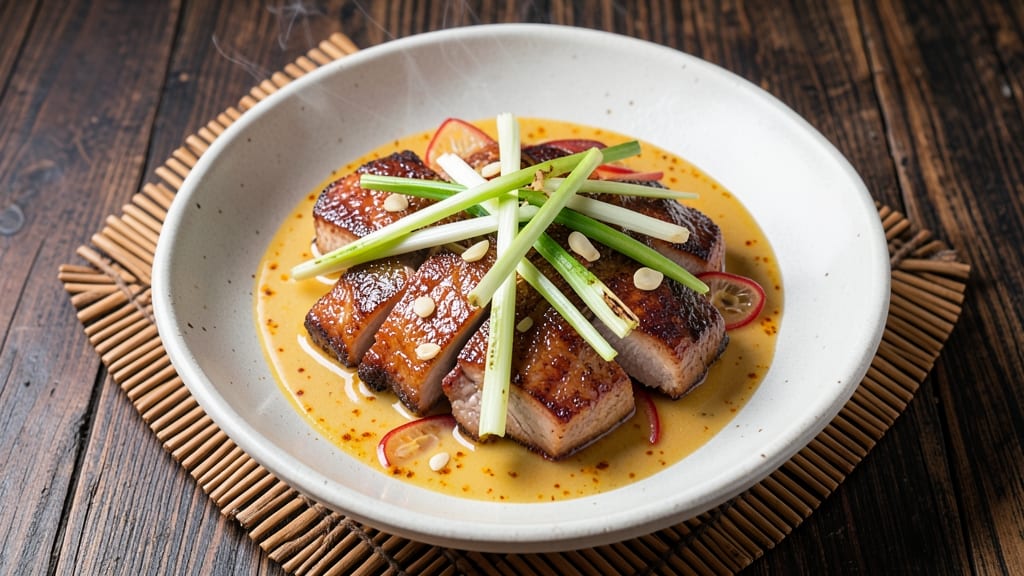
This Balinese pork belly recipe transports you to the aromatic streets of Ubud with just a few key techniques. The secret lies in balancing sweet coconut milk with bright lemongrass and turmeric—creating tender, caramelized pork that falls apart at the touch.
I first tasted this dish at a family-run warung in Bali, where the pork belly was slow-roasted over coconut husks until the skin crackled like autumn leaves. That memory still guides my approach today: patience and layering flavors.
The magic happens in the marinade, where coconut milk tenderizes the meat while lemongrass and galangal infuse it with citrusy depth. Unlike Western pork dishes, Balinese cooking relies on slow, moist heat to develop complex flavors without drying out the meat.
Here, we'll roast the pork belly until the edges are crispy and the interior melts like butter—restaurant-quality at home with just one pan and 3 hours of hands-off time.
What you'll end up with is pork belly so tender it practically dissolves on your tongue, with a caramelized crust that's irresistibly crispy. The aroma alone—warm coconut, earthy turmeric, and smoky lemongrass—will have your whole house smelling like Bali.
Serve it with steamed jasmine rice and a side of sambal for the full experience, or keep it simple with a fresh cucumber salad. This dish is worth every minute of waiting.
Between you and me, I've perfected this recipe after years of testing—including one memorable Thanksgiving where my pork belly disappeared before the table was set. The key is basting frequently with the cooking juices, which keeps the meat impossibly moist.
Trust me on this: once you try it, store-bought pork will never taste the same again. Let's get cooking!
Ingredients for balinese pork belly
Sweet coconut, fragrant lemongrass, and tender pork belly create an unforgettable Balinese feast.
| Ingredient | Amount | Notes |
|---|---|---|
| Pork Belly 🐖 | 2 lb | Skin-on, thick-cut preferred |
| Coconut Milk 🥥 | 1 ½ cups | Full-fat, canned for richness |
| Lemongrass Stalks 🌿 | 3 whole | Bruised, bottom 4 inches only |
| Galangal 🧅 | 1 piece | Substitute ginger if unavailable |
| Turmeric Powder 🌶️ | 1 tbsp | Fresh root preferred, grated |
| Garlic Cloves 🧄 | 6 cloves | Minced for marinade |
| Shallots 🧅 | 4 whole | Minced, or sub with onions |
| Brown Sugar 🍯 | ¼ cup | Light or dark, packed |
| Soy Sauce 🍶 | 2 tbsp | Dark soy for color depth |
| Fish Sauce 🍶 | 1 tbsp | Red Boat preferred |
| Lime Juice 🍋 | 2 tbsp | Freshly squeezed |
| Olive Oil 🫒 | 2 tbsp | For basting |
| Salt 🧂 | 1 tsp | Kosher or sea salt |
| Black Pepper 🌶️ | ½ tsp | Freshly ground |
| Jasmine Rice 🍚 | 1 ½ cups | Uncooked, for serving |
The pork belly is non-negotiable here—skin-on and thick-cut for that signature crackle. Most Asian markets carry it pre-sliced, but if you're at a regular grocery store, ask the butcher for a 2-pound slab. Costco or Whole Foods usually have it in stock. Fresh galangal is the secret weapon, but if you can't find it (common in the U.S.), ginger works in a pinch. Just don't skip it entirely—it's what gives this dish that authentic Balinese punch. The lemongrass should be vibrant green and firm to the touch. I always grab extra because it's used in so many dishes around here.
No galangal? Ginger plus a pinch of cardamom mimics the flavor profile surprisingly well. Running out of fish sauce? Soy sauce plus a splash of vinegar gets you close, though the umami won't be quite the same. The coconut milk can be light or full-fat, but full-fat gives that luxurious mouthfeel. For the brown sugar, I always use dark—it caramelizes better. Pro tip: Bruise the lemongrass and galangal with the side of your knife before adding to the marinade. This releases the oils and maximizes flavor. The pork belly skin should be scored in a diamond pattern before roasting for extra crispiness.
This dish tastes even better the next day, so make a double batch if you're feeding a crowd. The pork belly keeps 3-4 days in the fridge, wrapped tightly in parchment. For longer storage, freeze portions for up to 3 months. The marinade itself can be prepped a day ahead—just keep it refrigerated. When reheating, cover with foil and warm on low heat with a splash of water to keep it moist. Trust me, the leftovers are just as delicious as the first bite.
Why You'll Love This Recipe
- One-Pot Magic: I swear by this recipe when I’m too tired to wash dishes. The pork belly simmers right in the coconut milk with lemongrass and galangal—no extra pans, no fuss. Just slice, sear, and let it melt into golden perfection while you sip tea.
- Crave-Worthy Depth: That first bite? Rich, caramelized pork belly with a velvety coconut sauce, brightened by lemongrass and a whisper of turmeric’s warmth. It’s the kind of flavor that lingers long after the last forkful.
- Weeknight to Weekend: Make a big batch on Sunday—it reheats beautifully for lunches or dinner leftovers. (Yes, even my picky teenager asks for seconds.) The galangal’s zing cuts through the richness, so it never feels heavy.
- Budget-Friendly Luxury: Pork belly’s cheaper than you think, and coconut milk stretches generously. A single batch feeds four, and the leftovers? Even better the next day. Fancy dinner without the grocery-shock price tag.
Step-by-step instructions for Balinese pork belly
This aromatic pork belly transforms with tender, caramelized edges and a fragrant coconut-lemongrass sauce.
Prepare the Pork Belly for Maximum Flavor
Start by scoring the pork belly skin in a diamond pattern using a sharp knife, being careful not to cut into the meat. This creates crispy pockets while keeping the interior juicy. Pat the skin dry with paper towels—this ensures maximum crispiness when roasted. In a small bowl, mix the 1 tbsp turmeric powder, 1 tsp salt, and 0.5 tsp black pepper. Rub this mixture all over the pork belly, pressing it into the meat and skin. Let it sit at room temperature for 30 minutes while you prep the rest of the ingredients.
The turmeric not only adds color but also tenderizes the meat, while the salt helps draw out moisture for that perfect crisp. Don't skip this step—it's what gives this dish its signature golden hue and rich flavor. If you're using fresh turmeric root instead of powder, grate it finely and use the same amount.
Build the Aromatic Marinade and Sauce Base
In a food processor, combine the 3 whole lemongrass stalks (bruised and trimmed to 4 inches), 1 piece galangal (peeled and chopped), 6 cloves garlic, and 4 whole shallots. Pulse until finely minced but not pasty. Transfer this mixture to a bowl and stir in the 1.5 cups coconut milk, 2 tbsp soy sauce, 1 tbsp fish sauce, 0.25 cup brown sugar, and 2 tbsp lime juice. Mix well to combine—this will be both your marinade and sauce base.
Here's the thing—this marinade is where the magic happens. The galangal and lemongrass bring that authentic Balinese zing, while the coconut milk and fish sauce create depth. If you can't find galangal, ginger works in a pinch, but it won't be exactly the same. Taste the mixture now—it should be sweet, tangy, and slightly salty. Adjust with a pinch more sugar or fish sauce if needed.
Roast the Pork Belly to Crispy Perfection
Preheat your oven to 325°F. Place the pork belly fat-side up on a rack set inside a roasting pan. Pour half of the marinade mixture over the pork belly, reserving the rest for later. Roast uncovered for 2 hours, basting with the reserved marinade every 30 minutes. The pork is done when it reaches an internal temperature of 195°F and the skin is deep golden brown and crispy.
Don't rush this step—low and slow is key. The pork needs time to render its fat and become tender. If the skin starts to brown too quickly, tent it loosely with foil. The goal is crispy skin without burning. Real talk: this is the moment that matters. When you see that fat rendering and the skin developing a beautiful caramelized crust, you'll know you're on the right track.
Simmer the Sauce and Finish the Pork
Once the pork is cooked, remove it from the oven and let it rest for 10 minutes. In the same roasting pan, increase the oven temperature to 400°F. Place the pork belly back in the oven, fat-side up, and roast for an additional 10-15 minutes to crisp the skin further. Meanwhile, pour the remaining marinade into a saucepan and bring to a simmer over medium heat. Let it reduce for 5-7 minutes until slightly thickened and fragrant.
This final crisping step is crucial—it takes the pork from good to spectacular. While the pork finishes, the sauce reduces to coat the back of a spoon. You'll smell that incredible aroma of coconut, lemongrass, and caramelized sugar. If the sauce is too thick, add a splash of water or coconut milk to loosen it. The sauce should be glossy and cling to the pork when you slice it.
Serve with Jasmine Rice and Garnish
Slice the pork belly into ½-inch thick pieces against the grain for maximum tenderness. Arrange the slices on a platter and spoon the reduced sauce over the top. Serve immediately with 1.5 cups cooked jasmine rice on the side. Garnish with extra lime wedges and fresh cilantro if you like. The contrast of the crispy skin, tender meat, and fragrant sauce over fluffy rice is what makes this dish truly special.
Each bite should deliver a perfect balance of sweet, savory, and umami flavors. The pork belly should be melt-in-your-mouth tender with a crispy exterior, while the sauce adds a rich, aromatic finish. Don't forget to save some of that delicious sauce for drizzling over your rice—it's the perfect way to use up every last drop of flavor.
Pro Tips For Making Balinese Pork Belly
- CRACK THE BELLY FIRST: Pork belly’s fat renders better when scored in a diamond pattern—about 1/4-inch deep. I used to skip this and ended up with uneven crispiness, so don’t be shy with the knife. A sharp one makes this faster and cleaner.
- BLEND GALANGAL ROUGH: No food processor? Grate it fresh with a microplane—just don’t go overboard. Too fine, and it turns bitter. I learned this after one batch tasted like a spice cabinet disaster. Aim for coarse shreds, like matchsticks, and toss them in whole.
- SIMMER LOW AND SLOW: This isn’t a race. After the initial sear, drop the heat to a bare simmer (think tiny bubbles) and let that pork belly melt into the coconut milk for at least 45 minutes. Rushing turns the sauce grainy and the meat dry—trust the process.
- RESERVE COCONUT MILK: Strain the cooked sauce through a fine-mesh sieve before serving. The leftover solids add body, but they’re not pretty on the plate. I used to ignore this, but now I save about 2 tablespoons of the thickened milk to swirl in at the end—it looks polished and tastes richer.
Dietary considerations for these flavors
Gluten-Free Adaptations
This recipe is naturally gluten-free, thanks to its focus on coconut milk, lemongrass, and fresh herbs.
The marinade and sauce rely on soy sauce and fish sauce, but if you need to avoid gluten entirely, swap the 2 tbsp soy sauce for 2 tbsp gluten-free tamari and use a gluten-free fish sauce like Red Boat Gluten-Free.
Always double-check labels, as some brands may contain hidden gluten. 🌱
Vegetarian Substitutes
For a vegetarian version, replace the pork belly with extra-firm tofu or king oyster mushrooms. Press the tofu to remove excess water, then marinate it in the same coconut-lemongrass mixture for 4-6 hours to absorb the flavors.
Roast at 375°F for 25-30 minutes, basting occasionally. The mushrooms should be sliced into thick strips and roasted until tender and golden. Serve with the same sauce and jasmine rice for a satisfying plant-based meal.
Dairy-Free Considerations
This recipe is already dairy-free, making it perfect for those avoiding lactose or following a vegan diet. The coconut milk provides richness without dairy, and the marinade relies on umami-rich ingredients like fish sauce and soy sauce.
If you're using a vegan fish sauce, ensure it's free from animal-derived additives. Garnish with fresh herbs like cilantro or Thai basil to add extra vibrancy and freshness.
Allergen-Friendly Adjustments
For nut allergies, ensure your coconut milk is nut-free (some brands process in facilities with nuts). If you're allergic to shellfish, verify that your fish sauce is shellfish-free—Red Boat and Tiparos brands are typically safe.
For a completely shellfish-free version, replace the fish sauce with 1 tbsp additional soy sauce and 1 tbsp apple cider vinegar to mimic the umami depth. Always check ingredient labels to avoid cross-contamination risks.
Low-Sodium Options
To reduce sodium, cut the soy and fish sauce in half and add 1 tbsp coconut aminos (a lower-sodium alternative) to maintain flavor. You can also boost umami with 1 tsp mushroom powder or 1 tbsp nutritional yeast.
Taste the marinade before using it to ensure the flavors are balanced—adjust with a pinch of salt if needed. This approach keeps the dish flavorful while lowering sodium content significantly.
Keto-Friendly Tweaks
This recipe aligns well with keto principles, as it’s rich in healthy fats from coconut milk and pork belly while being low in carbs.
Skip the jasmine rice and serve the pork belly with a side of cauliflower rice or a fresh cucumber salad tossed in lime juice and olive oil.
The sauce’s natural sweetness from brown sugar can be reduced by half or replaced with a sugar-free alternative like erythritol if strict adherence to keto is required.
Nutrition facts
Frequently asked questions
Can I make this Balinese pork belly recipe with regular pork chops instead?
This recipe is specifically designed for pork belly to achieve that signature crispy skin and melt-in-your-mouth tenderness. Pork chops would cook much faster and wouldn't develop the same rich, caramelized flavor. If you're set on using chops, try thinly sliced boneless pork shoulder marinated overnight instead—it'll give you closer results to the texture we're aiming for.
How do I know when the pork belly is fully cooked?
Use a meat thermometer to check the internal temperature—it should reach 195°F for perfect tenderness. The skin should also be deep golden brown and crispy, while the meat will pull apart easily with a fork. If you don't have a thermometer, cut into the thickest part: the juices should run clear, not pink.
What's the best way to reheat leftovers?
Warm leftovers in a 350°F oven for 15-20 minutes, covered with foil to retain moisture. For a quick fix, use the microwave on medium power for 1-2 minutes with a splash of water or coconut milk to prevent drying. The skin won't be as crispy as fresh, but the meat stays juicy and flavorful.
Can I substitute regular ginger for galangal?
Yes, but it won't be exactly the same—galangal has a citrusy, peppery flavor that ginger lacks. For the closest match, use 1 piece ginger plus 1/4 tsp ground cardamom. If you're in a pinch, just use ginger and add a pinch of black pepper to mimic some of galangal's complexity.
Why does my pork belly turn out dry?
Overcooking is the most common culprit—pork belly needs low and slow heat to render fat properly. Always cook to 195°F internal temp and baste frequently. Another reason could be skipping the rest time after roasting. Let it rest 10 minutes before slicing to redistribute juices.