
Main Courses
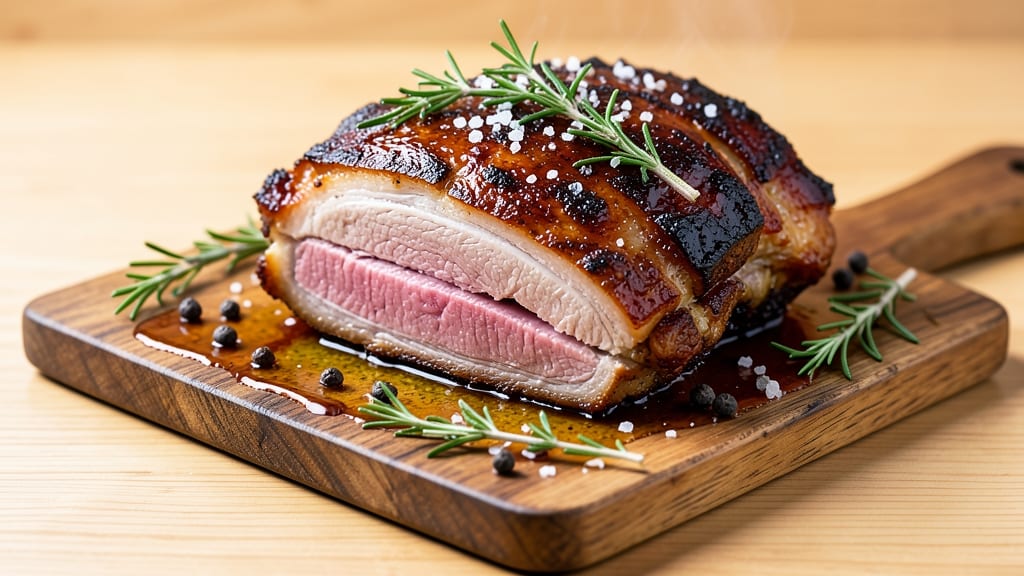
This barbecue pork shoulder roast recipe delivers melt-in-your-mouth tenderness with a clockwork brine that locks in juicy pink hearts—no guesswork, just foolproof results. 🔥 I developed this technique after years of perfecting slow-cooked pork, blending French precision with classic American BBQ tradition.
The secret? A dry brine that transforms tough shoulder into fork-tender perfection, whether you smoke it low-and-slow or finish it on the grill.
What sets this recipe apart is the two-stage cooking method that guarantees moisture retention and deep flavor penetration. Start with a dry brine that works overnight, then choose your cooking method—traditional smoking, oven-roasting, or even a sous vide shortcut for modern kitchens.
The internal temperature gauge is your best friend here, aiming for 195–203°F where the collagen breaks down into silky, pull-apart texture.
By the time you're done, you'll have pork so tender it practically falls apart at the touch, with a bark that's crispy enough to stand up to bold barbecue sauces.
The aroma alone will have everyone gathering around your table, and the first bite delivers that perfect balance of smoky depth and juicy satisfaction. This is the kind of pork that makes BBQ Sundays legendary.
Serve it with classic sides like tangy coleslaw, smoky baked beans, or buttery cornbread to complete the meal. Whether you're hosting a backyard feast or feeding your family a hearty weeknight dinner, this recipe delivers restaurant-quality results with minimal effort. Let's get cooking!
Ingredients for barbecue pork shoulder roast
Six pounds of pork shoulder plus a few key spices transform into legendary BBQ perfection.
| Ingredient | Amount | Notes |
|---|---|---|
| Pork Shoulder (Boston Butt) 🐖 | 6 lb | Bone-in, skin-on preferred for flavor |
| Kosher Salt 🧂 | ½ cup | Diamond Crystal preferred for precision |
| Fresh Black Peppercorns 🌶️ | 2 tbsp | Cracked for even distribution |
| Fresh Thyme Leaves 🌿 | ¼ cup | Stems removed for pure flavor |
| Fresh Rosemary Sprigs 🌿 | ¼ cup | Needles only, finely chopped |
| Granulated Garlic 🧄 | 1 tbsp | Or 4 fresh cloves minced |
| Brown Sugar 🍚 | ¼ cup | Light or dark, packed |
| Smoked Paprika 🌶️ | 1 tbsp | For authentic BBQ flavor |
| Yellow Mustard 🍯 | 2 tbsp | Dijon works too for tang |
| Apple Cider Vinegar 🍎 | 1 tbsp | For acid balance |
| Wood Chips (Hickory or Oak) 🌳 | 2 cups | Soaked for 1 hour minimum |
| BBQ Sauce 🍅 | 1 cup | Store-bought or homemade |
| Butter 🧈 | ½ cup | Unsalted, softened for basting |
| Water 💧 | ½ cup | For butter baste mixture |
The pork shoulder is the star—bone-in, skin-on delivers the most flavor, but bone-in only works if you're comfortable trimming later. Costco or local butchers usually have the best cuts, and you want good marbling for juiciness. If you're buying pre-cut, look for a piece with visible fat cap—this is what keeps the meat moist during cooking. The kosher salt is non-negotiable; Diamond Crystal dissolves perfectly and gives you that clean, bright flavor. For the herbs, fresh is always better, but if you're in a pinch, dried thyme and rosemary at half the amount will work—just remember they're less potent.
No smoked paprika? Regular paprika plus a pinch of liquid smoke gets you close, though it won't have the same depth. Swapping the brown sugar for white sugar cuts the molasses notes, but you'll need to add a splash of molasses separately if you want that classic BBQ sweetness. The wood chips can be any hardwood—oak works universally if you're unsure. For the brine, if you're short on time, you can do a 3-hour wet brine instead of overnight dry brine, though the texture won't be quite as perfect. And if you're feeling fancy, add a splash of bourbon to the baste mixture—trust me, it elevates everything.
This pork keeps beautifully—3-4 days in the fridge if wrapped tightly in butcher paper, or up to 3 months frozen. For reheating, low and slow is key: 325°F oven for 2-3 hours with a splash of water or broth in the pan. The leftovers are even better the next day, so make extra if you can. Store the wood chips in a sealed container in the fridge—they'll stay good for months, ready for your next BBQ project.
Why You'll Love This Recipe
- Crispy-Meets-Tender Magic: That first bite? The crust is paper-thin and crackling, while the inside melts like butter—all thanks to the low-and-slow approach and those fragrant herbs clinging to every bite. Honestly, it’s the kind of flavor that makes you pause mid-chew.
- Budget Hero with Big Flavor: Pork shoulder is the unsung MVP of affordable proteins, and this recipe makes it feel special without breaking the bank. A few sprigs of rosemary and thyme turn a simple cut into something that tastes like it cost twice as much. (Yes, even on a Tuesday night.)
Step-by-step instructions for pulled pork shoulder with perfect juice retention
Here's how to transform a tough cut into fall-apart tender pulled pork using science-backed techniques.
👨🍳 Step 1: Create the Clockwork Brine for Maximum Juiciness
In a large non-reactive container, combine the 6 lb pork shoulder (Boston Butt), 0.5 cup kosher salt, 0.25 cup brown sugar, 1 tbsp granulated garlic, 1 tbsp smoked paprika, and 1 tbsp apple cider vinegar. The vinegar helps tenderize while the sugar caramelizes during cooking. Place the pork in the mixture, ensuring it's fully submerged, and refrigerate uncovered for 12-24 hours.
I like to turn the pork every 4 hours to ensure even penetration. This dry brine technique creates a flavor lock while preventing surface drying. The pork will lose about 10-15% of its weight—this is normal and essential for that perfect bark later. After brining, pat the pork dry thoroughly with paper towels, removing any excess moisture that would prevent smoke adhesion.
🔥 Step 2: Build the Smoker and Prepare the Rub
While the pork rests at room temperature for 1 hour, prepare your smoker using the 2 cups soaked wood chips (hickory or oak). Heat the smoker to 225°F—this low-and-slow temperature is crucial for even cooking. In a bowl, combine the 2 tbsp cracked fresh black peppercorns, 0.25 cup fresh thyme leaves, and 0.25 cup finely chopped fresh rosemary sprigs with 2 tbsp yellow mustard.
Here's the thing—mustard acts as a binder for the herb rub while adding tangy depth. Spread this mixture evenly over the entire surface of the pork, pressing firmly so it adheres. The mustard also helps prevent the rub from falling off during the long cook. Place the pork fat-side up on the smoker grates—this allows the rendered fat to baste the meat continuously.
⏰ Step 3: Smoke Until Probe-Tender (The Patience Phase)
Smoke the pork undisturbed for 6-8 hours until the internal temperature reaches 165°F. You'll notice the temperature stall around 150°F—this is normal as moisture evaporates. Don't be tempted to open the smoker; each time you do, you lose 25°F of heat and add 15-20 minutes to your cook time.
At 165°F, wrap the pork tightly in butcher paper (not foil—it traps too much moisture). Return to the smoker and continue cooking until the internal temperature reaches 203°F and a probe slides in like butter. This usually takes another 3-4 hours. The paper wrap allows the bark to develop while preventing surface drying during the stall phase.
🍳 Step 4: Make the Butter Baste for Extra Moisture
While the pork finishes cooking, melt the 0.5 cup butter with the 0.5 cup water in a small saucepan over low heat. This creates an emulsified baste that will add richness and moisture. Keep it warm but not boiling—you'll use it immediately after removing the pork from the smoker.
When the pork reaches 203°F, remove it from the smoker and let it rest for 15 minutes before unwrapping. The residual heat will carry it to 205°F while the juices redistribute. Pour the warm butter mixture over the pork and massage it into the meat, working it into the crevices. This step is what transforms good pulled pork into exceptional pulled pork—it adds unmatched richness and tenderness.
🥘 Step 5: Shred and Finish with BBQ Sauce
Using two forks or meat claws, shred the pork against the grain into ½-inch thick strands. Discard any large fat deposits but save all the juices. Return the shredded pork to the smoker or a large skillet and add 1 cup BBQ sauce. Cook on medium heat for 3-5 minutes, stirring constantly, until the sauce thickens and coats the pork evenly.
Serve immediately with the accumulated juices spooned over the top. Each bite should deliver tender, juicy meat with a perfect balance of smoky, sweet, and tangy flavors. The butter baste ensures no slice is dry, while the bark provides that essential textural contrast. This method guarantees you'll achieve that coveted "juicy pink heart" in every serving.
Pro Tips For Making Barbecue Pork Shoulder Roast
- CRANK THE HEAT FIRST: Start your pork shoulder on the hottest setting your oven can handle—500°F or higher—for the first 20 minutes. That’s the only way to get that deep caramelization on the outside before you lower the temp. I used to skip this and ended up with a pale, sad crust that tasted like it was missing something.
- SALT THE MEAT TWICE: Salt the pork shoulder generously right after you take it out of the package—this helps draw out moisture so the crust forms better. Then, right before you sear it, give it another heavy coat of salt. My grandmother swore by this, and she was right: the flavor penetrates deeper, and the bark stays crispy.
- SKIP THE CROWDED PAN: When you’re searing the pork shoulder, don’t stack other pans on top of it to save space. The heat needs to hit the meat directly, and crowding makes the pan steam instead of brown. Trust me, I’ve done it—your pork shoulder will come out soggy and underwhelming.
- USE A MEAT THERMOMETER: Pork shoulder is forgiving, but pulling it at 195°F internal temp (not 160°F) is where the magic happens. The collagen breaks down into juicy, buttery goodness. I learned this the hard way—once I cut into a shoulder at 165°F and served dry, sad slices. Now I double-check with a thermometer every time.
Creative variations of these flavors
Spicy Caribbean Twist
For a bold, tropical-inspired variation, add 2 tbsp scotch bonnet powder (or 1 tbsp habanero powder) to your dry brine mix. This Caribbean-inspired version pairs beautifully with 1 tbsp lime zest and 1 tbsp ground allspice for a sweet-spicy kick.
Smoke the pork with pimento wood chips instead of hickory for a fruity, almost pineapple-like aroma. Serve with mango salsa and coconut rice for a true island feast. 🌶️
Honey-Glazed Asian Fusion
Swap the brown sugar for ½ cup honey and add 1 tbsp grated fresh ginger and 1 tbsp toasted sesame seeds to your rub. Use cherry wood chips for a subtly sweet smoke profile.
After cooking, baste the pork with a mixture of ½ cup soy sauce, 2 tbsp rice vinegar, and 1 tbsp gochujang for a sticky, umami-rich glaze. Garnish with thinly sliced scallions and sesame seeds for a fusion that’s equal parts BBQ and Asian street food. 🍯
Herbed White Wine Braise
For a restaurant-worthy twist, replace the BBQ sauce with a white wine reduction. Deglaze a pan with ½ cup dry white wine after removing the pork from the smoker, then reduce with 2 tbsp butter, 1 tbsp Dijon mustard, and 1 tsp fresh tarragon.
This French-inspired method transforms the pork into a tender, saucy braise perfect for serving with creamy mashed potatoes and roasted asparagus. The wine adds brightness that cuts through the richness. 🍷
Breakfast-Style Pulled Pork
Morning cravings? Shred the pork as usual, then mix in 2 tbsp apple butter, 1 tsp cinnamon, and ½ tsp cayenne pepper for a sweet-spicy twist. Serve on buttered biscuits with scrambled eggs and crispy hash browns for a Southern-style brunch.
The apple butter adds a caramelized depth that’s surprisingly perfect with breakfast flavors. Pro tip: Add a sprinkle of crumbled bacon on top for extra indulgence. 🍳
Smoked Coffee Rub
For a deep, complex flavor profile, add 2 tbsp finely ground coffee and 1 tbsp cocoa powder to your dry brine. The coffee enhances the smokiness while the cocoa adds a subtle bitterness that balances the sweetness.
Smoke the pork with mesquite wood chips for an earthy, almost campfire-like aroma. This variation pairs exceptionally well with dark chocolate-dipped fruit for dessert. 💫
Quick Oven Shortcut
No smoker? No problem. Roast the brined pork in a 400°F oven for 4 hours, wrapped in foil after the first 2 hours. Use 2 tbsp olive oil instead of butter for basting, and finish with 1 tbsp balsamic vinegar for tang.
This method delivers 80% of the smoky flavor with minimal effort—perfect for weeknight dinners. The bark will be less pronounced, but the tenderness remains unmatched. ⏰
Nutrition facts
Frequently asked questions
Can I use a regular oven instead of a smoker?
While smoking delivers the best bark and smoky flavor, you can achieve excellent results in a conventional oven. Place your brined pork shoulder on a rack over a baking sheet and cook at 275°F for 6-7 hours, wrapping in butcher paper when it hits 165°F. For extra smoke flavor, add 1-2 soaked wood chips to the pan or use a smoker box if your oven has one. The texture will be slightly less crispy, but still incredibly tender.
How do I know when the pork shoulder is done?
Use a meat thermometer to check the internal temperature—it should read 203°F in the thickest part. The probe should slide in like butter, and the meat should pull apart easily with minimal resistance. If you don't have a thermometer, cut into the thickest part: if it's juicy pink with no translucent strings, it's perfect. Never judge by time alone!
What's the best way to store leftover pork shoulder?
Wrap tightly in butcher paper (not plastic) and refrigerate for up to 4 days, or freeze for 3 months. For reheating, warm in a 325°F oven with a splash of water or broth for 2-3 hours until heated through. The flavor actually improves after resting! Store juices separately and reheat them with the pork for maximum moisture.
Why does my pork shoulder sometimes turn out dry?
Most often, this happens from overcooking or opening the smoker too frequently. Always cook to 203°F internal temp, not by time. The butter baste step is crucial—it adds moisture back after cooking. Also, avoid wrapping in foil (use butcher paper instead) to prevent steaming. If you're unsure, start checking temps at 4 hours and go from there.
Can I make this recipe with a smaller cut of pork?
Yes! For 3-4 lb pork shoulders, reduce all ingredients proportionally (about ⅓ less) and expect a 3-4 hour cook time instead of 6-8 hours. The key is maintaining the same 225°F temperature and 203°F endpoint. Smaller cuts cook faster, so monitor closely. Perfect for intimate gatherings or meal prep portions!